“Some people use their sketchbook/notebooks to help them work things out. We use them to imagine things, figure out how to make something, help us see and listen, and to help us lay out certain problems we are wondering about in a way that lets us know more about them. I like this kind of sketchbook/workbook best the kind that’s more of a place to mess around than a place to make skillful pictures. Although it turns out that spending a certain amount of sincere time messing around in your notebook it just seems to lead to some beautiful pages anyway.”
NOTES
note taking method, master mind groups, daydreams, ticket stubs, daily pages, day books, sketch pads, tentative drawings, empty cities
A Pattern In Sound and Vision
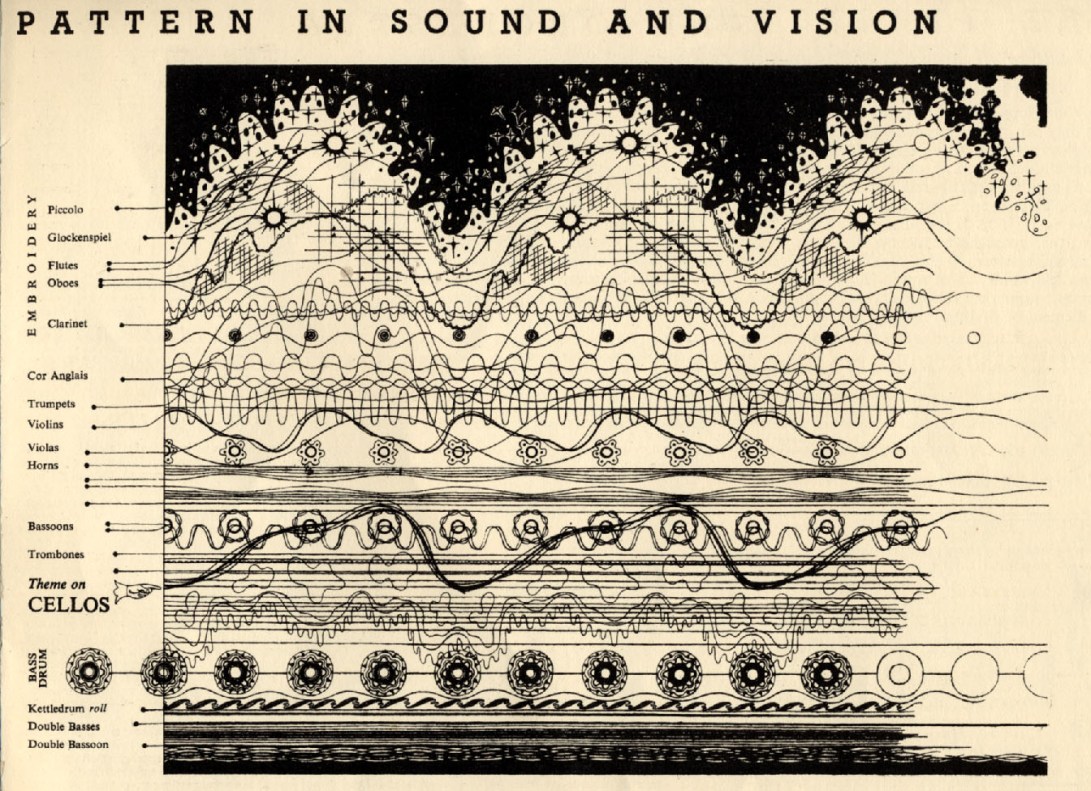
on note-taking while traveling
“A notebook takes on a friendly character, the patina of its daily use, its doodles and coffee stains. It becomes an indispensable artifact of the trip, glowing with revelation.”
Inside Guillermo Del Toro’s sketchbooks

“I like to say that we only make one movie in our lifetime, a movie made of all the images of all our movies.”
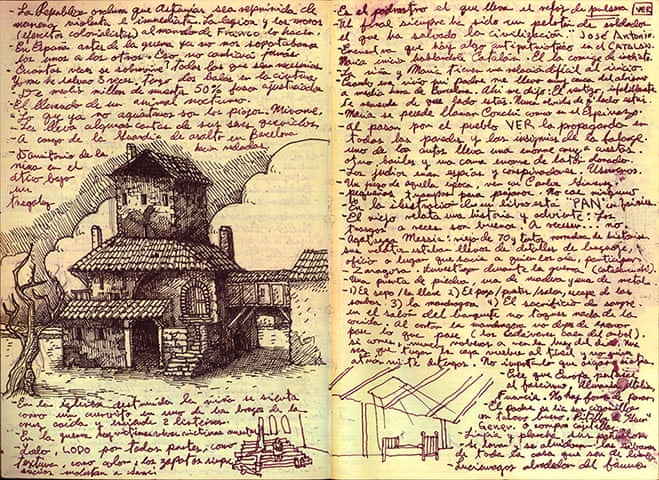
“In the end, perfection is just a concept – an impossibility we use to torture ourselves and that contradicts nature.”
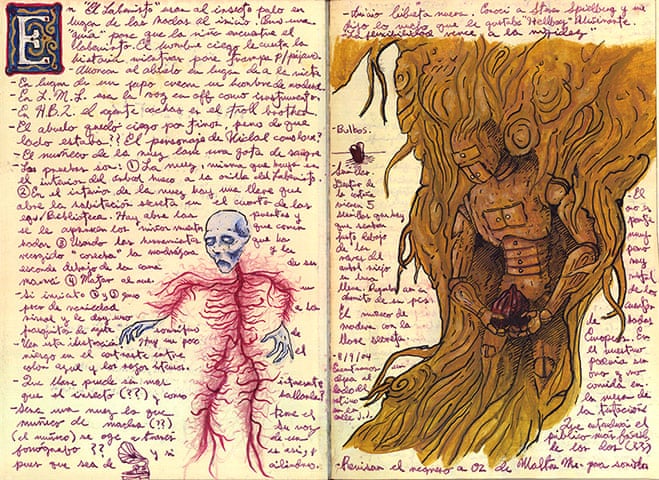
“In fairy tales, monsters exist to be a manifestation of something that we need to understand, not only a problem we need to overcome, but also they need to represent, much like angels represent the beautiful, pure, eternal side of the human spirit, monsters need to represent a more tangible, more mortal side of being human: aging, decay, darkness and so forth. And I believe that monsters originally, when we were cavemen and you know, sitting around a fire, we needed to explain the birth of the sun and the death of the moon and the phases of the moon and rain and thunder. And we invented creatures that made sense of the world: a serpent that ate the sun, a creature that ate the moon, a man in the moon living there, things like that. And as we became more and more sophisticated and created sort of a social structure, the real enigmas started not to be outside. The rain and the thunder were logical now. But the real enigmas became social. All those impulses that we were repressing: cannibalism, murder, these things needed an explanation. The sex drive, the need to hunt, the need to kill, these things then became personified in monsters. Werewolves, vampires, ogres, this and that. I feel that monsters are here in our world to help us understand it. They are an essential part of a fable.”
“On that December night at Bleak House, I noticed that del Toro had moved some of his journals from the bathroom safe to a shelf in the Rain Room. I asked to see early sketches for “Madness.” The notebook was from 1993. He turned the pages, stopped, and smiled. “Look!” he said. It was an image of one of the explorers falling into icy water. An inky creature lunging at him looked breathtakingly similar to the Shoggoth with symmetrical tentacles. Del Toro’s monsters had inhabited his mind for nearly two decades. From the beginning, del Toro had imagined that his creatures, unlike Lovecraft’s, would have a fatal vulnerability—one that explained why the horrible beasts had remained trapped in Antarctica. Salt water: it dissolved a Shoggoth like a slug. “
— Show The Monster, Guillermo del Toro’s quest to get amazing creatures onscreen
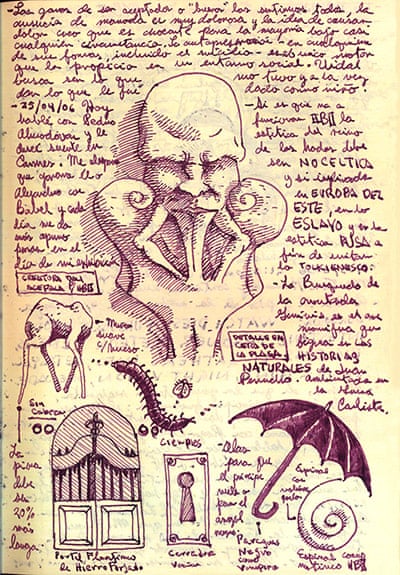
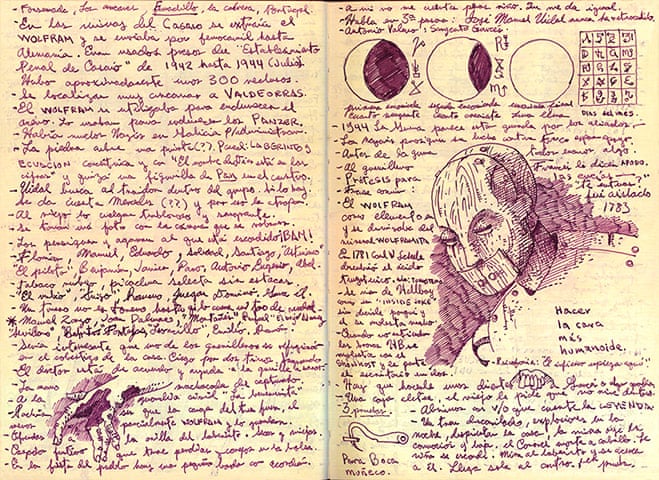
“Some ideas for one film end up getting used in another. Some pages are instructions for make-up artists, others are just Del Toro working out what looks cool and scary.”
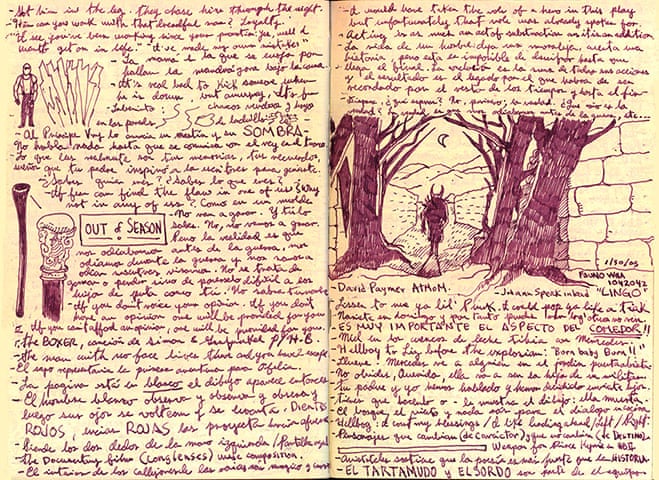
Images via.
Thomas Jefferson’s pocket notebooks

“Thomas Jefferson’s pocket notebooks, composed of erasable ivory plates on which he would write scientific observations and memoranda before copying them into notebooks in the evening. At Monticello.”
Bird Call in Musical Notation (source unknown)

This is a Volvelle a Medieval Computer…

“This is a volvelle, a medieval device that allowed you to calculate the phases of the moon and the latter’s position in relation to the sun. The dials, with their charming depictions of moon and sun, tell you what you need to know. What’s most remarkable about the device is not so much its crafty nature – it consists of complex layers of rotating disks – but that it is usually fitted inside a medieval book. Some are so bulky that they pierce the adjacent pages. What a surprise it must have been for the medieval reader who thumbed through such a book for the first time. Turning a page, he or she was confronted with an ingenious piece of machinery. A medieval computer.”
Visboek (FishBook), 1560 (Koninklijke Bibliotheek, 78 E 54)
reblogging erikkwakkel:


“These wonderful, and sometimes fantastic, images of marine animals come from Adriaen Coenen’s Visboek (FishBook), which he published in 1560 (Koninklijke Bibliotheek, 78 E 54). A fisherman, Coenen gathered all information he could find on the sea and its coasts, coastal waters, fishing grounds and marine animals, which he described in more than 800 pages.”
Thoughts on Doodling
“…keep drawing, make A LOT of drawings, and don’t worry about making bad drawings.”
 Paul Greer