
via Nesa Wake

“These wonderful images featured here are from a Japanese painted scroll known as the Bakemono zukushi. The artist and date is unknown, though its thought to hail from the Edo-period, sometime from the 18th or 19th century. Across it’s length are depicted a ghoulish array of “yokai” from Japanese folklore. In his The Book of Yokai, Michael Dylan Foster describes a yokai as:
‘a weird or mysterious creature, a monster or fantastic being, a spirit or a sprite … creatures of the borderlands, living on the edge of town, or in the mountains between villages, or in the eddies of a river running between two rice fields. They often appear at twilight, that gray time when the familiar seems strange and faces become indistinguishable. They haunt bridges and tunnels, entranceways and thresholds. They lurk at crossroads.’“

“The class of yokai characterised by an ability to shapeshift, and that featured in this scroll, is the bakemono (or obake), a word literally meaning “changing thing” or “thing that changes”. The founding father of minzokugaku (Japanese folklore studies), Yanagita Kuno (1875–1962), drew a distinction between yurei (ghosts) and bakemono: the former haunt people and are associated with the depth of night, whereas the latter haunt places and are seen by the dim light of dusk or dawn.”

“Amongst the bakemono monsters depicted in the scroll is the rokurokubi (ろくろくび), a long-necked woman whose name literally means “pulley neck”. Whether shown with a completely detachable head (more common in Chinese versions), or with head upon the end of a long threadlike neck as shown here, the head of the rokurokubi has the ability to fly about independently of the body. In his 1904 collection Kwaidan, Lafcadio Hearn provides the first extended discussion of this yokai in English, telling of a samurai-turned-travelling-priest who finds himself staying the night in a household of rokurokubi intent on eating their guest.”

more at Public Domain Review


![Anatomical illustrations, late 17th century [+]](https://i0.wp.com/pinktentacle.com/images/10/med_illustration_3.jpg)
“These illustrations are from a late 17th-century document based on the work of Majima Seigan, a 14th-century monk-turned-doctor. According to legend, Seigan had a powerful dream one night that the Buddha would bless him with knowledge to heal eye diseases. The following morning, next to a Buddha statue at the temple, Seigan found a mysterious book packed with medical information. The book allegedly enabled Seigan to become a great eye doctor, and his work contributed greatly to the development of ophthalmology in Japan in the 16th and 17th centuries.”
![Anatomical illustrations, late 17th century [+]](https://i0.wp.com/pinktentacle.com/images/10/med_illustration_4.jpg)
More on Pink Tentacle.
or: Depicting the destruction of the earth in several stages:
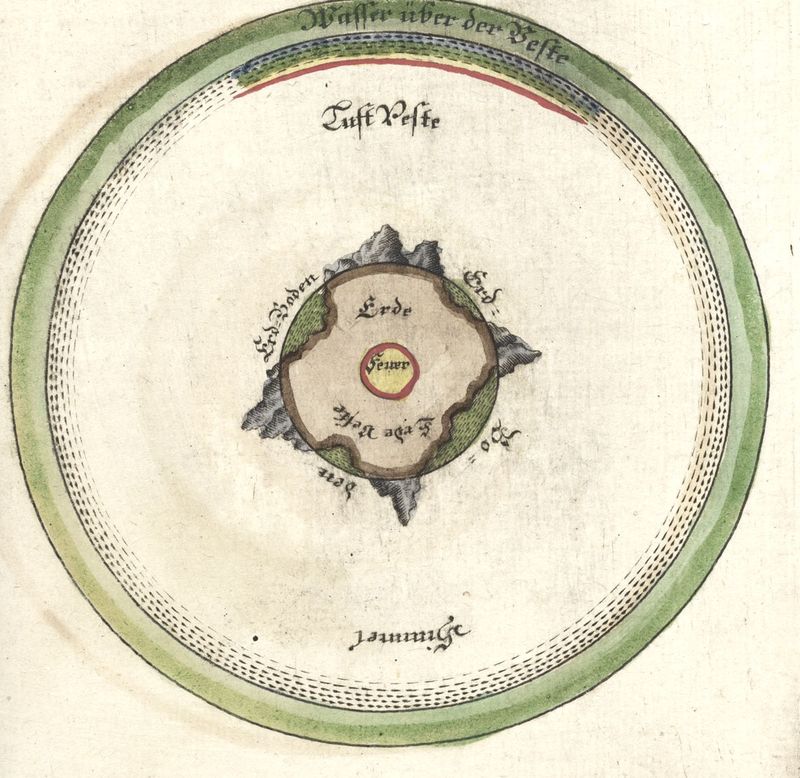
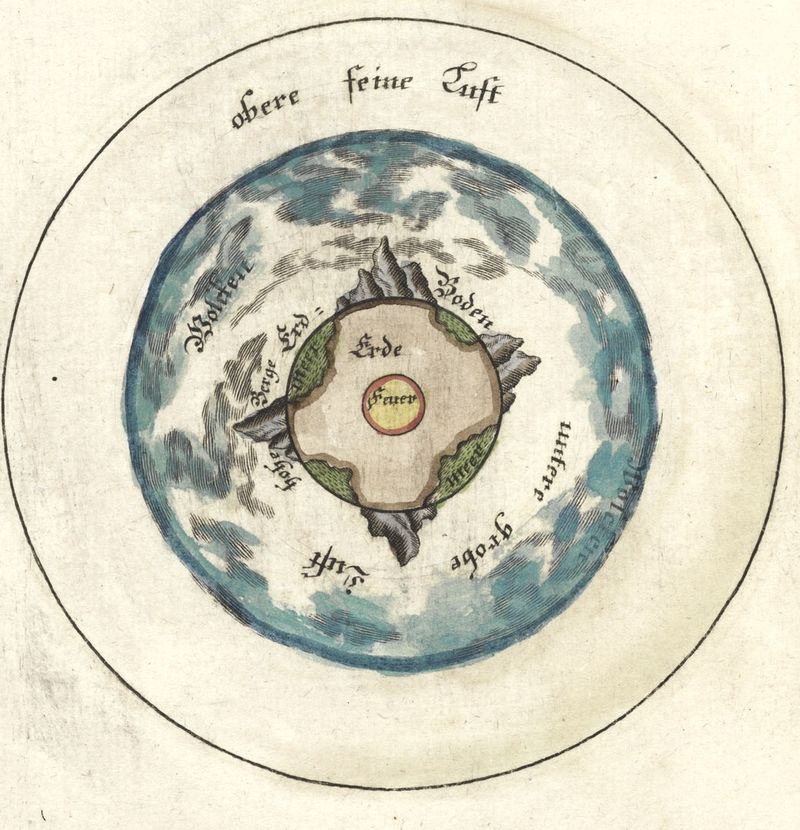
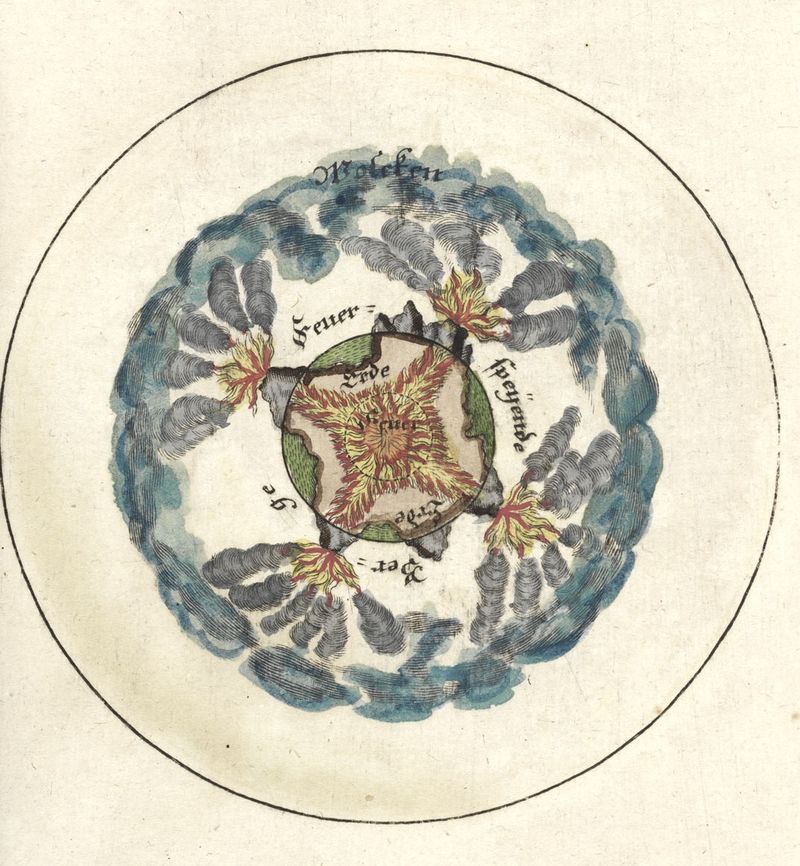
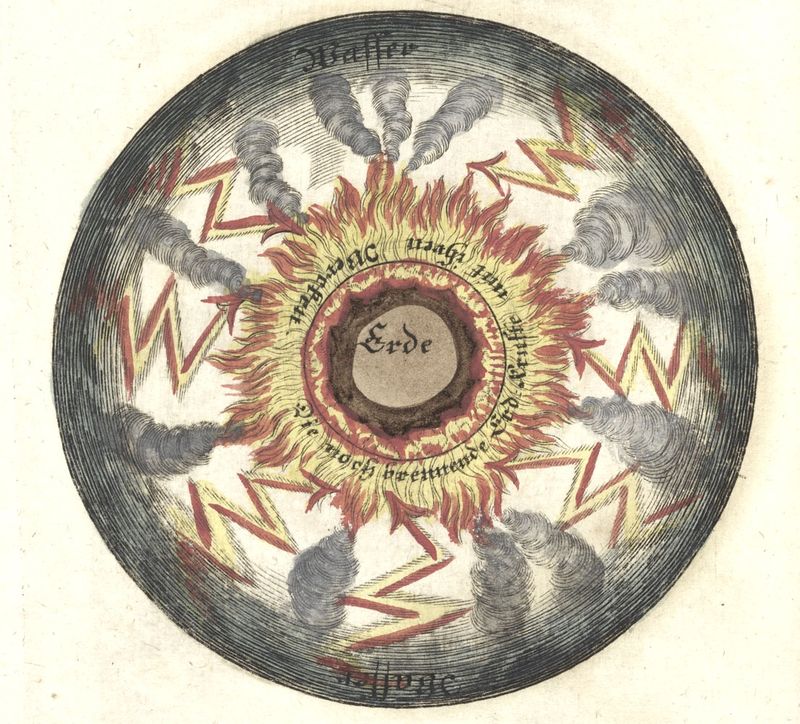
“This engraving is one of twelve found in a fine little book, the brainchild of clergyman/semi-scientist Jodocus Frisch (1714-1787), who delivered to the (un-) waiting world his vision of how the earth and heaven will come to an end, there at the end of days. Die Welt im Feuer, Oder das Wahre Vergehen und Ende der Welt, Durch den letzten Sünd-Brand (printed in Sorau by Gottlob Heboldm in 1746) is one of very few works that depict (in illustration) the destruction of the Earth, and even though Frisch illuminates biblically-based theory, the idea of the earth exploding into bits in primordial fire and so on was extraordinary. The images were done in four colors representing the four elements: yellow, brown, green and white represented (respectively) fire, earth, water and air. In this image, we see the fire-centric earth encircled by a sphere of water, which is surrounded by a sphere of fire, which in turn is surrounded by a sphere of air, with much bad stuff happening. “
More to be found at thesciencebookstore.

“Sir William Hamilton (1730-1803), perhaps best-known today as the husband of Emma Hamilton, mistress of Admiral Lord Nelson, was in his own right a skilled diplomatist, a celebrated connoisseur and collector, and a respected natural historian. In his own time he was honoured in particular for his contributions to the study of volcanoes, acquiring the title ‘the modern Pliny’ for his studies of Vesuvius.”
vi BibliOdyssey

 Paul Greer