“There are two basic categories of film directors. One consists of those who seek to imitate the world in which they live, the other of those who seek to create their own world. The second category contains the poets of cinema, Bresson, Dovzenko, Mizoguchi, Bergman, Buñuel and Kurosawa, the cinema’s most important names. The work of these film-makers is difficult to distribute: it reflects their inner aspirations, and this always runs counter to public taste. This does not mean that the film-makers don’t want to be understood by their audience. But rather that they themselves try to pick up on and understand the inner feelings of the audience.”
Andrei Tarkovsky
A Message to Young People from Andrei Tarkovsky
“I don’t know… I think I’d like to say only that they should learn to be alone and try to spend as much time as possible by themselves. I think one of the faults of young people today is that they try to come together around events that are noisy, almost aggressive at times. This desire to be together in order to not feel alone is an unfortunate symptom, in my opinion. Every person needs to learn from childhood how to be spend time with oneself. That doesn’t mean he should be lonely, but that he shouldn’t grow bored with himself because people who grow bored in their own company seem to me in danger, from a self-esteem point of view.”
via BrainPickings
“Tarkovsky’s Translations” Sight and Sound 50, no.3, Summer 1981, 152-53, Reprinted in Andrei Tarkovsky Interviews, ed. John Gianvito, University of Mississippi Press, Jackson, Mississippi, 2006, p.71
“Everybody asks me what things mean in my films. This is terrible! An artist doesn’t have to answer for his meanings. I don’t think so deeply about my work—I don’t know what my symbols may represent. What matters to me is that they arouse feelings, any feelings you like, based on whatever your inner response might be. If you look for a meaning, you’ll miss everything that happens. Thinking during a film interferes with your experience of it. Take a watch to pieces, it doesn’t work. Similarly with a work of art, there’s no way it can be analyzed without destroying it.”
via sloaneohno
Andreï TARKOVSKI. Working diary for Mirror.

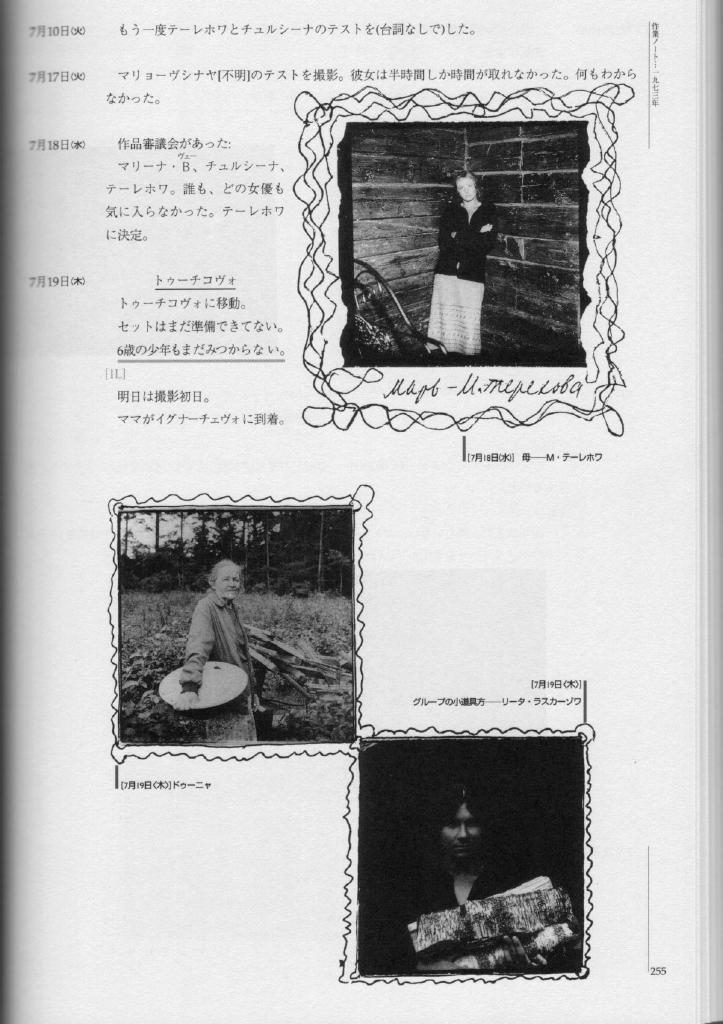
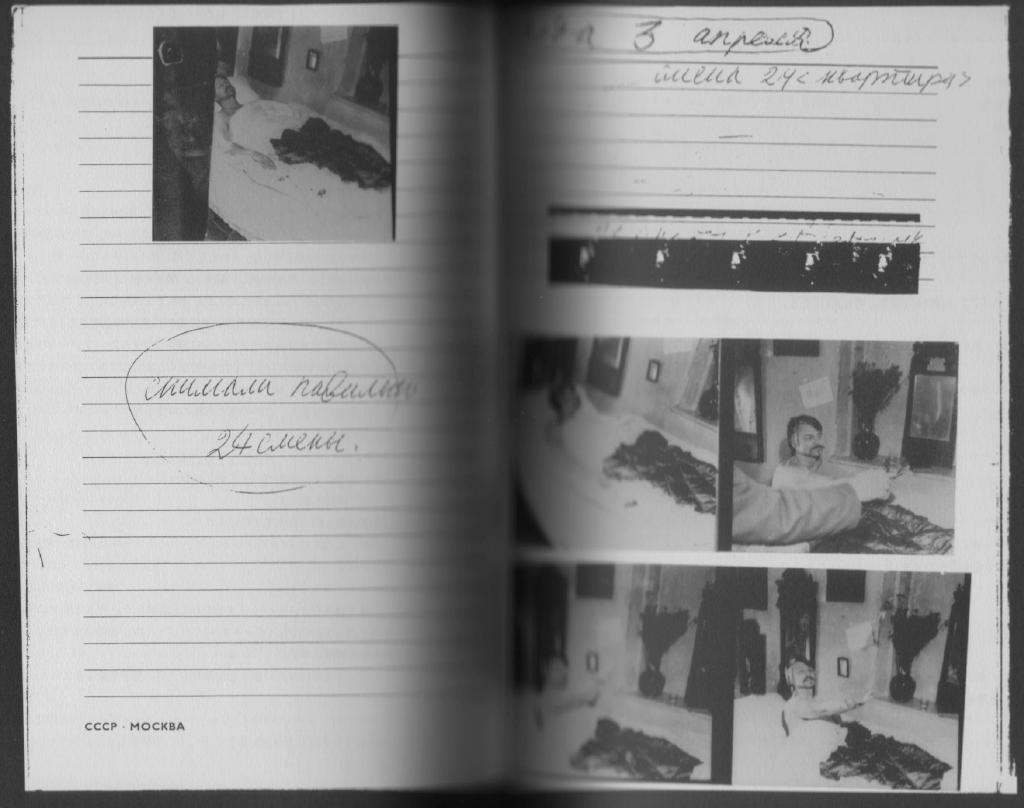
More info on this book here.
“He was a magician by profession.”
“When film is not a document, it is a dream. That is why Tarkovsky is the greatest of them all. He moves with such naturalness in the room of dreams. He doesn’t explain. What should he explain anyhow? He is a spectator, capable of staging his visions in the most unwieldy but, in a way, the most willing of media. All my life I have hammered on the doors of the rooms in which he moves so naturally. Only a few times have I managed to creep inside.”
— Ingmar Bergman
Andrei Tarkovsky’s words on film
“Cinema is the one art form where the author can see himself as the creator of an unconditional reality, quite literally of his own world.”
Las Polaroid de Tarkovsky
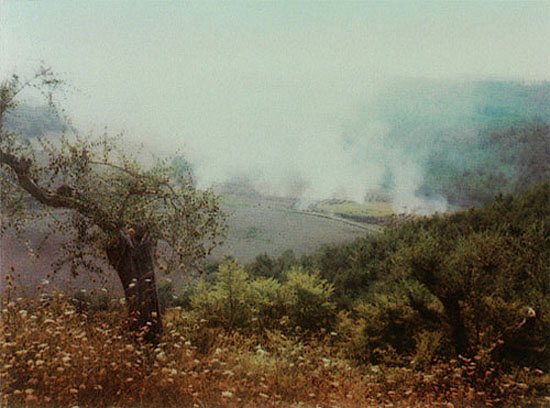
“No es muy conocido que Tarkovsky, cuyas películas parecen estar compuestas a veces por un montaje de fotografías estáticas, se dedicó durante algún tiempo, efectivamente, a tomar fotos con una Polaroid. Estas fotos, a pesar de sus imperfecciones técnicas, atestiguan la misma forma de mirar y el mismo mundo visual de sus grandes films.”
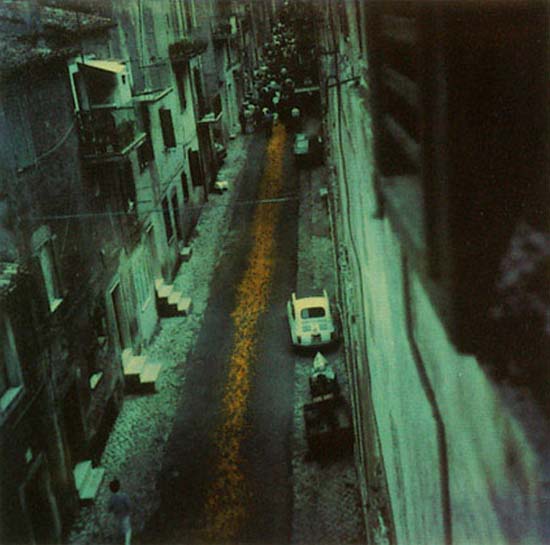
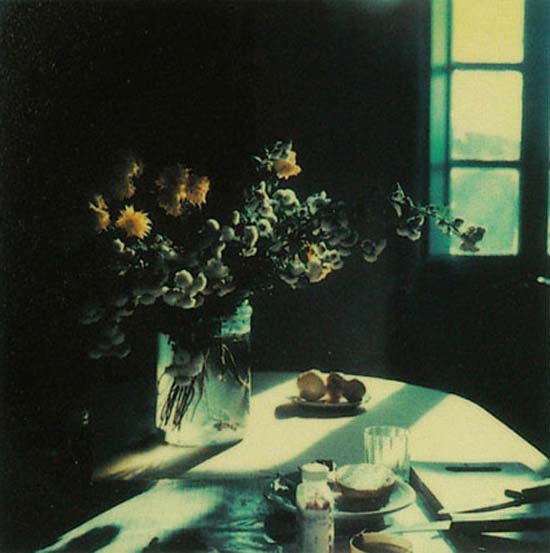
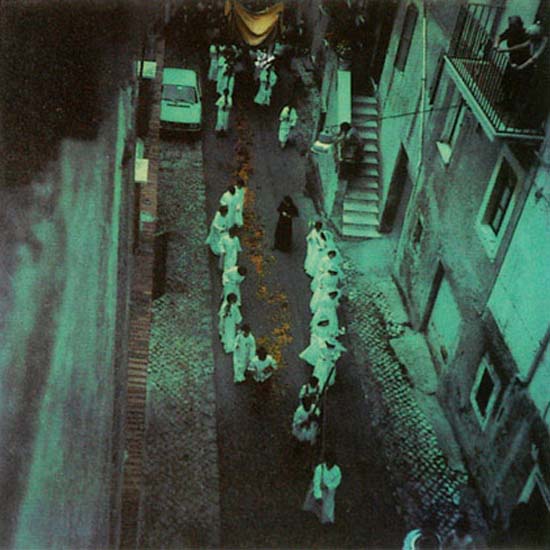
more at: Poemas del río Wang
 Paul Greer