…for anyone,
Who has the will to chase one.”

“I’ve zig-zagged all over America,”

“and I haven’t found my safety haven,”

“SAY! would you let me cry on your shoulder?”

“I’ve heard you’ll try..”

“…anything twice.”
ART: ɑːt (noun) 1. the expression or application of human creative skill and imagination, typically in a visual form such as painting or sculpture, producing works to be appreciated primarily for their beauty or emotional power.
2. the various branches of creative activity, such as painting, music, literature, and dance.
“the visual arts”
…for anyone,
Who has the will to chase one.”
“I’ve zig-zagged all over America,”
“and I haven’t found my safety haven,”
“SAY! would you let me cry on your shoulder?”
“I’ve heard you’ll try..”
“…anything twice.”

Progress, progress, limping into action. Always reminding myself how it gets easier the more often I do it so it encourages me to keep going. The pockets of time are there it is usually just a question of being ruthless with oneself.
So if drawing had value even when it was practised by people with no talent, it was for Ruskin because drawing can teach us to see: to notice properly rather than gaze absentmindedly. In the process of recreating with our own hand what lies before our eyes, we naturally move from a position of observing beauty in a loose way to one where we acquire a deep understanding of its parts.
Couple this with the basic idea of habit forming and applied consistency:
Let no youth have any anxiety about the upshot of his education, whatever the line of it may be. If he keep faithfully busy each hour of the working-day, he may safely leave the final result to itself. He can with perfect certainty count on waking up some fine morning, to find himself one of the competent ones of his generation, in whatever pursuit he may have singled out. Silently, between all the details of his business, the power of judging in all that class of matter will have built itself up within him as a possession that will never pass away. Young people should know this truth in advance. The ignorance of it has probably engendered more discouragement and faint-heartedness in youths embarking on arduous careers than all other causes put together.
Maybe that inspires you. Who knows.
Back to my efforts. As ever there is a link to the Instagram post in the caption of the picture:

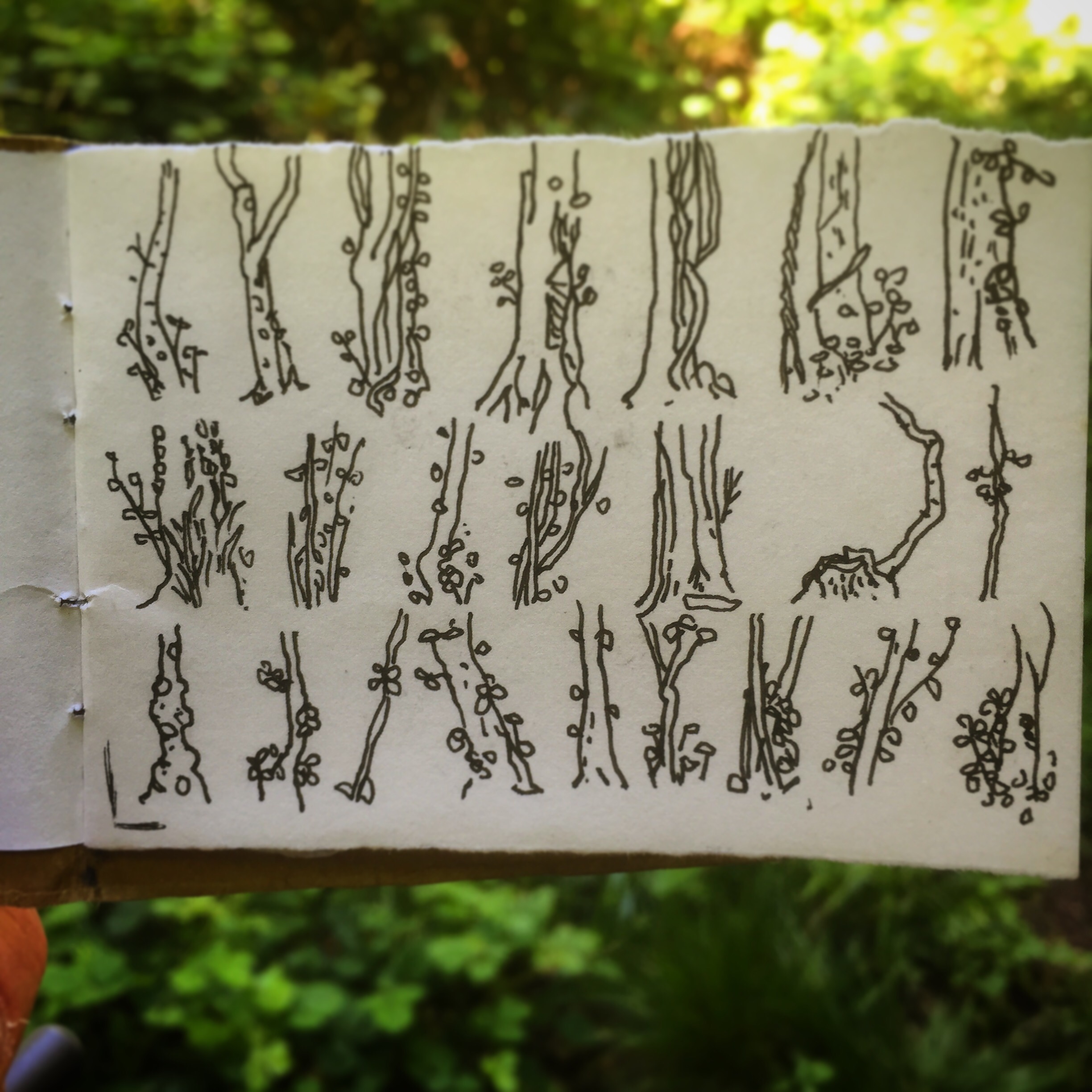

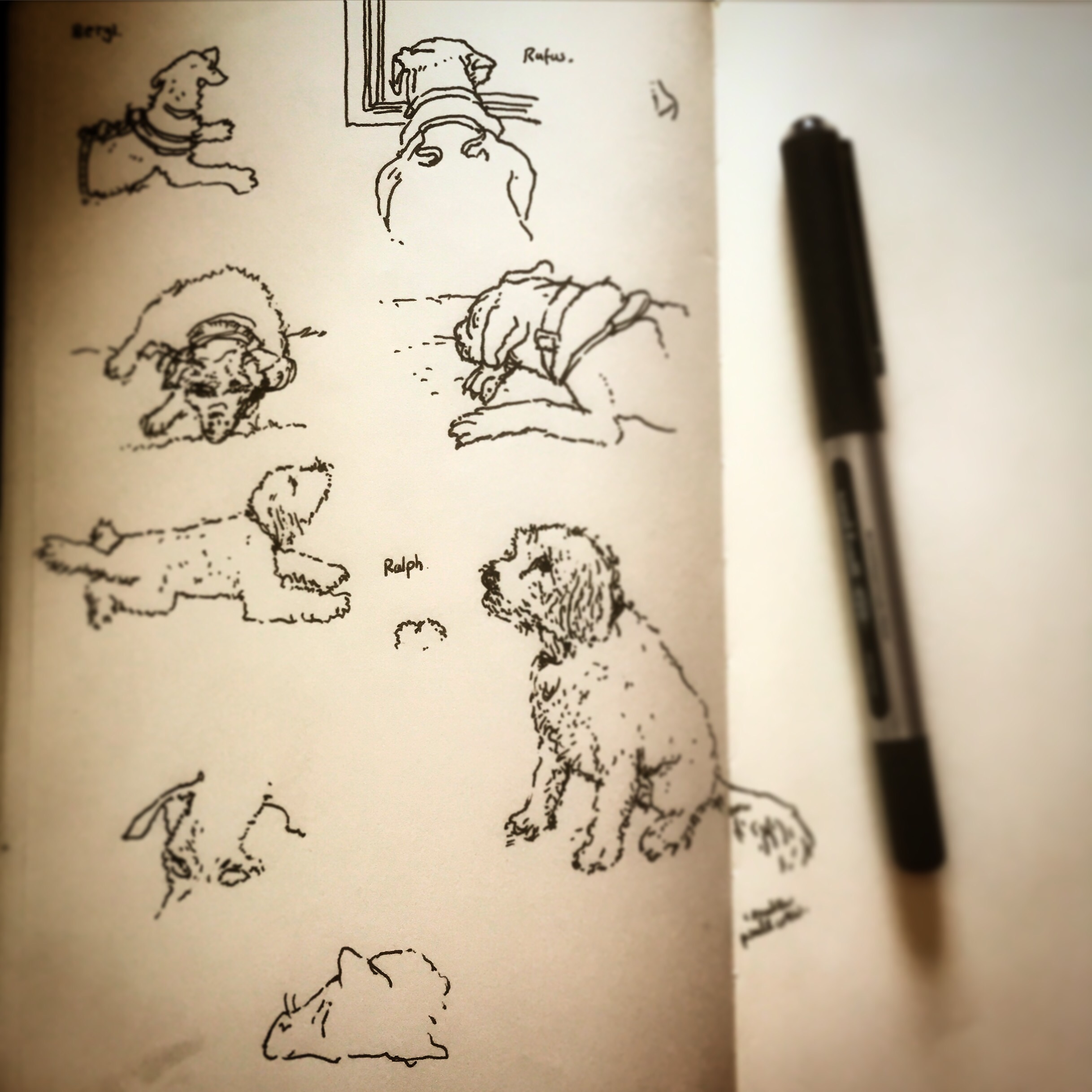
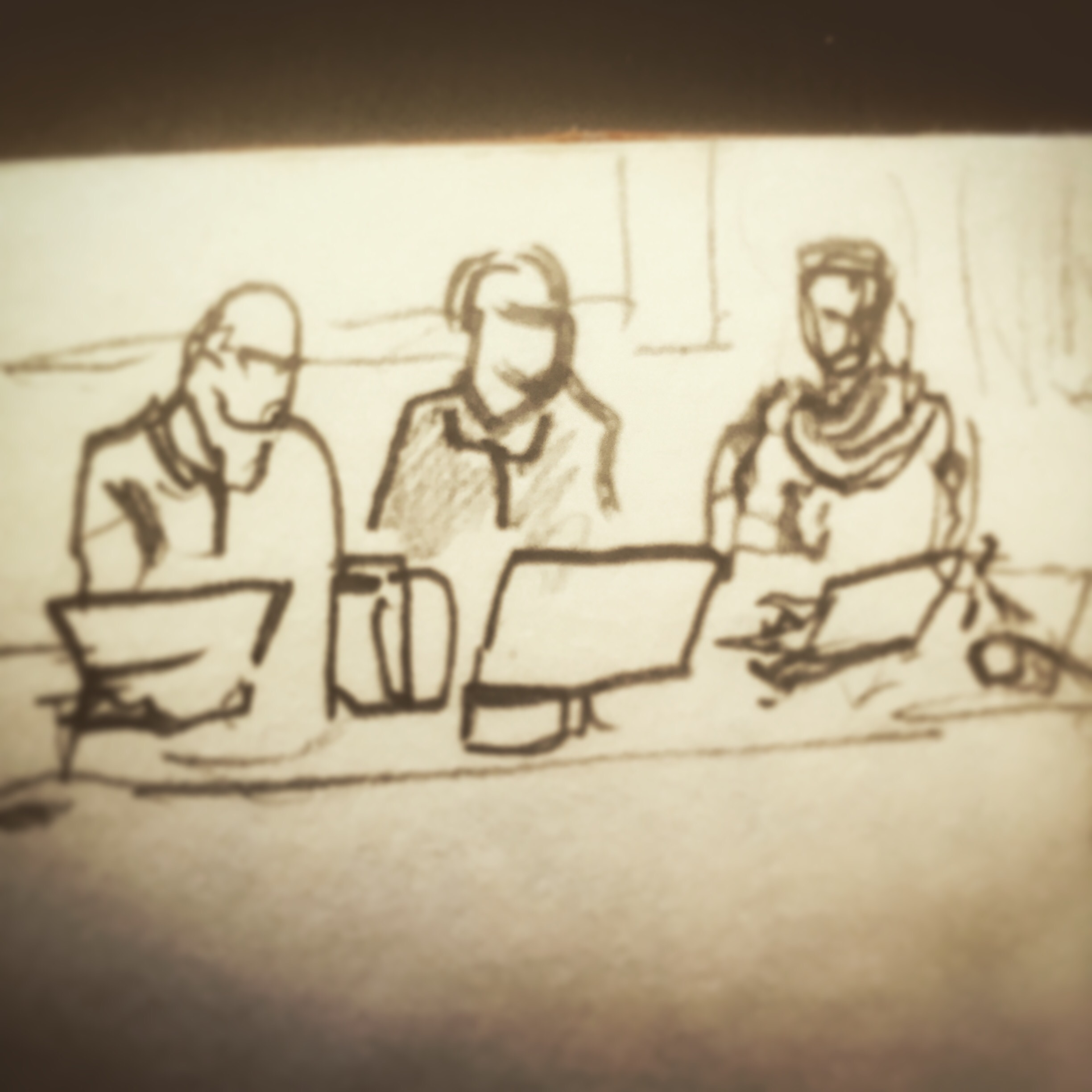

“If you think academies are a red herring, a partial and inconsistent solution to a problem that has been wrongly framed, then you need to somehow respond to this; choose a school that is still local authority-controlled, and support it to stay that way. Or become a governor of an academy, to uphold the values that you loved in community schools: that they serve the whole community.”

We took a sneaky stop off at The Cottage on the way home from the hospital. I got a “non-malignant” diagnosis for my condition so was feeling pretty spritely, grateful. It’s times like that you look at the water and see every wave.


Just been informed by Eldest that there are over 150 wookie words for “wood” but none for “artist”.
“We need to re-train audiences who’ve grown used to the free YouTube model that shorts are worth paying for. I keep telling my animator friends, “Please sell your work. Even if you put it online and just charge 50 cents, sell it.” “Everything is free” has been doing genuine damage to young artists.” (animation)
Two things coming up recently regarding powerful rich “artists” making kudos and money from the hard work of whom they can only consider to be lesser mortals.
First you should know that Richard Prince has been “re-photographing” since the 1970s. He takes pictures of photos in magazines, advertisements, books or actors’ headshots, then alters them to varying degrees. Often, they look nearly identical to the originals. This has of course, led to legal trouble. In 2008, French photographer Patrick Cariou sued Prince aft..er he re-photographed Cariou’s images of Jamaica’s Rastafarian community. Although Cariou won at first, on appeal, the court ruled that Prince had not committed copyright infringement because his works were “transformative.”
– A reminder that your Instagram photos aren’t really yours: Someone else can sell them for $90,000
..and then Dan Clowes on that Shia Lebeouf thing:
“Speaking of grudges: Have you forgiven Shia LaBeouf?”
“I don’t know. No, not really. I mean, I don’t hold a grudge. I don’t think about it that much. But I don’t think what he did was really forgivable. I don’t know that it matters that much if he’s apologizing or whatever. I just hate the idea of anybody doing that to some young artist who couldn’t hire legal representation. I’m sort of the one guy who could deal with something like that, and it would be really possible for somebody with his amount of money and power to just crush some poor young artist if that happened to them, and I would hate to see that. So I don’t think it’s something that needs to be forgiven; I think it’s something that always needs to be thought of as just a horrible thing to do.”
– Comics Legend Daniel Clowes on Hate Mail, Jim Belushi, and Not Forgiving Shia LaBeouf
Difficult for me to comment on this without falling into ranting, which is how I am supposed to react.
Let’s cleanse ourselves by reading about the true artists who Lichenstein “homaged”, in Deconstructing Lichtenstein.
Finally an article addressing a parallel issue of the popular misconceptions around the creation of CGI for big budget features:
As the debate surrounding what visual effects are worth rages on, it is clear that the studios themselves have an interest in perpetuating the myth that VFX are the product of clinical assembly lines and the results are equally lifeless and mechanical. Blaming computers for the dumbing down of movies has become a journalistic trope that is bandied about to squeeze the one part of the Hollywood machine that has no union or organizational skill to push back.
 Paul Greer