“Since childhood, I’ve been faithful to monsters. I have been saved and absolved by them, because monsters, I believe, are patron saints of our blissful imperfection, and they allow and embody the possibility of failing”
via Jess Fink
“Since childhood, I’ve been faithful to monsters. I have been saved and absolved by them, because monsters, I believe, are patron saints of our blissful imperfection, and they allow and embody the possibility of failing”
via Jess Fink
“I studied the classical effects from classical films. I don’t know only the new techniques, I know the old techniques. When you were talking about compositing an image, the language is still the same – matte lines, roto, matte paintings. You’re using the same language as before. Grain, haze, atmospheric dispersion, specularity – the language is the same.”

“I like to say that we only make one movie in our lifetime, a movie made of all the images of all our movies.”
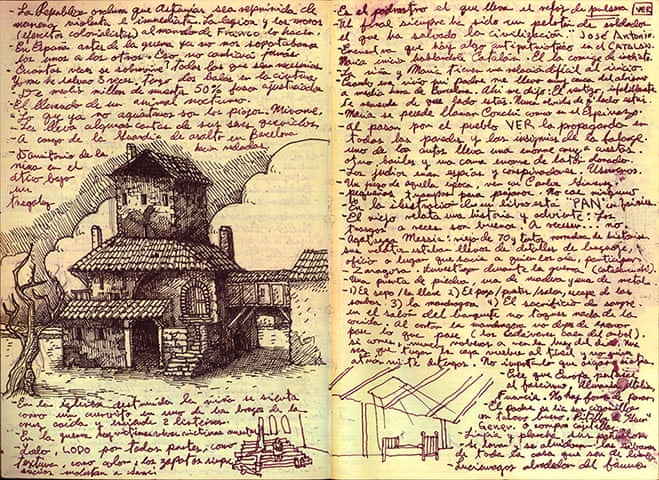
“In the end, perfection is just a concept – an impossibility we use to torture ourselves and that contradicts nature.”
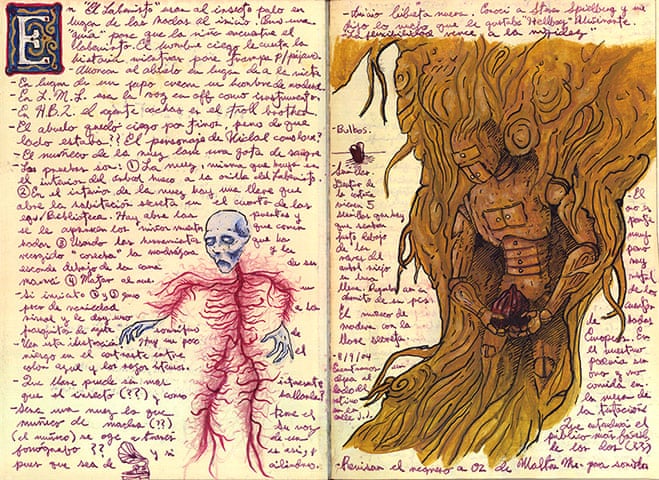
“In fairy tales, monsters exist to be a manifestation of something that we need to understand, not only a problem we need to overcome, but also they need to represent, much like angels represent the beautiful, pure, eternal side of the human spirit, monsters need to represent a more tangible, more mortal side of being human: aging, decay, darkness and so forth. And I believe that monsters originally, when we were cavemen and you know, sitting around a fire, we needed to explain the birth of the sun and the death of the moon and the phases of the moon and rain and thunder. And we invented creatures that made sense of the world: a serpent that ate the sun, a creature that ate the moon, a man in the moon living there, things like that. And as we became more and more sophisticated and created sort of a social structure, the real enigmas started not to be outside. The rain and the thunder were logical now. But the real enigmas became social. All those impulses that we were repressing: cannibalism, murder, these things needed an explanation. The sex drive, the need to hunt, the need to kill, these things then became personified in monsters. Werewolves, vampires, ogres, this and that. I feel that monsters are here in our world to help us understand it. They are an essential part of a fable.”
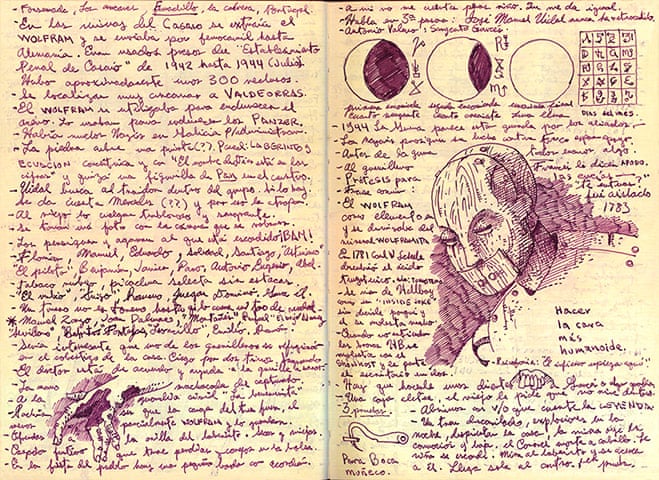
“On that December night at Bleak House, I noticed that del Toro had moved some of his journals from the bathroom safe to a shelf in the Rain Room. I asked to see early sketches for “Madness.” The notebook was from 1993. He turned the pages, stopped, and smiled. “Look!” he said. It was an image of one of the explorers falling into icy water. An inky creature lunging at him looked breathtakingly similar to the Shoggoth with symmetrical tentacles. Del Toro’s monsters had inhabited his mind for nearly two decades. From the beginning, del Toro had imagined that his creatures, unlike Lovecraft’s, would have a fatal vulnerability—one that explained why the horrible beasts had remained trapped in Antarctica. Salt water: it dissolved a Shoggoth like a slug. “
— Show The Monster, Guillermo del Toro’s quest to get amazing creatures onscreen
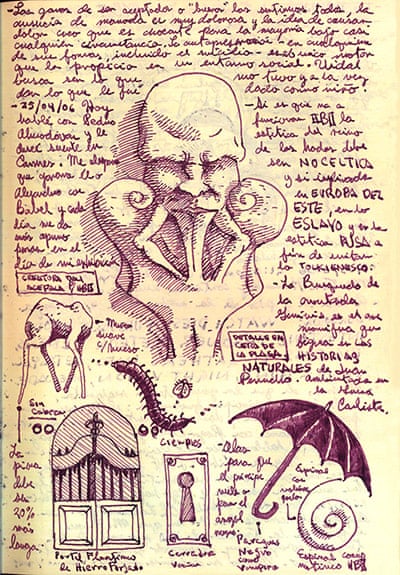
“Some ideas for one film end up getting used in another. Some pages are instructions for make-up artists, others are just Del Toro working out what looks cool and scary.”
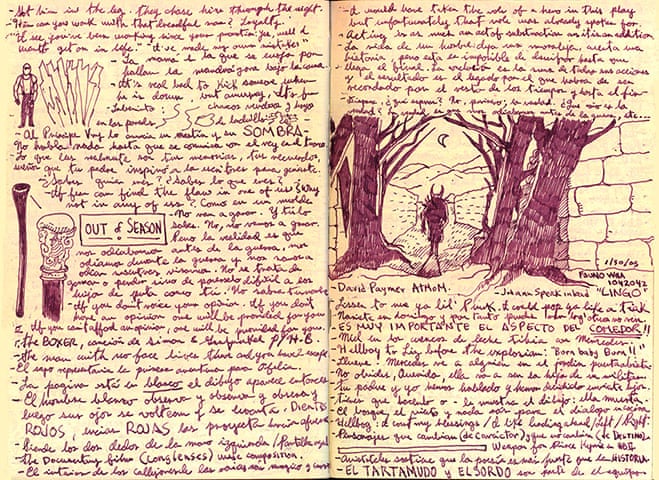
Images via.


“Why did I write it down? In order to remember, of course, but exactly what was it I wanted to remember? How much of it actually happened? Did any of it? Why do I keep a notebook at all? It is easy to deceive oneself on all those scores. The impulse to write things down is a peculiarly compulsive one, inexplicable to those who do not share it, useful only accidentally, only secondarily, in the way that any compulsion tries to justify itself. I suppose that it begins or does not begin in the cradle. Although I have felt compelled to write things down since I was five years old, I doubt that my daughter ever will, for she is a singularly blessed and accepting child, delighted with life exactly as life presents itself to her, unafraid to go to sleep and unafraid to wake up. Keepers of private notebooks are a different breed altogether, lonely and resistant rearrangers of things, anxious malcontents, children afflicted apparently at birth with some presentiment of loss.”

 Paul Greer