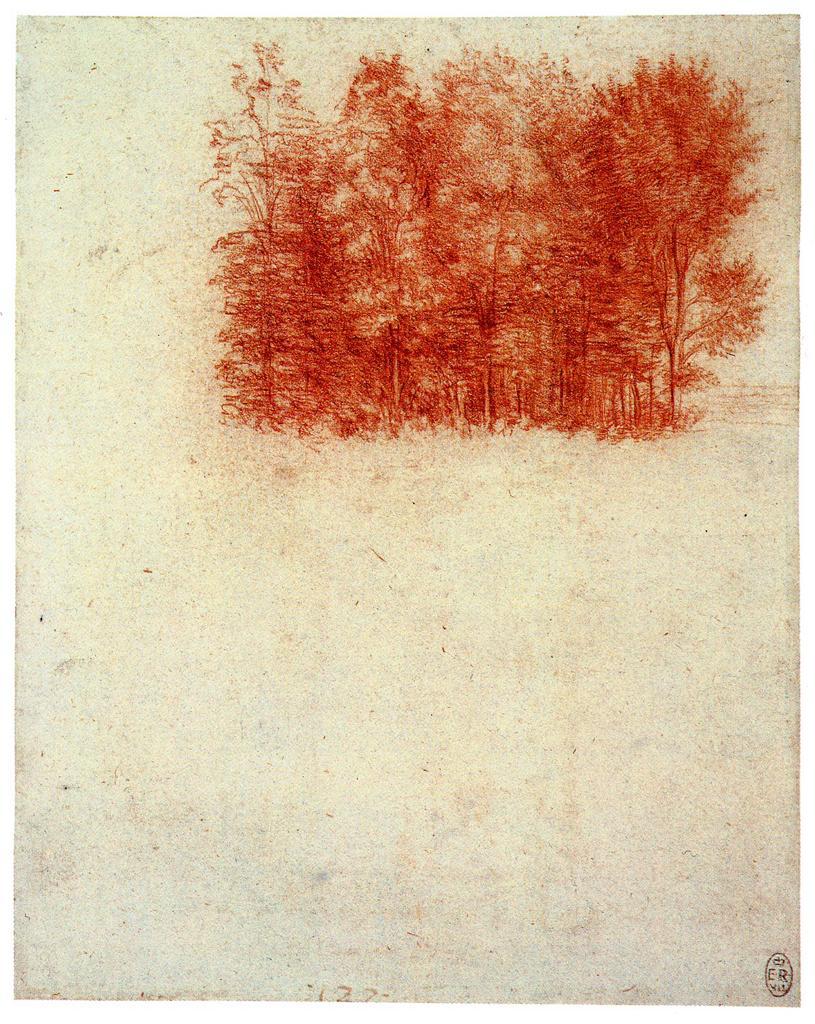
“Art observation skills can transfer to the medical lab”

“If you’re unfamiliar or uncomfortable with how art and science can mingle to produce something clinically beneficial, it’s a study premise that might seem far-fetched — but it didn’t seem that way to Gurwin, an ophthalmology resident at Penn, in part because she’d already seen the benefits of art education on a medical career firsthand.

“Having studied fine arts myself and having witnessed its impact on my medical training, I knew art observation training would be a beneficial practice in medical school,” she said. “Observing and describing are skills that are taught very well in fine arts training, and so it seemed promising to utilize their teachings and apply it to medicine.”

“Gurwin and Binenbaum’s findings, published in the journal Ophthalmology in September: The medical students who’ve dabbled in art just do better.

“It’s a glimpse at how non-clinical training can and does make for a better-prepared medical professional. Not only does art observation training improve med students’ abilities to recognize visual cues, it also improves their ability to describe those cues.”

via

“Isaacson argues that Leonardo’s observational powers were not innate and that with sufficient practice, we can all observe as he did. People talk in a precious way about genius, creativity, and curiosity as superpowers that people are born with but noticing is a more humble pursuit. Noticing is something we can all do.”

also via
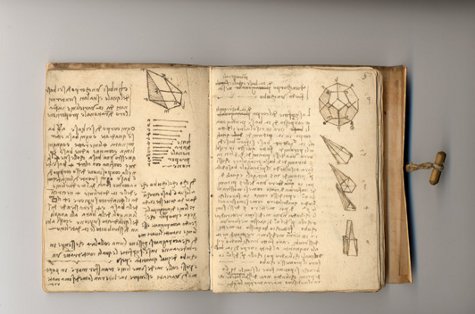
on Leonardo


He frequently wrote on loose sheets of paper that he kept barely organized; he made his own “notebooks” by folding the sheets and wrapping them in fabric. But when he turned thirty he also began writing in leather-bound journals. And he carried small bound notebooks with him at all times. He kept these tiny 3.5X2.5 notebooks tied to his belt, always at the ready for his thoughts, observations, drawings, and ideas.”

DA VINCI’S BLOBS


da Vinci

Looking at a rapidly flowing stream or a thunderstorm leaves a strong visual impression, but many aspects of what is actually happening remain hidden from or are simply beyond the reach of observation, either by the naked eye or instruments. They have to be inferred from what can be observed, and this is a matter of interpretation, of imagination. It is very much the method Albert Einstein used in developing his theories of Relativity, because he could not directly observe objects moving close to the speed of light, or the movements of stars in interstellar space. In science it is called making a hypothesis, and the application of this method took modern physics far beyond empiricism (Newton had proudly claimed, “I make no hypotheses”), which was based strictly on what could be observed. Da Vinci, in this way as in others, anticipated future developments—he created hypothetical worlds that revealed the hidden structures of nature. These, in turn, helped him create paintings of great originality that are imbued with a lasting aura of conceptual power.

Lebbeus Woods


Da Vinci


Da Vinci

more here

The Netherlands diary

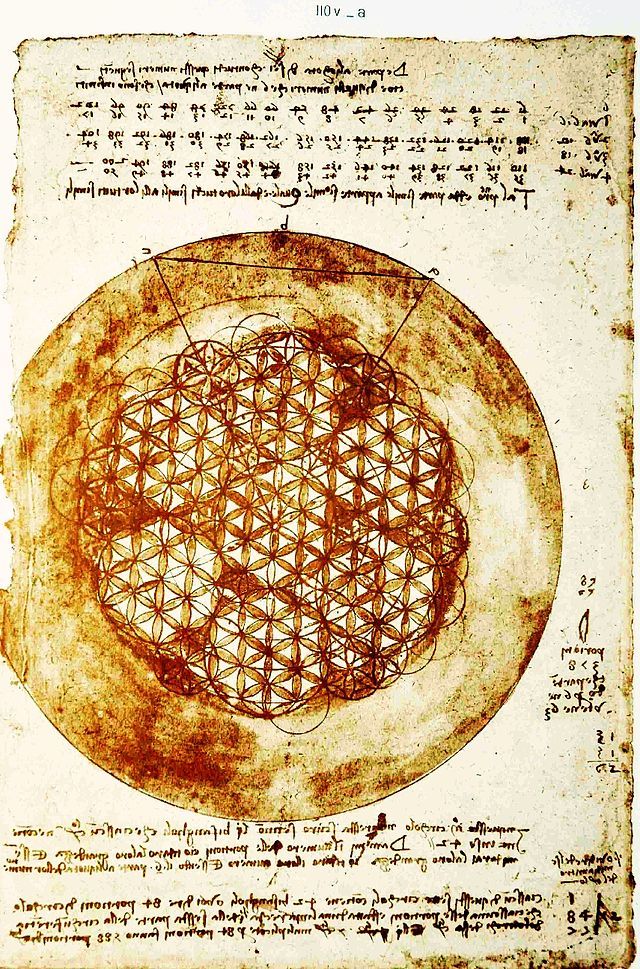
One of six decorative patterns of a knot; round shape of intertwined strapwork with an empty, disc in the centre, in the four corners single knots with ornamental foliage. Woodcut

Entry from ‘Albrecht Dürer and his Legacy’ BM exh. cat. 2002, no.103:
‘This woodcut design for ornament is one of six ‘knots’, as Dürer referred to them in his Netherlands diary (see Goris and Marlier, p. 81) copied after six engravings of c. 1490-1500 thought to be designed by Leonardo da Vinci

via