“This is a volvelle, a medieval device that allowed you to calculate the phases of the moon and the latter’s position in relation to the sun. The dials, with their charming depictions of moon and sun, tell you what you need to know. What’s most remarkable about the device is not so much its crafty nature – it consists of complex layers of rotating disks – but that it is usually fitted inside a medieval book. Some are so bulky that they pierce the adjacent pages. What a surprise it must have been for the medieval reader who thumbed through such a book for the first time. Turning a page, he or she was confronted with an ingenious piece of machinery. A medieval computer.”
manuscript
Visboek (FishBook), 1560 (Koninklijke Bibliotheek, 78 E 54)
reblogging erikkwakkel:
“These wonderful, and sometimes fantastic, images of marine animals come from Adriaen Coenen’s Visboek (FishBook), which he published in 1560 (Koninklijke Bibliotheek, 78 E 54). A fisherman, Coenen gathered all information he could find on the sea and its coasts, coastal waters, fishing grounds and marine animals, which he described in more than 800 pages.”
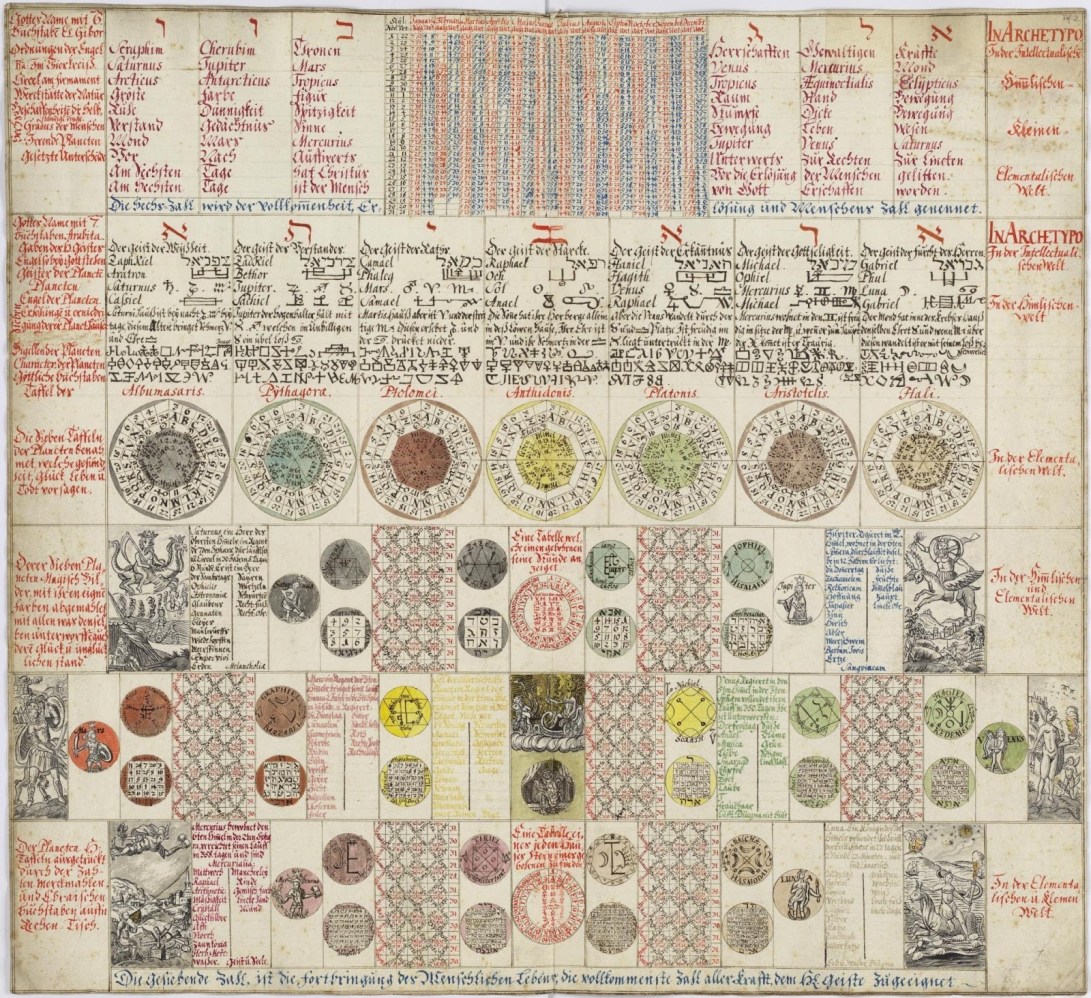
‘Ein Im[m]erwährender Natürlich-Magischer Calender, Welcher die Beschauung der Allertiefesten und Geheimesten Sachen, Ingleichen die Erkäntnüs der gantzen Philosophie in sich faßet’, 1582. SLUB Dresden
“The Magical Calendar is one of the most amazing pieces of art and information available in Western Hermeticism.
Published in 1620, the Magical Calendar contains tables of correspondences arranged by number from one to twelve. They are based in part on extensive tables in Agrippa, book 2, chapters 4-14 but go well beyond anything in Agrippa, especially sigils. The engraving was executed by the brilliant Johannes Theodorus de Bry who illustrated other important occult works such as those of Robert Fludd. The author was Johann Baptista Großchedel. Carlos Gilly has identified the original manuscript on which the printed Magical Calendar was based as British Library manuscript Harley 3420.”
via theremina
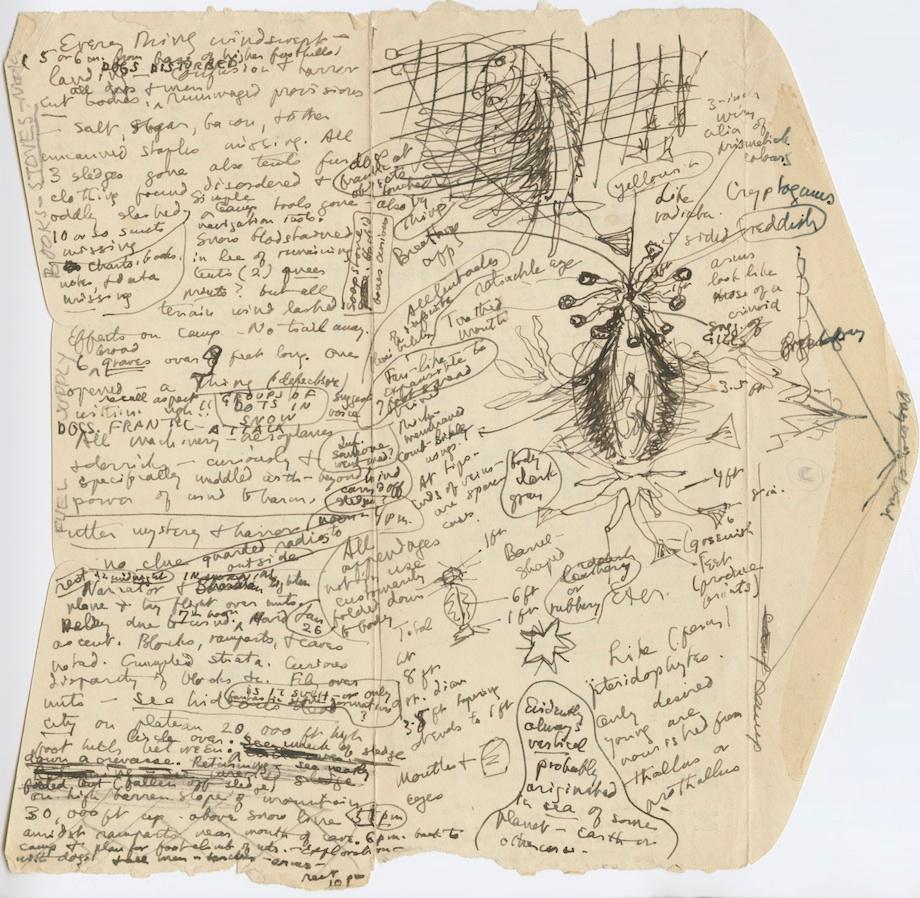
H.P. Lovecraft’s Monster Drawings: Cthulhu and “an open slice of howling fear”
“On March 23rd, the manuscript continued, Wilcox failed to appear; and inquiries at his quarters revealed that he had been stricken with an obscure sort of fever and taken to the home of his family in Waterman Street. He had cried out in the night, arousing several other artists in the building, and had manifested since then only alternations of unconsciousness and delirium.”
“Mountains featured several species of forgotten, intelligent beings, including the ‘Elder Things.’ The sketch on the right side of this page of notes (click here to view it in a larger format), with its annotations (‘body dark grey’; ‘all appendages not in use customarily folded down to body’; ‘leathery or rubbery’) represents Lovecraft working out the specifics of an Elder Thing’s anatomy.” That such things lurked in Lovecraft’s imagination have made his state of mind a subject of decades and decades of rich discussion among his enthusiasts. But just the body count racked up by Cthulhu, the Elder Things, and the other denizens of this unfathomable realm should make us thankful that Lovecraft saw them in his mind’s eye so we wouldn’t have to.”
from openculture
Ancient Egyptian music notation
“From a set of 6 parchments described by German musicologist Hans Hickmann in his 1956 book Musicologie Pharaonique, or Music under the Pharaohs, as dating from the 5th to 7th centuries C.E. Colors are presumed to indicate pitch and size to indicate duration. Writings on the parchment are in Coptic with indications like “Spiritual Harmony” and “Holy Hymn Singer”. This manuscript had a profound influence on Egyptian composer Halim El-Dabh’s music notation and paintings when he discovered a reproduction in Vogue magazine in 1952.
Note: I wasn’t able to locate these manuscripts and couldn’t find any reference to them online, but they are presumably in NY’s Metropolitan Museum collections. This image comes from Theresa Sauer’s book Notations 21, Mark Batty Publisher, USA, 2009.”
reblogged from continuo-docs
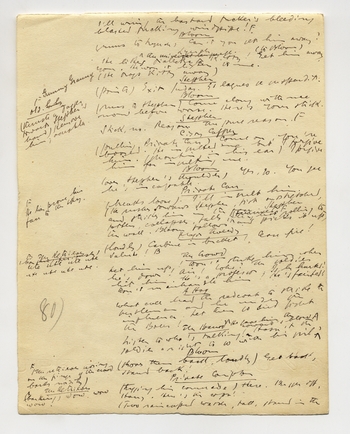
James Joyce, Ulysses: autograph manuscript, “Circe” episode. [Fall, 1920] EL4. J89ul 922 MS

EL4. J89ul 922 MS