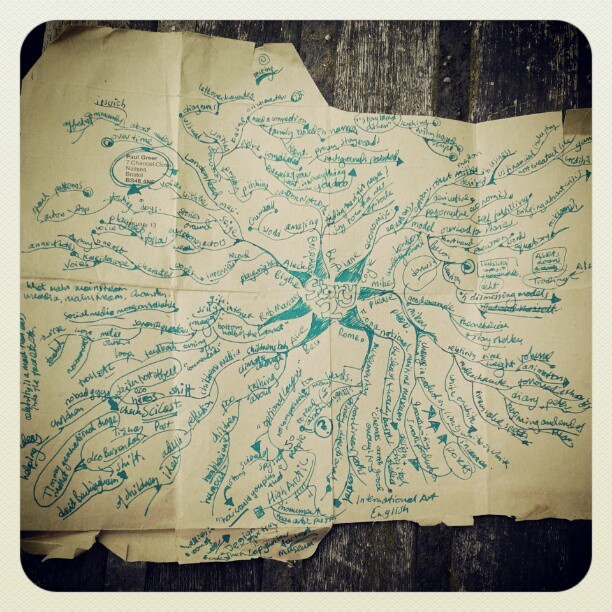
Why do I need mind-maps?
“There are a few things you need to know:
First, I am lucky enough to have a number of positive impacts of dyslexia. One of those is that once I have acquired new information I can process it very rapidly and often have multiple thoughts at once. That often means that I can solve the most complex problems faster than others.
Second, I have a problem writing and thinking at the same time. I believe it is to do with short-term memory. However, the bottom line is that I keep forgetting where I am in the overall flow of the thing that I am writing. As a result, my writing meanders and needs to be edited (by me) again and again until it finally expresses what I mean.
Thirdly, I see patterns in things – often before others. I use that to form and then set out compelling arguments and explanations that become very clear to readers.
Finally, I have a fairly precise use of language and so – whilst not finding it easy to write – am a fierce critic of my own work. So that means the editing can take a very long time.”
from MindMaps are the answer…. what’s the question?




![Richard Waller Tabula colorum physiologica … [Table of physiological colors] Philosophical Transactions of the Royal Society of London, 1686](https://library.si.edu/sites/default/files/39088018207936-1000.jpg)
 Paul Greer