Theorists of Colour (1665-1810)

Color is always representative. Newton’s original wheel included “musical notes correlated with color.” By the end of the 18th century, color theory had become increasingly tied to psychological theories and typologies, as in the wheel above, the “rose of temperaments,” made by Goethe and Friedrich Schiller in 1789 to illustrate “human occupations and character traits,” the Public Domain Review notes, including “tyrants, heroes, adventurers, hedonists, lovers, poets, public speakers, historians, teachers, philosophers, pedants, rulers,” grouped into the four temperaments of humoral theory.

via Open Culture

Far Flung Flora and Fauna

German biologist and artist Ernst Haeckel dedicated his life studying far flung flora and fauna, drawing each of their peculiar specificities with an immense scientific detail. Haeckel made hundreds of such renderings during his lifetime, works which were used to explain his biological discoveries to a wide audience. In addition to these visual masterpieces, Haeckel also discovered many microbes, and coined several scientific terms commonly known today, such as ecology, phylum, and stem cell.


A new book from Taschen titled The Art and Science of Ernst Haeckel outlines the 19th-century artist-biologist’s most important visual works and publications across a hefty 704 pages. The compendium includes 450 drawings, watercolors, and sketches from his research, which was in large support of Darwin’s theory of evolution. Most notably the book contains the Kunstformen der Natur (Art Forms in Nature), a collection of 100 prints of varying organisms originally published between 1899 and 1904.

You can learn more about the collection of illustrations and Haeckel’s discoveries on Taschen’s website. (via Fast Co. Design) (via Colossal)

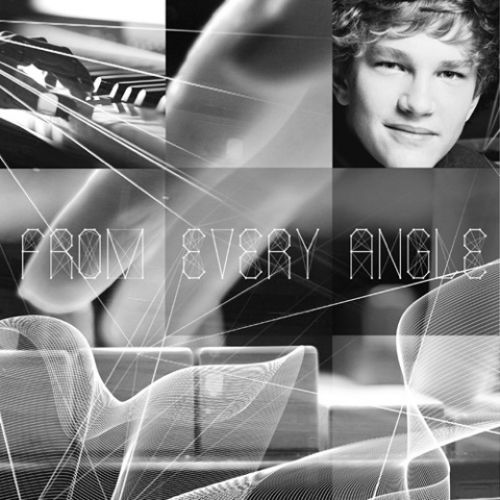
Lisiecki: From Every Angle

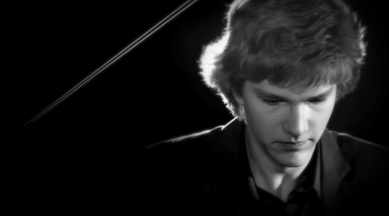
This week saw the very first Bristol Proms get underway and on Monday night BDH collaborated with the Bristol Old Vic, the Watershed and a fantastic team of technicians to showcase the extraordinary Jan Lisieki playing Chopin’s Etudes.

display

Lisieki performed on the stage of the Old Vic surrounded by cameras and scanning equipment, whilst a team of film makers technicians and artists weaved a live visual interpretation of the event, including CGI (by me), scanned versions of Jan and multiple camera angles, which was beamed over to the Watershed as a unique live experience to be enjoyed by a clapping and cheering crowd.

It was a great experience working on a live event with such a great crew, many lessons were learned and hopefully we can do more in the future, there is so much to explore with the live generation of 3D animation and it’s interaction with a real time event.

Here’s some grabs from the days leading up to the concert:

An edited and finessed version of the Watershed feed will be shown on Saturday night on More4 as part of their Piano Night.