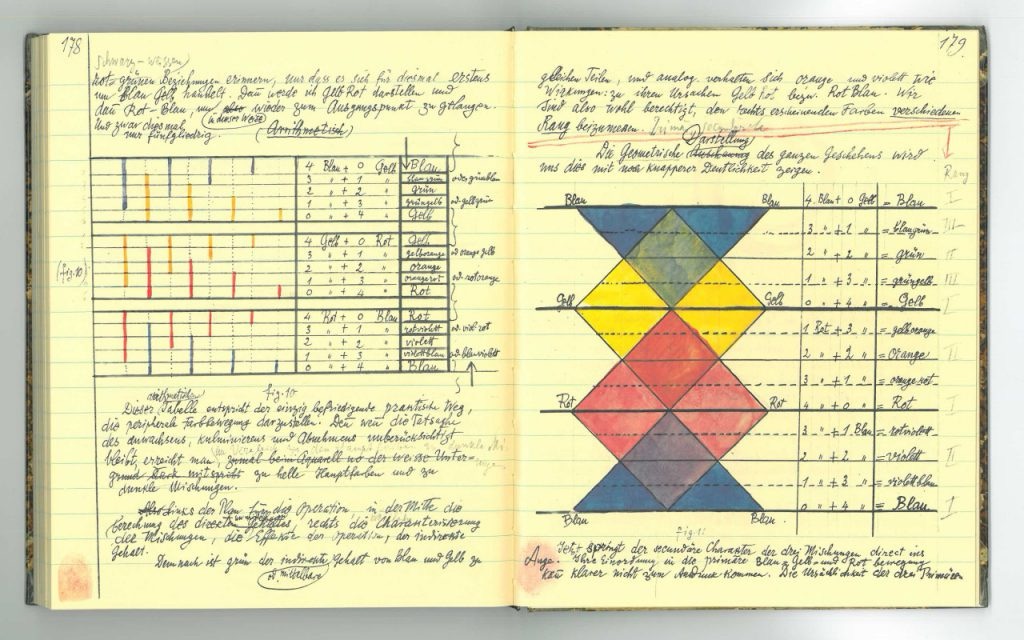
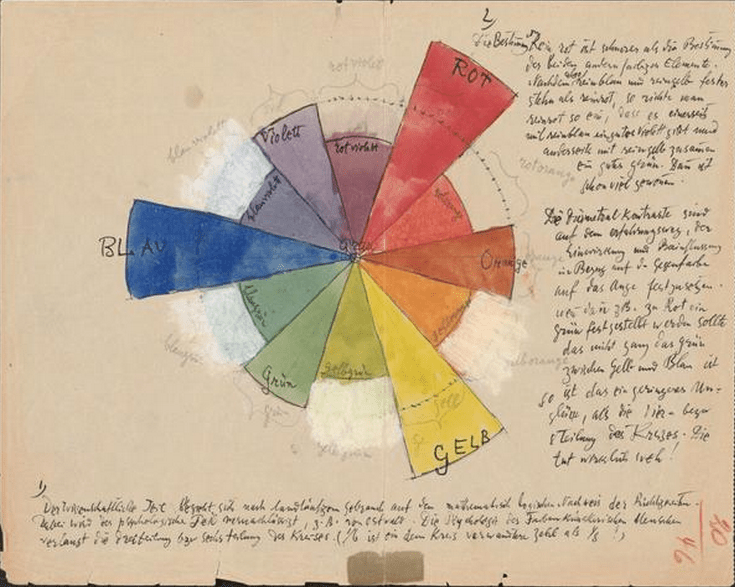
“The best way to learn is drawing, even if you’re no Leonardo Da Vinci.”

‘Our anxiety around drawing starts around puberty, when we begin self-critiquing our abilities to render a perfect likeness, Dowd says. “The self-consciousness associated with ‘good’ drawing, or a naive form of realism, is mostly to blame,” he explains to Quartz. ”If you take a step back, and define drawing as symbolic mark-making, it’s obvious that all human beings draw. Diagrams, maps, doodles, smiley faces: These are all drawings!”’

– Drawing shouldn’t be about performance, but about process.

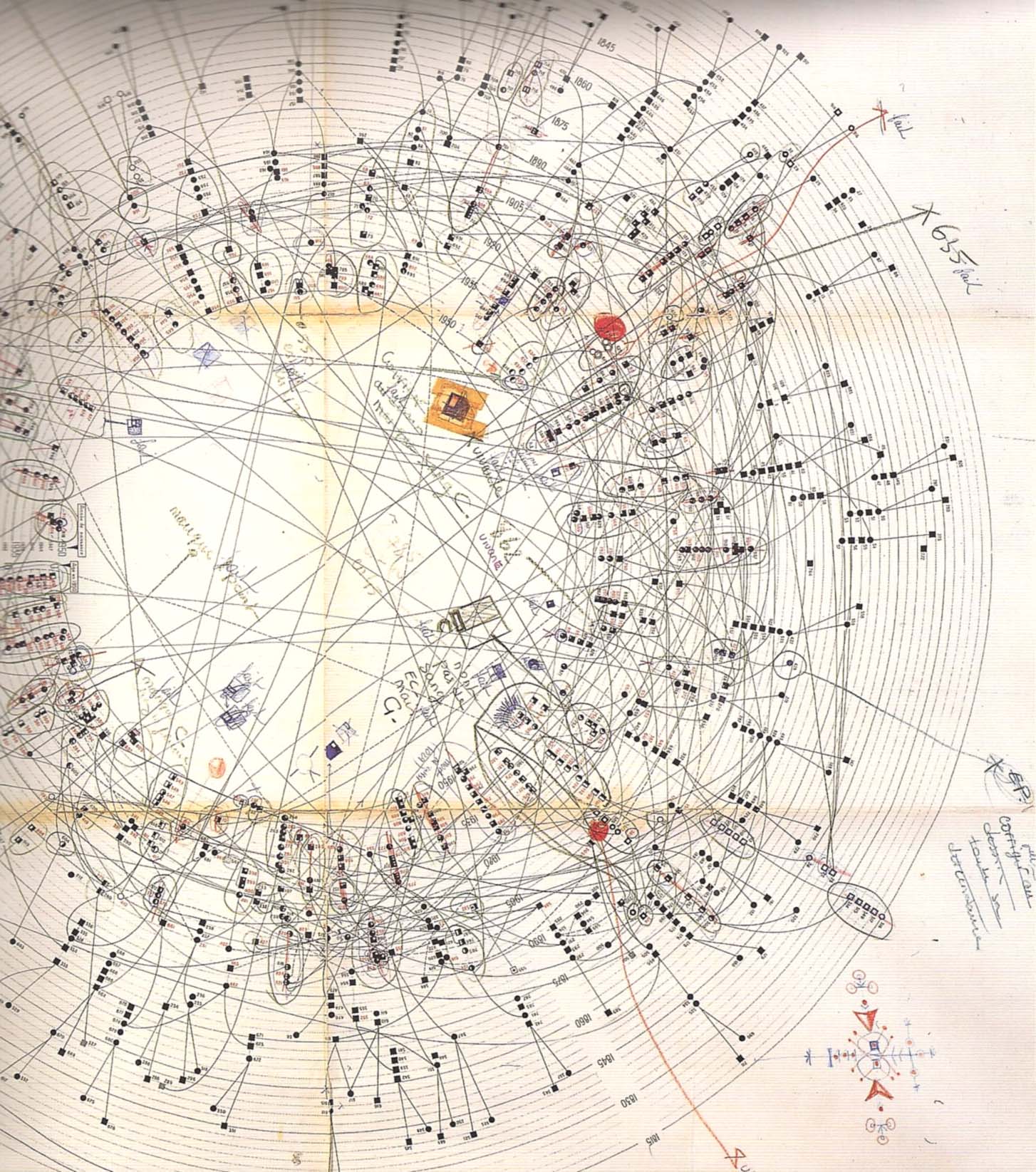
Inuit Genealogy

reblogging johnfass

johnfass's avatarfevered imaginings

Currently working on a research project related to Canadian and Greenland Inuit with R0gMedia in Berlin. The diagram above is a genealogical diagram made in the mid 1950s by anthropologist Jean Malaurie, the first of its kind. It’s a hand made radial drawing, Malaurie has a whole series of them in his apartment in Paris, along with his extensive personal archive of research materials including photos, films, notebooks, drawings. While the broader aims of the project are to find an institution willing to host the collection, I’m trying to make an digital artefact out of this diagram that could bring the information alive and demonstrate how historical anthropological materials can be made relevant and contextualised for present and future generations. DIS2012 published a paper on this project for a workshop about slow technology. Slow technology DIS2012
View original post

Notes, writing, diagrams, and index symbols by Walter Benjamin


Walter Benjamin notes


Walter Benjamin notes


Walter Benjamin notes


Walter Benjamin notes


Walter Benjamin notes


Walter Benjamin notes


Walter Benjamin notes


Walter Benjamin notes


Walter Benjamin notes


Walter Benjamin notes

(source)

reblogging austinkleon:

Alan Wall’s reflections on Benjamin:

“Of all writers Benjamin was the most aware of the technologies that made writing possible. Although there had been ‘reservoir pens’ of one sort or another for centuries, the nineteenth century delivered the first true fountain pens (and a little later ball-point pens). These eliminated the need for the nib to be kept in close proximity to an inkpot, thus making the activity of writing more itinerant. And Benjamin was certainly an itinerant writer, writing in apartments, libraries, cafes and bars. He carried his pens and his notebooks around, as he often did copies of some of the images that most engaged him. He was a mobile intelligence unit moving through the streets of a city. ”

On his notation system for The Arcades Project:

“[Benjamin] attempted “to integrate the principle of the montage as an epistemological technique.” Color charts, schemata, and diagrams act as guiding principles to navigate the thicket of excerpts and quotations. Benjamin’s personal color-coding shows an attempt to make order within the vast constellation of his own notes—a tension between an impulse toward structure and the potential of the open field of his interests.”

The Corps of Discovery carried out this order with all due diligence. Not only did Captains Lewis and Clark keep notebooks on their observations, but the other soldiers did as well, producing in all more than one million words during their travels.

“Lewis and Clark kept 18 of what Jefferson called their “traveling pocket journals;” 13 were larger notebooks bound in red morocco leather, 4 were smaller and bound in paper board, and one was Clark’s field notebook bound in elkskin. Clark carried this elkskin field book during times of inclement weather or while canoeing down a river in order not to risk damage to one of the larger red notebooks. He would then copy his field notes into the red notebooks later on. When all the notebooks were not in use they were kept protected in tin cases. When their pages had been completely filled, the notebooks were sealed safely shut inside the cases for a safe return to Washington.”

The Pocket Notebooks of 20 Famous Men

Sketches of Nikolai Gogol, Count Fyodor Petrovich Tolstoy, and other Russian artists by poet Alexander Pushkin.


Sketches of Nikolai Gogol, Count Fyodor Petrovich Tolstoy, and other Russian artists by poet Alexander Pushkin.

“Pushkin would frequently jot down these charming black and white sketches both in his personal writings, and in the margins of his manuscripts. The final image, a page from Eugene Onegin, is a terrific example of his notebooks. Alongside the text, Pushkin included a sketch of a well-known Russian painter and aristocrat, with whom the author was certainly acquainted: Count Fyodor Petrovich Tolstoy (not to be confused with the Leo Tolstoy).”

—  @iliablinderman


sketchbook/notebook

“Some people use their sketchbook/notebooks to help them work things out. We use them to imagine things, figure out how to make something, help us see and listen, and to help us lay out certain problems we are wondering about in a way that lets us know more about them. I like this kind of sketchbook/workbook best the kind that’s more of a place  to mess around than a place to make skillful pictures. Although it turns out that spending a certain amount of sincere time messing around in your notebook it just seems to lead to some beautiful pages anyway.”

Lynda Barry