
“Thomas Jefferson’s pocket notebooks, composed of erasable ivory plates on which he would write scientific observations and memoranda before copying them into notebooks in the evening. At Monticello.”
“Thomas Jefferson’s pocket notebooks, composed of erasable ivory plates on which he would write scientific observations and memoranda before copying them into notebooks in the evening. At Monticello.”
“What I Have Lived For
Three passions, simple but overwhelmingly strong, have governed my life: the longing for love, the search for knowledge, and unbearable pity for the suffering of mankind. These passions, like great winds, have blown me hither and thither, in a wayward course, over a great ocean of anguish, reaching to the very verge of despair.
I have sought love, first, because it brings ecstasy – ecstasy so great that I would often have sacrificed all the rest of life for a few hours of this joy. I have sought it, next, because it relieves loneliness—that terrible loneliness in which one shivering consciousness looks over the rim of the world into the cold unfathomable lifeless abyss. I have sought it finally, because in the union of love I have seen, in a mystic miniature, the prefiguring vision of the heaven that saints and poets have imagined. This is what I sought, and though it might seem too good for human life, this is what—at last—I have found.With equal passion I have sought knowledge. I have wished to understand the hearts of men. I have wished to know why the stars shine. And I have tried to apprehend the Pythagorean power by which number holds sway above the flux. A little of this, but not much, I have achieved.
Love and knowledge, so far as they were possible, led upward toward the heavens. But always pity brought me back to earth. Echoes of cries of pain reverberate in my heart. Children in famine, victims tortured by oppressors, helpless old people a burden to their sons, and the whole world of loneliness, poverty, and pain make a mockery of what human life should be. I long to alleviate this evil, but I cannot, and I too suffer.
This has been my life. I have found it worth living, and would gladly live it again if the chance were offered me.”
““Spirit” comes from the Latin word “to breathe.” What we breathe is air, which is certainly matter, however thin. Despite usage to the contrary, there is no necessary implication in the word “spiritual” that we are talking of anything other than matter (including the matter of which the brain is made), or anything outside the realm of science. On occasion, I will feel free to use the word. Science is not only compatible with spirituality; it is a profound source of spirituality. When we recognize our place in an immensity of light years and in the passage of ages, when we grasp the intricacy, beauty and subtlety of life, then that soaring feeling, that sense of elation and humility combined, is surely spiritual. So are our emotions in the presence of great art or music or literature, or of acts of exemplary selfless courage such as those of Mohandas Gandhi or Martin Luther King Jr. The notion that science and spirituality are somehow mutually exclusive does a disservice to both.”
more here
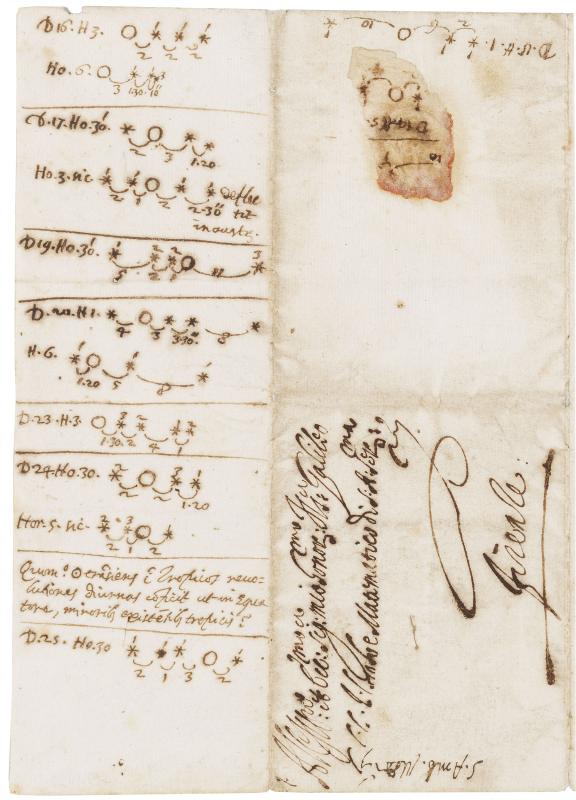
“On this scrap of paper (an unfolded envelope), Galileo recorded the positions of four satellites of Jupiter over a period of several nights. He had observed the moons with the aid of his newly constructed telescope and published his findings in his revolutionary book The Starry Messenger (1610). He then worked to define more precisely the periods of the orbits of the Jovian moons, setting up his telescope night after night and making notes such as these. In a radical departure from his university training, Galileo insisted that scientific theory be grounded in observation and physical evidence rather than reliance on ancient authority.”
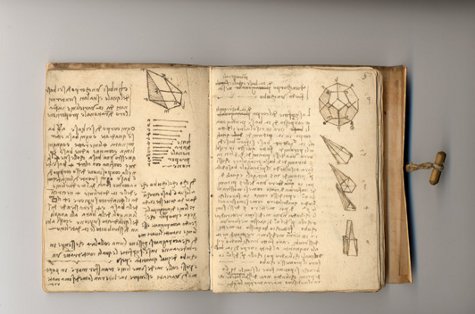
“He frequently wrote on loose sheets of paper that he kept barely organized; he made his own “notebooks” by folding the sheets and wrapping them in fabric. But when he turned thirty he also began writing in leather-bound journals. And he carried small bound notebooks with him at all times. He kept these tiny 3.5X2.5 notebooks tied to his belt, always at the ready for his thoughts, observations, drawings, and ideas.”
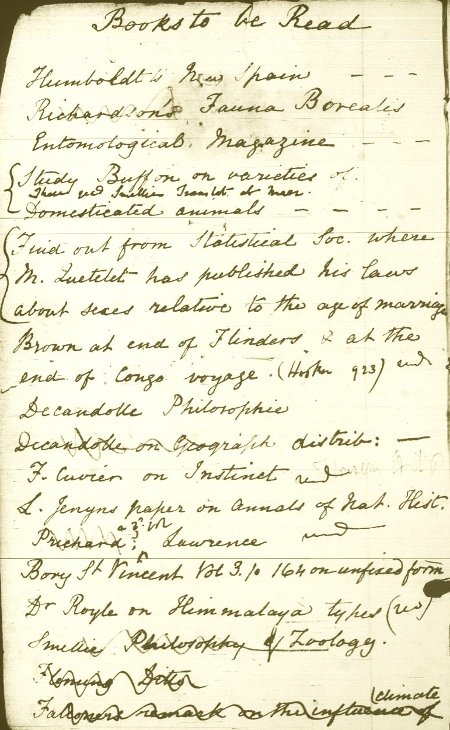
via proustitute


 Paul Greer