
from Philadelphia Museum Of Art
maker unknown

via bloodmilk
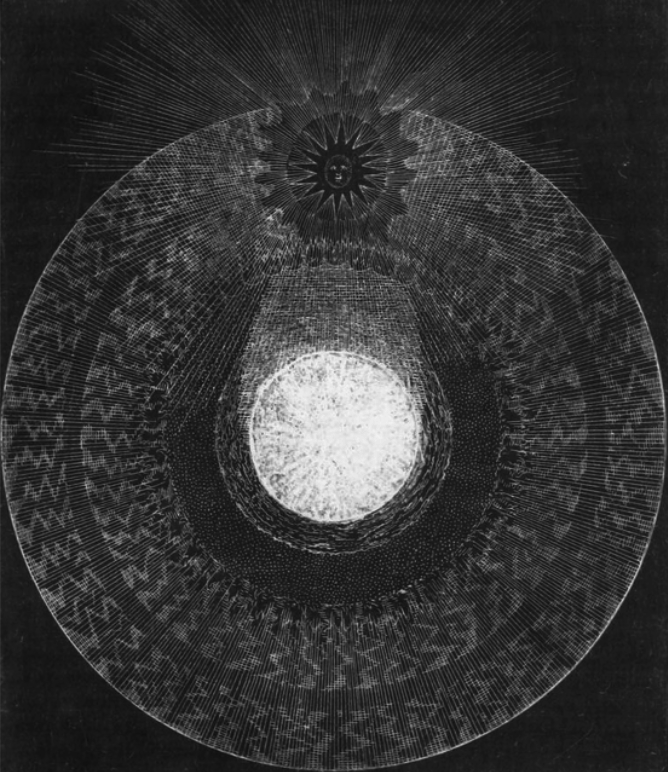
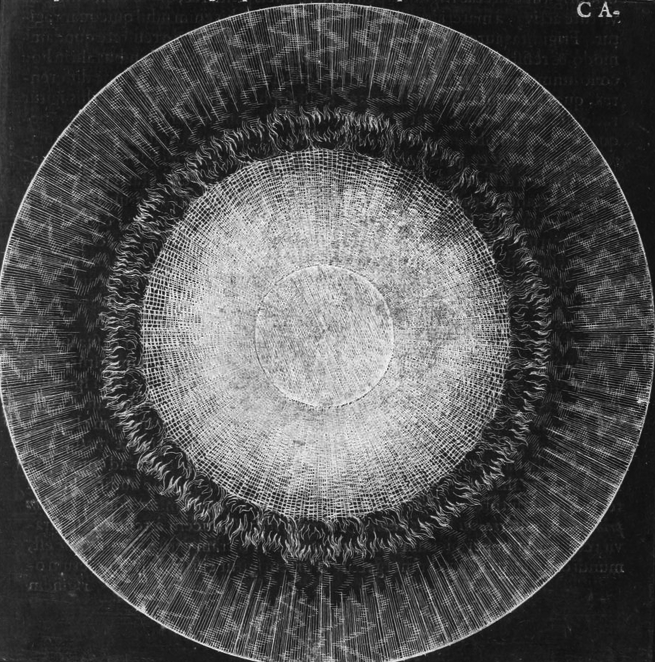
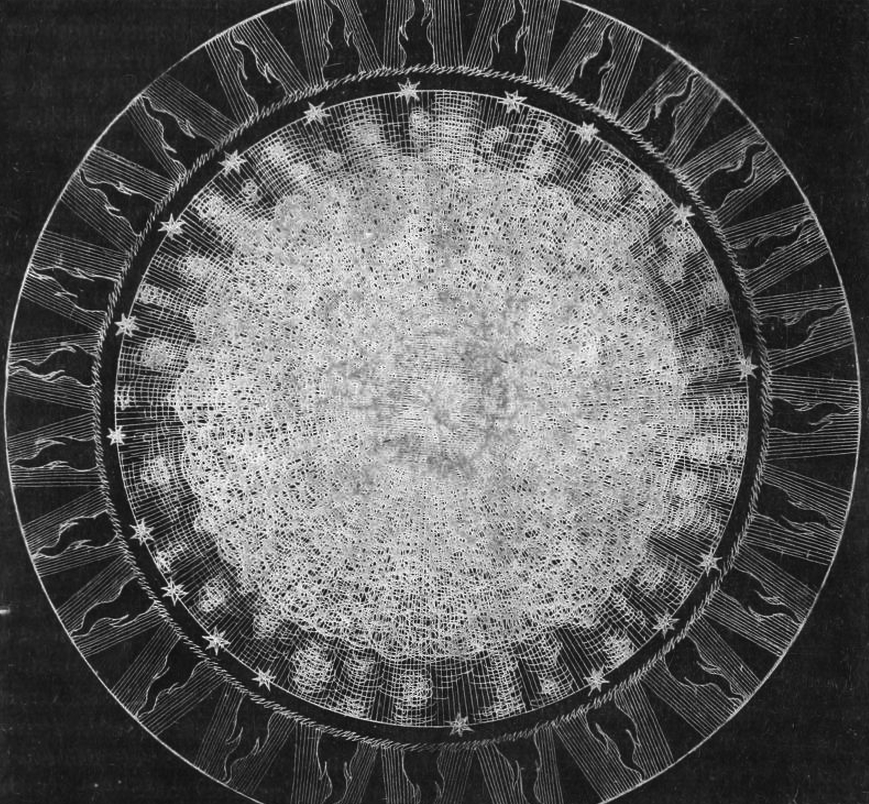
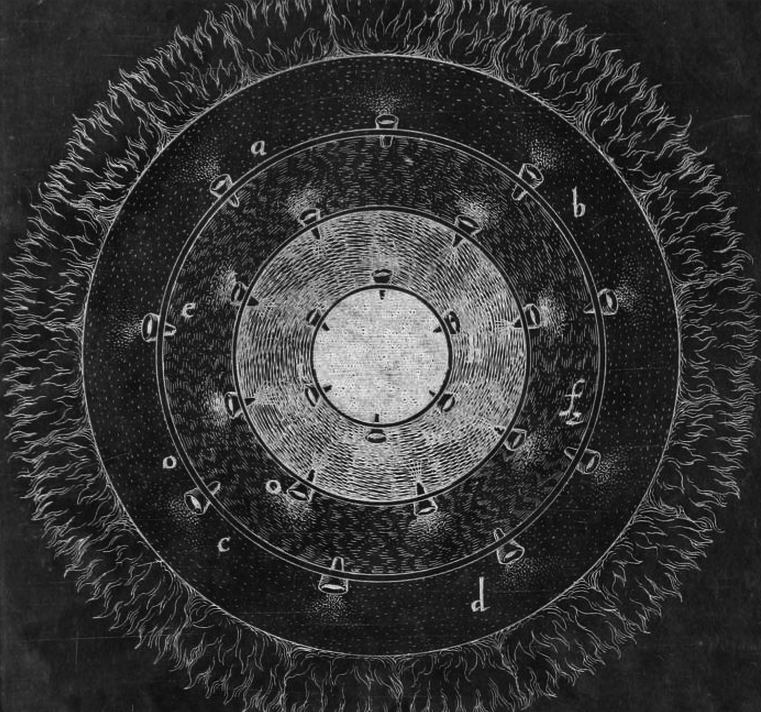
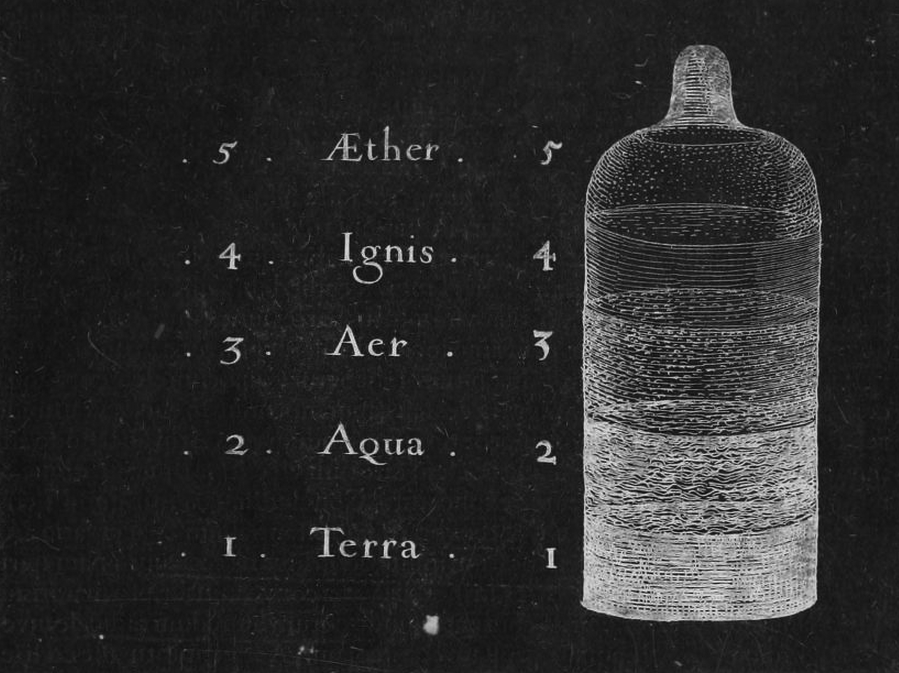
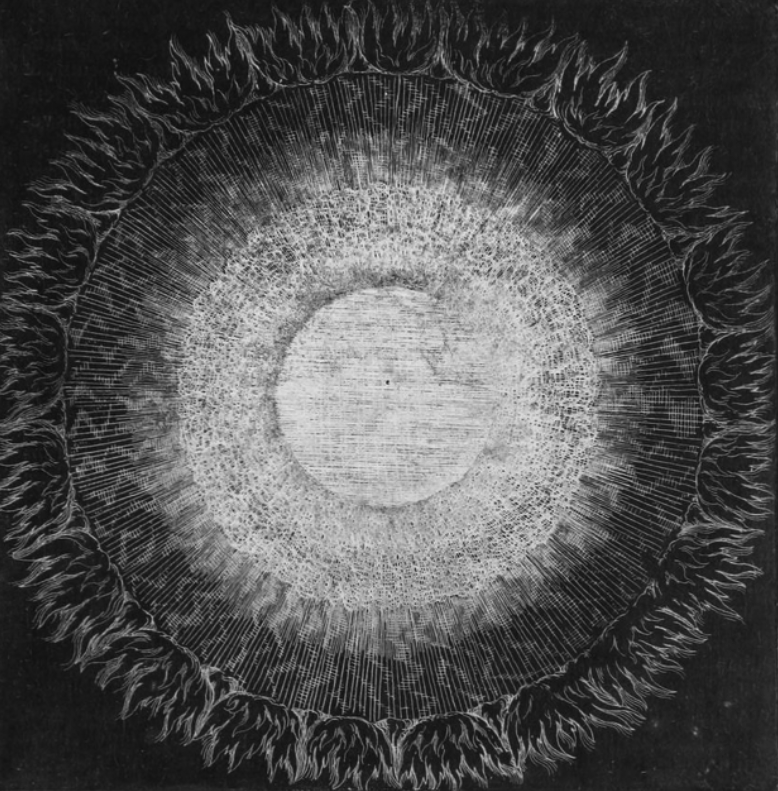
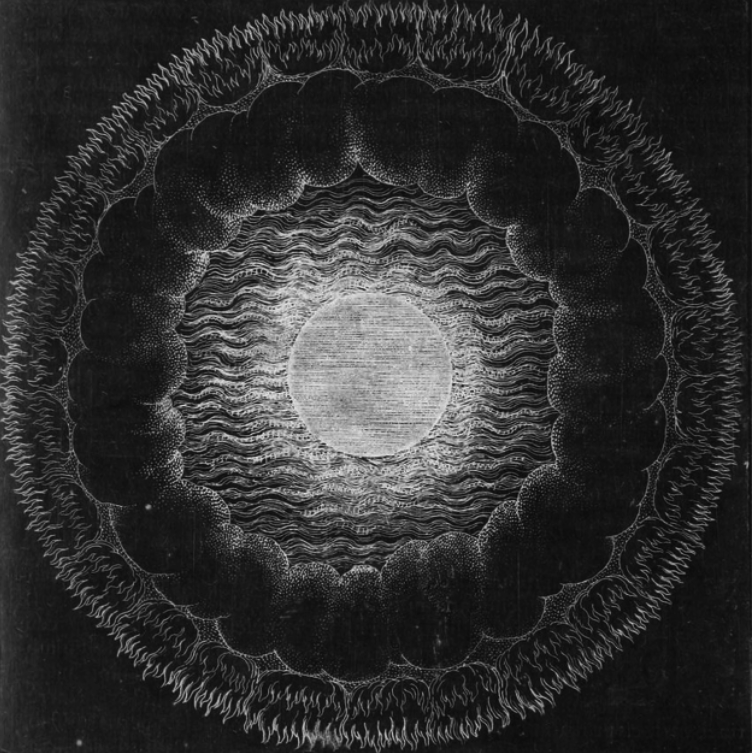
“Robert Fludd was a respected English physician (of Welsh origins) employed at the court of King James I of England. He was a prolific writer of vast, multi-volume encyclopaedias in which he discussed a universal range of topics from magical practices such as alchemy, astrology, kabbalism and fortune-telling, to radical theological thinking concerning the inter-relation of God with the natural and human worlds. However, he also proudly displayed his grasp of practical knowledge, such as mechanics, architecture, military fortifications, armaments, military manoeuvres, hydrology, musical theory and musical instruments, mathematics, geometry, optics and the art of drawing, as well as chemistry and medicine. Fludd used the common metaphor for the arts as being the “ape of Nature,” a microcosmic form of the manner in which the universe itself functioned.
“Fludd’s most famous work is the History of the Two Worlds (Utriusque Cosmi … Historia, 1617-21) published in five volumes by Theodore de Bry in Oppenheim. The two worlds under discussion are those of the Microcosm of human life on earth and the Macrocosm of the universe (which included the spiritual realm of the Divine).”
““Spirit” comes from the Latin word “to breathe.” What we breathe is air, which is certainly matter, however thin. Despite usage to the contrary, there is no necessary implication in the word “spiritual” that we are talking of anything other than matter (including the matter of which the brain is made), or anything outside the realm of science. On occasion, I will feel free to use the word. Science is not only compatible with spirituality; it is a profound source of spirituality. When we recognize our place in an immensity of light years and in the passage of ages, when we grasp the intricacy, beauty and subtlety of life, then that soaring feeling, that sense of elation and humility combined, is surely spiritual. So are our emotions in the presence of great art or music or literature, or of acts of exemplary selfless courage such as those of Mohandas Gandhi or Martin Luther King Jr. The notion that science and spirituality are somehow mutually exclusive does a disservice to both.”
more here
“Hilma af Klint was a Swedish artist and mystic whose paintings were amongst the first abstract art. She belonged to a group called ‘The Five’ and the paintings or diagrams were a visual representation of complex philosophical ideas.”

“At the Academy of Fine Arts she met Anna Cassel, the first of the four women with whom she later worked in “The Five” (de Fem), a group of artists who shared her ideas. The group of female artists The Five was engaged in the paranormal and regularly organized spiritistic séances. They recorded in a book a completely new system of mystical thoughts in the form of messages from higher spirits, called The High Masters (“Höga Mästare”). One, Gregor, spoke thus: “all the knowledge that is not of the senses, not of the intellect, not of the heart but is the property that exclusively belongs to the deepest aspect of your being…the knowledge of your spirit”.”

“The pictures were painted directly through me, without any preliminary drawings, and with great force. I had no idea what the paintings were supposed to depict; nevertheless I worked swiftly and surely, without changing a single brush stroke.”

 Paul Greer