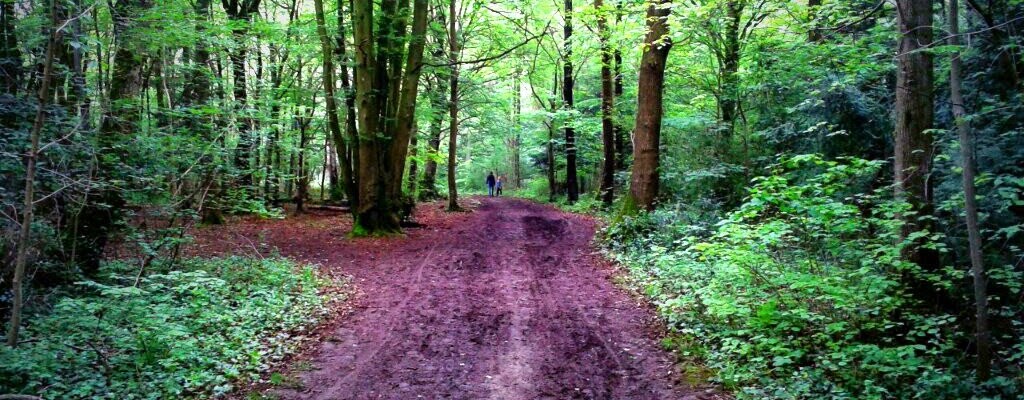
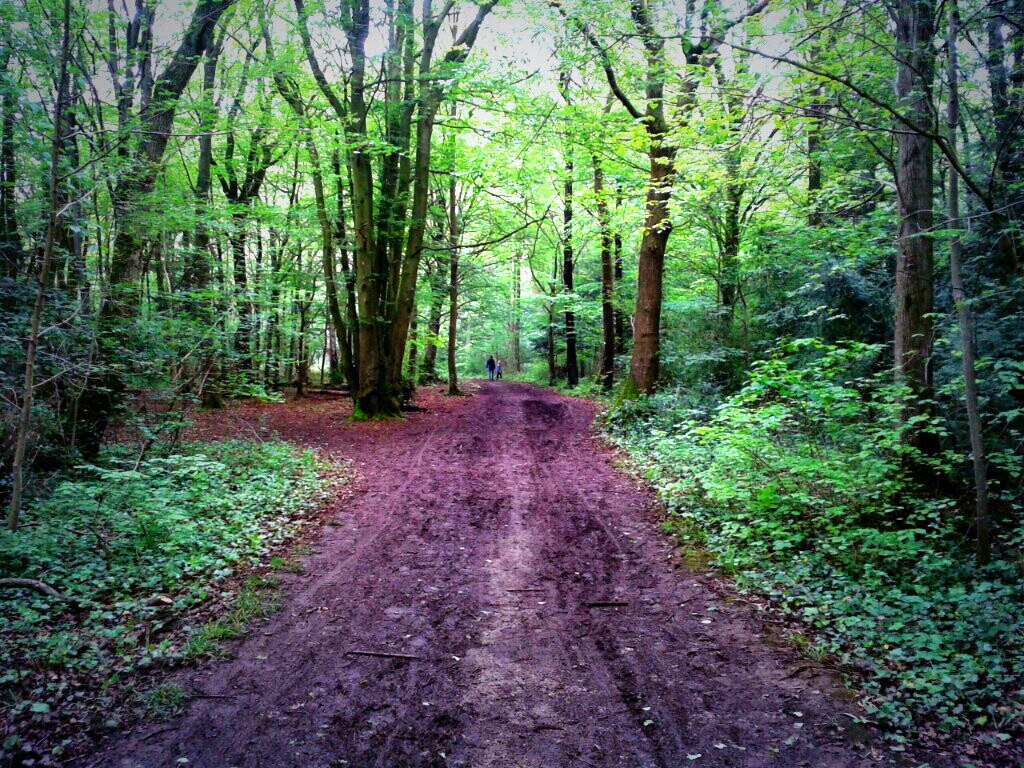
Nature’s particular gift to the walker, through the semi-mechanical act of walking — a gift no other form of exercise seems to transmit in the same high degree — is to set the mind jogging, to make it garrulous, exalted, a little mad maybe — certainly creative and suprasensitive, until at last it really seems to be outside of you and as if it were talking to you whilst you are talking back to it. Then everything gradually seems to join in, sun and the wind, the white road and the dusty hedges, the spirit of the season, whichever that may be, the friendly old earth that is pushing life firth of every sort under your feet or spell-bound in a death-like winter trance, till you walk in the midst of a blessed company, immersed in a dream-talk far transcending any possible human conversation. Time enough, later, for that…; here and now, the mind has shaken off its harness, is snorting and kicking up heels like a colt in a meadow.–
walking
A Leafy Weekend
Theory of the Dérive
“One of the basic situationist practices is the dérive [literally: “drifting”], a technique of rapid passage through varied ambiances. Dérives involve playful-constructive behavior and awareness of psychogeographical effects, and are thus quite different from the classic notions of journey or stroll. In a dérive one or more persons during a certain period drop their relations, their work and leisure activities, and all their other usual motives for movement and action, and let themselves be drawn by the attractions of the terrain and the encounters they find there. Chance is a less important factor in this activity than one might think: from a dérive point of view cities have psychogeographical contours, with constant currents, fixed points and vortexes that strongly discourage entry into or exit from certain zones. But the dérive includes both this letting-go and its necessary contradiction: the domination of psychogeographical variations by the knowledge and calculation of their possibilities.”
 Paul Greer