Modes of Processing: Notes from a Comics Roundtable

Processing words and images together is like looking at a person’s face while listening to them speak. Amazing! This makes me think about how reading comics is like living in the world; there are multiple modes of processing required of us. There’s so much information being communicated in a person’s face when they speak. But sometimes the person’s face communicates information that, juxtaposed with what they are saying, changes the meaning. Like when my mom and I say “Hate you” instead of “Love you,” there’s a certain facial expression that goes with the words that makes “Hate you” = “Love you.” I guess I’ve always liked modes of communication that are less direct than they appear.

Amy Kurzweil (Flying Couch)

I draw because I couldn’t communicate in the usual ways growing up. I was too shy, or weird, or something. Drawing has never been private for me; it was always the only non-private thing. I never made comics as a hobby; I chose the medium consciously, as an adult, when my parents and teachers and classmates stopped being the right audience for my drawings, and I needed an audience and a more concrete medium I could plug into. I wouldn’t write a story I didn’t want to share.

Liana Finck (Twitter)

My artistic advice to someone just getting started is: Don’t worry what other people are doing, or what they think you should do; just have fun. Practice. Experiment. If you haven’t found your personal style yet, don’t worry, it will come to you. You need to make a lot of shit before you start making gold, and even when it’s gold, it’ll probably still look like shit to you sometimes. Also: Don’t expect comics to make you rich, or even make you a living. Not saying it can’t happen, but it’s about as likely as winning the lottery.

Mari Naomi (website)

It’s all worth reading.

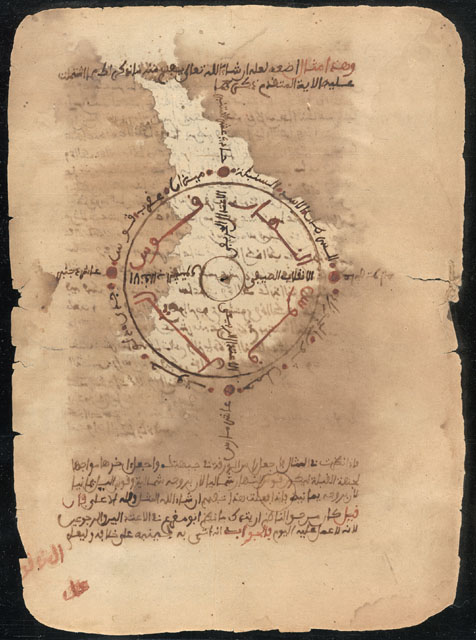
The Timbuktu Manuscripts 13C+

timbuktu-manuscripts-astronomy-tables

Timbuktu Manuscripts or (Tombouctou Manuscripts) is a blanket term for the large number of historically important manuscripts that have been preserved for centuries in private households in Timbuktu, Mali. The collections include manuscripts about art, medicine, philosophy, and science, as well as priceless copies of the Quran. The number of manuscripts in the collections has been estimated as high as 700,000.

loc_timbuktu_manuscripts_amm0001rs

The majority of manuscripts were written in Arabic, but many were also in local languages, including Manding, Songhay and Tamasheq. The dates of the manuscripts ranged between the late 13th and the early 20th centuries (i.e., from the Islamisation of the Mali Empire until the decline of traditional education in French Sudan). Their subject matter ranged from scholarly works to short letters. The manuscripts were passed down in Timbuktu families and were mostly in poor condition.[4] Most of the manuscripts remain unstudied and uncatalogued, and their total number is unknown, affording only rough estimates. A selection of about 160 manuscripts from the Mamma Haidara Library in Timbuktu and the Ahmed Baba collection were digitized by the Tombouctou Manuscripts Project in the 2000s.

timbuktu-manuscripts-astronomy-mathematics

With the demise of Arabic education in Mali under French colonial rule, appreciation for the medieval manuscripts declined in Timbuktu, and many were being sold off. Time magazine related the account of an imam who picked up four of them for $50 each. In October 2008 one of the households was flooded, destroying 700 manuscripts.

from Wikipedia via Muslim Culture

If I don’t do it, I’ll stop doing it.

Great interview with Laurie Anderson on reality, virtual reality, working practices and the election. Worth reading all of it really.

This on Philip Glass and daily work:

I’ve been playing with Phil a lot lately. It’s been really, really interesting and fun, really nice. I remember one particular thing, the summer before this we were playing Ravello. It was a hard day. We had traveled there. We rehearsed. We’d done the show. We’d gone out for an endless dinner. It was two in the morning and we came back. I had to leave for Rome in a couple of hours. I was just packing and doing stuff. I came up from the garden and he was there with [his girlfriend] Sari. They had just done two hours of yoga. I was like, “Phil, it’s four in the morning. Couldn’t you do it tomorrow?” He said, “No, I wouldn’t of done it today. I need to do it everyday. If I don’t do it, I’ll stop doing it.” He’s like that with music, too. He’s so disciplined. It’s amazing. I’ve known Phil for many decades. He’s always been like that. He’s dedicated. He puts the time in. He’s also massively, musically talented… he’s a genius, and a hard working genius.


18th November 2016

Write down what you value; what standards you hold for yourself and for others. Write about your dreams for the future and your hopes for your children. Write about the struggle of your ancestors and how the hardship they overcame shaped the person you are today.
Write your biography, write down your memories. Because if you do not do it now, you may forget.
Write a list of things you would never do. Because it is possible that in the next year, you will do them.
Write a list of things you would never believe. Because it is possible that in the next year, you will either believe them or be forced to say you believe them.

This is how to be your own light

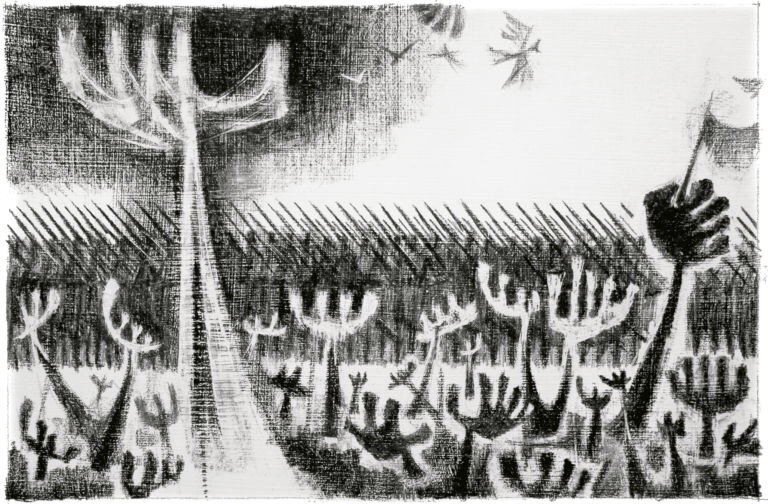
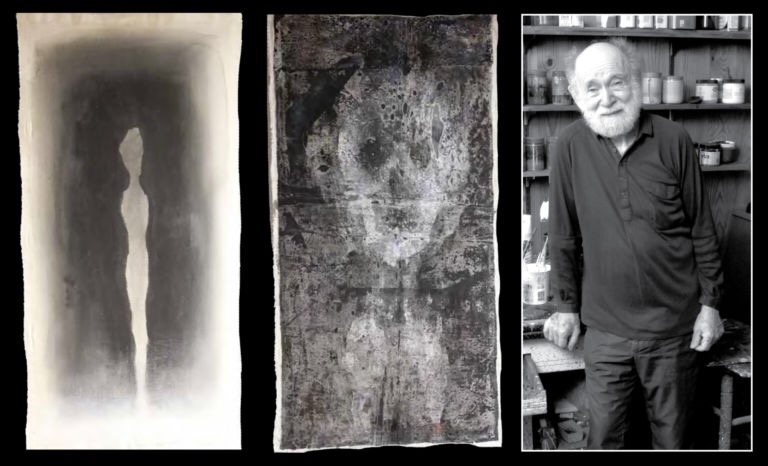
Si Lewen’s Parade: An Artist Odyssey

“The Parade” is a modernist dirge of a book that still packs an emotional wallop, telling the story of mankind’s recurring and deadly war fever. Einstein wrote Si a fan letter after seeing the drawings in 1951, saying, “Our time needs you and your work!” It doesn’t take a genius to see that this is still true today, so Si and I collaborated on an expanded “director’s cut” version of “The Parade,” remastered from the original art and published, this month, as a long accordion-fold book.

Art Speigelman

#6DoF

Six degrees of freedom (6DoF) refers to the freedom of movement of a rigid body in three-dimensional space. Specifically, the body is free to change position as forward/backward (surge), up/down (heave), left/right (sway) translation in three perpendicular axes, combined with changes in orientation through rotation about three perpendicular axes, often termed pitch, yaw, and roll.

wiki

This is something that will be crucial to any future plans of VR, AR and MR.

As a CGI artist I am fluent with navigating myself around a 3D space using a Wacom pen and a combination of customised button control and use of the ctrl/alt keys. But I was myself unfamiliar with this terminology which seems to be at the core of much development at the moment.

Obviously 360 video cannot provide full 6DoF so will naturally settle itself as different kind of medium.

New Front Page

I updated my front page with some GIFs, to jazz it up a bit, but also to simplify and to give people a better first impression of what I am about.

I’m a bit concerned the loading time might be affected by the heavy file size.

Any feed back would be greatly appreciated.

Comments open.