Carrie Fisher isn’t around any more. And that’s just horrible. As my dad said: shit happens, but some shit is worse than others. And I want everyone to remember her and all the great things she was. A wonderful writer, a fine actress, a great mother, a caring daughter, a loyal friend, a wit, a prolific present-giver, a lunatic, a legend.
FLICKERED
FLICKERY LIGHTS: (/ˈflɪkə/) (lʌɪts/) (noun) Unusual animation, things that move, experimental puppetry, stop motion, cinematographs.
“Me & My Lungs”
Watch this amazing film by Chris Price:
“Finally after quite a long wait I can share this.
An insight into my life and experiences living with Cystic Fibrosis. Being creative, finding a balance and not letting the restrictions stop me from moving forward.
A massive thank you to everyone who worked on this with me. Tim Marriott Lisa Price Al Hodgson Arthur Cox
Please share it and help raise some awareness about Cystic Fibrosis”
Animation Axis -27.05.16
“A short film depicting a dad’s influence on a young boy’s life. His judgmental character mixed with the boys fondness for his dad prove to be a toxic mix that tears away at a world of opportunity and experiences. A short animation made with oil pastels and newspaper clippings.”
Unnamed Truths by Sophie Marsh
“Bristol-based animator, Sophie Marsh created an ABC fact file filled with animals in her paper film for adults. Produced by Calling the Shots.”
The Mascot by Ladislas Starevicz
“Starewicz had become a master animator by 1933, incorporating techniques never used before and rarely since (such as moving the puppets during the actual exposure to create blurring for fast movement). His use of rear-screen projection is also surprisingly effective.”
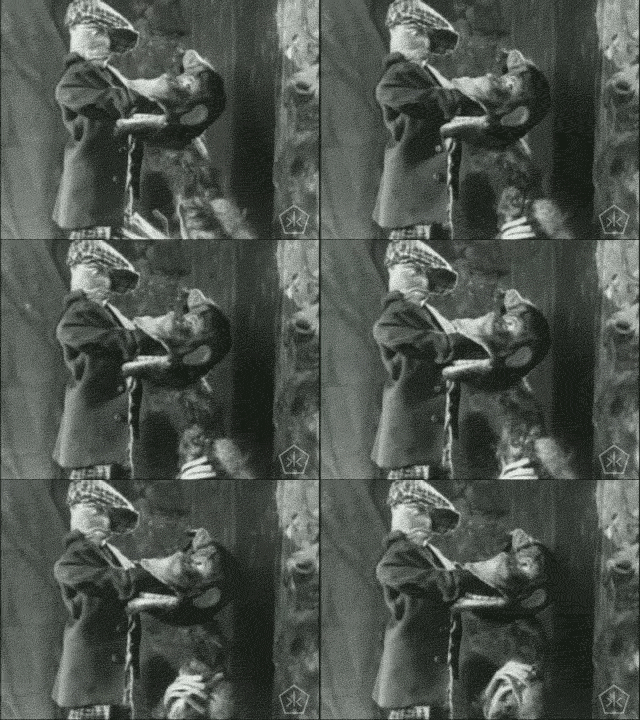
EXCERPTS >|< The Mascot (1933)
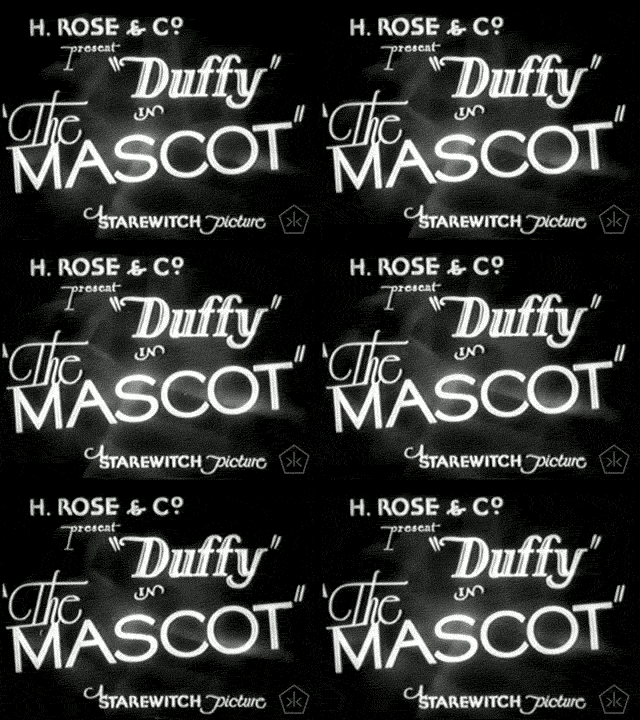
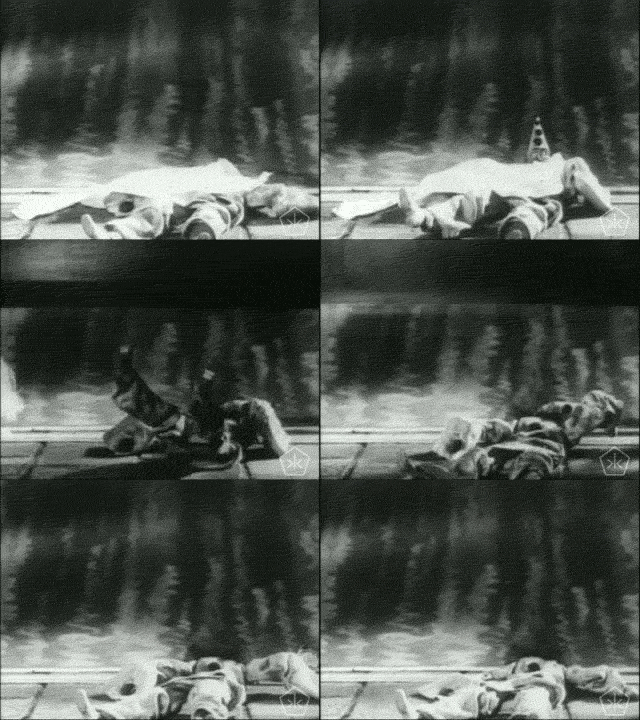
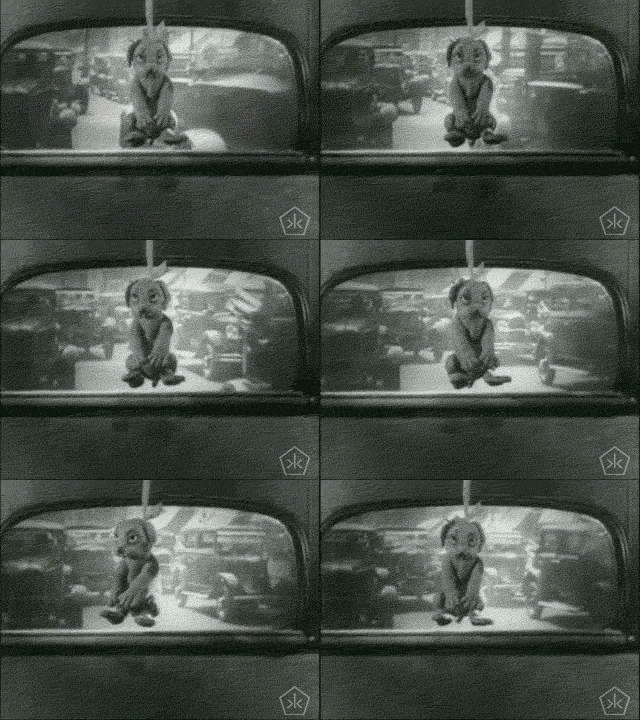
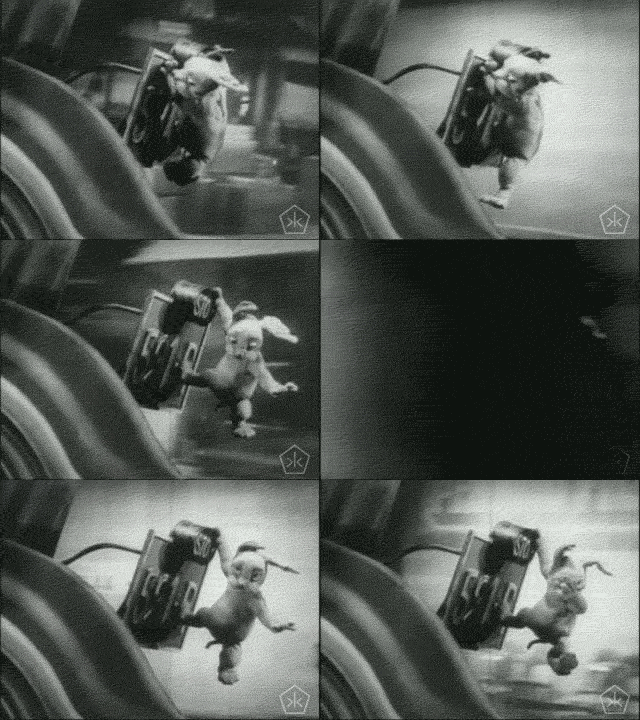
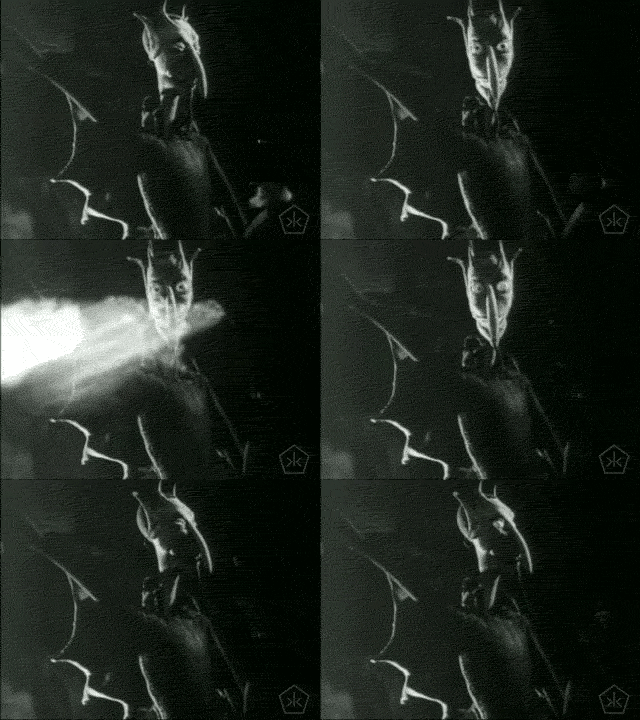
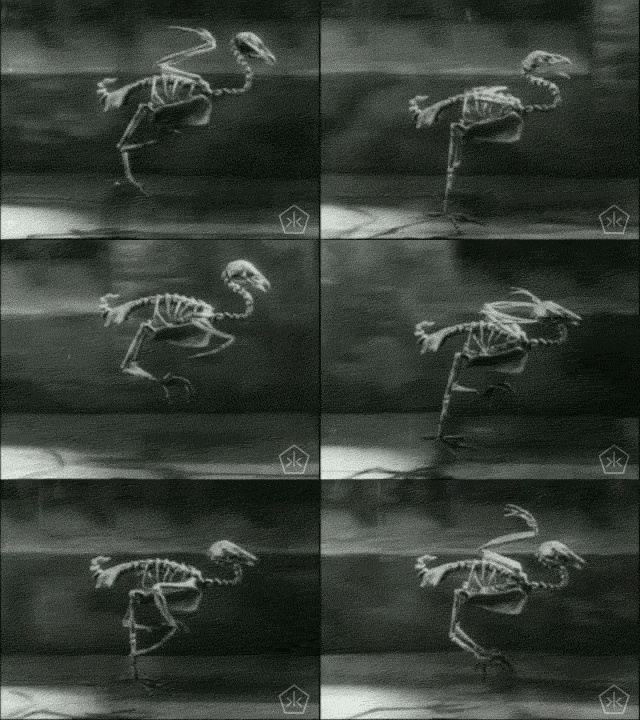
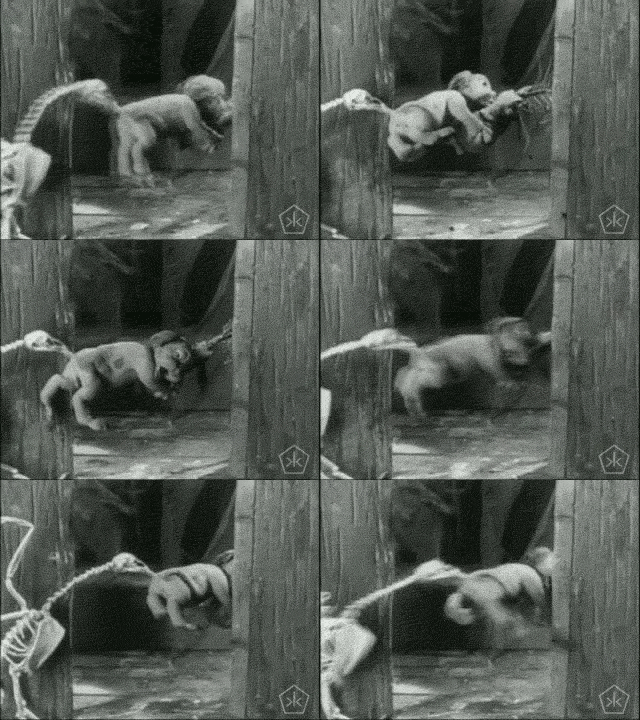
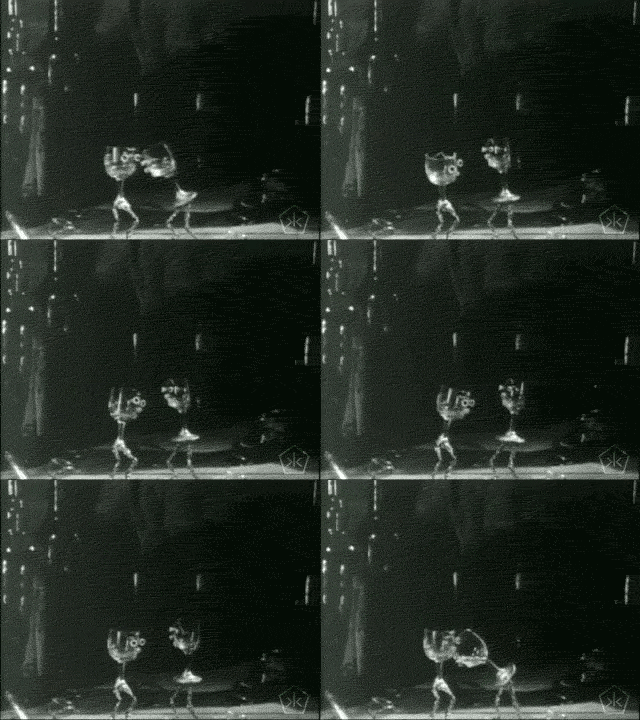
reblogging: okkultmotionpictures:
EXCERPTS >|< The Mascot (1933)
A series of gifs excerpted from The Mascot: a fabulous and surreal stop-motion film by Wladislaw Starewicz, a master animator by 1933.
We invite you to watch the full video HERE
–
Una serie di gif estratte da The Mascot: un film surreale in stop-motion di Wladislaw Starewicz, del 1933.
Vi invitiamo a vedere il video originale QUI
EXCERPTS by OKKULT MOTION PICTURES: a collection of gifs excerpted from open source/unknown/rare/controversial moving images. A digital humanities project for the diffusion of open knowledge.
>|<
“Because with linocut, once your hand carves it, it is gone.”
“I never use the “Undo” command on my computer while drawing.”
Stanley Kubrick: The Lost Tapes
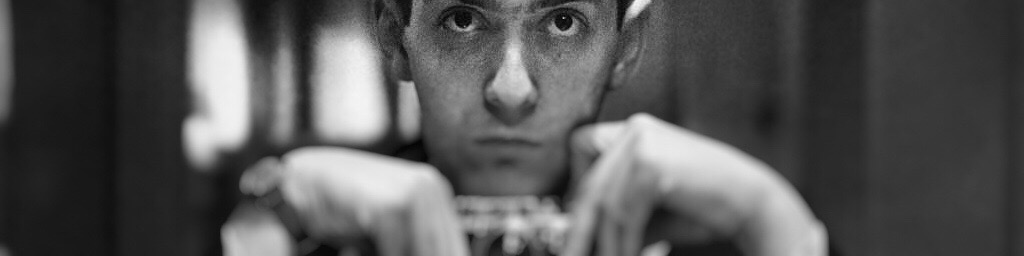
“A short documentary about the early life and feature films of the great Stanley Kubrick, as narrated by himself. The narration was pulled from interviews that took place in 1966 with Jeremy Bernstein. Bernstein was writing a profile on the director and used these recordings as a chance to gather information. As it turns out the tapes themselves were a rare and incredibly interesting insight into the mind of Kubrick. Its also a glimpse at the director before his “masterpieces” such as ‘2001 : A Space Odyssey’ and ‘The Shining’ had been made. The films mentioned are as follows :
1968 – 2001: A Space Odyssey
1964 – Dr. Strangelove or: How I Learned to Stop Worrying and Love the Bomb
1962 – Lolita
1960 – Spartacus
1957 – Paths of Glory
1956 – The Killing
1955 – Killer’s Kiss
1953 – Fear and Desire
1951 – Day of the Fight (Documentary short)
1951 – Flying Padre (Documentary short)”
“Stop Motion Animators Are Amazing”
“Animation is an in-depth, moment-by-moment exploration of space and time, of motion, both conscious and unconscious, of gravity, of weather, of material, of action and reaction. It asks, how does a leaf falling differ from a person falling? It looks at what I do with my hands when I’m worried, how I hold my shoulders while I’m waiting, where my eyes look when I’m sad. It asks, how do I position myself in relation to someone I love. Animators are observers and psychologists. They are actors inhabiting characters from the outside. They are physicists and engineers, first studying how things move in the real world, then figuring out how to represent that in an artificial one. How does a football bounce when it hits the ground? How does snow fall on a windy day? When you rub your eye, how long does it take to reposition itself properly in its socket? That’s one we explore in Anomalisa.
The thing I especially love about stop motion animation is that it has to figure out how to accomplish all this simulation in real space and actual time. A shirt has to be suspended in multiple positions in space as it is tossed toward a bed. How does it tumble as it’s tossed? All the different types of animators need to understand that trajectory, but only stop motion animators have to make it tumble in a real, albeit tiny room onto a real, albeit tiny bed. It has to be lit with real, albeit tiny lights. If the object tossed onto the bed is heavy enough—a suitcase, a person, for example—the bed has to react to the weight. Maybe the object has to bounce a little after it lands. How would it bounce? Straight up and down? Off at an angle? The animator must know. All this action has to be broken down into still photos, 24 of them for a second of screen time. Being involved in Anomalisa has made me more observant and more thoughtful about movement. I watch people walk and ask myself what it says about them. I watch myself fidget and ask the same questions. I notice gestures. I pay attention to the crazy movement of leaves in the breeze on the tree outside my window. I try to understand how those seemingly haphazard movements might be simplified but effectively represented. I realize we’re all moving constantly, in relation to others, unconsciously revealing our secrets, our fears, our attractions and repulsions, consciously trying to hide them, protect ourselves, make ourselves less obvious, less vulnerable.
Stop motion is an old fashioned, maybe even antiquated method of animation. And I love that about it, as well. I love that it is done by hand and that the “fingerprints” of the animators remains present in the finished film. You can see their presence in the slight chatter of clothing and hair, in the occasional awkwardness of a silicone body resisting being moved into a certain position. These are the flaws that make stop motion sing.
Lewis Hyde wrote a poem entitled “This Error is the Sign of Love” that resonates greatly with me. It begins:
This error is the sign of love,
the crack in the ice where the otters breathe,
the tear that saves a man from power,
the puff of smoke blown down the chimney one morning, and the
widower sighs and gives up his loneliness,
the lines transposed in the will so the widow must scatter
coins from the cliff instead of ashes and she marries
again, for love,
the speechlessness of lovers that forces them to leave it alone
while it sends up its first pale shoot like an onion
sprouting in the pantry,
this error is the sign of love.As we move into an increasingly virtual society, I find solace and comfort in the hands-on, human imperfection of the stop motion process. It is to me both heartbreaking and beautiful. The imperfections of the humans who create these works make it so. And, oddly perhaps, because of this, these puppets make me feel more connected to those sweet aspects of us as human beings.”
Cinema Is a Mosaic Made of Time
“There are two basic categories of film directors. One consists of those who seek to imitate the world in which they live, the other of those who seek to create their own world. The second category contains the poets of cinema, Bresson, Dovzenko, Mizoguchi, Bergman, Buñuel and Kurosawa, the cinema’s most important names. The work of these film-makers is difficult to distribute: it reflects their inner aspirations, and this always runs counter to public taste. This does not mean that the film-makers don’t want to be understood by their audience. But rather that they themselves try to pick up on and understand the inner feelings of the audience.”
 Paul Greer