NOTES
note taking method, master mind groups, daydreams, ticket stubs, daily pages, day books, sketch pads, tentative drawings, empty cities
Notes, writing, diagrams, and index symbols by Walter Benjamin


(source)
reblogging austinkleon:
Alan Wall’s reflections on Benjamin:
“Of all writers Benjamin was the most aware of the technologies that made writing possible. Although there had been ‘reservoir pens’ of one sort or another for centuries, the nineteenth century delivered the first true fountain pens (and a little later ball-point pens). These eliminated the need for the nib to be kept in close proximity to an inkpot, thus making the activity of writing more itinerant. And Benjamin was certainly an itinerant writer, writing in apartments, libraries, cafes and bars. He carried his pens and his notebooks around, as he often did copies of some of the images that most engaged him. He was a mobile intelligence unit moving through the streets of a city. ”
On his notation system for The Arcades Project:
“[Benjamin] attempted “to integrate the principle of the montage as an epistemological technique.” Color charts, schemata, and diagrams act as guiding principles to navigate the thicket of excerpts and quotations. Benjamin’s personal color-coding shows an attempt to make order within the vast constellation of his own notes—a tension between an impulse toward structure and the potential of the open field of his interests.”
The Drawings of Paul Klee


Leonardo da Vinci – Codex Atlanticus (“Flower of Life”.)
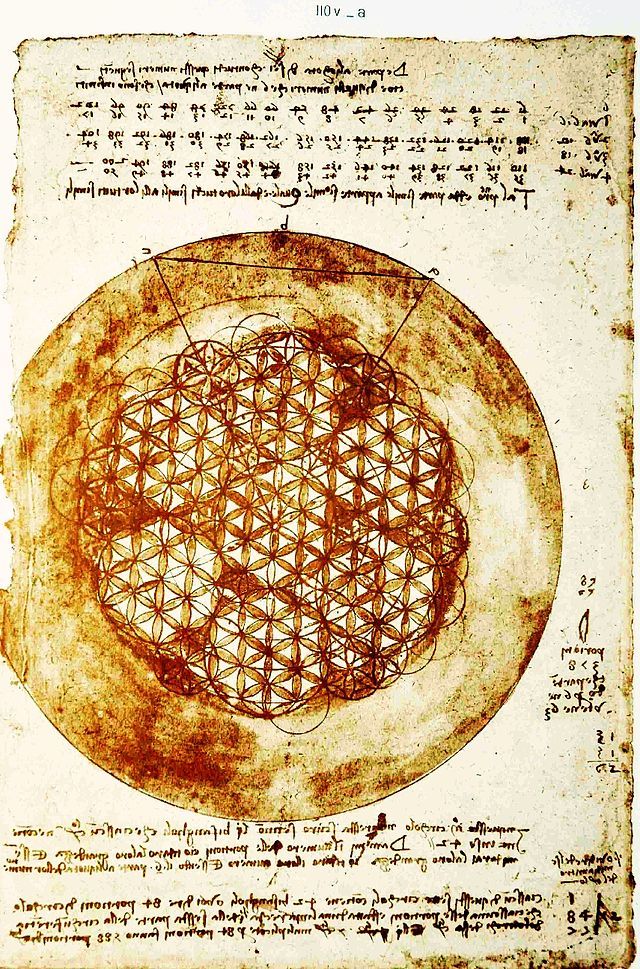
Leonardo da Vinci’s Principles for a Complete Mind:
1) Science of art.
2) Art of science.
3) Learn to see.
4) Realize everything connects to everything.
/ Sacred Geometry
Paul Thek: Notebooks
“Thek [was] an avid keeper of journals, producing over a hundred between 1969 and 1980. Complex and varied, the journals form an intimate and often intense portrait of an energetic mind. Most are written in ordinary school notebooks, with routine accounts of Thek’s days punctuated by emotionally raw passages of self-reflection, analysis of his closest (and, at times, most troubled) personal relationships, and as time progressed, evidence of a growing paranoia. In perfect script, he copied page after page of writings that he admired by Saint Augustine, Ananda K. Coomaraswamy, William Blake, and others. Copying was clearly a meditation for him, a spiritual exercise and, as such, an antidote to anxiety and to what he knew was his own pettiness and anger. But the journals are full of moments of joyful exuberance and artistic bravura as well: celebrations of sex, silly word games, and a range of visual expression, from simple marks and comic sketches to intimate, exquisite watercolors of the sea.”
Adriaen Coenen’s Fish Book (1580)
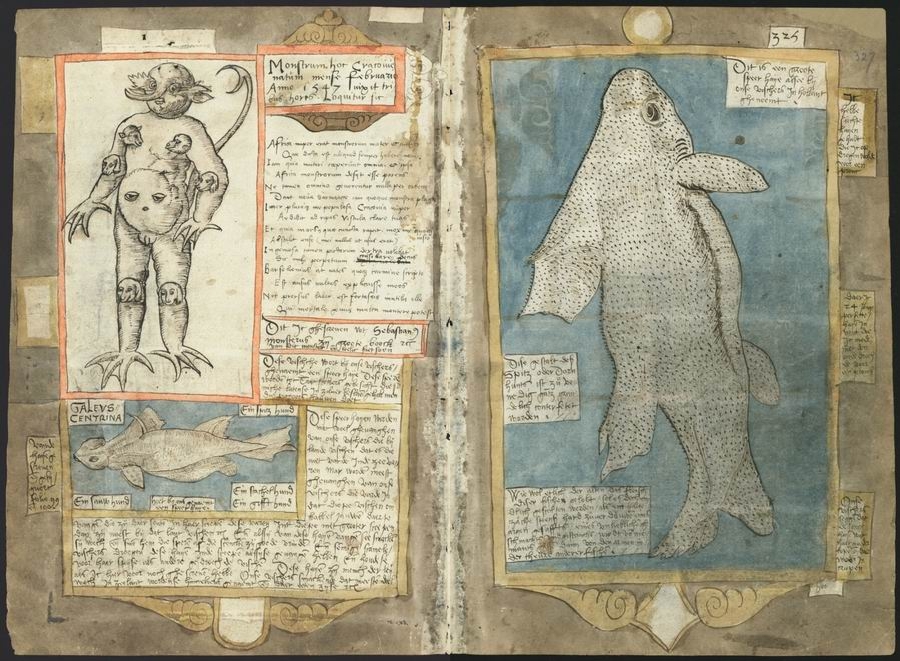
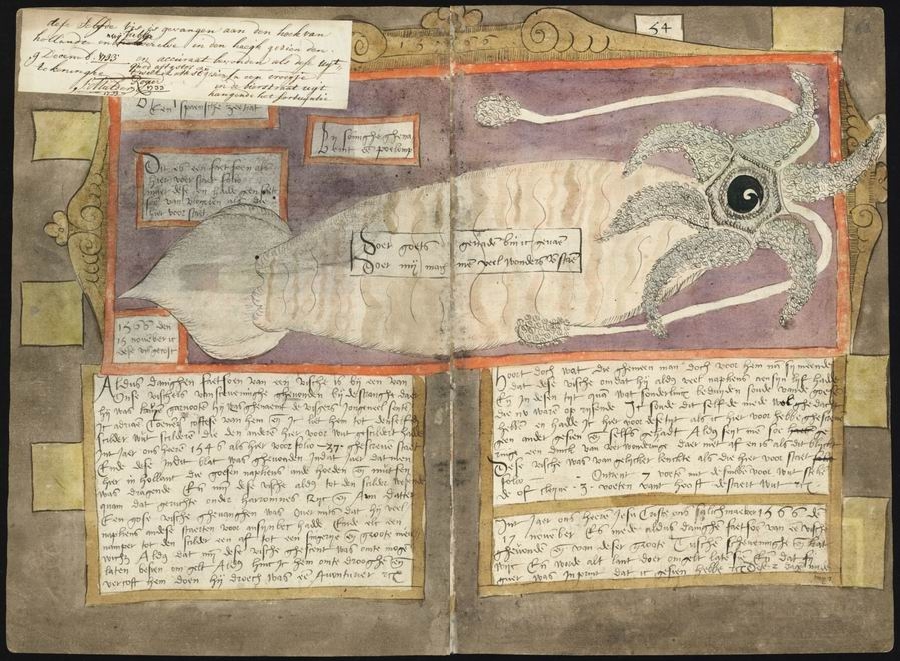

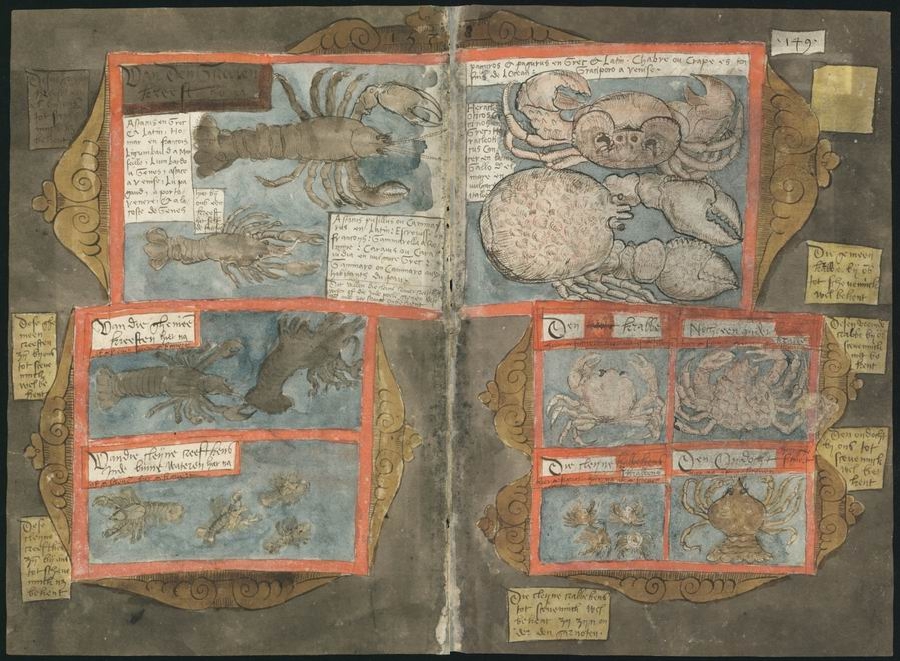
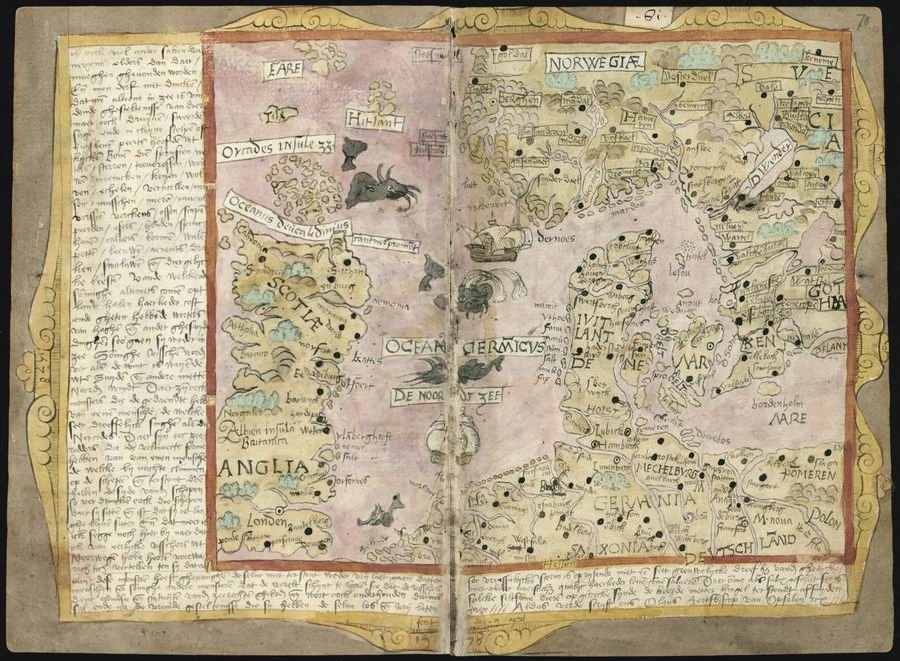
“Selected double-page spreads from Adriaen Coenen’s Visboek (Fish Book), an epic 800+ page tome on all things fish and fish-related. Coenen began work on this unique book in 1577, at the age of 63, and in three years gathered an unprecedented amount of information on the sea and its coasts, coastal waters, fishing grounds and marine animals. The information was largely gathered in the course of Coenen’s daily work in the Dutch sea-side village of Scheveningen as a fisherman and fish auctioneer and, later on, as wreck master of Holland (allowing him access to every strange creature that washed ashore). Coenen was also a well respected authority in academic circles and used this reputation to receive learned works on the sea from The Hague and Leiden, copied extracts from which find their way into his Fish Book.”
Initial, “Epistolae, etc.”: Spain, 15th century via The British Library, Public Domain.

Galilei Galileo (1564-1642) The Pleiades – Sidereus Nuncius

“Sidereus Nuncius (usually Sidereal Messenger, also Starry Messenger or Sidereal Message) is a short astronomical treatise (or pamphlet) published in New Latin by Galileo Galilei on March 13, 1610.[1] It was the first published scientific work based on observations made through a telescope, and it contains the results of Galileo’s early observations of the imperfect and mountainous Moon, the hundreds of stars that were unable to be seen in either the Milky Way or certain constellations with the naked eye, and the Medicean Stars that appeared to be circling Jupiter.”
The Corps of Discovery carried out this order with all due diligence. Not only did Captains Lewis and Clark keep notebooks on their observations, but the other soldiers did as well, producing in all more than one million words during their travels.
“Lewis and Clark kept 18 of what Jefferson called their “traveling pocket journals;” 13 were larger notebooks bound in red morocco leather, 4 were smaller and bound in paper board, and one was Clark’s field notebook bound in elkskin. Clark carried this elkskin field book during times of inclement weather or while canoeing down a river in order not to risk damage to one of the larger red notebooks. He would then copy his field notes into the red notebooks later on. When all the notebooks were not in use they were kept protected in tin cases. When their pages had been completely filled, the notebooks were sealed safely shut inside the cases for a safe return to Washington.”
 Paul Greer