Carrie Fisher isn’t around any more. And that’s just horrible. As my dad said: shit happens, but some shit is worse than others. And I want everyone to remember her and all the great things she was. A wonderful writer, a fine actress, a great mother, a caring daughter, a loyal friend, a wit, a prolific present-giver, a lunatic, a legend.
micro
“What did you do?”
How to compose a successful critical commentary
-
You should attempt to re-express your target’s position so clearly, vividly, and fairly that your target says, “Thanks, I wish I’d thought of putting it that way.
-
You should list any points of agreement (especially if they are not matters of general or widespread agreement).
-
You should mention anything you have learned from your target.
-
Only then are you permitted to say so much as a word of rebuttal or criticism.
Jello Biafra’s Record Collection
I have a really hard time being patient with people who get locked into one era, “Oh there’s no good music after the grunge era, there’s no good music after the sixties.”
Wrong people, you want that energy you liked as a kid? Put down that needle, leave your home and go see somebody new and random. You neve know what’s going to happen to you.
Interview continues here.
But overall I think the best era for music is right now. And the reason I do is because everything is available. Everything. Imagine trying to find fresh rockabilly records in 1975. It’s not like that anymore.
Val Telberg

Born in Moscow, Val Telberg lived in China, Japan, and Korea during his youth. He studied painting at the Art Student’s League, New York, in 1942, where he was exposed to the surrealism movement and experimental filmmaking. To support his painting, Telberg traveled from Florida to Massachusettes, printing photographs of nightclub patrons and working at photographic concession stands where people posed with cutouts of celebrities. In 1945, he returned to New York and produced narrative, surrealist photographs using sandwiched, bleached or burned negatives and double exposure within the camera. His later work evolved to large scale, scroll-like multiple images.

Around that time, Mr. Telberg began experimenting with the multiple-image photographic technique for which he became known. His photomontages, which sometimes were mural-size, consisted of layered images of figures in motion and had a dreamlike weightlessness associated with Surrealism. He had his first major show at the Brooklyn Museum in 1948. In the mid-1950’s he collaborated with Nin, creating images for the 1958 edition of her book “The House of Incest.”
– NYT

In 1942 he began to study painting at the Art Students League in New York City; there he met Kathleen Lambing, who taught him photography and whom he married in 1944. His first professional photographic experience came that year, when he was employed as a nightclub photographer in Florida and later at a portrait concession in Fall River, Massachusetts. In 1948 he returned to New York and did freelance photography. In addition to his commercial endeavors, Telberg did his own work, much of which involved experimental printing from multiple negatives.
–ICP

via of-saudade
Modes of Processing: Notes from a Comics Roundtable
Processing words and images together is like looking at a person’s face while listening to them speak. Amazing! This makes me think about how reading comics is like living in the world; there are multiple modes of processing required of us. There’s so much information being communicated in a person’s face when they speak. But sometimes the person’s face communicates information that, juxtaposed with what they are saying, changes the meaning. Like when my mom and I say “Hate you” instead of “Love you,” there’s a certain facial expression that goes with the words that makes “Hate you” = “Love you.” I guess I’ve always liked modes of communication that are less direct than they appear.
I draw because I couldn’t communicate in the usual ways growing up. I was too shy, or weird, or something. Drawing has never been private for me; it was always the only non-private thing. I never made comics as a hobby; I chose the medium consciously, as an adult, when my parents and teachers and classmates stopped being the right audience for my drawings, and I needed an audience and a more concrete medium I could plug into. I wouldn’t write a story I didn’t want to share.
– Liana Finck (Twitter)
My artistic advice to someone just getting started is: Don’t worry what other people are doing, or what they think you should do; just have fun. Practice. Experiment. If you haven’t found your personal style yet, don’t worry, it will come to you. You need to make a lot of shit before you start making gold, and even when it’s gold, it’ll probably still look like shit to you sometimes. Also: Don’t expect comics to make you rich, or even make you a living. Not saying it can’t happen, but it’s about as likely as winning the lottery.
– Mari Naomi (website)
The Timbuktu Manuscripts 13C+

Timbuktu Manuscripts or (Tombouctou Manuscripts) is a blanket term for the large number of historically important manuscripts that have been preserved for centuries in private households in Timbuktu, Mali. The collections include manuscripts about art, medicine, philosophy, and science, as well as priceless copies of the Quran. The number of manuscripts in the collections has been estimated as high as 700,000.
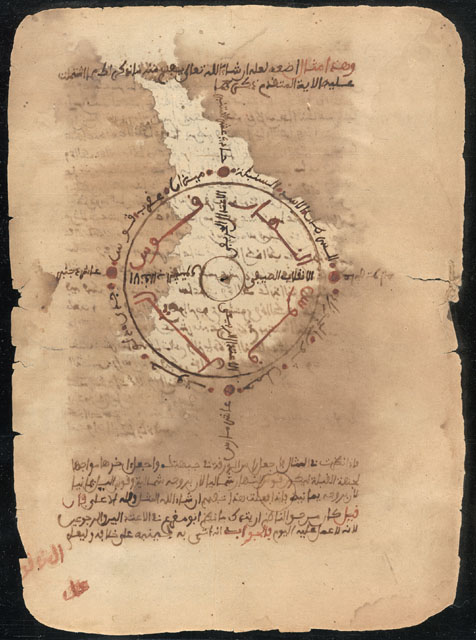
The majority of manuscripts were written in Arabic, but many were also in local languages, including Manding, Songhay and Tamasheq. The dates of the manuscripts ranged between the late 13th and the early 20th centuries (i.e., from the Islamisation of the Mali Empire until the decline of traditional education in French Sudan). Their subject matter ranged from scholarly works to short letters. The manuscripts were passed down in Timbuktu families and were mostly in poor condition.[4] Most of the manuscripts remain unstudied and uncatalogued, and their total number is unknown, affording only rough estimates. A selection of about 160 manuscripts from the Mamma Haidara Library in Timbuktu and the Ahmed Baba collection were digitized by the Tombouctou Manuscripts Project in the 2000s.
With the demise of Arabic education in Mali under French colonial rule, appreciation for the medieval manuscripts declined in Timbuktu, and many were being sold off. Time magazine related the account of an imam who picked up four of them for $50 each. In October 2008 one of the households was flooded, destroying 700 manuscripts.
from Wikipedia via Muslim Culture
If I don’t do it, I’ll stop doing it.
Great interview with Laurie Anderson on reality, virtual reality, working practices and the election. Worth reading all of it really.
This on Philip Glass and daily work:
I’ve been playing with Phil a lot lately. It’s been really, really interesting and fun, really nice. I remember one particular thing, the summer before this we were playing Ravello. It was a hard day. We had traveled there. We rehearsed. We’d done the show. We’d gone out for an endless dinner. It was two in the morning and we came back. I had to leave for Rome in a couple of hours. I was just packing and doing stuff. I came up from the garden and he was there with [his girlfriend] Sari. They had just done two hours of yoga. I was like, “Phil, it’s four in the morning. Couldn’t you do it tomorrow?” He said, “No, I wouldn’t of done it today. I need to do it everyday. If I don’t do it, I’ll stop doing it.” He’s like that with music, too. He’s so disciplined. It’s amazing. I’ve known Phil for many decades. He’s always been like that. He’s dedicated. He puts the time in. He’s also massively, musically talented… he’s a genius, and a hard working genius.
 Paul Greer