Notebook Organisation:

reblogging study-well:

There are lots of different ways to oraganise a notebook so here’s a quick guide to some options:

Date pages and entries. Write today’s date on the page and start writing. This is helpful if you want to a time record of your ideas, and notes.

Prepare a table of contents. Leave a few pages blank at the beginning of the notebook and write “Table of Contents” on the first page. Save this space for a place for you to jot down the major sections of your notebook as well as any accompanying page numbers. Some notebooks, such as the  leuchtturm1917notebooks have built in blank table of contents.

Create your own sections. Divide up your notebook into as many different smaller sections as you need. You could use sticky notes or tabs. You could combine this with a table of contents.

Dedicate specific pages of the notebook for different needs. You could keep the left page of a journal for your diagrams and charts and the right side for your notes, and thoughts.

Make an index. Flip to the back of the notebook and set aside about ten blank pages for an index. Mark the first page of this section “Index” and then write three letters of the alphabet to each page. As you take notes in your notebook, you can jot down specific or general subjects in this index to help you find items.

Use a tagging system. Make your entry into your notebook. In the example, they have recorded a Chinese recipe.  Go to the back of the notebook and add a tag or title, e.g. “Chinese” on the left edge of the page. Go back to the first page where the entry was, and on the same line number as you wrote “Chinese” make a black mark on the edge. You make this mark so that even when the notebook is closed, the mark is visible. After repeating this for various recipes, you now have various tags visible on the notebooks edge. If you ever wanted to find a Chinese recipe, you simply look at the index, locate the label, and look along the visible edge which has been tagged as Chinese. Then just flick to each marked page. You’re not limited to one tag per page. You could tag a page 2 or 3 times. So if you jot down a chicken stir fry you could tag it as “Chicken” and “Chinese”. This is described with pictures here.
Sources; 12

On Gwangi


Amongst the methonal fumes, corduroy flares and taste of cresta in the pre-star wars seventies there was relatively little of the fantastic to occupy the day dreaming mind of the under 10s. There was occasional Saturday morning Godzilla, there was Flash Gordon and various other assorted grand ideas fitting into a budget.

Valley of Gwangi crashed into my world during this time. At Gran’s house, A creepy pre title, the very western theme music with crashing timpani (by Jerome Morross of Big Country (not that one that one), the promise of cowboys vs dinosaurs. A playfulness of genre unusual until the age when comic books finally took over cinema.

Gwangi was conceived by Willis O’Brien, prime animator of the original King Kong. It was Part of a set of ideas featuring Cowboys and monsters (including Mighty Joe Young and the xxxxx). O’Brien was unable to finish the project and handed it to his apprentice, Ray Harryhausen, who had by then completed many multi creature films which were mostly better t.

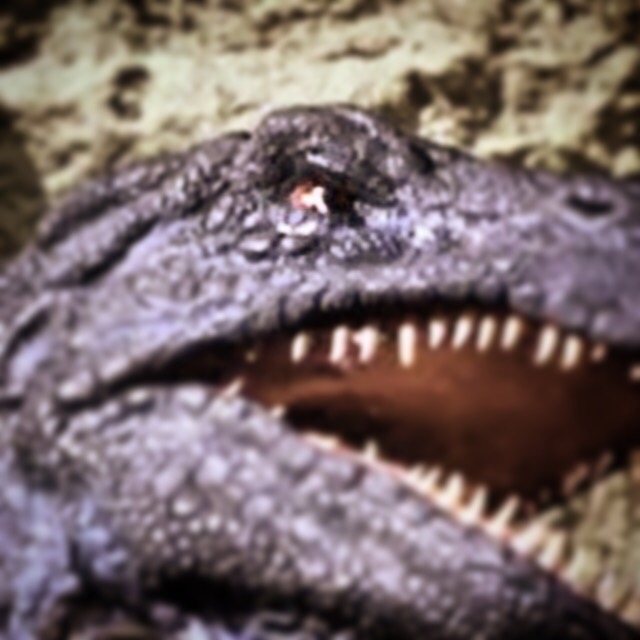
The Allosaurus in gwangi was fast moving, tail constantly curling, in a candid moment it scratched it’s nose. It was alive. Many books at that time were still telling us that dinosaurs were sluggish, slow moving cold blooded creatures. But Harryhuasen looked at them with the eye of an animator, seeing how they neeed to move. Consequently he was ahead of many paleantologists and he produced a level of dynamism unmatched until Speilberg got his hands in the Train Set 23 years later.

Showing my children a film such as this is a recipe for heartbreak. They’re raised on hi end 21st century cgi, it’s meaning is lost to them because they don’t get the history and it’s just too old. Sometimes it’s equally devastating revisiting a treasure of childhood, one sees the flaws not perceived at such a young age. Gwangi carries some of that, yet the magic still carries me away.

I had the privilege of meeting Harryhausen about twenty years ago. I managed to mumble about how much I loved the film and had gone through the lasso sequence frame by frame enough times to degrade a VHS. He smiled and told me the story of how they had taken a jeep with a pole, the stunt riders lassoed the pole and the jeep accelerated back and forth pulling the riders off the horses, and then by the “magic of cinema” (his words) they removed the pole and put Gwangi in. I nodded gratefully and crawled back under my stone.

As mentioned The Valley of Gwangi is being shown as an open air screening in  Victoria Square, Bedminster, Bristol on August 8th as part of the Bristol Bad Film Club (wtf?) (oh wait, they apologise). I am unable to attend and have nothing but cold, hard envy for all of you who can.

Frightened Control Freaks

    “Whenever I’ve had to write prose I always find writing the description is really frustrating, because I think I could just draw this. And also there’s always so much more content to a drawing than to a prose description. I feel like there’s always so much more to be done with that. Plus when you’re writing prose you’re competing against Tolstoy and Dostoevsky and it’s very difficult to do anything that would be ultimately satisfying in terms of really differentiating yourself. At best I could write a halfway decent novel. That’s all I could ever hope for and that would be quite an accomplishment.”


    “It sometimes seems like that’s the overriding trend in comics right now, beautiful drawings and empty stories.
I can’t tell if that’s just the result of a generation of kids who are raised with this different form of receiving media. Is it that or is it just that they’re coming out of the art world more than they used to? I don’t know, but there is something very strange about that. It doesn’t seem to be attracting people who just want to create stories and aren’t that visually oriented. You would sort of think that would be a part of the comics world that was opening up. At least I haven’t really seen that. Or they could just be doing stories I’m not very interested in.”

– Daniel Clowes

Jim Le Fevre makes 12 foot Sculptural Zoetrope for SBTRKT

The common mistake with attempting a zoetrope is to expect it to do too much. It’s unlike a film which has at its disposal time to start and stop actions. It’s at its best when it is exploring a simple loop or phrase of movement, and a lot can be done by skillfully crafting that within a context. This is part of the restrictions of limited time and space for the loops. All loops exist in parallel, meaning movements need to be clear of each other by the time the next loop is in play. Equally, baring in mind the repetitive nature of loops, some movements may read differently than intended. – (what are you waiting for go see it now).


“You Better Run” by Junior Kimbrough (1992)

In the late 1950s Kimbrough began playing the guitar in his own style, using mid-tempo rhythms and a steady drone played with his thumb on the bass strings. This style would later be cited as a prime example of hill country blues. His music is characterized by the tricky syncopation between his droning bass strings and his midrange melodies. His soloing style has been described as modal and features languorous runs in the middle and upper registers. The result was described by music critic Robert Palmer as “hypnotic”. In solo and ensemble settings it is often polyrhythmic, which links it to the music of Africa. North Mississippi bluesman and former Kimbrough bassist Eric Deaton suggested similarities between Kimbrough’s music and that of Fulani musicians such as Ali Farka Touré. The music journalist Tony Russell wrote that “his raw, repetitive style suggests an archaic forebear of John Lee Hooker, a character his music shares with that of fellow North Mississippian R. L. Burnside”.”