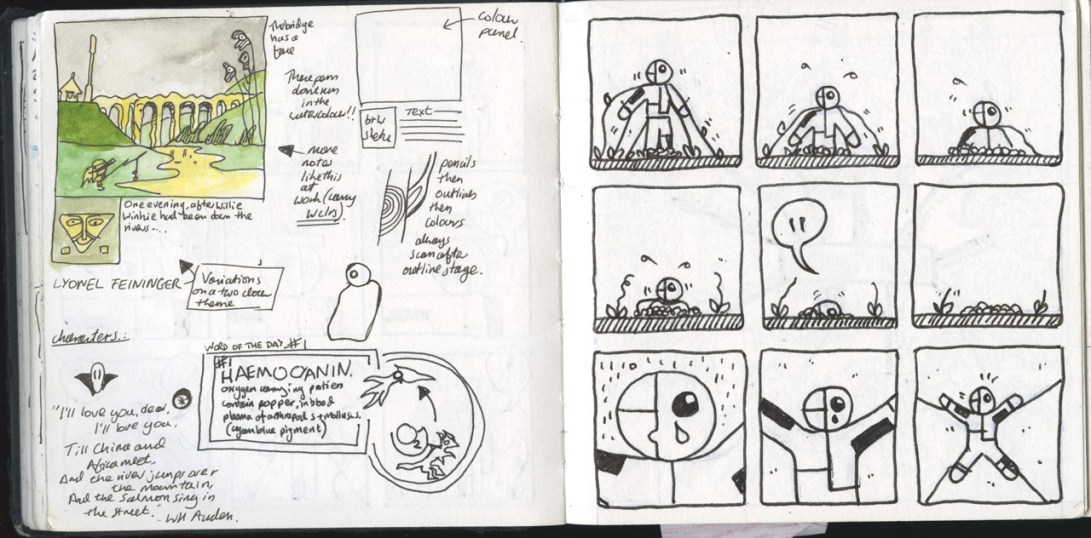
“time & again” by Jacques Khouri (2010)
I’m
evolving.
“Love Your Money” by Daisy Chainsaw (1991)
I saw these guys supporting Hole in autumn ’91, they were way better than the main act, and a complete surprise at the time.
What’s lovely about this clip is that the band now come across as perfectly normal compared to that weird looking audience.
Save us from the saviours
“There are two main stories about the Greek crisis in the media: the German-European story (the Greeks are irresponsible, lazy, free-spending, tax-dodging etc, and have to be brought under control and taught financial discipline) and the Greek story (our national sovereignty is threatened by the neoliberal technocracy imposed by Brussels). When it became impossible to ignore the plight of the Greek people, a third story emerged: the Greeks are now presented as humanitarian victims in need of help, as if a war or natural catastrophe had hit the country. While all three stories are false, the third is arguably the most disgusting. The Greeks are not passive victims: they are at war with the European economic establishment, and what they need is solidarity in their struggle, because it is our struggle too.
Greece is not an exception. It is one of the main testing grounds for a new socio-economic model of potentially unlimited application: a depoliticised technocracy in which bankers and other experts are allowed to demolish democracy. By saving Greece from its so-called saviours, we also save Europe itself.”
– Slavoj Žižek (via jhnbrssndn)
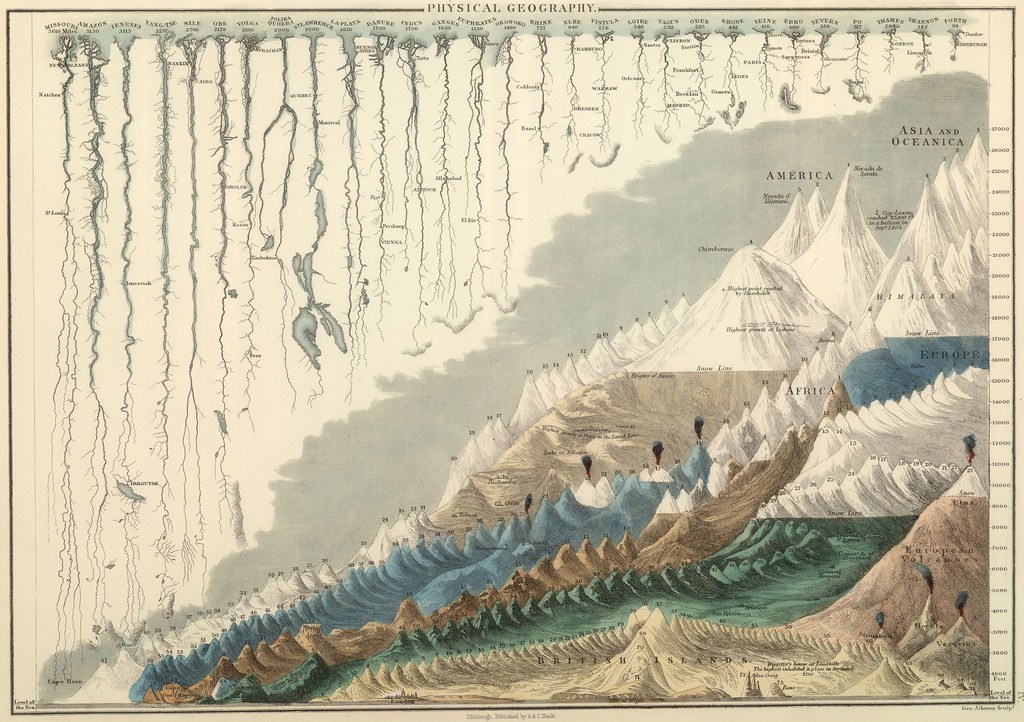
“Tinted drawing showing the comparative lengths of rivers and heights of mountains worldwide. “
“No symbols where none intended”

“Although popularly thought of as a rather dour and ascetic writer, there is a wonderfully playful aspect to Samuel Beckett’s creative output: the pictorial array of raggle-taggle characters and baroque broidery that scampers through his notebooks and manuscripts. Continuously—from decorating 1930s exercise books to embellishing the scraps of paper bearing his 1970s Mirlitonnades—doodling provided an amiable outlet when, yet again, he found himself up against the obduracy of words.
Beckett’s interest in the visual arts is well known. During his exhaustive travels around Germany in the 1930s he kept notes detailing his responses to the Old Master and more modern paintings that he had seen. More communally, throughout his life he formed close friendships with a number of artists including Jack B. Yeats, Bram Van Velde, Henri Hayden, and Avigdor Arikha. However, his appreciation of Fine Art seems to have had no discernibly direct effect on his own spontaneous drawings, which repeatedly appear to have earthier, and more mixed, antecedents.”
“The Bushes Scream While My Daddy Prunes” by The Very Things (1984)
Notebook Pages Maps and That