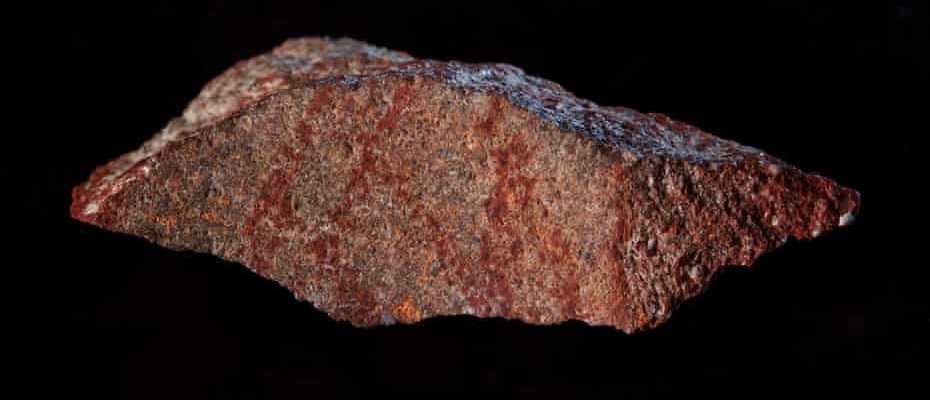
Earliest known drawing found on rock in South African cave

Researchers believe the pattern on the fragment of rock is 73,000 years old, but are perplexed as to what it might represent

“Archaeologists found the marked stone fragment as they sifted through spear points and other material excavated at Blombos cave in South Africa. It has taken seven years of tests to conclude that a human made the lines with an ochre crayon 73,000 years ago.

“The simple red marks adorn a flake the size of two thumbnails which appears to have broken off a grindstone cobble used to turn lumps of ochre into paint powder. The lines end so abruptly at the fragment’s edges that researchers believe the cross-hatches were originally part of a larger design drawn on the cobble.

“This is first known drawing in human history,” said Francesco d’Errico, a researcher on the team at the University of Bordeaux. “What does it mean? I don’t know. What I do know is that what can look very abstract to us could mean something to the people in the traditional society who produced it.”

guardian

The Codex Rotundus

Great Post on the Codex Rotundus from Book Addiction UK:

Jessica's avatarBookAddiction

Codex Rotundus 3 fac

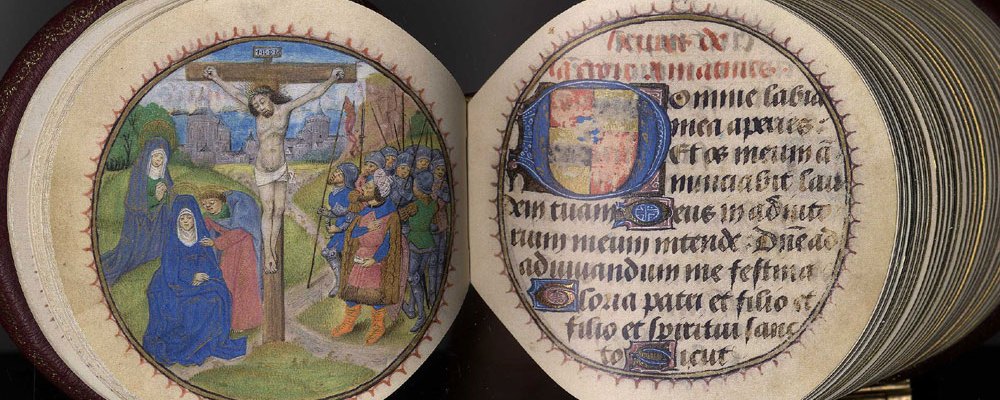
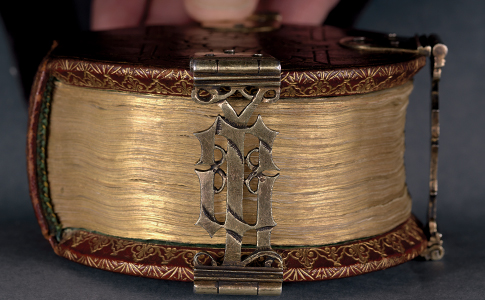
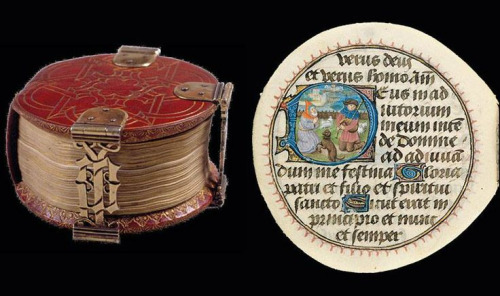
The manuscripts and codices which survive from the late 15th century are often large and lavish affairs and usually conform to certain norms in terms of shape. But this curious and unusual little gem, which takes its name ‘Codex Rotundus’ from its unique shape, measures just over 9 centimeters across and is circular.  Its 266 pages are bound along a spine just 3cm long, so small that three clasps are needed to help keep it closed.  Thought to have been rebound in the 17th century, the original clasps which help hold the tiny codex together, were reused. As so many of the manuscripts from this period, it is a devotional text -a lavishly illuminated Book of Hours in Latin and French.

Codex Rotundus 1 fac

Remnants of a coat of arms, which a subsequent owner appears seems to have tried to obliterate, in the first initial ‘D’ suggests that it was created for Adolf of Cleves…

View original post 253 more words

Inuit Genealogy

reblogging johnfass

johnfass's avatarfevered imaginings

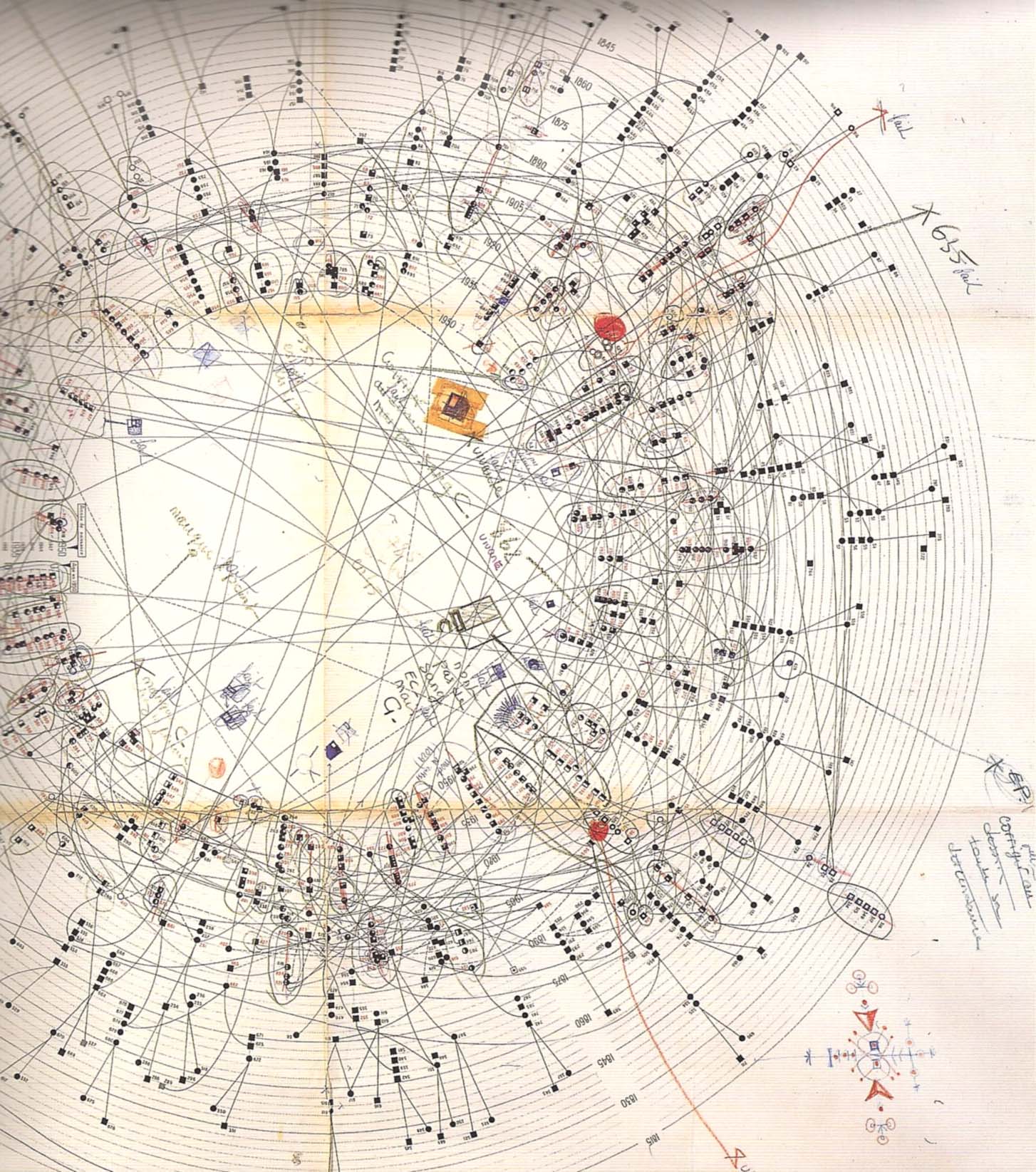
Currently working on a research project related to Canadian and Greenland Inuit with R0gMedia in Berlin. The diagram above is a genealogical diagram made in the mid 1950s by anthropologist Jean Malaurie, the first of its kind. It’s a hand made radial drawing, Malaurie has a whole series of them in his apartment in Paris, along with his extensive personal archive of research materials including photos, films, notebooks, drawings. While the broader aims of the project are to find an institution willing to host the collection, I’m trying to make an digital artefact out of this diagram that could bring the information alive and demonstrate how historical anthropological materials can be made relevant and contextualised for present and future generations. DIS2012 published a paper on this project for a workshop about slow technology. Slow technology DIS2012

View original post