“I think we all have this little theatre on top of our shoulders, where the past and the present and our aspirations and our memories are simply and inexorably mixed. What makes each one of us unique is the potency of the individual mix.
“We can make our lives only when we know what our lives have been. And drama is about how you make the next moment. It’s like when you’re watching a sporting event, like a soccer game here; when it’s going on, you don’t know what’s going to happen. But all the rules are laid down.
“I don’t make the mistake that high culture mongers do of assuming that because people like cheap art, their feelings are cheap, too. When people say, ‘Oh listen, they’re playing our song,’ they don’t mean, ‘Our song, this little cheap tinkling, syncopated piece of rubbish is what we felt when we met.’ What they saying is ‘That song reminds us of the tremendous feeling we had when we met.’ Some of the songs I use are great anyway but the cheaper songs are still in the direct line of descent from David’s Psalms. They’re saying, ‘Listen, the world isn’t quite like this, the world is better than this, there is love in it,’ ‘There’s you and me in it’ or ‘The sun is shining in it.’
“So called dumb people, simple people, uneducated people, have as authentic and profound a depth of feeling as the most educated on earth. And anyone who says different is a fascist.”
New GIF: sevenTime
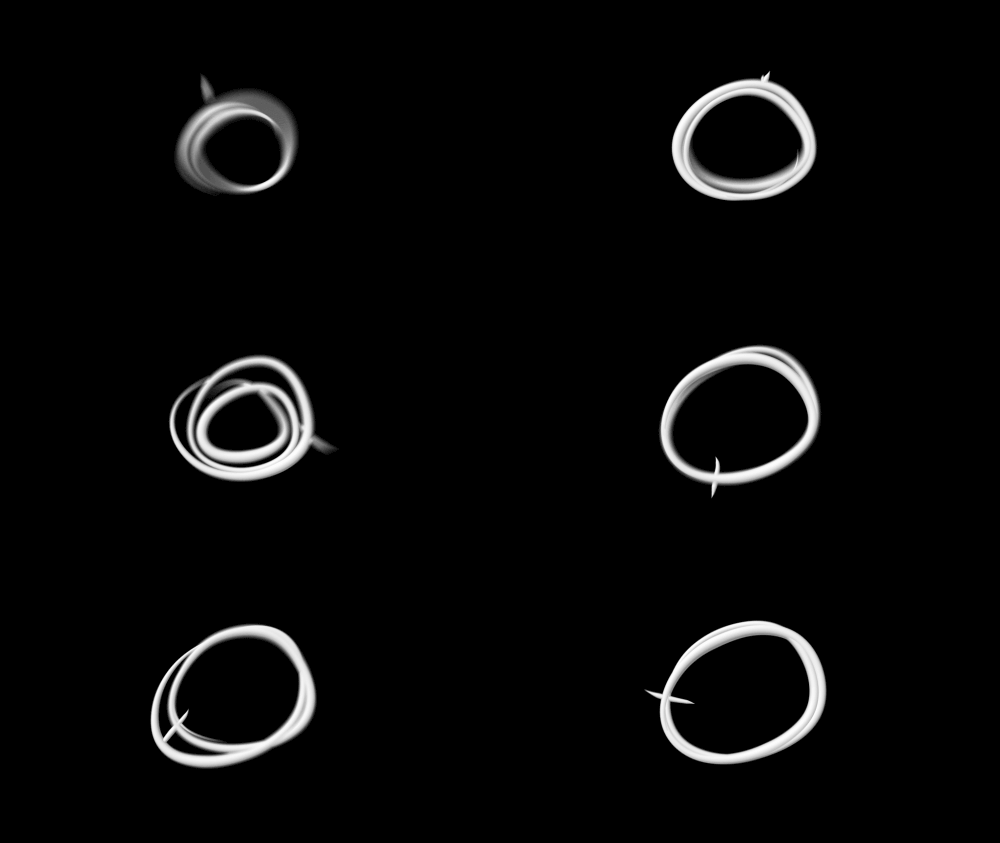
“…Let me explain this slowly”
“He claims that I criticised the new grammar test because there is “no such thing as correct grammar”. No, I criticised it because a) it was brought in without any evidence that it would help children write better, b) that Year 6 is too early to tackle grammar in any useful way, c) the kind of grammar being tested was resulting in it being taught out of context of real speaking, writing and reading, d) questions about grammar are not simply a matter of “right and wrong”.”
Totally

‘one of the few English books written for grown-up people’
“That element of tragedy which lies in the very fact of frequency, has not yet wrought itself into the coarse emotion of mankind; and perhaps our frames could hardly bear much of it. If we had a keen vision and feeling of all ordinary human life, it would be like hearing the grass grow and the squirrel’s heart beat, and we should die of that roar which lies on the other side of silence. As it is, the quickest of us walk about well wadded with stupidity.”
“In its encounter with Nature, science invariably elicits a sense of reverence and awe.”
““Spirit” comes from the Latin word “to breathe.” What we breathe is air, which is certainly matter, however thin. Despite usage to the contrary, there is no necessary implication in the word “spiritual” that we are talking of anything other than matter (including the matter of which the brain is made), or anything outside the realm of science. On occasion, I will feel free to use the word. Science is not only compatible with spirituality; it is a profound source of spirituality. When we recognize our place in an immensity of light years and in the passage of ages, when we grasp the intricacy, beauty and subtlety of life, then that soaring feeling, that sense of elation and humility combined, is surely spiritual. So are our emotions in the presence of great art or music or literature, or of acts of exemplary selfless courage such as those of Mohandas Gandhi or Martin Luther King Jr. The notion that science and spirituality are somehow mutually exclusive does a disservice to both.”
more here
View on evening commute significantly improved since using the wagon less.

Ray Harryhausen on his favourite creature
Notebook Page.
I generally don’t post these they often contain too much personal stuff. I’ll try to get over

