Animation
anɪˈmeɪʃ(ə)n/
noun
1. the state of being full of life or vigour; liveliness.
2. the technique of photographing successive drawings or positions of puppets or models to create an illusion of movement when the film is shown as a sequence.”a combination of live action with 3-D animation”
Independent Immersive Cardboard
So I look at the date on the last post like this and just wade through my social media posts to put down anything of any particular note here, like a searchable back up, similar to what Scobletrousers talks about here.
The idea of an independent web is becoming increasingly vital I think, it takes effort, and does not come naturally to most. This blog is not currently self-hosted, but should be and I plan on making it so as soon as I can justify the cost. I chose WordPress for this because I get the impression it is portable as and when one is ready.
The recent controversy over the experiments Facebook was doing with peoples streams is a great example of why indieweb is so important. I have always found Facebook to be emotionally manipulative, like a bad Spielberg film. It’s taken some time, self-confidence building and some shedding of giving a **** for me to start using it in a way that is useful and constructive, and I use it because so many people I know do and I would lose contact with them if I didn’t. This does sound bizarre when you write it down, but it’s as true for many other people as it is for me.
It was always a platform designed for young students to show off, that is what it is based on.
Here’s some Robert Breer.
It goes Areer, Breer, Creer, Dreer, Ereer, Freer, then me, Greer.
Mr Breer came to do a talk at my college when I was a student it’s not difficult to see the influence of his thinking on things like the Animated Journal.
It’s a beautiful summer (so far), we bought a new tent and spent a night in the garden. Adventures soon hopefully.

I’m still loving Photo Blender.
Eli Wallach died. Remembering this as cinema.
My friend Hugh Cowling (awesome), who worked on the forthcoming Poets of the Sommes animations, told me about this beautiful little piece of stop frame.
I share a lot of stuff like this on my Tumblr, it is the form of social media internet I feel most comfortable with, most unselfconscious, if you like, I’ve been on there since early 2008, and I don’t think there’s been many days since I haven’t reblogged something.
This is taking a lot longer than I expected, I should do these more often so they’re not so rambly.
I previously mentioned my disappointment at the recent Godzilla 2014, so I recently caught up with Pacific Rim, which, although not exactly Citizen Kane, is great fun, it’s pitched perfectly, has a very valid message for the kids, is inclusive and has international characters working together. I found myself laughing and clapping my hands several times. That someone loves those kaiju and the rest of humanity so much, they would make such a film for the rest of us is heart warming.
Here is a quote from the director Guillermo Del Toro (culled from Wikipedia so it must be completely accurate) which illustrates just one simple reason why it’s a superior product to G14.
I don’t want people being crushed. I want the joy that I used to get seeing Godzilla toss a tank without having to think there are guys in the tank… What I think is you could do nothing but echo the moment you’re in. There is a global anxiety about how fragile the status quo is and the safety of citizens, but in my mind—honestly—this film is in another realm. There is no correlation to the real world. There is no fear of a copycat kaiju attack because a kaiju saw it on the news and said, ‘I’m going to destroy Seattle.’ In my case, I’m picking up a tradition. One that started right after World War II and was a coping mechanism, in a way, for Japan to heal the wounds of that war. And it’s integral for a kaiju to rampage in the city.
I think they got the go ahead to make some more, which is great news. Apparently this is unusual because it didn’t do so well in the States but did well elsewhere, and they don’t usually commission a sequel in such circumstances.
Had a go on this thing.
Was lucky to see some immersive theater last week. It was very intense, unlike anything I have experienced. Get into that if you’re wondering what to do with yourself, it’s actually ground breaking. Not sure there can be a lot of money in it though.
OK, I’ve spent twice as long on this as I was expecting. If you actually read this and liked it do something to let me know what you liked. If you didn’t like it, I don’t care, I’m going to keep doing it anyway.
Hit send.
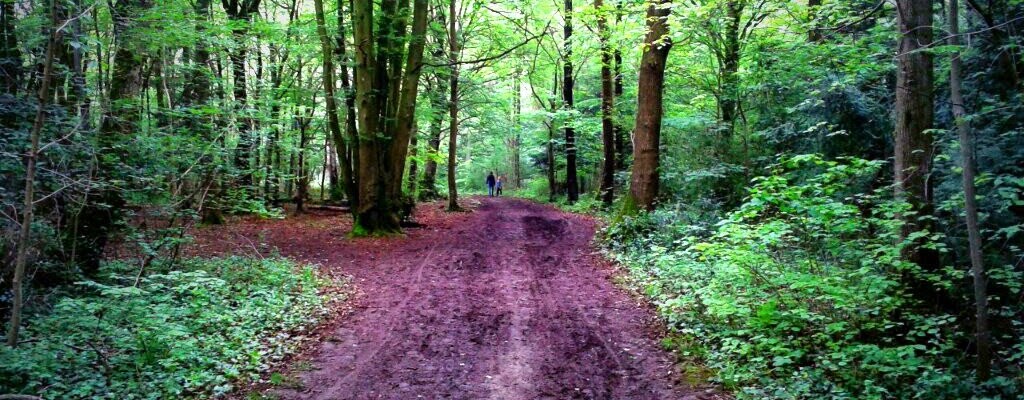
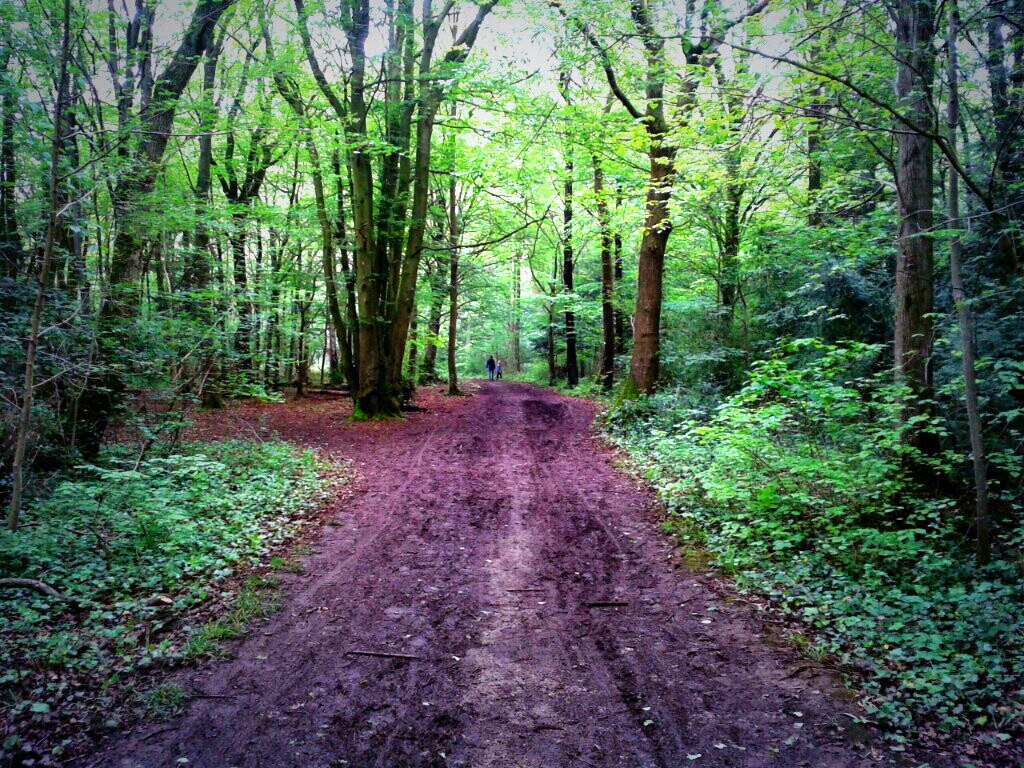
A Leafy Weekend
Something in the pipeline..
What @katiewest actually saw.
Stan Brakhage – “Cat’s Cradle” (1959)
“Paul Arthur, in his essay for The Criterion Collection, wrote that Cat’s Cradle “does not entirely suppress our recourse to naming but rather floods our typical eye-brain loop with stimuli for which attached language cues are either less than automatic or, in cases of purely sensory appeal, non-existent.” Fred Camper, in another essay for The Criterion Collection, remarked upon the mysteriousness of the four characters’ interactions, but was nevertheless “kept on edge by the very rapid intercutting… the viewer is at once encouraged to come up with his own interpretations and prevented from settling on any one idea.”
see also
Glass Animals – Gooey (animation) by Katy Wang (2014)
“Visit my blog for ‘behind the scenes’ stuff: http://goo.gl/EpwoBN This is what came out of my head on a three week music video project on my art foundation course… Hand drawn animation 759 frames drawn in Photoshop CS5 Edited in Sony Vegas Pro 10 Music: Gooey – Glass Animals “
A great breakdown, worth checking out.
“Ubu” by Geoff Dunbar (1978)
“I think it was the late sixties, and I saw this wonderful production of Ubu on at the Royal Court, and Max Wall was playing his Royal Highness. And it was just astounding, I mean, that was my initiation with Alfred Jarry, I mean, he was quite an extraordinary man. I thought at that time, if I ever got the chance to do it, Ubu would just be the most natural animated picture. I related it to Jarry in terms of animation initiallybecause it was originally a marionette play that he put on at school as a boy, and then he placed it a little bit later in the theatre. And I think it’s part of anyone that works in the theatre, it’s part of their curriculum, you know, you come across Ubu, you come across the importance of Ubu in breaking the traditions.
…So we developed that style, you know, literally it was blobbing ink. And when we were doing some of the backgrounds – you know, they were very simple, we just drew them in like this, and then I would take a bottle of ink with those plunger things, just squeeze it, and then just whack it right across it, and you’d just let the blobs go.
I remember, it was in the BAFTA theatre, and it was a full house, a lot of people had turned up to see this piece. And it did the job, it broke the mould, I think, of people’s conception of animation. I mean, there it was: suddenly there was something else happening on the screen. And it was the most marvellous feeling when it finished, there was a little pause. And tremendous applause, I was really moved by that. I did, at another screening, overhear some people walking out saying it was the most revolting and disgusting film they’d ever seen, and they didn’t know what animation was coming to. At which I thought, well, I don’t know, I mean, it can’t always be little cutie characters.”
“Experimental animation meets pottery” (2014) by Jim Le Fevre, Roop & Al Johnstone, Mike Paterson
“The film is based upon the principles of the Phonotrope, a type of contemporary Zoetrope using a turntable created by Jim Le Fevre in 2006. It is similar to a Zoetrope – the difference being that instead of the slits that one would have in the drum around the side of the Zoetrope, it uses the shutter speed of the camera instead.
Jim used 19 ‘frames’ on the pot – a good balance of space per frame (about 4 cm at the outside of the bowl) and amount of animation (0.7 of a second per loop).
To get it up to speed it was simply pressing the floor lever gently until it was perfect in-frame for the camera (essentially it would be 78rpm and so therefore would work on a traditional 78 deck).”
 Paul Greer