The Timbuktu Manuscripts 13C+

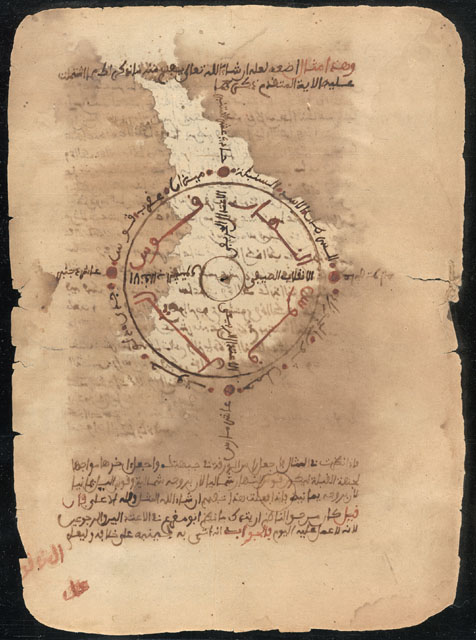
timbuktu-manuscripts-astronomy-tables

Timbuktu Manuscripts or (Tombouctou Manuscripts) is a blanket term for the large number of historically important manuscripts that have been preserved for centuries in private households in Timbuktu, Mali. The collections include manuscripts about art, medicine, philosophy, and science, as well as priceless copies of the Quran. The number of manuscripts in the collections has been estimated as high as 700,000.
loc_timbuktu_manuscripts_amm0001rs

The majority of manuscripts were written in Arabic, but many were also in local languages, including Manding, Songhay and Tamasheq. The dates of the manuscripts ranged between the late 13th and the early 20th centuries (i.e., from the Islamisation of the Mali Empire until the decline of traditional education in French Sudan). Their subject matter ranged from scholarly works to short letters. The manuscripts were passed down in Timbuktu families and were mostly in poor condition.[4] Most of the manuscripts remain unstudied and uncatalogued, and their total number is unknown, affording only rough estimates. A selection of about 160 manuscripts from the Mamma Haidara Library in Timbuktu and the Ahmed Baba collection were digitized by the Tombouctou Manuscripts Project in the 2000s.

timbuktu-manuscripts-astronomy-mathematics

With the demise of Arabic education in Mali under French colonial rule, appreciation for the medieval manuscripts declined in Timbuktu, and many were being sold off. Time magazine related the account of an imam who picked up four of them for $50 each. In October 2008 one of the households was flooded, destroying 700 manuscripts.

from Wikipedia via Muslim Culture
Athanasius Kircher’s Mundus Subterraneus, 1665.


Athanasius Kircher’s Mundus Subterraneus, 1665.

“Athanasius Kircher’s diagrams of the interconnectedness of fire (above) and water (below) in Earth. The diagrams are just a piece of his large, multi-volume work Mundus Subterraneus, published in 1665.”

via


Athanasius Kircher’s Mundus Subterraneus, 1665.

“On a visit to southern Italy in 1638, the ever-curious Kircher was lowered into the crater of Vesuvius, then on the brink of eruption, to examine its interior. He was also intrigued by the subterranean rumbling which he heard at the Strait of Messina. His geological and geographical investigations culminated in his Mundus Subterraneus of 1664, in which he suggested that the tides were caused by water moving to and from a subterranean ocean.
“Kircher was also puzzled by fossils. He understood that fossils were the remains of animals. He ascribed large bones to giant races of humans.[24] Not all the objects which he was attempting to explain were in fact fossils, hence the diversity of explanations. He interpreted mountain ranges as the Earth’s skeletal structures exposed by weathering.
“Kircher’s map of Atlantis, oriented with south at the top, from Mundus Subterraneus.
Mundus Subterraneus includes several pages about the legendary island of Atlantis including a map with the Latin caption “Situs Insulae Atlantidis, a Mari olim absorpte ex mente Egyptiorum et Platonis descriptio.” translating as “Site of the island of Atlantis, in the sea, from Egyptian sources and Plato’s description.”

Circular song – En la maison Dedalu

reblogging erikkwakkel:


Circular song

“Medieval music books, with their merry notes jumping off the page, are a pleasure to look at. This sensational page from the 14th century adds to this experience in a most unusual manner. It presents a well-known song, the French ballade titled En la maison Dedalus (In the house of Dedalus), be it that the scribe decided to write both music and lyrics in a circular form. There is reason behind this madness. The maze created by music and words locks up the main character of the song, the mythological figure Ariadne, who is a prisoner in the house of Daedalus – she is represented by the red dot. The book contains treatises on music theory, notation, tuning and chant. In other words, it was meant for experts readers. The beholder likely enjoyed the challenge of singing a circular song (did he or she spin the book around?) and how it held its subject hostage in the merriest of ways.”

“Pic: Berkeley, Music Library, MS 744 (made in Paris in 1375).”

from erikkwakkel:

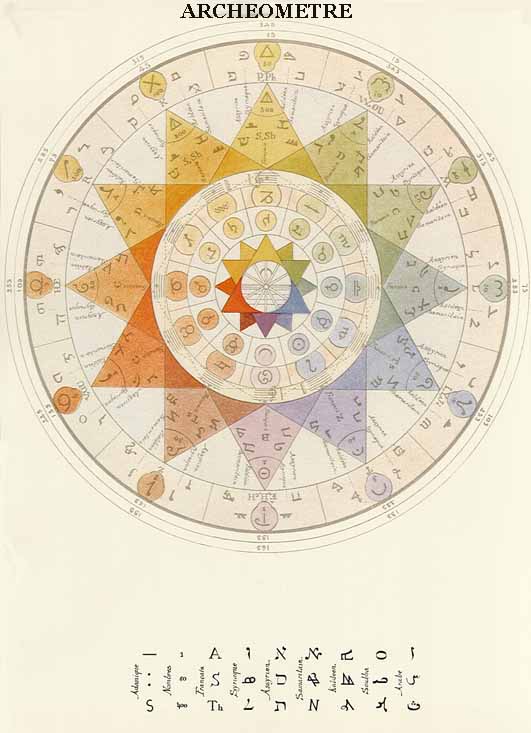
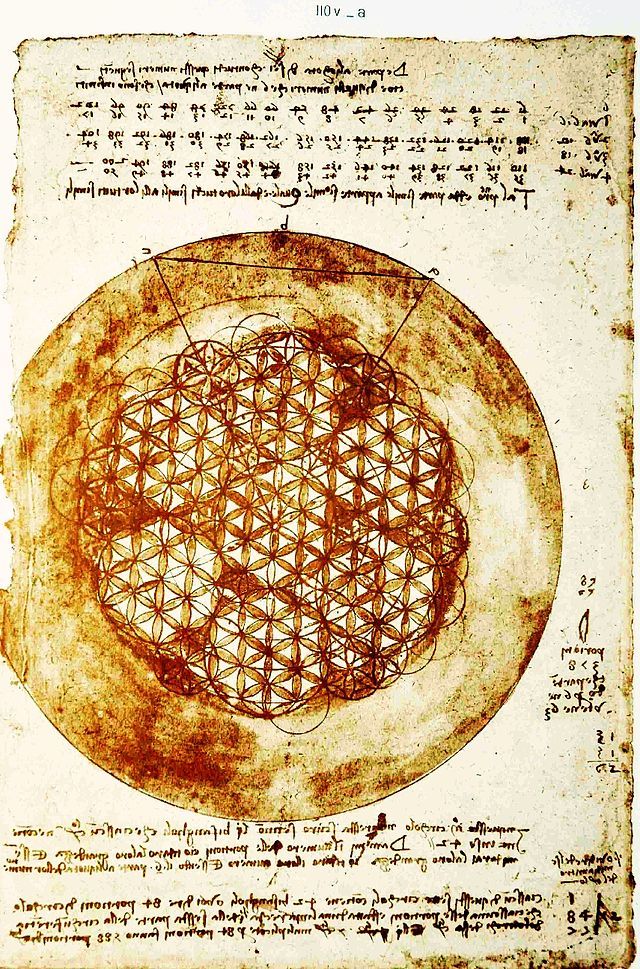
Archeometre by Alexandre Saint-Yves d’Alveydre


HTML tutorial

The term “Archeometre” originates from the Greek and means “the measure of the principle”. The system refers also to a series of symbols and meanings, which refer to the federal drawer.

‘Archeometre’ is it the measurement of the ‘Archee’ (Universal Cosmic Force) of which the Hermetists speaks. Is it a process, a ‘key’ which makes it possible to penetrate the Mysteries of the Word. It is a measuring instrument of the first (primary) principles of the manifested universe.

Alexandre Saint Yves d’Alveydre’s Archeometre shows the original Atlantean alphabet translates into the material the word, form, color, smell, sound and taste, the key to all religions and the sciences of antiquity.

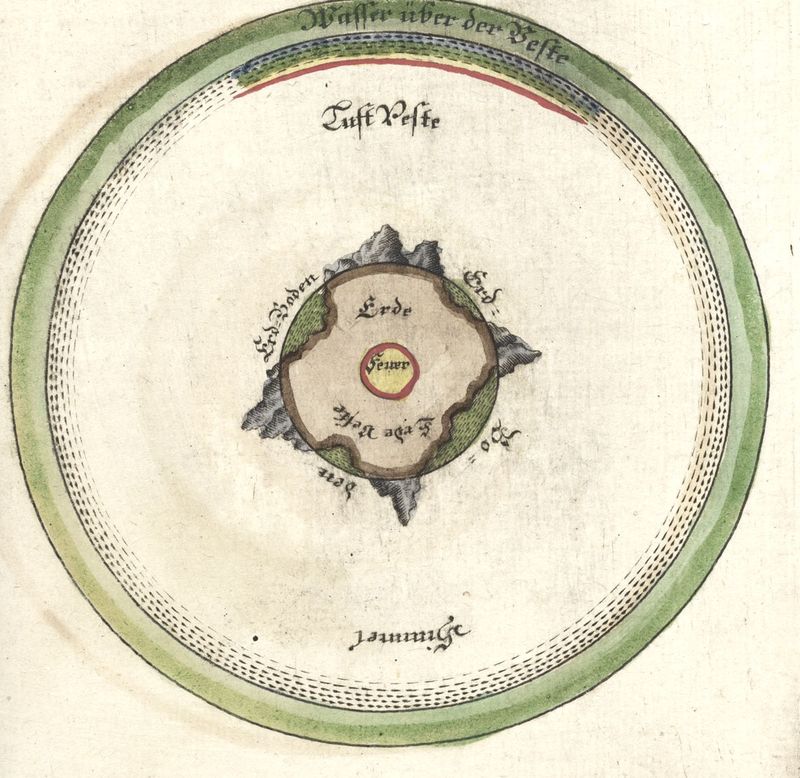
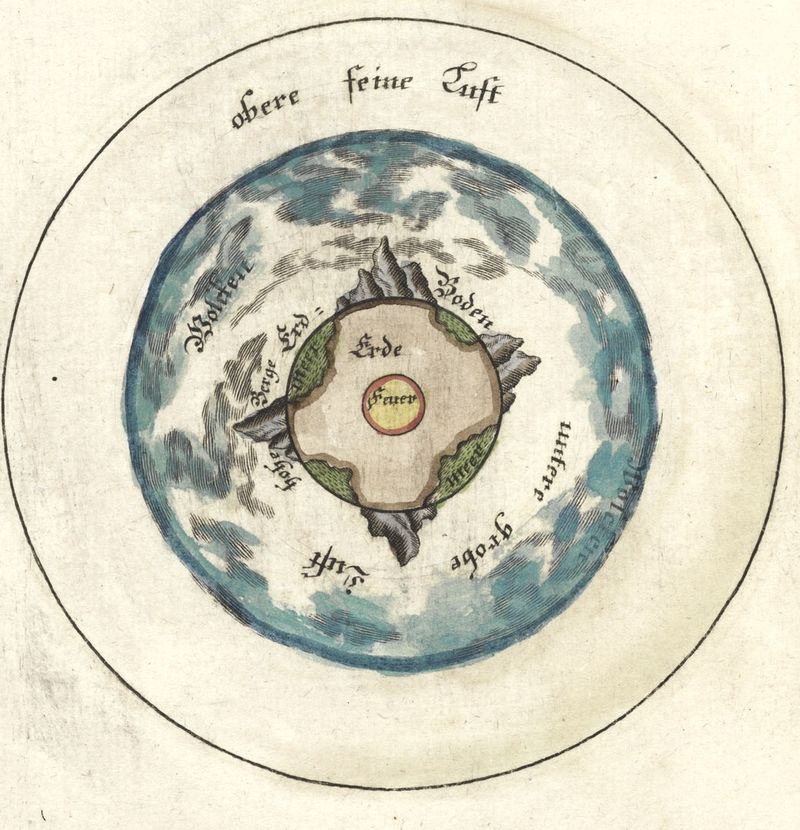
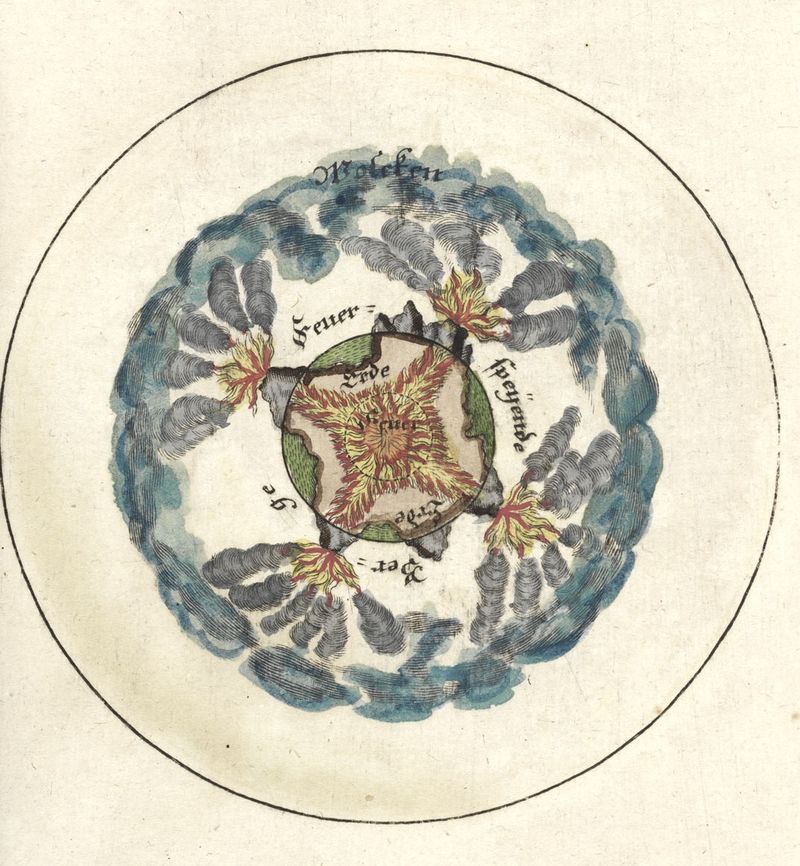
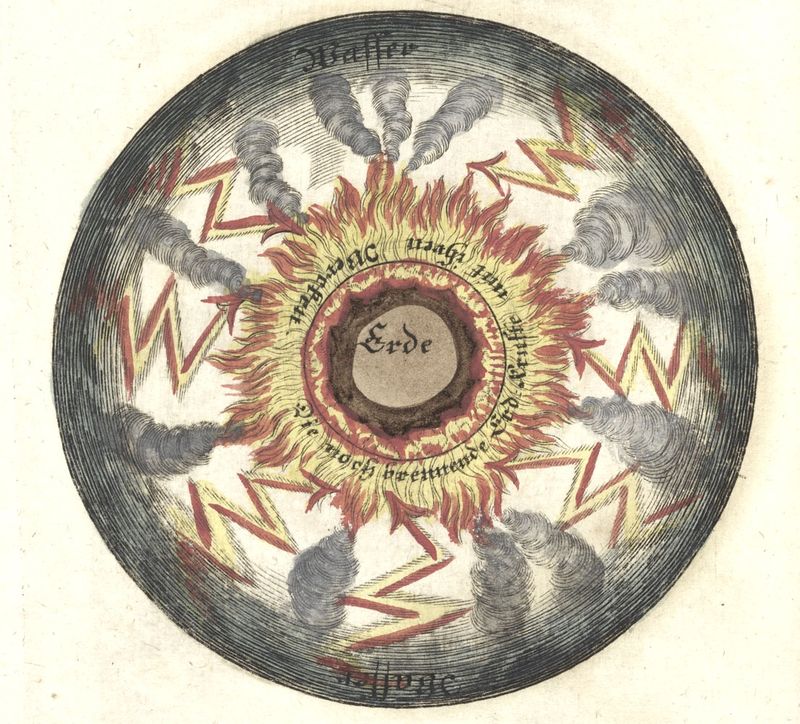
“Die Welt im Feuer, oder das wahre Vergehen und Ende der Welt, durch den letzten Sünd-Brand translate”

or: Depicting the destruction of the earth in several stages:

Depicting the Destruction of the Earth


Depicting the Destruction of the Earth


Depicting the Destruction of the Earth


"


“This engraving is one of twelve found in a fine little book, the brainchild of clergyman/semi-scientist Jodocus Frisch (1714-1787), who delivered to the (un-) waiting world his vision of how the earth and heaven will come to an end, there at the end of days.   Die Welt im Feuer, Oder das Wahre Vergehen und Ende der Welt, Durch den letzten Sünd-Brand  (printed in Sorau by Gottlob Heboldm in 1746) is one of very few works that depict (in  illustration) the destruction of the Earth, and even though Frisch illuminates biblically-based theory, the idea of the earth exploding into bits in primordial fire and so on was extraordinary.  The images were done in four colors representing the four elements:  yellow, brown, green and white represented (respectively) fire, earth, water and air. In this image, we see the fire-centric earth encircled by a sphere of water, which is surrounded by a sphere of fire, which in turn is surrounded by a sphere of air,  with much bad stuff happening. “

More to be found at thesciencebookstore.