The Netherlands diary

One of six decorative patterns of a knot; round shape of intertwined strapwork with an empty, disc in the centre, in the four corners single knots with ornamental foliage. Woodcut

Entry from ‘Albrecht Dürer and his Legacy’ BM exh. cat. 2002, no.103:
‘This woodcut design for ornament is one of six ‘knots’, as Dürer referred to them in his Netherlands diary (see Goris and Marlier, p. 81) copied after six engravings of c. 1490-1500 thought to be designed by Leonardo da Vinci

via

Philip Glass – Geometry of Circles (Sesame Street) (1979)

“”Geometry of Circles” is a series of unnumbered animation pieces created for Sesame Street in 1979. Cathryn Aison commissioned Philip Glass to write music for animation based on her storyboard which had been submitted to and approved by Edith Zornow of CTW.

The shorts consist of the movement of six circles (each with a different color of the rainbow) that are formed by and split up into various geometric patterns. Glass’s music underscores the animation in a style that closely resembles the “Dance” numbers and the North Star vignettes written during the same time period as his Einstein on the Beach opera.”

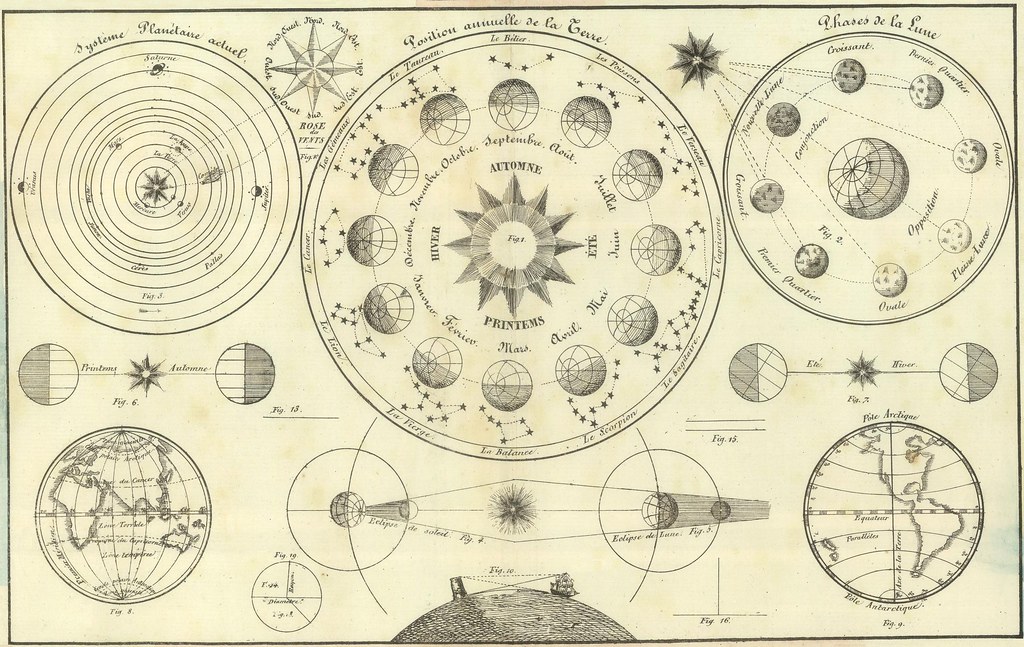
Tableau d’Astronomie et de Sphère

H'Atlas Universel d'Histoire et de Geographie Anciennes et Modernes, de Mythologie, des Religions, d'Astronomie, de Physique, de Geologie, de Histoire Naturelle, de Grammaire, de Rhetorique..' by Henri Duval, 1834; published in Paris by L Houbloup.
H’Atlas Universel d’Histoire et de Geographie Anciennes et Modernes, de Mythologie, des Religions, d’Astronomie, de Physique, de Geologie, de Histoire Naturelle, de Grammaire, de Rhetorique..’ by Henri Duval, 1834; published in Paris by L Houbloup.

'General Atlas Of The World: Containing Upwards Of Seventy Maps. Engraved On Steel, In The First Style Of Art, By Sidney Hall, William Hughes, F.R.G.S., &c. New Edition. Embracing All The Latest Discoveries Obtained From Government Surveys And Expeditions, Books Of Recent Travel, And Other Sources, Including The North-West Passage Discovered By H.M. Ship Investigator. With Introductory Chapters On The Geography And Statistics Of The Various Countries Of The World, And A Complete Index Of 65,000 Names' by Adam & Charles Black, Sidney Hall and William Hughes, 1854; published in Edinburgh by A & C Black.
‘General Atlas Of The World: Containing Upwards Of Seventy Maps. Engraved On Steel, In The First Style Of Art, By Sidney Hall, William Hughes, F.R.G.S., &c. New Edition. Embracing All The Latest Discoveries Obtained From Government Surveys And Expeditions, Books Of Recent Travel, And Other Sources, Including The North-West Passage Discovered By H.M. Ship Investigator. With Introductory Chapters On The Geography And Statistics Of The Various Countries Of The World, And A Complete Index Of 65,000 Names’ by Adam & Charles Black, Sidney Hall and William Hughes, 1854; published in Edinburgh by A & C Black.

A time table indicating the difference in time between the principal cities of the World and also showing their air-line distance from Washington. - 'Mitchell's New General Atlas, Containing Maps Of The Various Countries Of The World, Plans Of Cities, Etc., Embraced In Ninety-Three Quarto Maps, Forming A Series Of One Hundred and Forty-seven Maps and Plans, Together With Valuable Statistical Tables..' by Samuel Augustus Mitchell Jr, 1883; published in Philadelphia by WM Bradley.
A time table indicating the difference in time between the principal cities of the World and also showing their air-line distance from Washington. – ‘Mitchell’s New General Atlas, Containing Maps Of The Various Countries Of The World, Plans Of Cities, Etc., Embraced In Ninety-Three Quarto Maps, Forming A Series Of One Hundred and Forty-seven Maps and Plans, Together With Valuable Statistical Tables..’ by Samuel Augustus Mitchell Jr, 1883; published in Philadelphia by WM Bradley.

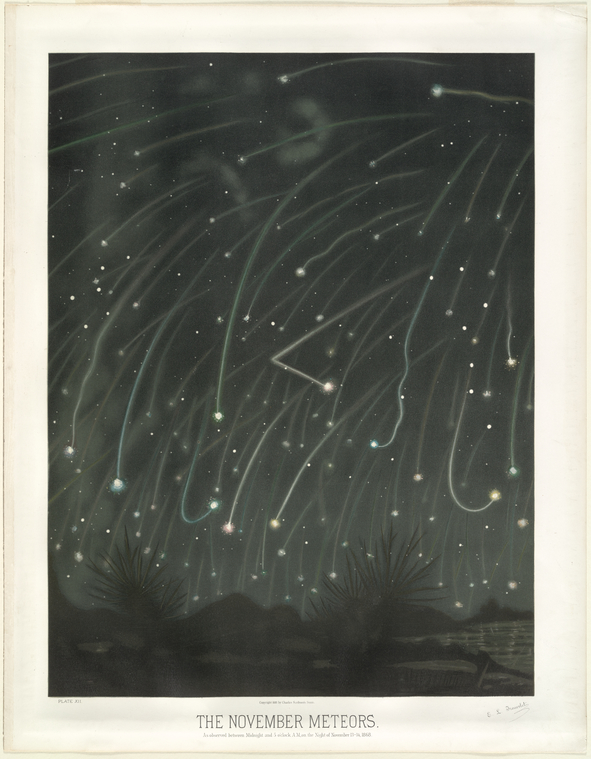
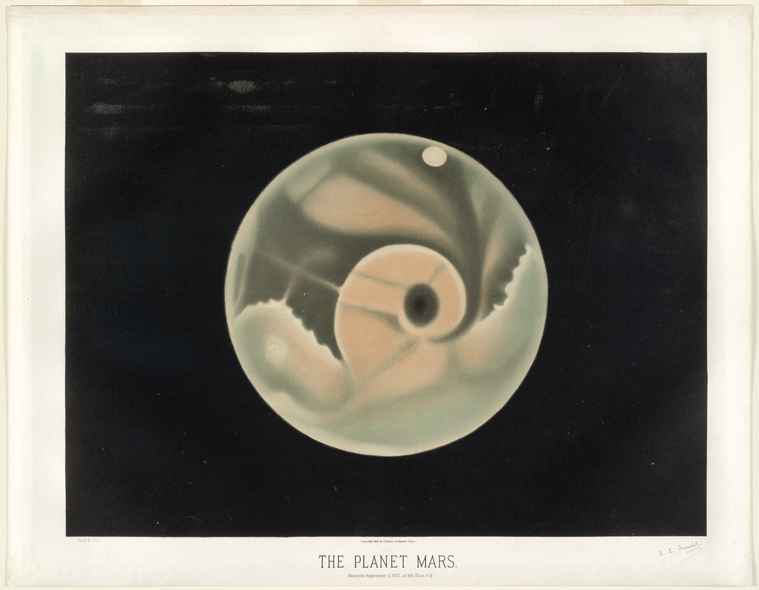
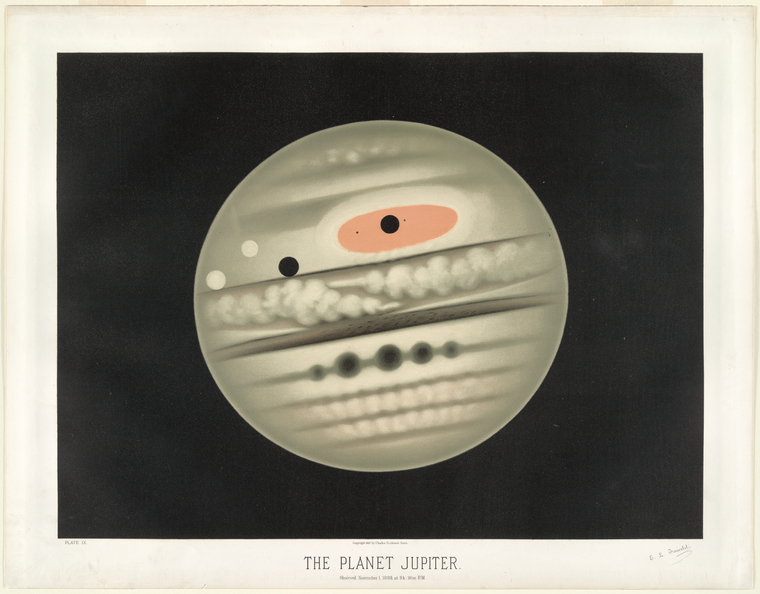
From BliOdyssey

Monomyth / Hero’s Journey

By scan from an unknown publication by an anonymous poster, in a thread, gave permission to use it. Re-drawn by User:Slashme - 4chan.org, thread about monomyths, AKA the hero's journey, Public Domain, https://commons.wikimedia.org/w/index.php?curid=10284342
By scan from an unknown publication by an anonymous poster, in a thread, gave permission to use it. Re-drawn by User:Slashme – 4chan.org, thread about monomyths, AKA the hero’s journey, Public Domain, https://commons.wikimedia.org/w/index.php?curid=10284342


“The study of hero myth narratives started in 1871 with anthropologist Edward Taylor’s observations of common patterns in plots of hero’s journeys. Later on, others introduced various theories on hero myth narratives such as Otto Rank and his Freudian psychoanalytic approach to myth, Lord Raglan’s unification of myth and rituals, and eventually hero myth pattern studies were popularized by Joseph Campbell, who was influenced by Carl Jung’s view of myth. In his 1949 work The Hero with a Thousand Faces, Campbell described the basic narrative pattern as follows:

‘A hero ventures forth from the world of common day into a region of supernatural wonder: fabulous forces are there encountered and a decisive victory is won: the hero comes back from this mysterious adventure with the power to bestow boons on his fellow man.'”

via

Hilma af Klint (1862 – 1944)

Hilma af Klint was a Swedish artist and mystic whose paintings were amongst the first abstract art. She belonged to a group called ‘The Five’ and the paintings or diagrams were a visual representation of complex philosophical ideas.”

SERIES VII - NO. 5 - 1920
SERIES VII – NO. 5 – 1920

“At the Academy of Fine Arts she met Anna Cassel, the first of the four women with whom she later worked in “The Five” (de Fem), a group of artists who shared her ideas. The group of female artists The Five was engaged in the paranormal and regularly organized spiritistic séances. They recorded in a book a completely new system of mystical thoughts in the form of messages from higher spirits, called The High Masters (“Höga Mästare”). One, Gregor, spoke thus: “all the knowledge that is not of the senses, not of the intellect, not of the heart but is the property that exclusively belongs to the deepest aspect of your being…the knowledge of your spirit”.”


Booklet with drawings by Hilma af Klint.

Booklet with drawings by Hilma af Klint.

The pictures were painted directly through me, without any preliminary drawings, and with great force. I had no idea what the paintings were supposed to depict; nevertheless I worked swiftly and surely, without changing a single brush stroke.”


Svanen (The Swan), nr 17, Group 9, Series SUW, October 1914 – March 1915. This abstract work was never exhibited during af Klint's lifetime.

Svanen (The Swan), nr 17, Group 9, Series SUW, October 1914 – March 1915. This abstract work was never exhibited during af Klint’s lifetime.

via

Newton’s colour circle

“In a mixture of primary colours, the quantity and quality of each being given, to know the colour of the compound.”


Newton's colour circle

from wiki – Throughout Opticks, Newton compared colours in the spectrum to a run of musical notes. To this purpose, he used a Dorian mode, similar to a white-note scale on the piano, starting at D. He divided his colour wheel in musical proportions round the circumference, in the arcs from DE to CD. Each segment was given a spectral colour, starting from red at DE, through orange, yellow, green, blew [sic], indigo, to violet in CD. (The colours are commonly known as ROY G BIV.)

The middle of the colours—their ‘centres of gravity’—are shown by p, q, r, s, t, u, and x. The centre of the circle, at O, was presumed to be white. Newton went on to describe how a non-spectral colour, such as z, could be described by its distance from O and the corresponding spectral colour, Y.