





reblogged from kitten-little
reblogged from kitten-little
“The size and age of the Cosmos are beyond ordinary human understanding. Lost somewhere between immensity and eternity is our tiny planetary home. In a cosmic perspective, most human concerns seem insignificant, even petty. And yet our species is young and curious and brave and shows much promise. In the last few millennia we have made the most astonishing and unexpected discoveries about the Cosmos and our place within it, explorations that are exhilarating to consider. They remind us that humans have evolved to wonder, that understanding is a joy, that knowledge is prerequisite to survival. I believe our future depends on how well we know this Cosmos in which we float like a mote of dust in the morning sky.”
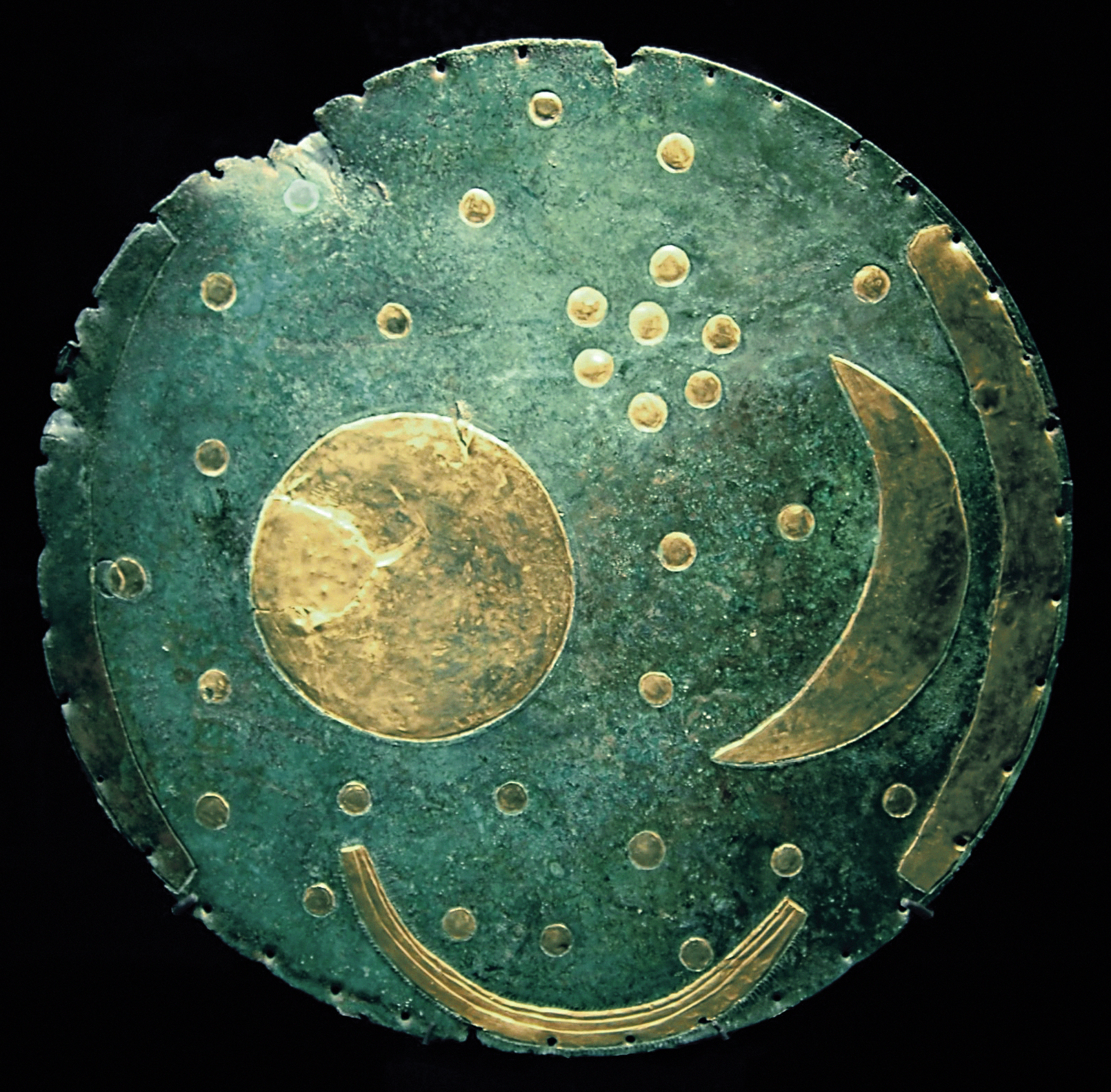
“The Nebra sky disk is a bronze disk of around 30 centimeters (12 in) diameter and a weight of 2.2 kilograms (4.9 lb), with a blue-green patina and inlaid with gold symbols. These are interpreted generally as a sun or full moon, a lunar crescent, and stars (including a cluster interpreted as the Pleiades). Two golden arcs along the sides, marking the angle between the solstices, were added later. A final addition was another arc at the bottom surrounded with multiple strokes (of uncertain meaning, variously interpreted as a Solar Barge with numerous oars, as the Milky Way, or as a rainbow).”
“The disk may be an astronomical instrument as well as an item of religious significance. The blue-green patina of the bronze may have been an intentional part of the original artifact. The find is regarded as reconfirming that the astronomical knowledge and abilities of the people of the European Bronze Age included close observation of the yearly course of the Sun, and the angle between its rising and setting points at summer and winter solstice. While much older earthworks and megalithic astronomical complexes such as the Goseck circle and Stonehenge had already been used to mark the solstices, the disk is the oldest known “portable instrument” to allow such measurements. Pásztor, however, sees no evidence that the disk was a practical device for solar measurements.”
via trixietreats
 Paul Greer