Why Our Future Depends on Libraries, Reading and Daydreaming

“Every now and again it becomes fashionable among some adults to point at a subset of children’s books, a genre, perhaps, or an author, and to declare them bad books, books that children should be stopped from reading…It’s tosh. It’s snobbery and it’s foolishness. There are no bad authors for children, that children like and want to read and seek out, because every child is different. They can find the stories they need to, and they bring themselves to stories. A hackneyed, worn-out idea isn’t hackneyed and worn out to them. This is the first time the child has encountered it. Do not discourage children from reading because you feel they are reading the wrong thing. Fiction you do not like is a route to other books you may prefer. And not everyone has the same taste as you.”

Neil Gaimen


[YOUR ART IS BETTER THAN YOU THINK IT IS] – Problem Glyphs by Eliza Gauger


[YOUR ART IS BETTER THAN YOU THINK IT IS]

[YOUR ART IS BETTER THAN YOU THINK IT IS]

Anonymous asked:

“November 4th 2013, 12:09:00 am · 5 months ago

“I’m terrified that if i can’t create something of meaning, then i don’t even exist . I am constantly failing to measure up, humiliated to be ‘not quite good enough’. Sometimes despair causes me to be tempted to become destructive and hateful just so i leave a mark. I feel disposable. I need the courage to grow, the faith to try. Is there a sigil for that?”


“Problem Glyphs is a project by Eliza Gauger in which sigils are drawn in response to problems you send in. There are over 200 glyphs so far. You can support this project on Patreon or with a one time contribution.”

Why I Adore Night

“I have noticed that when all the lights are on, people tend to talk about what they are doing – their outer lives. Sitting round in candlelight or firelight, people start to talk about how they are feeling – their inner lives. They speak subjectively, they argue less, there are longer pauses. To sit alone without any electric light is curiously creative. I have my best ideas at dawn or at nightfall, but not if I switch on the lights – then I start thinking about projects, deadlines, demands, and the shadows and shapes of the house become objects, not suggestions, things that need to done, not a background to thought.”

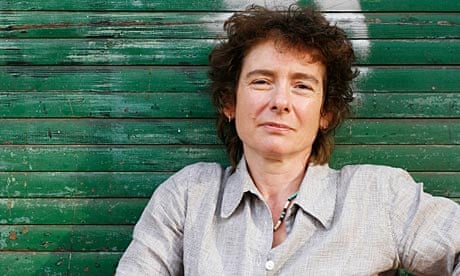
Literary Birthday – Jeanette Winterson, born 27 August 1959


jeanette

reblogging  Amanda Patterson for Writers Write

Literary Birthday – 27 August

Jeanette Winterson, born 27 August 1959

Seven Quotes

1. Language is what stops the heart exploding.
2. It’s not the one thing nor the other that leads to madness, but the space in between.
3.Everything in writing begins with language. Language begins with listening.
4. When people say that poetry is merely a luxury for the educated middle classes, or that it shouldn’t be read much at school because it is irrelevant, or any of the strange and stupid things that are said about poetry and its place in our lives, I suspect that the people doing the saying have had things pretty easy. A tough life needs a tough language – and that is what poetry is. That is what literature offers – a language powerful enough to say how it is.
5. What you risk reveals what you value.
6. So from the very first, if I was hurt in some way, then I would take a book — which was very difficult for me to buy when I was little — and I would go up into the hills, and that is how I would assuage my hurt.
7. Always in my books, I like to throw that rogue element into a stable situation and then see what happens.

Jeanette Winterson’s 10 Rules for Writing

1. Turn up for work. Discipline allows creative freedom. No discipline equals no freedom.
2. Never stop when you are stuck. You may not be able to solve the problem, but turn aside and write something else. Do not stop altogether.
3.Love what you do.
4. Be honest with yourself. If you are no good, accept it. If the work you are ­doing is no good, accept it.
5. Don’t hold on to poor work. If it was bad when it went in the drawer it will be just as bad when it comes out.
6. Take no notice of anyone you don’t respect.
7. Take no notice of anyone with a ­gender agenda. A lot of men still think that women lack imagination of the fiery kind.
8. Be ambitious for the work and not for the reward.
9. Trust your creativity.
10. Enjoy this work!
Winterson is a British writer who was awarded an OBE for services to literature. Oranges Are Not the Only Fruit won the 1985 Whitbread Prize for a First Novel, and was adapted for television by Winterson in 1990. She has won various awards around the world for her fiction and adaptations, including the Whitbread Prize, UK, and the Prix d’argent, Cannes Film Festival. She writes regularly for various UK newspapers.

Source for 10 Rules

Source for Image

How to Build a Universe

“Because today we live in a society in which spurious realities are manufactured by the media, by governments, by big corporations, by religious groups, political groups… So I ask, in my writing, What is real? Because unceasingly we are bombarded with pseudo-realities manufactured by very sophisticated people using very sophisticated electronic mechanisms. I do not distrust their motives; I distrust their power. They have a lot of it. And it is an astonishing power: that of creating whole universes, universes of the mind. I ought to know. I do the same thing.”

Philip K Dick

Using Meditation as an Anchor of Creative Integrity

“I came from painting. And a painter has none of those worries. A painter paints a painting. No one comes in and says, “You’ve got to change that blue.” It’s a joke to think that a film is going to mean anything if somebody else fiddles with it. If they give you the right to make the film, they owe you the right to make it the way you think it should be — the filmmaker. The filmmaker decides on every single element, every single word, every single sound, every single thing going down that highway through time. Otherwise, it won’t hold together. When there’s even a little hint of pressure coming from someplace else — like deadlines or going overbudget… — this affects the film. And you just want support, support, support… in a perfect world… so that you can really get the thing to be correct.”

David Lynch