


More on BibliOdyssey.
/ˈdrɔː(r)ɪŋ/
noun
1. a picture or diagram made with a pencil, pen, or crayon rather than paint.
“a series of charcoal drawings on white paper”
synonyms: sketch, picture, illustration, representation, portrayal, delineation, depiction, composition, study, diagram, outline, design, plan, artist’s impression; tracing
“he did a pencil drawing of the house”
2. an instance of selecting the winner or winners in a lottery or raffle.
“entrants need not be present at the drawing”

“Although popularly thought of as a rather dour and ascetic writer, there is a wonderfully playful aspect to Samuel Beckett’s creative output: the pictorial array of raggle-taggle characters and baroque broidery that scampers through his notebooks and manuscripts. Continuously—from decorating 1930s exercise books to embellishing the scraps of paper bearing his 1970s Mirlitonnades—doodling provided an amiable outlet when, yet again, he found himself up against the obduracy of words.
Beckett’s interest in the visual arts is well known. During his exhaustive travels around Germany in the 1930s he kept notes detailing his responses to the Old Master and more modern paintings that he had seen. More communally, throughout his life he formed close friendships with a number of artists including Jack B. Yeats, Bram Van Velde, Henri Hayden, and Avigdor Arikha. However, his appreciation of Fine Art seems to have had no discernibly direct effect on his own spontaneous drawings, which repeatedly appear to have earthier, and more mixed, antecedents.”

(via)

by Keri Smith
(via)
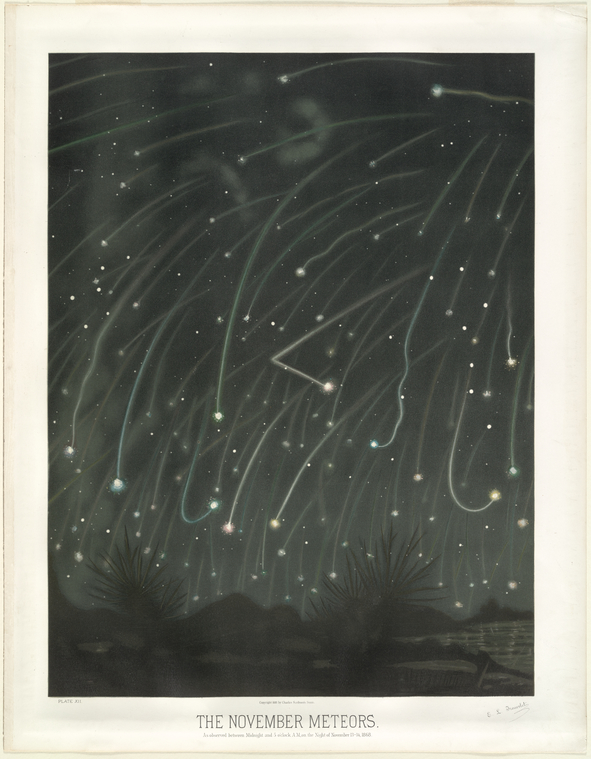
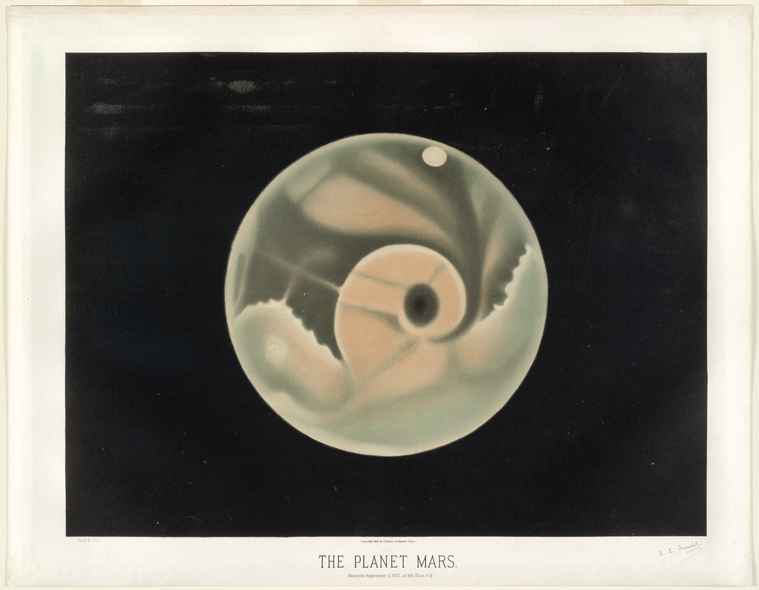
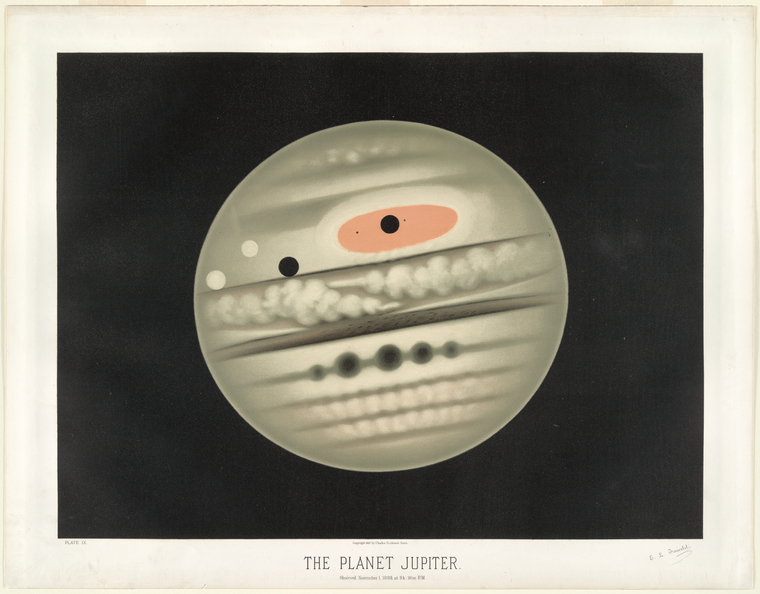
(Known for: Introducing gypsy moth to North America)
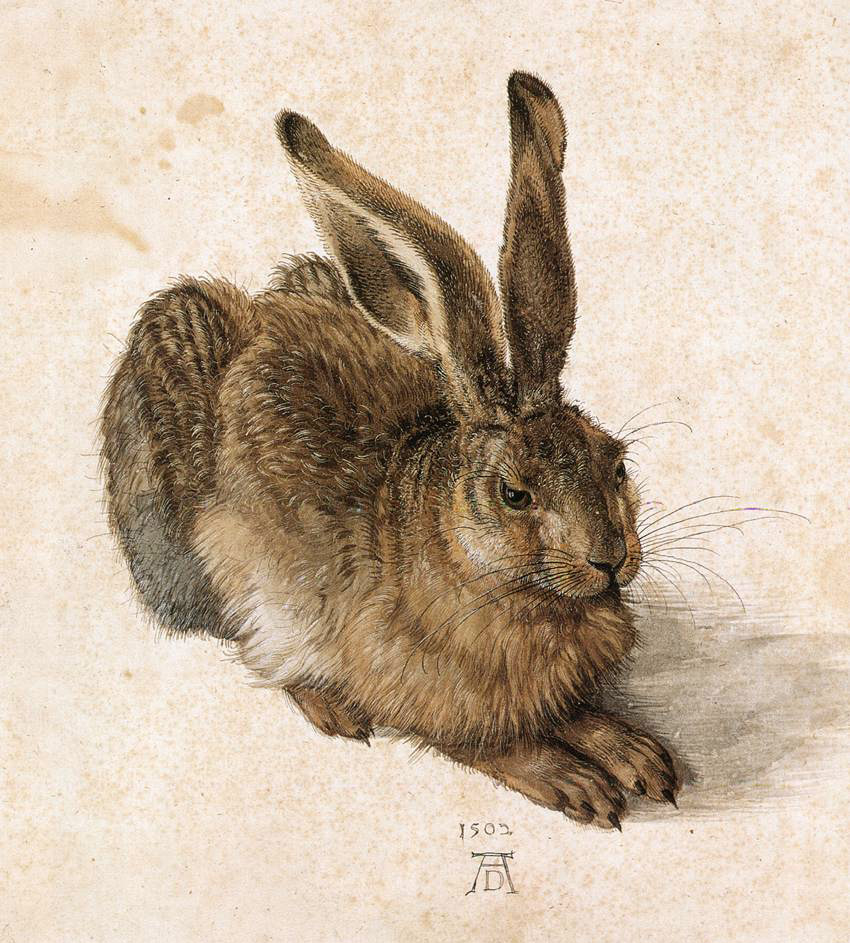
“There is some debate over how Dürer accurately captured the image of the hare: he may have sketched a hare in the wild and filled in the individual details from a dead animal, or captured one and held it alive in his studio while he worked on the painting. A reflection of the window frame in the hare’s eye is often cited as evidence for the theory that Dürer copied the hare from life in his workshop, but this cross-barred reflection is a technique that Dürer frequently used to add vitality to the eyes of his subjects.”

directed by Lucinda Schreiber and Yanni Kronenberg.


 Paul Greer