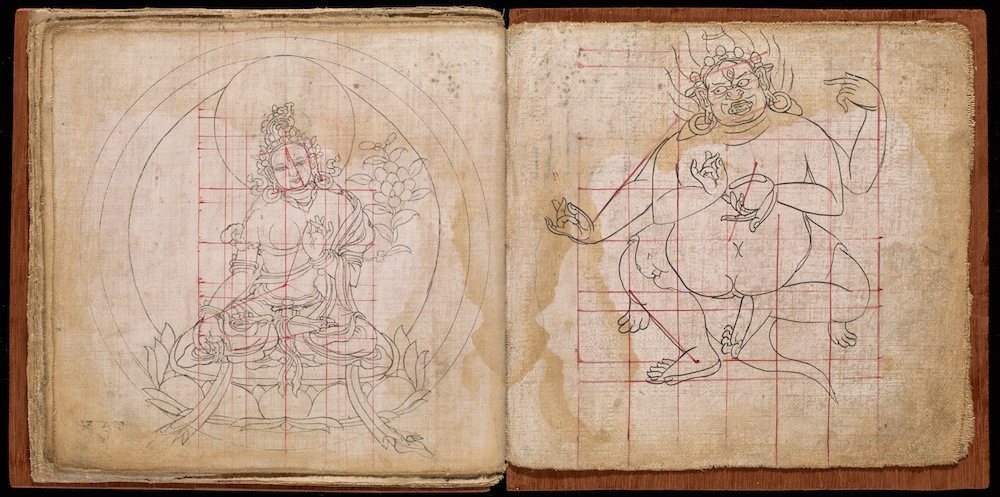
The Tibetan Book of Proportions


The Tibetan Book of Proportions


The Tibetan Book of Proportions


The Tibetan Book of Proportions


The Tibetan Book of Proportions


The Tibetan Book of Proportions


The Tibetan Book of Proportions


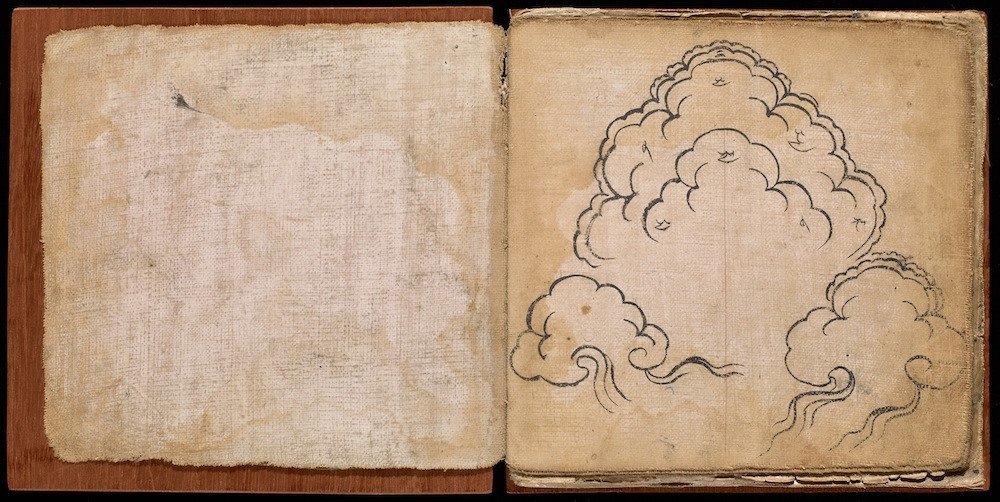
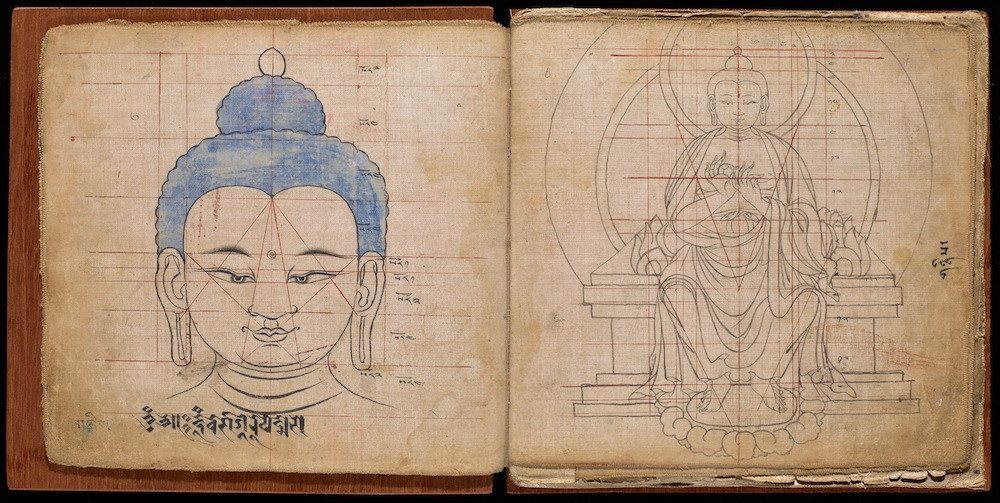
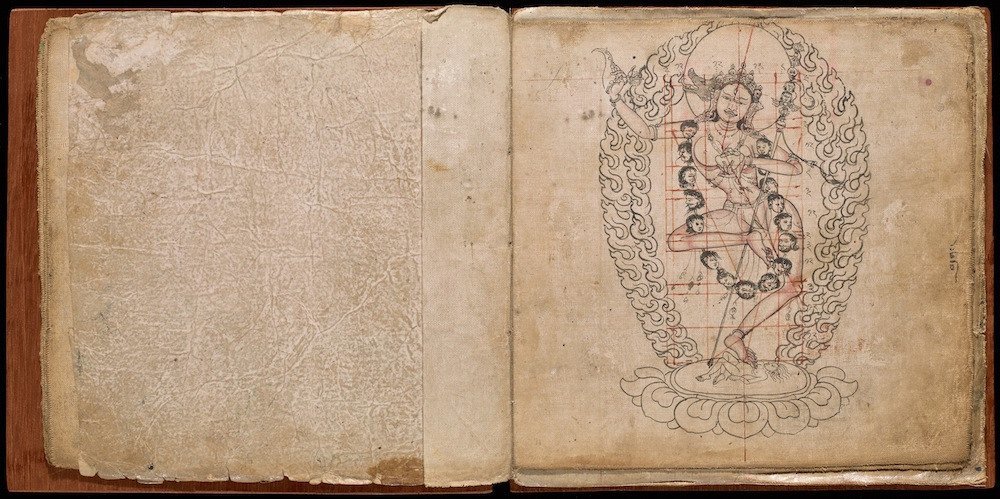
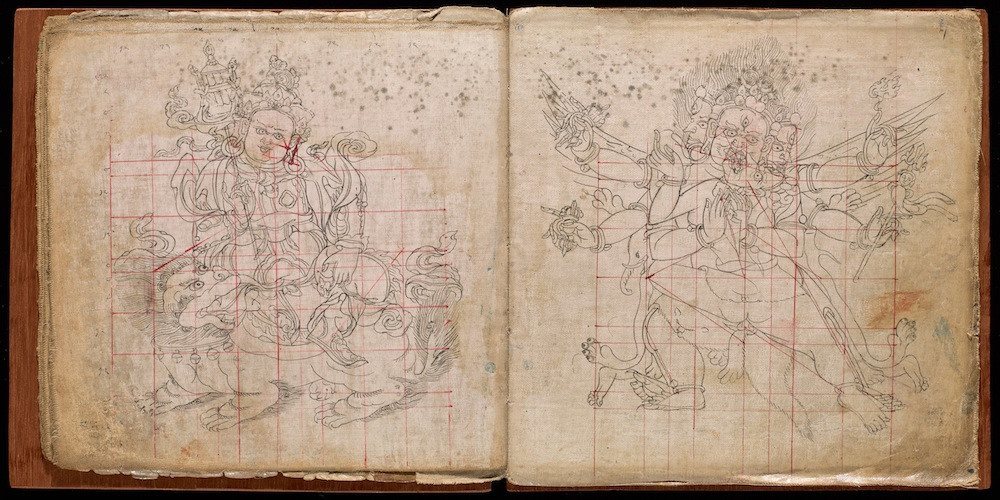
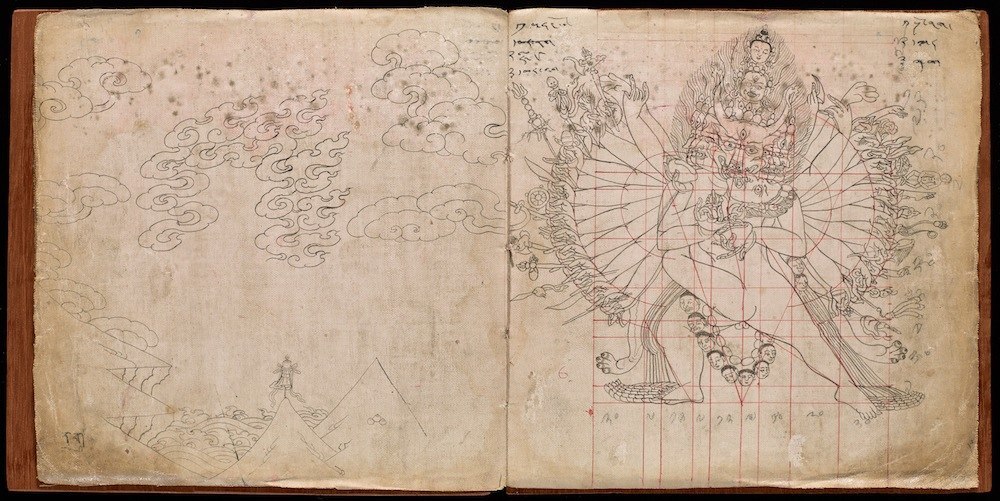
“Born some time around the early 4th century B.C., Siddhārtha Gautama was a Nepalese monk and wandering sage whose teachings went on to underpin Buddhism. As Buddhism spread, pictorial representations Gautama —the Buddha—were expected to be so particular that guidelines emerged as to how he should be drawn. Public Domain Review points to a book from the 1700s that shows, precisely, how the Buddha and other important Buddhist figures should appear.

Written in Newari script with Tibetan numerals, the book was apparently produced in Nepal for use in Tibet. The concept of the ‘ideal image’ of the Buddha emerged during the Golden Age of Gupta rule, from the 4th to 6th century. As well as the proportions, other aspects of the depiction – such as number of teeth, colour of eyes, direction of hairs – became very important.”

link updated, more to see here:

originally via .
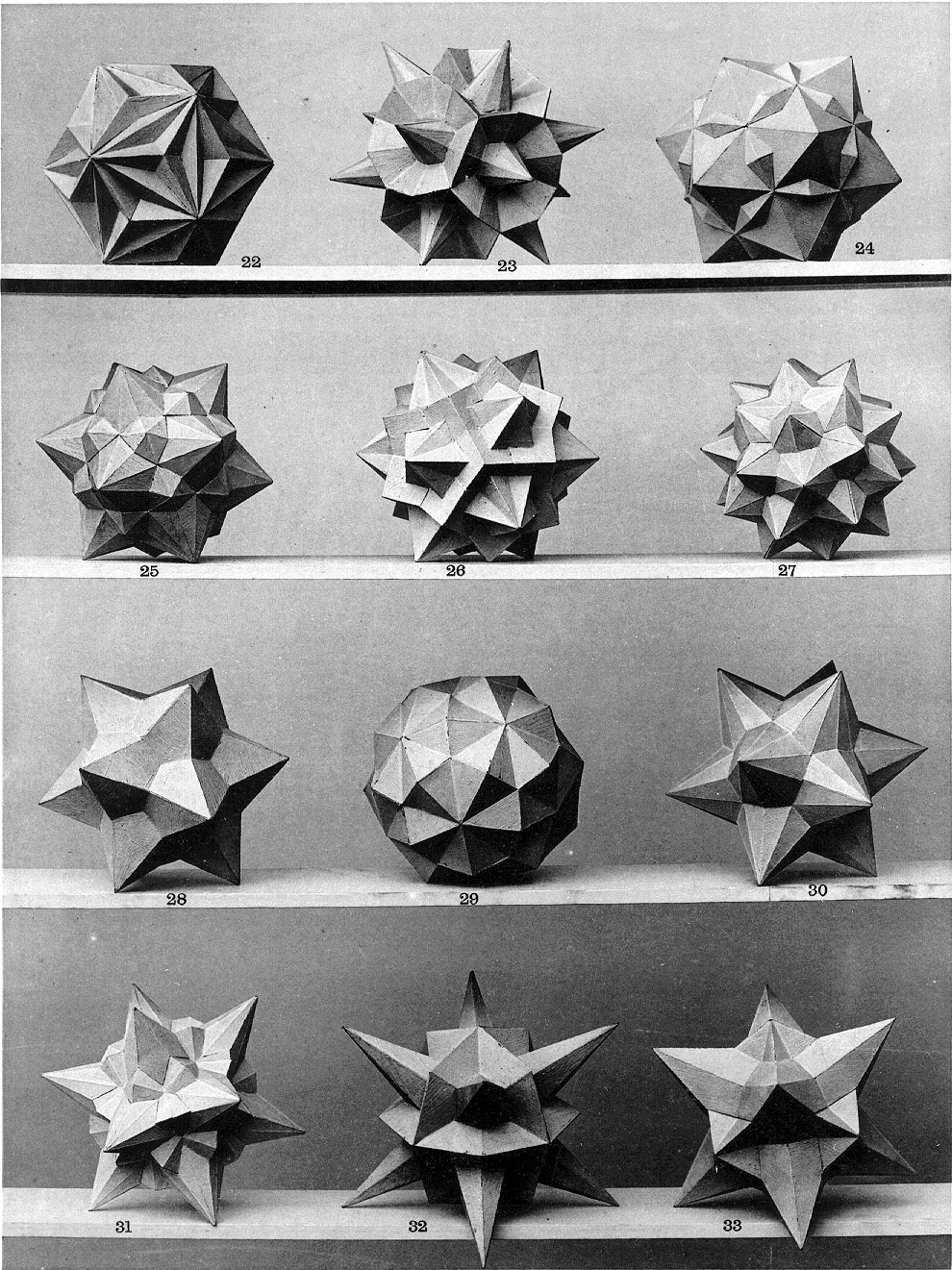
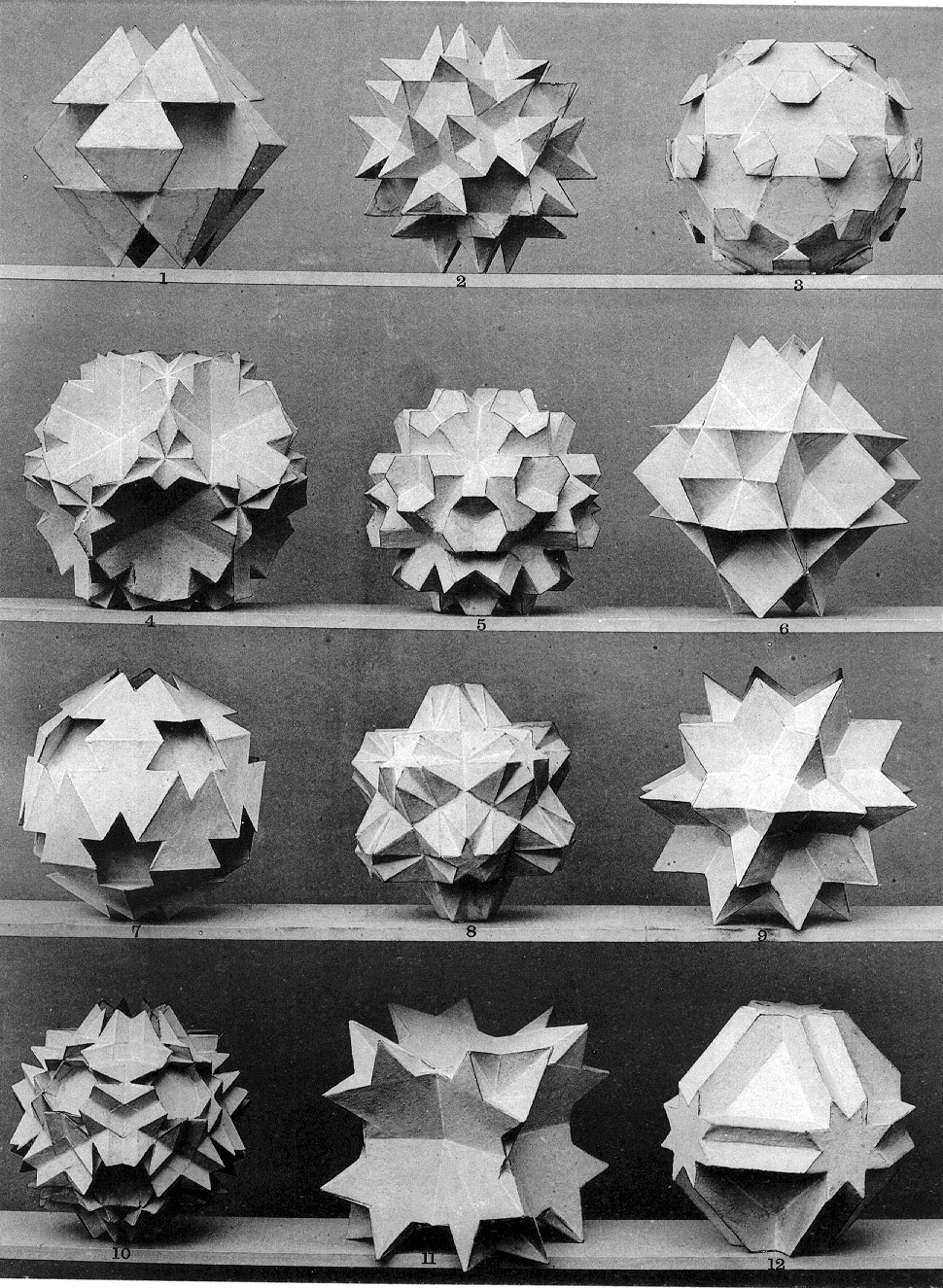
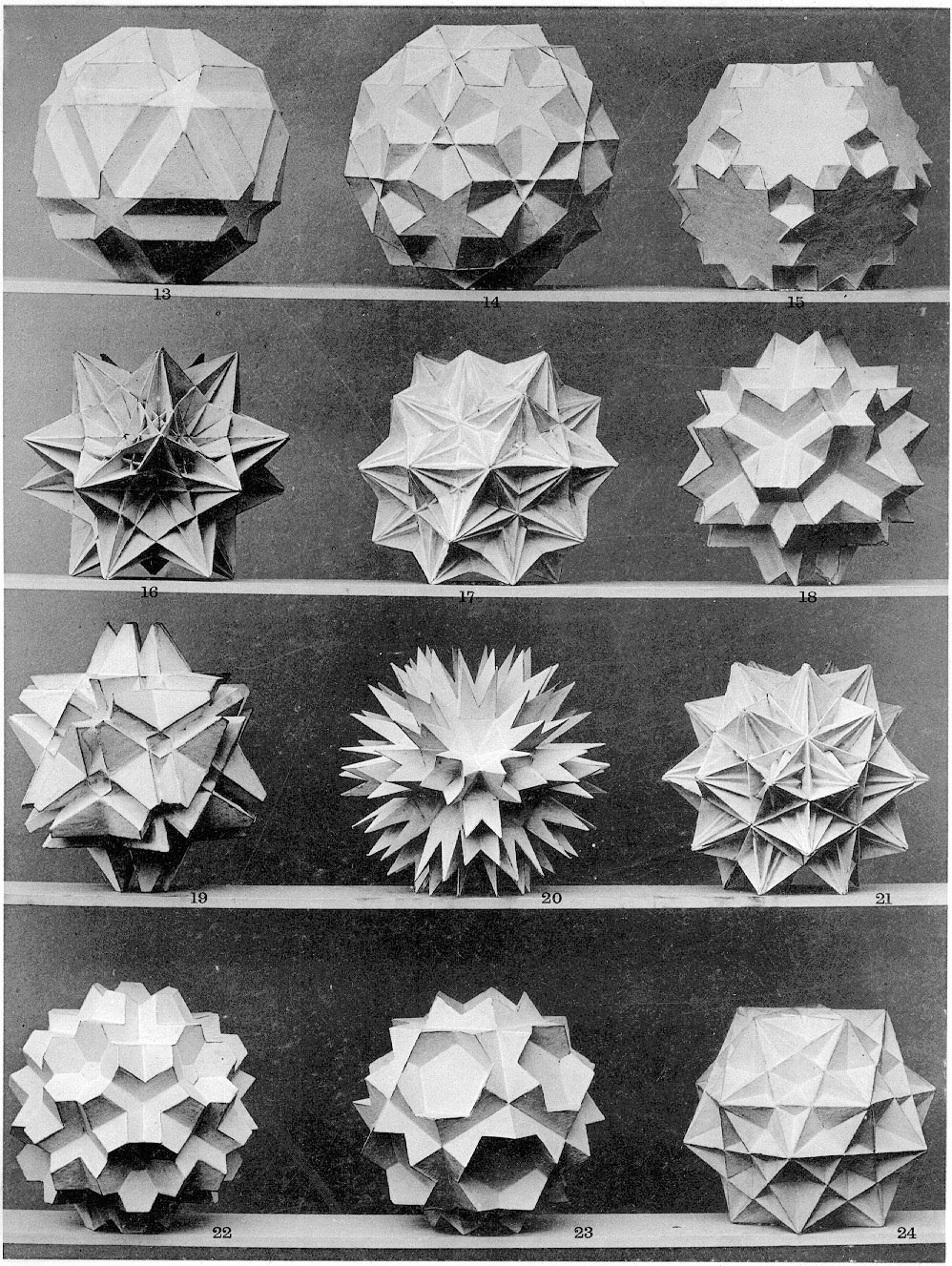
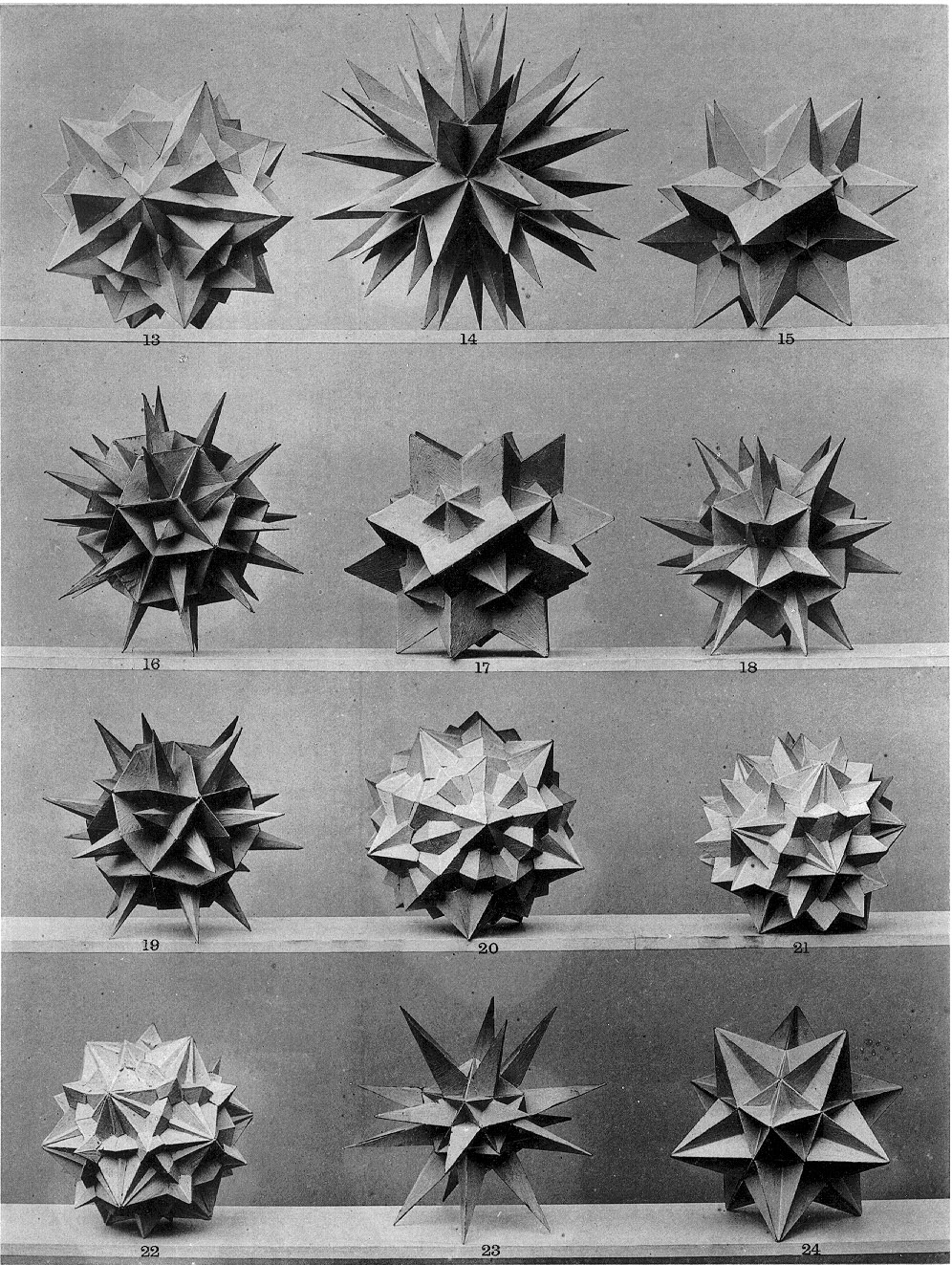
Prof. Dr, Max Bruckner, Four Plates from the Book “Vielecke und Vielflache”, (1900)

reblogging rudygodinez
Max Bruckner


Max Bruckner


Max Bruckner


Max Bruckner

Regular convex polyhedra, frequently referenced as “Platonic” solids, are featured prominently in the philosophy of Plato, who spoke about them, rather intuitively, in association to the four classical elements (earth, wind, fire, water… plus ether). However, it was Euclid who actually provided a mathematical description of each solid and found the ratio of the diameter of the circumscribed sphere to the length of the edge and argued that there are no further convex polyhedra than those 5: tetrahedron, hexahedron (also known as the cube), octahedron, dodecahedron and icosahedron.”

reblogging rudygodinez

Philip Glass – Geometry of Circles (Sesame Street) (1979)

“”Geometry of Circles” is a series of unnumbered animation pieces created for Sesame Street in 1979. Cathryn Aison commissioned Philip Glass to write music for animation based on her storyboard which had been submitted to and approved by Edith Zornow of CTW.

The shorts consist of the movement of six circles (each with a different color of the rainbow) that are formed by and split up into various geometric patterns. Glass’s music underscores the animation in a style that closely resembles the “Dance” numbers and the North Star vignettes written during the same time period as his Einstein on the Beach opera.”