Coltrane’s Circle of Fifths

From Open Culture:

Physicist and saxophonist Stephon Alexander has argued in his many public lectures and his book The Jazz of Physics that Albert Einstein and John Coltrane had quite a lot in common. Alexander in particular draws our attention to the so-called “Coltrane circle,” which resembles what any musician will recognize as the “Circle of Fifths,” but incorporates Coltrane’s own innovations. Coltrane gave the drawing to saxophonist and professor Yusef Lateef in 1967, who included it in his seminal text, Repository of Scales and Melodic Patterns. Where Lateef, as he writes in his autobiography, sees Coltrane’s music as a “spiritual journey” that “embraced the concerns of a rich tradition of autophysiopsychic music,” Alexander sees “the same geometric principle that motivated Einstein’s” quantum theory.

Neither description seems out of place. Musician and blogger Roel Hollander notes, “Thelonious Monk once said ‘All musicians are subconsciously mathematicians.’ Musicians like John Coltrane though have been very much aware of the mathematics of music and consciously applied it to his works.”

The Timbuktu Manuscripts 13C+

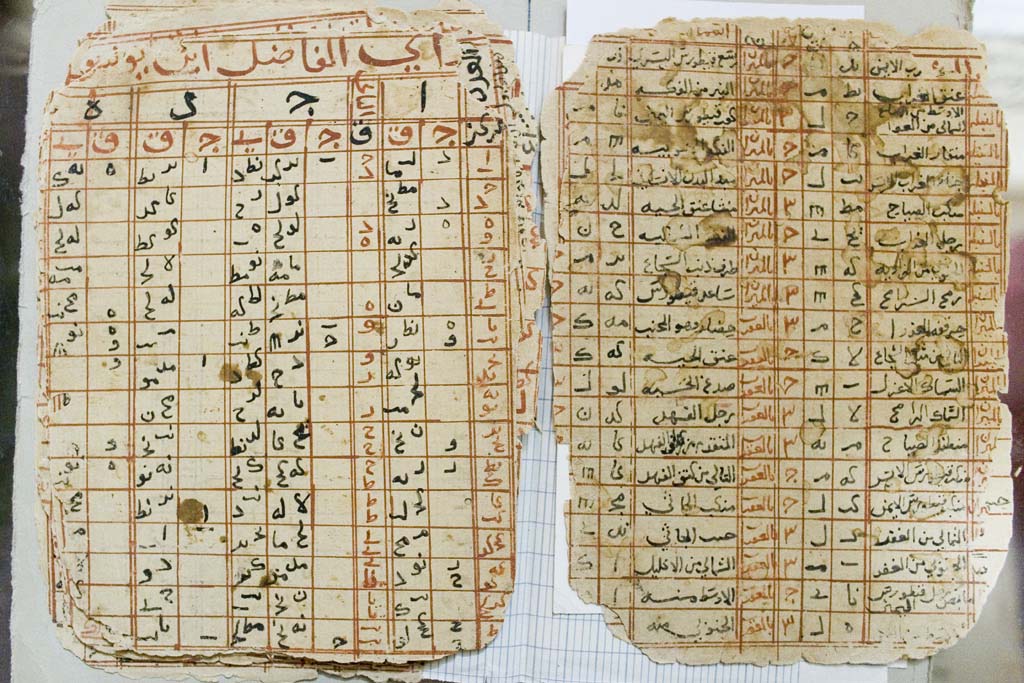
timbuktu-manuscripts-astronomy-tables

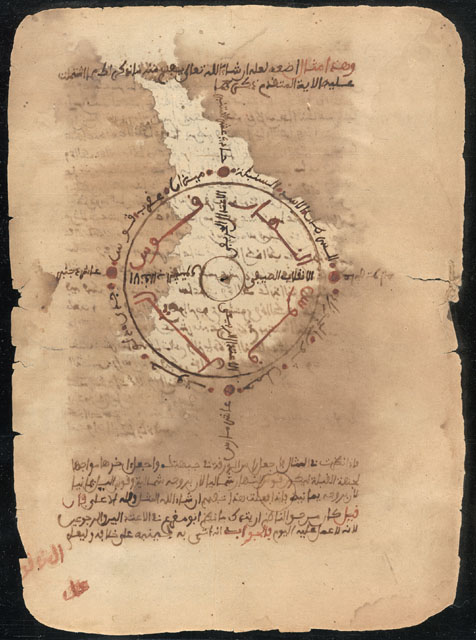
Timbuktu Manuscripts or (Tombouctou Manuscripts) is a blanket term for the large number of historically important manuscripts that have been preserved for centuries in private households in Timbuktu, Mali. The collections include manuscripts about art, medicine, philosophy, and science, as well as priceless copies of the Quran. The number of manuscripts in the collections has been estimated as high as 700,000.
loc_timbuktu_manuscripts_amm0001rs

The majority of manuscripts were written in Arabic, but many were also in local languages, including Manding, Songhay and Tamasheq. The dates of the manuscripts ranged between the late 13th and the early 20th centuries (i.e., from the Islamisation of the Mali Empire until the decline of traditional education in French Sudan). Their subject matter ranged from scholarly works to short letters. The manuscripts were passed down in Timbuktu families and were mostly in poor condition.[4] Most of the manuscripts remain unstudied and uncatalogued, and their total number is unknown, affording only rough estimates. A selection of about 160 manuscripts from the Mamma Haidara Library in Timbuktu and the Ahmed Baba collection were digitized by the Tombouctou Manuscripts Project in the 2000s.
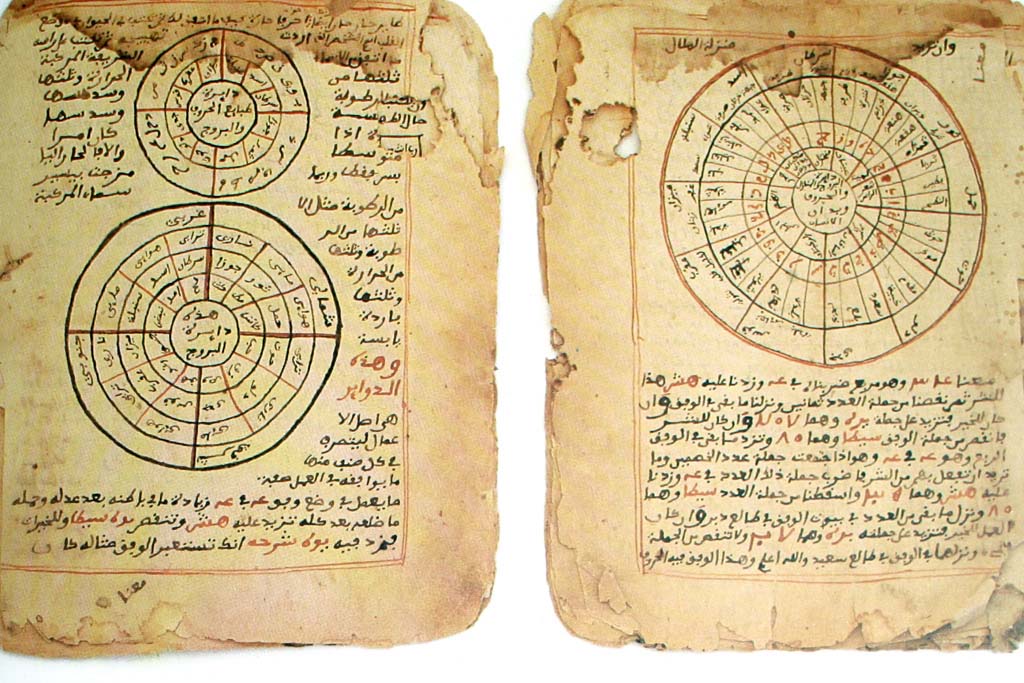
timbuktu-manuscripts-astronomy-mathematics

With the demise of Arabic education in Mali under French colonial rule, appreciation for the medieval manuscripts declined in Timbuktu, and many were being sold off. Time magazine related the account of an imam who picked up four of them for $50 each. In October 2008 one of the households was flooded, destroying 700 manuscripts.

from Wikipedia via Muslim Culture

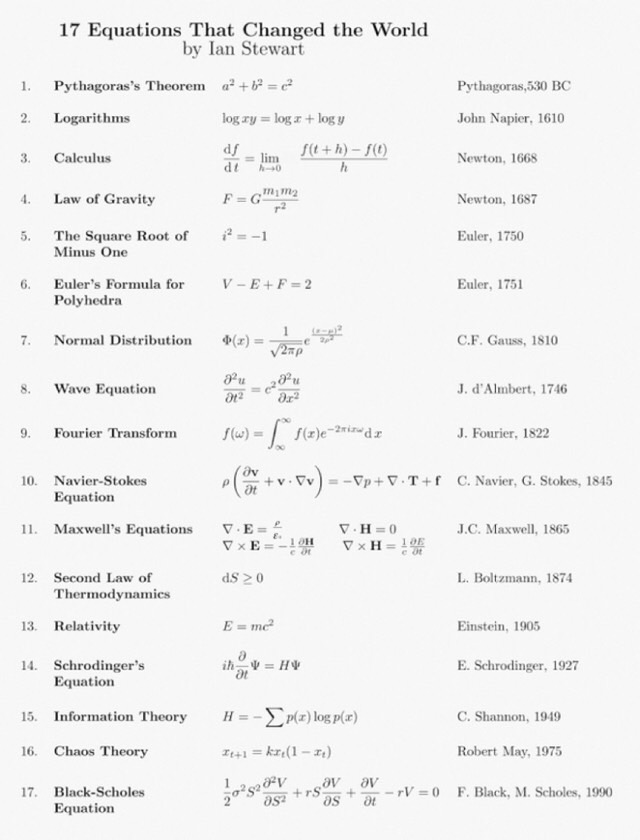
Musemathematics

“Numbers it is. All music when you come to think. Two multiplied by two divided by half is twice one. Vibrations: chords those are. One plus two plus six is seven. Do anything you like with figures juggling. Always find out this equal to that. Symmetry under a cemetery wall. He doesn’t see my mourning. Callous: all for his own gut. Musemathematics. And you think you’re listening to the etherial. But suppose you said it like: Martha, seven times nine minus x is thirtyfive thousand. Fall quite flat. It’s on account of the sounds it is.”
– James Joyce from Ulysses

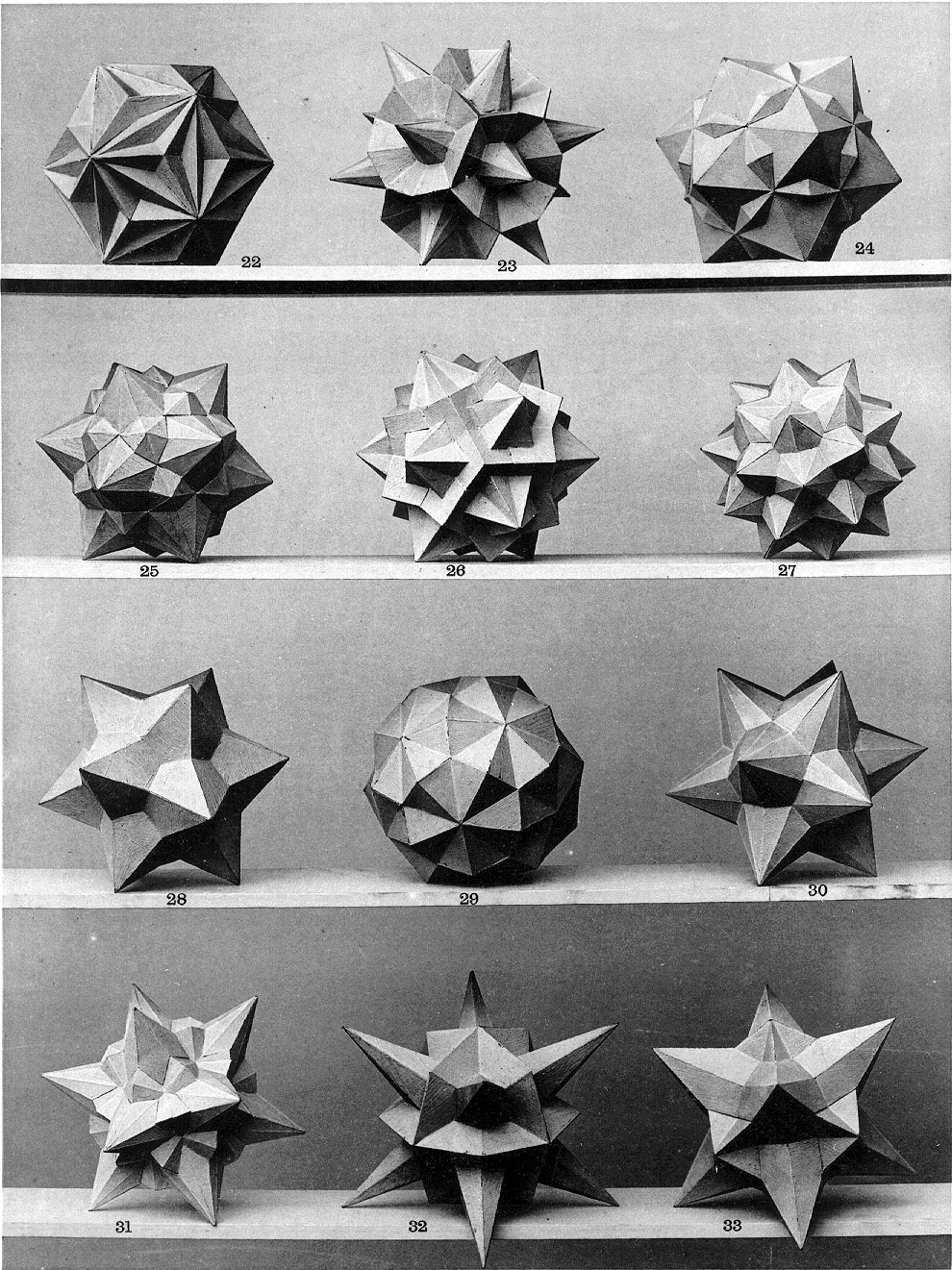
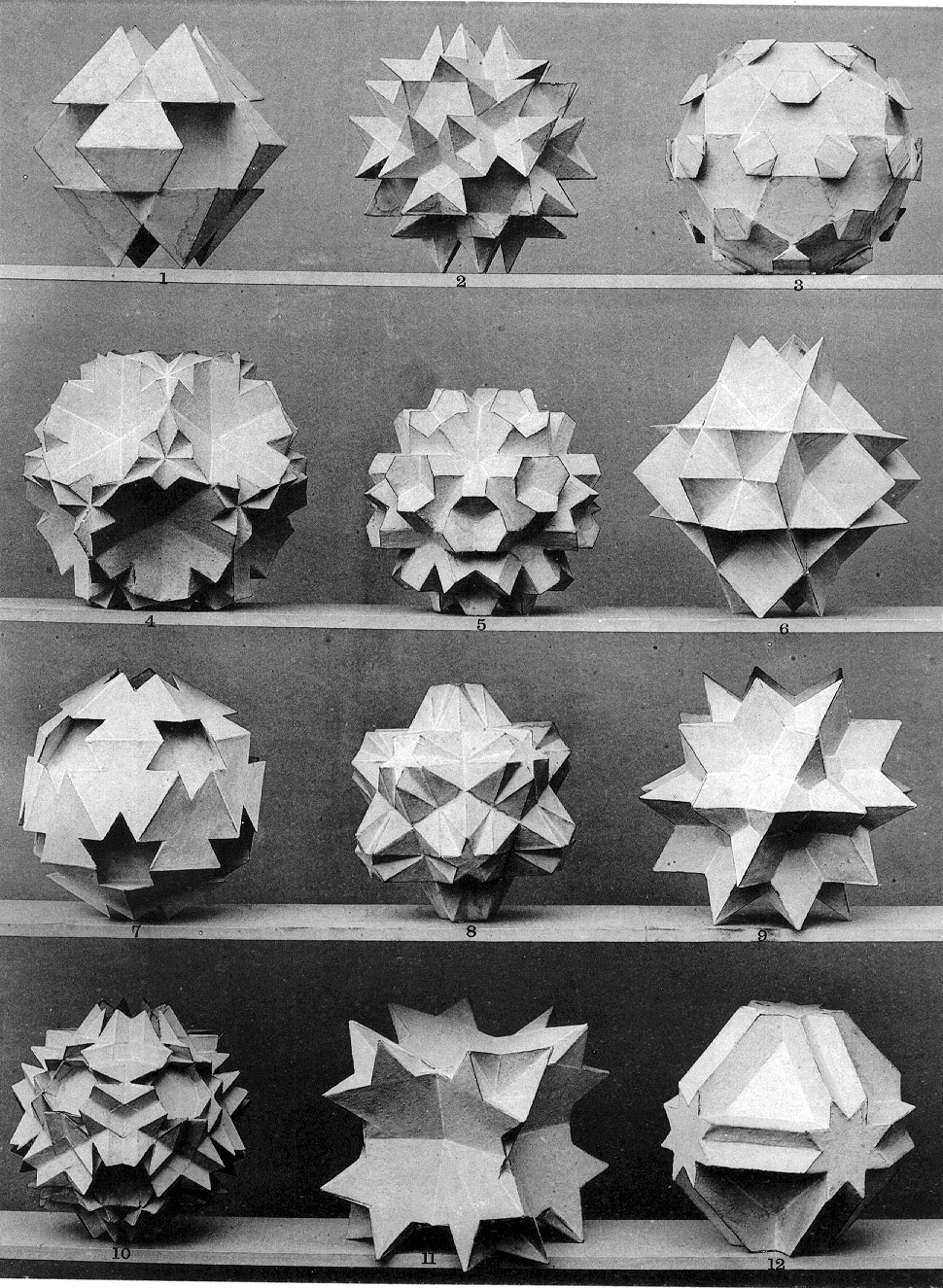
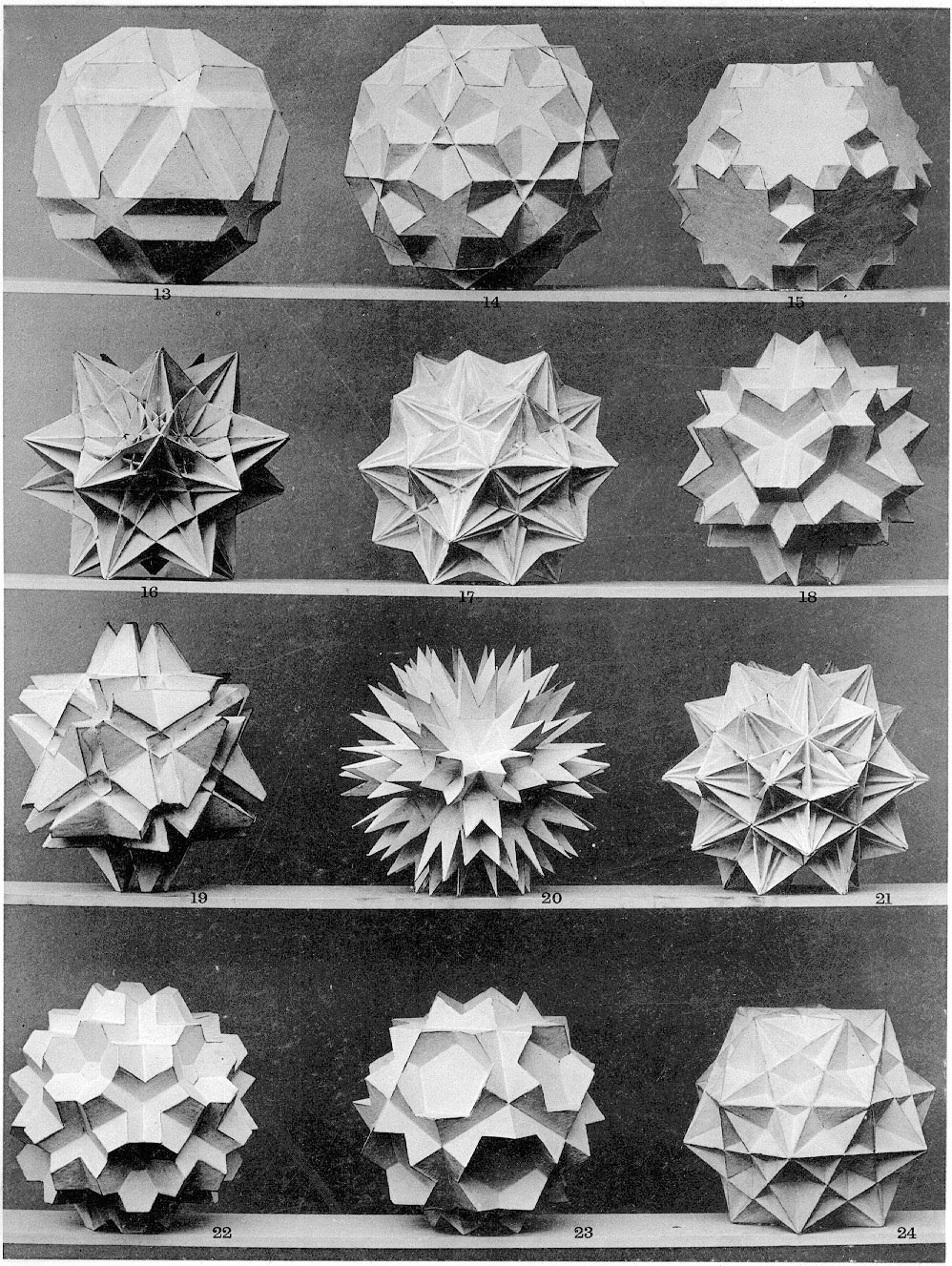
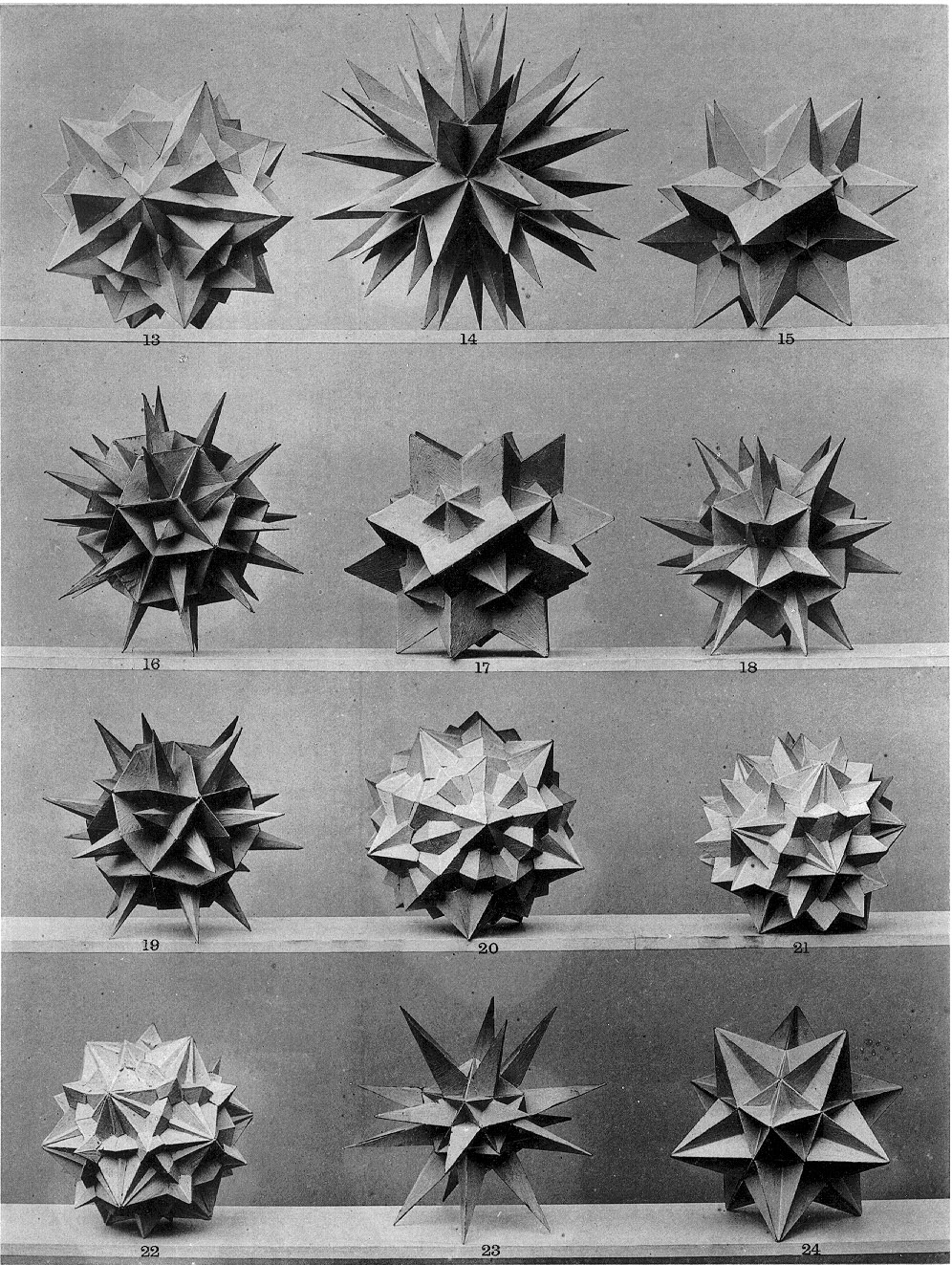
Prof. Dr, Max Bruckner, Four Plates from the Book “Vielecke und Vielflache”, (1900)

reblogging rudygodinez
Max Bruckner


Max Bruckner


Max Bruckner


Max Bruckner

Regular convex polyhedra, frequently referenced as “Platonic” solids, are featured prominently in the philosophy of Plato, who spoke about them, rather intuitively, in association to the four classical elements (earth, wind, fire, water… plus ether). However, it was Euclid who actually provided a mathematical description of each solid and found the ratio of the diameter of the circumscribed sphere to the length of the edge and argued that there are no further convex polyhedra than those 5: tetrahedron, hexahedron (also known as the cube), octahedron, dodecahedron and icosahedron.”

reblogging rudygodinez