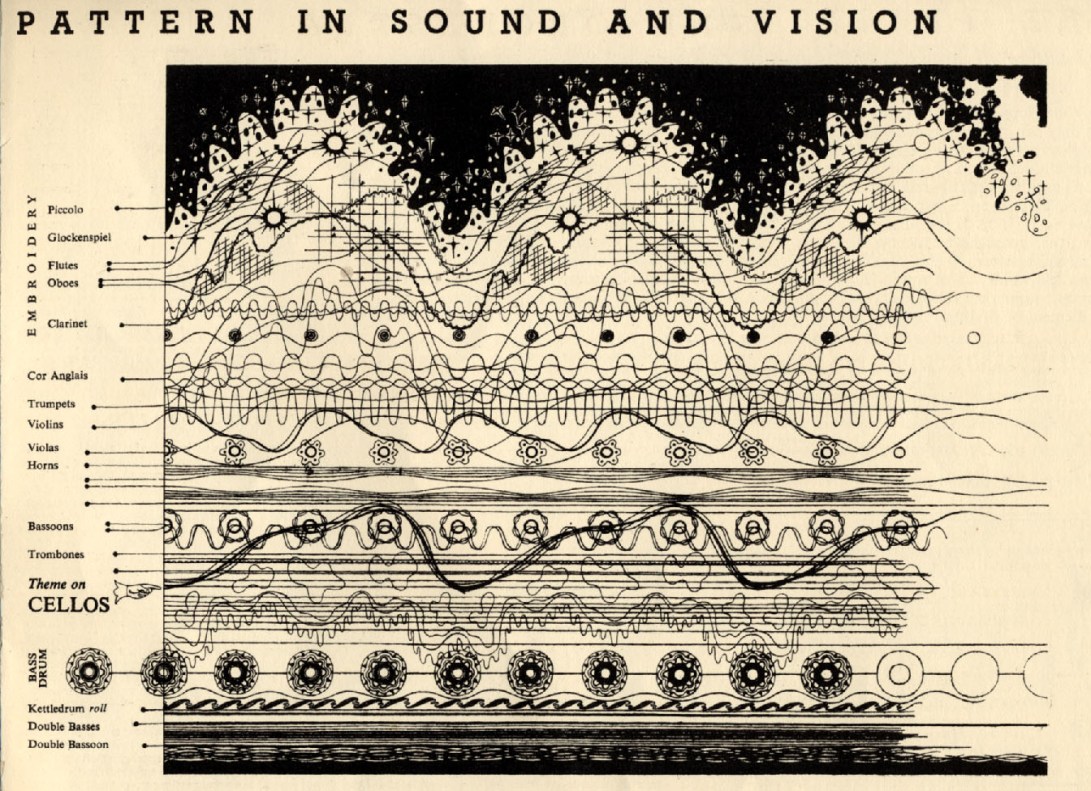
A Pattern In Sound and Vision
/ˈmjuːzɪk/
noun
1. vocal or instrumental sounds (or both) combined in such a way as to produce beauty of form, harmony, and expression of emotion.
“couples were dancing to the music”
synonyms: notes, strains, tones, chords, sound; More
2. the written or printed signs representing vocal or instrumental sound.
“Tony learned to read music”

This week saw the very first Bristol Proms get underway and on Monday night BDH collaborated with the Bristol Old Vic, the Watershed and a fantastic team of technicians to showcase the extraordinary Jan Lisieki playing Chopin’s Etudes.
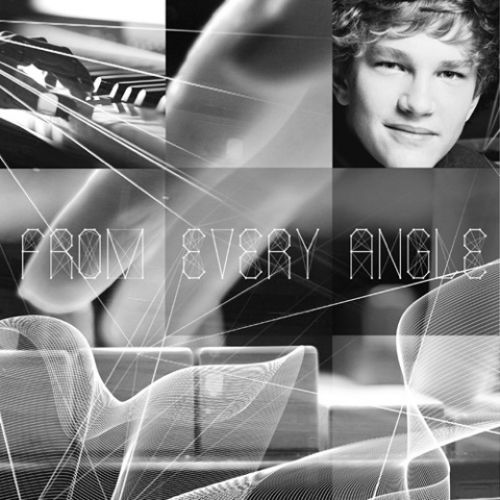
Lisieki performed on the stage of the Old Vic surrounded by cameras and scanning equipment, whilst a team of film makers technicians and artists weaved a live visual interpretation of the event, including CGI (by me), scanned versions of Jan and multiple camera angles, which was beamed over to the Watershed as a unique live experience to be enjoyed by a clapping and cheering crowd.
It was a great experience working on a live event with such a great crew, many lessons were learned and hopefully we can do more in the future, there is so much to explore with the live generation of 3D animation and it’s interaction with a real time event.
Here’s some grabs from the days leading up to the concert:
An edited and finessed version of the Watershed feed will be shown on Saturday night on More4 as part of their Piano Night.
“To the best of my recollection it was done in a day. I don’t think it was two days. On a very, very old board, I mean this board was old! An Elvis type of board, old-tech, low-tech, in a poorly lit, cheap old studio with very little time. To David’s credit, he listened with his ear to each thing and talked it out with me, I gave him what I thought it should have, he put that in its perspective, added some touches. He’s always liked the most recent technology, so there was something called a Time Cube you could feed a signal into — it looked like a bong, a big plastic tube with a couple of bends in it — and when the sound came out the other end, it sort of shot at you like an echo effect. He used that on the guitar in “Gimme Danger”, a beautiful guitar echo overload that’s absolutely beautiful; and on the drums in “Your Pretty Face Is Going To Hell”. His concept was, “You’re so primitive, your drummer should sound like he’s beating a log!” It’s not a bad job that he did…I’m very proud of the eccentric, odd little record that came out.”
— Iggy Pop
“…the most absurd situation I encountered when I was recording was the first time I worked with Iggy Pop. He wanted me to mix Raw Power, so he brought the 24-track tape in, and he put it up. He had the band on one track, lead guitar on another and him on a third. Out of 24 tracks there were just three tracks that were used. He said ‘see what you can do with this’. I said, ‘Jim, there’s nothing to mix’. So we just pushed the vocal up and down a lot. On at least four or five songs that was the situation, including “Search and Destroy.” That’s got such a peculiar sound because all we did was occasionally bring the lead guitar up and take it out.”
reblogging i12bent:
Guitarist Link Wray (May 2, 1929 – 2005) was one of the first Native American recording artists to produce a major hit…
Rumble was released in 1958 to immediate acclaim by young people (it is one of the only instrumentals to be banned from airplay, due to its supposed ability to incite rebellion and rioting) – later generations will know it from the soundtrack of Pulp Fiction…
Link played a heavy, distorted lead guitar and his raw sound has influenced power guitarists from Pete Townsend to Jeff Beck, Jimmy Page, Jimi Hendrix, Marc Bolan, Neil Young and Bob Dylan.
Wray lived his last decades in Denmark and is buried in Copenhagen…
(via straycatsfangirl)
Also:
“Eventually the instrumental came to the attention of record producer Archie Bleyer of Cadence Records, who hated it, particularly after Wray poked holes in his amplifier’s speakers[7] to make the recording sound more like the live version. But Bleyer’s stepdaughter loved it, so he released it despite his misgivings.[8] Phil Everly heard it and suggested the title “Rumble”, as it had a rough sound and said it sounded like a street fight.”
“The 1980 Adam and the Ants song “Killer in the Home”, from their Kings of the Wild Frontier album, is based on the same refrain that is featured in “Rumble” (Ants guitarist Marco Pirroni has cited Link Wray as a major influence).”
“In an interview with Stephen Colbert on April 29, 2013, Iggy Pop stated that he “left school emotionally” at the moment he first heard “Rumble” at the student union, leading him to pursue music as a career.”
“It is also one of the first tunes to use the power chord, the “major modus operandi of the modern rock guitarist.”


 Paul Greer