365 Day Sketch Project Update: 38-54

I’ve given myself a few weeks off, with the Big Clearout taking over pretty much every spare moment I have. It’s a shame because I would’ve like to have drawn many of the items we’ve been passing on as a record of past times. But the speed and quantity of things going meant that I just didn’t find the time to do it. Also tiredness.

365 Day Sketch Project Update: Days 23 – 37

Well over a month in. Quite chuffed. I had a few medical incidents during the course of this (see below) so there are a few rushed, but done.


365 Sketch Project 11-22

Still going after over three weeks. It’s interesting to see what you notice.

(Text culled from the Instagram posts.)

(If you can’t see the embeds you might need to go here to see them.)

(Oh yes, and about half way through this sequence I start  recording which notebook each sketch is in, more on that later.)


365 Sketch Project: 1-10

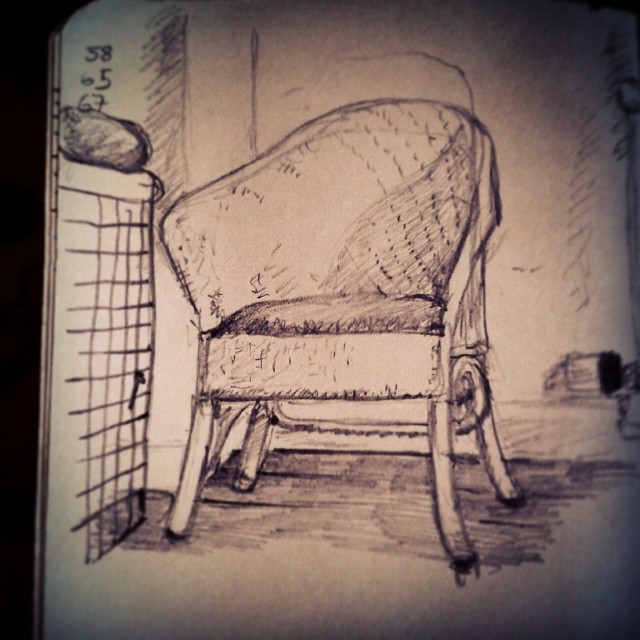
I’m not sure what happened. I was waiting to go out and so sat and drew a chair, then watch myself in slow motion as I added “1/365” and then posted it on the internet.

Drawing everyday is obviously an aspiration that gets pushed aside with everyday business, work and (here’s the rub) mechanical distractions. I never draw as much as I want to. So launching the spectre of mild internet shame upon failure may well encourage me to do more.

I have always felt the activity was 90% looking, and judging by what what below one could say that is all that I was doing.

I am not one of those that drawing has some magic potential over photography, both encourage a paying attention to the everyday, and then a potential to pull something extraordinary out of it.

Hopefully I can keep this rolling. Once again it is largely for my benefit, but perhaps there might be some enjoyment to be gained as I stumble, question myself, draw badly with no signs of improvement, hate everything, hurredly scribble something at the end of the day etc etc, so follow me on Instagram for immediate and possible calamitous updates, if you so wish.

Anyone else on a 365 project?

(Below I have added the comment I posted on Instagram and the link to the original post. All but two are drawn from life. Day 3 is a copy of a Chris Ware sketch and Day 9 a study of feet found on the tumblr hashtag. I will probably just draw things from life from now on as I seem to get most from that. Also avoids infringing on someone’s copyright which is extremely uncool.)

http://instagram.com/p/o8R9xIny6M/
1/365…..
Oh dear, did I just type that?
Yes, yes I did.
http://instagram.com/p/o8R9xIny6M/
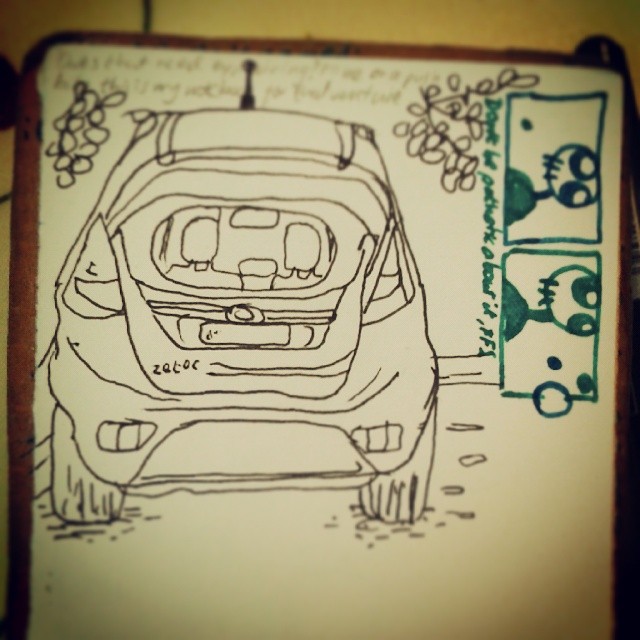
2/365. Drawn straight to ink in homemade pocket book (message me for instructions) whilst waiting in car park for delivery of supplies for twin 10 year birthday Sunday afternoon pizza blow out. Two panel doodle comic comes free of charge. http://instagram.com/p/o_GhFTnyzM/
2/365.
Drawn straight to ink in homemade pocket book (message me for instructions) whilst waiting in car park for delivery of supplies for twin 10 year birthday Sunday afternoon pizza blow out.
Two panel doodle comic comes free of charge.

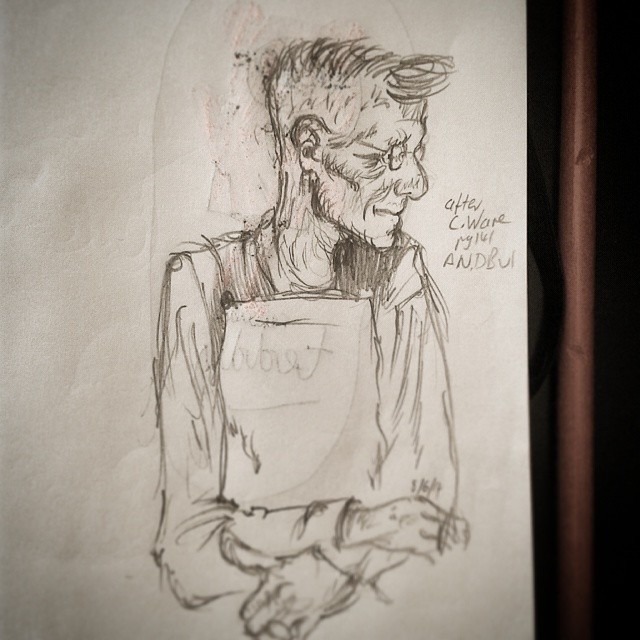
3/365 After C Ware, ANLDB 1, pg 141. http://instagram.com/p/pD1b2qHy_T/
3/365
After C Ware, ANLDB 1, pg 141.

http://instagram.com/p/pEl1JUHy9u/
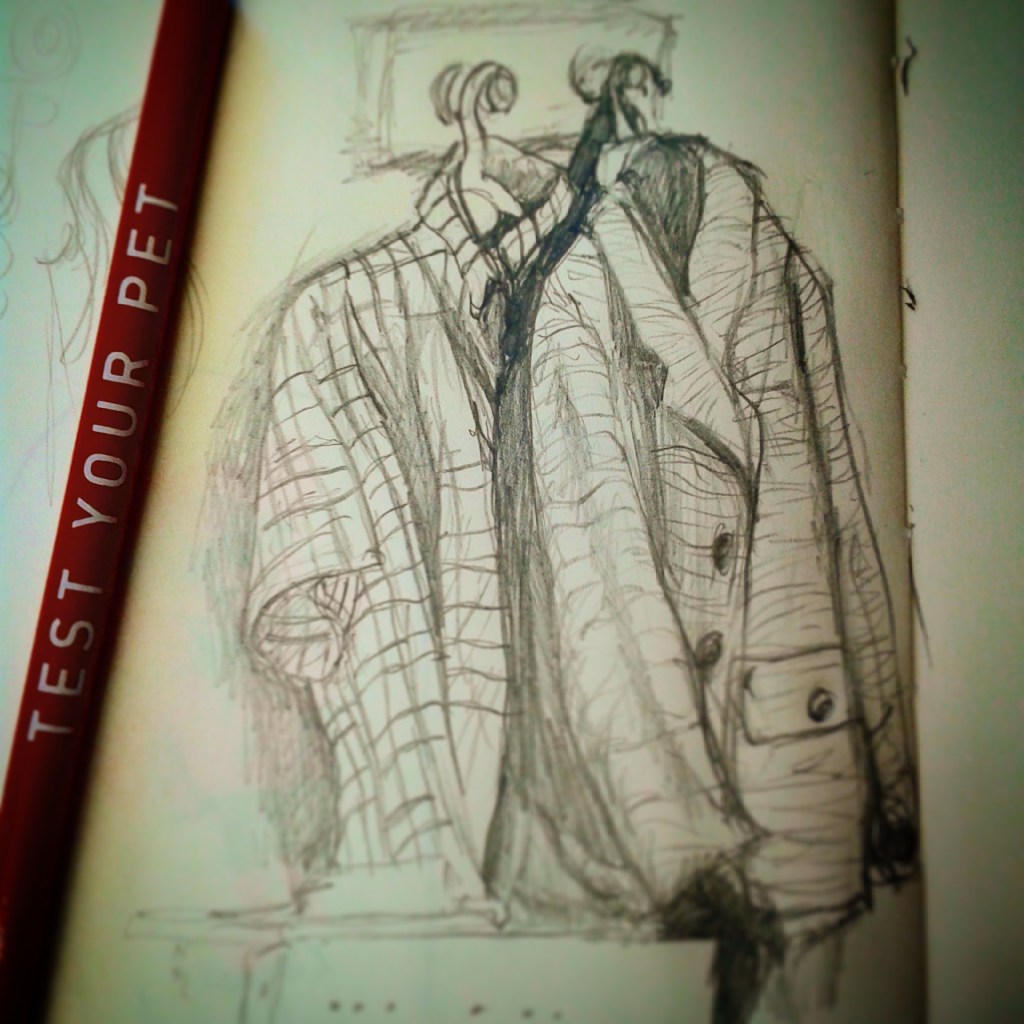
4/365.
Terrible attempt at clothing.
Yes, that is a Test Your Pet pencil.

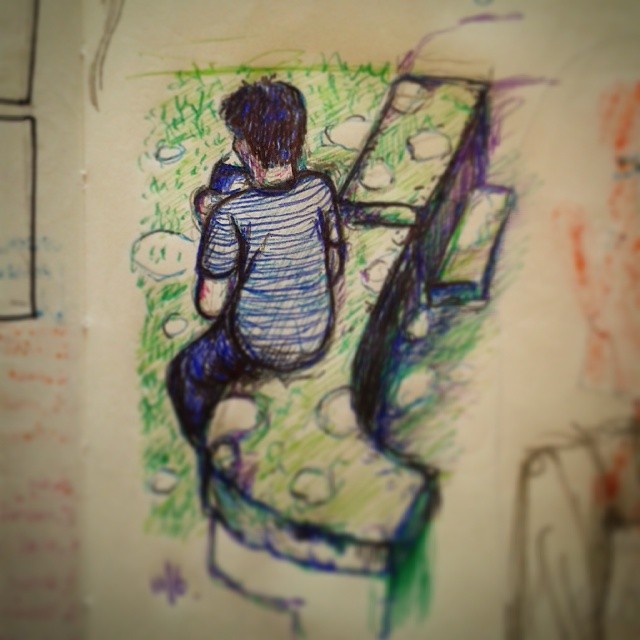
5/#365. Random dude eating chop suey(?) on the wall outside. Coloured ballpoint whilst waiting for fluid cache and landsat download. http://instagram.com/p/pGqoMmHy9m/
5/#365.
Random dude eating chop suey(?) on the wall outside.
Coloured ballpoint whilst waiting for fluid cache and landsat download.

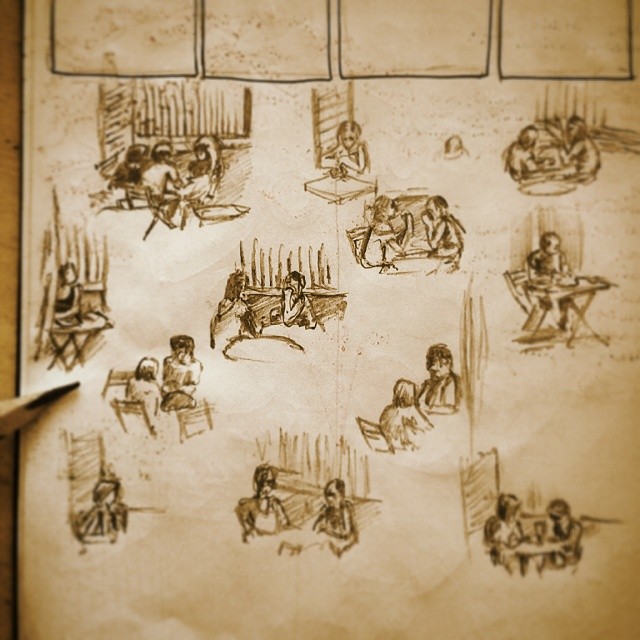
6/365. Varoius clientele sitting outside coffee shop on Whiteladies Road. Drawn during lunch break. Pencil. http://instagram.com/p/pJbZs9ny4H/
6/365.
Varoius clientele sitting outside coffee shop on Whiteladies Road.
Drawn during lunch break.
Pencil.

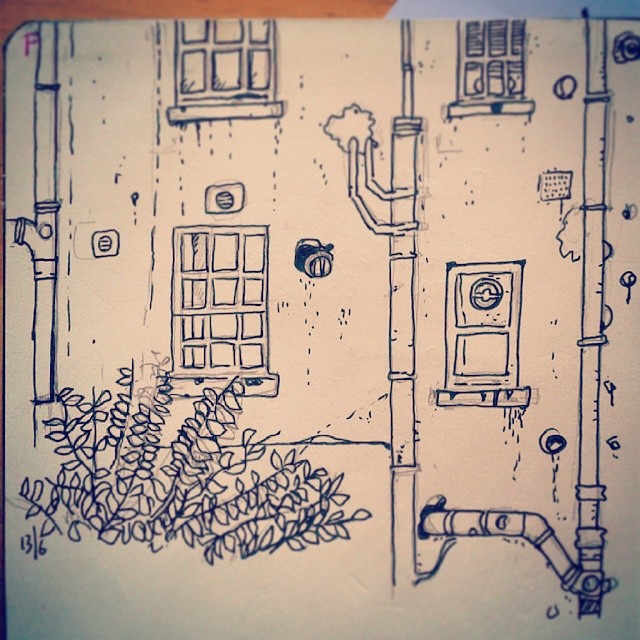
7/365. Windows and soil pipes. Pilot Vball on paper. Looking out window whilst upgrading PC render node and listening to Mex v Cam. http://instagram.com/p/pMXhDVny8r/
7/365.
Windows and soil pipes.
Pilot Vball on paper.
Looking out window whilst upgrading PC render node and listening to Mex v Cam.

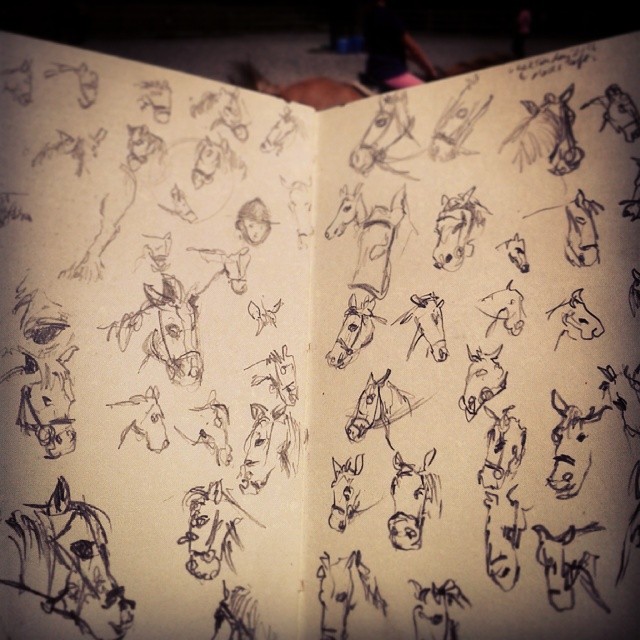
8/365. Page of horse heads. Drawn during Second Eldests riding lesson. http://instagram.com/p/pOYdMiny5n/
8/365.
Page of horse heads.
Drawn during Second Eldests riding lesson.

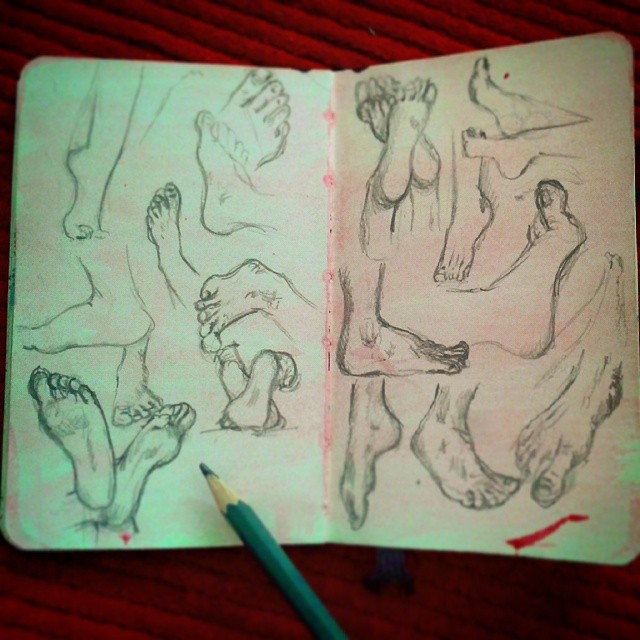
9/365 Foot studies from various sources off of t'internet. http://instagram.com/p/pRYNOUHyxa/
9/365
Foot studies from various sources off of t’internet.

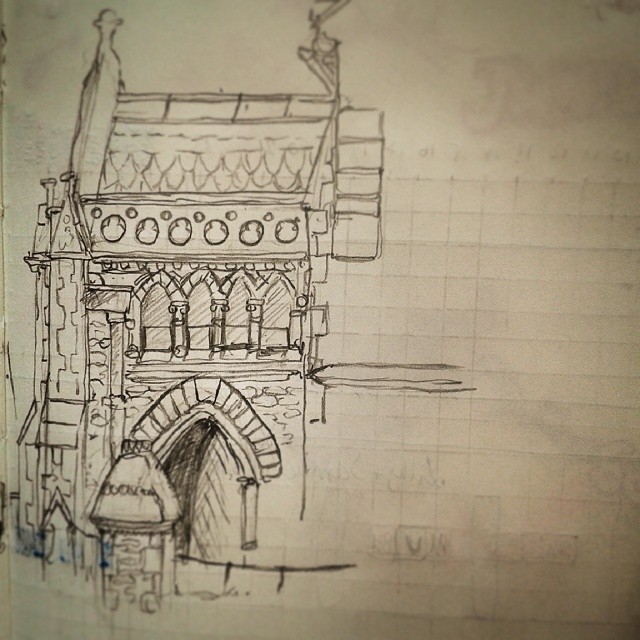
10/365. Attempt at the northern side of the Tynedale Baptist Church, Whiteladies Road. Pencil. 20 mins. http://instagram.com/p/pTb4JNny7r/
10/365.
Attempt at the northern side of the Tynedale Baptist Church, Whiteladies Road.
Pencil.
20 mins.


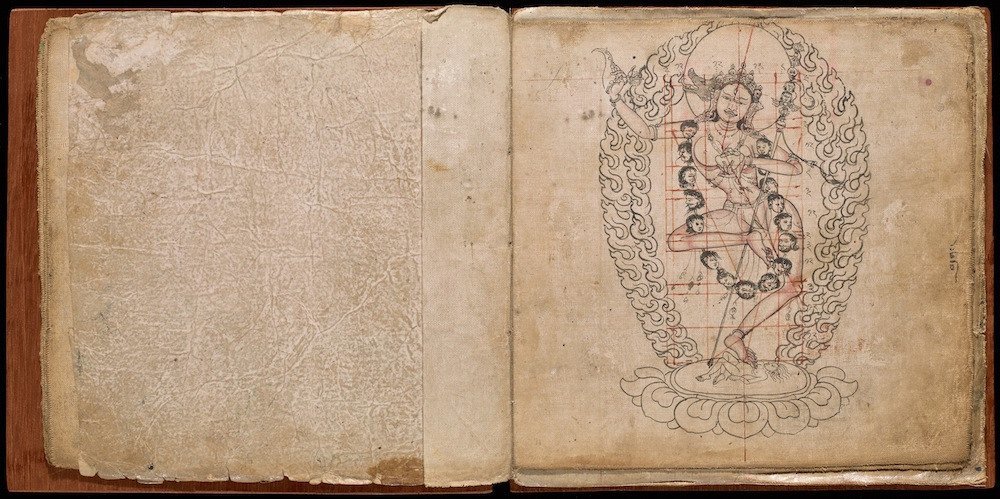
The Tibetan Book of Proportions


The Tibetan Book of Proportions


The Tibetan Book of Proportions


The Tibetan Book of Proportions


The Tibetan Book of Proportions


The Tibetan Book of Proportions


The Tibetan Book of Proportions


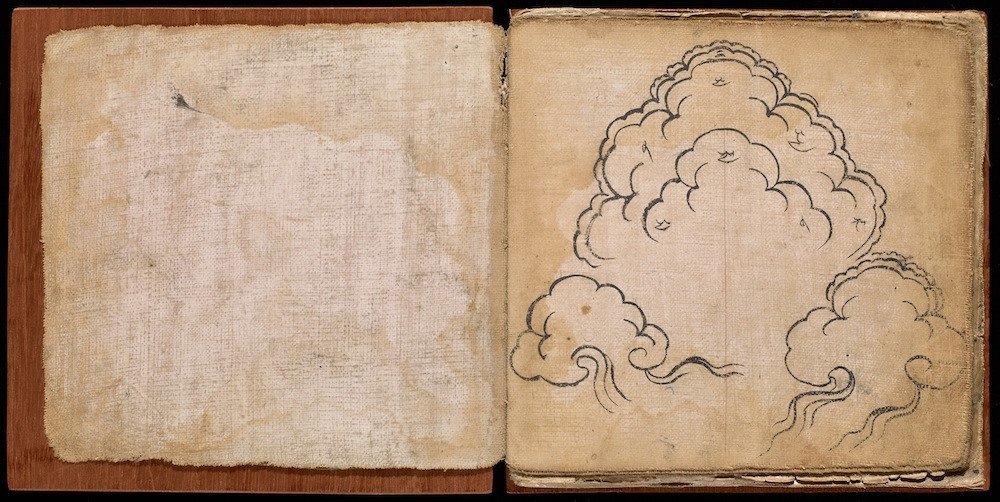
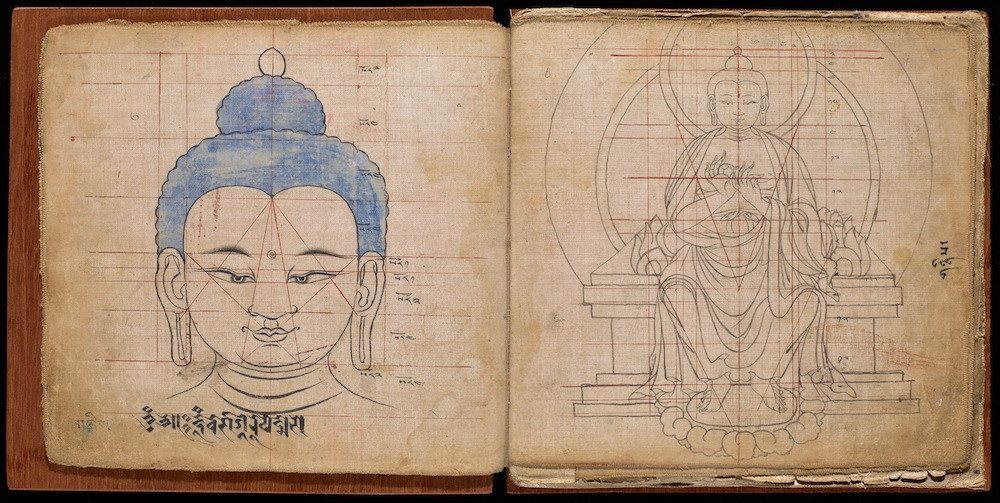
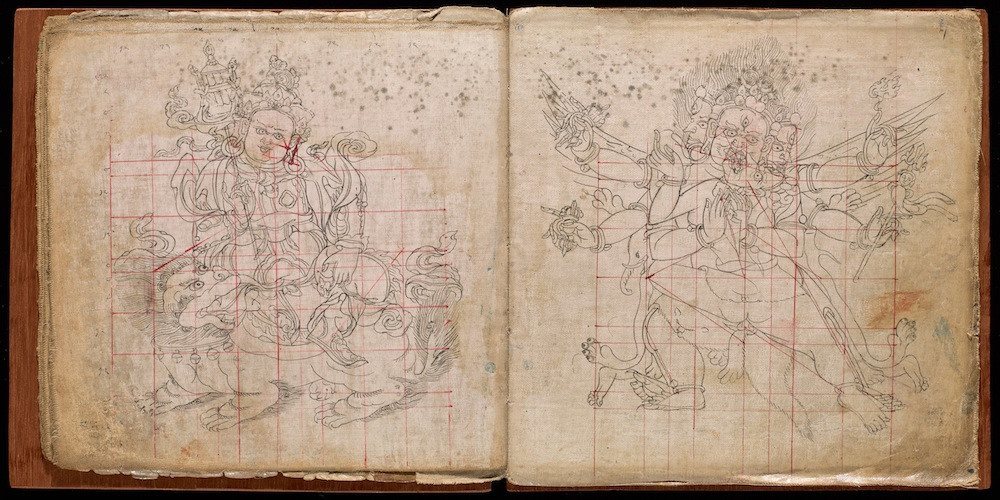
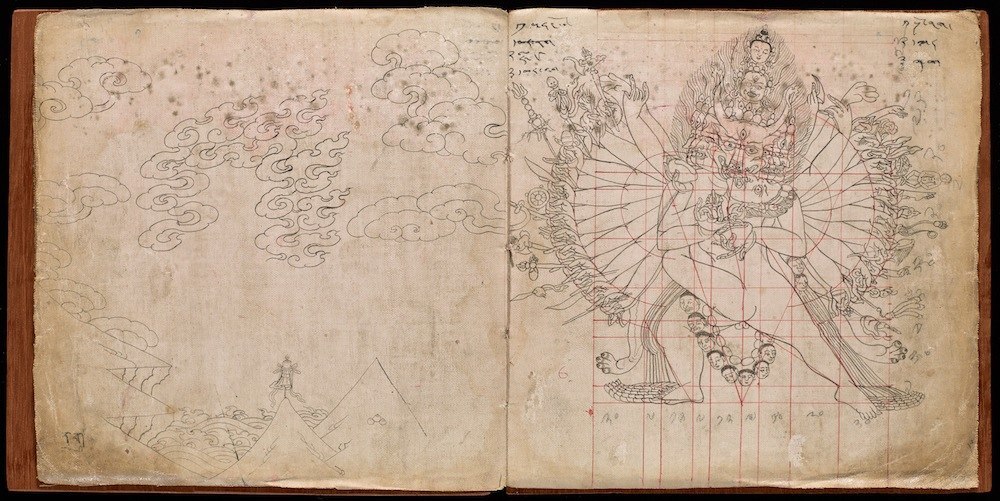
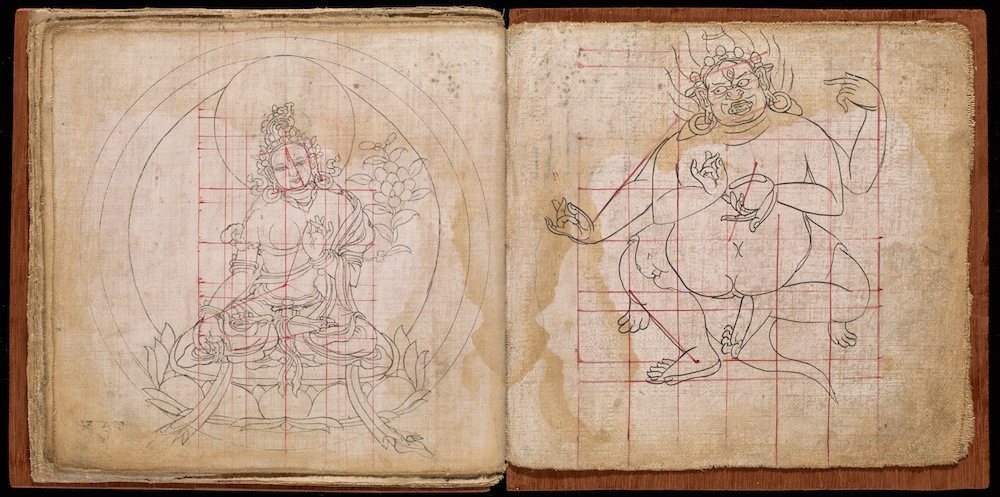
“Born some time around the early 4th century B.C., Siddhārtha Gautama was a Nepalese monk and wandering sage whose teachings went on to underpin Buddhism. As Buddhism spread, pictorial representations Gautama —the Buddha—were expected to be so particular that guidelines emerged as to how he should be drawn. Public Domain Review points to a book from the 1700s that shows, precisely, how the Buddha and other important Buddhist figures should appear.

Written in Newari script with Tibetan numerals, the book was apparently produced in Nepal for use in Tibet. The concept of the ‘ideal image’ of the Buddha emerged during the Golden Age of Gupta rule, from the 4th to 6th century. As well as the proportions, other aspects of the depiction – such as number of teeth, colour of eyes, direction of hairs – became very important.”

link updated, more to see here:

originally via .

ADOLF WÖLFLI (1864-1930)

“At the beginning of the twentieth century, Adolf Wölfli, a former farmhand and laborer, produced a monumental, 25,000-page illustrated narrative in Waldau, a mental asylum near Bern, Switzerland. Through a complex web of texts, drawings, collages and musical compositions, Wölfli constructed a new history of his childhood and a glorious future with its own personal mythology. The French Surrealist André Breton described his work as “one of the three or four most important oeuveres of the twentieth century”. Since 1975, our aim is to make Adolf Wölfli’s work known through one-man and group exhibitions as well as publications.”


adolf01

Wölfli’s first epic From the Cradle to the Grave runs over 2,970 pages of text and 752 illustrations bound by Wölfli into nine books. It takes the form of a travelogue whose principal hero is a boy called Doufi (a nickname for Adolf). Together with his family, Doufi travels all over the world which is, in the name of progress, duly explored and inventorised. In From the Cradle to the Grave, Wölfli transforms his miserable childhood into a glamorous story of wonderful adventures, discoveries and awesome hazards, all of which are famously overcome. The text, which mixes prose with poetry and extensive lists, is accompanied by colourful maps, portraits and illustrations of events such as combats, collapses and catastrophes. In these drawings one first encounters the form of the “Vögeli“ – a little bird which can be understood as the protector of the ubiquitous Wölfli’s alter ego and simultaneously as a sexual symbol filling in any potential empty space”


adolf02

Adolf Wölfli. From the Cradle to the Grave. Bedlam=Walking Wheel, Provisional Map of Both the Kingdom of Spain and Portugal, Dromedary Indian and Vosel Stubborn Donkey Mask, Lea Tantaria, Condor Eggs, Hall of Blacks, London South, Map of the Two Principalities Sonoricije and the West Bzimbzabazaru, Helvetic Cathedral in Northern Amazonian Hall, Atlantic Ocean Waves and Přístaf Cradle Lisbon (top to bottom). 1912.”


adolf03

Wölfli’s imaginary autobiography and one-person utopia starts with „From the Cradle to the Grave“ (1908-1912). In 3,000 pages, Wölfli turns his dramatic and miserable childhood into a magnificent travelog. He relates how as a child named Doufi, he traveled „more or less around the entire world,“ accompanied by the „Swiss Hunters and Nature Explorers Taveling Society.“ The narrative is lavishly illustrated with drawings of fictitious maps, portraits, palaces, cellars, churches, kings, queens, snakes, speaking plants, etc.”


adolf04

In the second part of the writings, the „Geographic and Algebraic Books“, Wölfli describes how to build the future „Saint Adolf-Giant-Creation“: a huge „capital fortune“ will allow to purchase, rename, urbanize, and appropriate the planet and finally the entire cosmos. In 1916 this narrative reaches a climax as Wölfli dubs himself St. Adolf II.”


adolf05

Jean Dubuffet, the French artist and founder of „Art Brut,“ called Wölfli „le grand Wölfli,“ the Surrealist André Breton considered his oeuvre „one of the three of four most important works of the twentieth century,“ and the Swiss curator Harald Szeemann showed a number of his pieces in 1972 at „documenta 5,“ the renown contemporary art exhibition in Kassel, Germany. Wölfli’s writings, which he considered his actual life’s work, only began to be systematically examined and transcribed in 1975 when the Adolf Wölfli Foundation was founded. Elka Spoerri (1924-2002) built up the Adolf Wölfli Foundation and was its curator from 1975 to 1996.”


adolf06

Every Monday morning Wölfli is given a new pencil and two large sheets of unprinted newsprint. The pencil is used up in two days; then he has to make do with the stubs he has saved or with whatever he can beg off someone else. He often writes with pieces only five to seven millimetres long and even with the broken-off points of lead, which he handles deftly, holding them between his fingernails. He carefully collects packing paper and any other paper he can get from the guards and patients in his area; otherwise he would run out of paper before the next Sunday night. At Christmas the house gives him a box of coloured pencils, which lasts him two or three weeks at the most.”

Walter Morgenthaler, a doctor at the Waldau Clinic,


adolf07

Naturally enough, the question whether Wölfli’s music can be played is asked again and again. The answer is yes, with some difficulty. Parts of the musical manuscripts of 1913 were analyzed in 1976 by Kjell Keller and Peter Streif and were performed. These are dances – as Wölfli indicates – waltzes, mazurkas, and polkas similar in their melody to folk music. How Wölfli acquired his knowledge of music and its signs and terms is not clear. He heard singing in the village church. Perhaps he himself sang along. There he could see song books from the eighteenth century with six-line staffs (explaining, perhaps, his continuous use of six lines in his musical notations). At festivities he heard dance music, and on military occasions he heard the marches he loved so well. More important than the concrete evaluation of his music notations is Wölfli’s concept of viewing and designing his whole oeuvre as a big musical composition. The basic element underlying his compositions and his whole oeuvre is rhythm. Rhythm pervades not only his music but his poems and prose, and there is also a distinctive rhythmic flow in his handwriting.””


adolf08

After Wölfli died at Waldau in 1930 his works were taken to the Museum of the Waldau Clinic in Bern. Later the Adolf Wölfli Foundation was formed to preserve his art for future generations. Its collection is now on display at the Museum of Fine Arts in Bern.”


adolf09

Information via Magic Transistor, Wikipedia and Adolf Wölfli Foundation.
Sketches of Nikolai Gogol, Count Fyodor Petrovich Tolstoy, and other Russian artists by poet Alexander Pushkin.


Sketches of Nikolai Gogol, Count Fyodor Petrovich Tolstoy, and other Russian artists by poet Alexander Pushkin.

“Pushkin would frequently jot down these charming black and white sketches both in his personal writings, and in the margins of his manuscripts. The final image, a page from Eugene Onegin, is a terrific example of his notebooks. Alongside the text, Pushkin included a sketch of a well-known Russian painter and aristocrat, with whom the author was certainly acquainted: Count Fyodor Petrovich Tolstoy (not to be confused with the Leo Tolstoy).”

—  @iliablinderman


sketchbook/notebook

“Some people use their sketchbook/notebooks to help them work things out. We use them to imagine things, figure out how to make something, help us see and listen, and to help us lay out certain problems we are wondering about in a way that lets us know more about them. I like this kind of sketchbook/workbook best the kind that’s more of a place  to mess around than a place to make skillful pictures. Although it turns out that spending a certain amount of sincere time messing around in your notebook it just seems to lead to some beautiful pages anyway.”

Lynda Barry