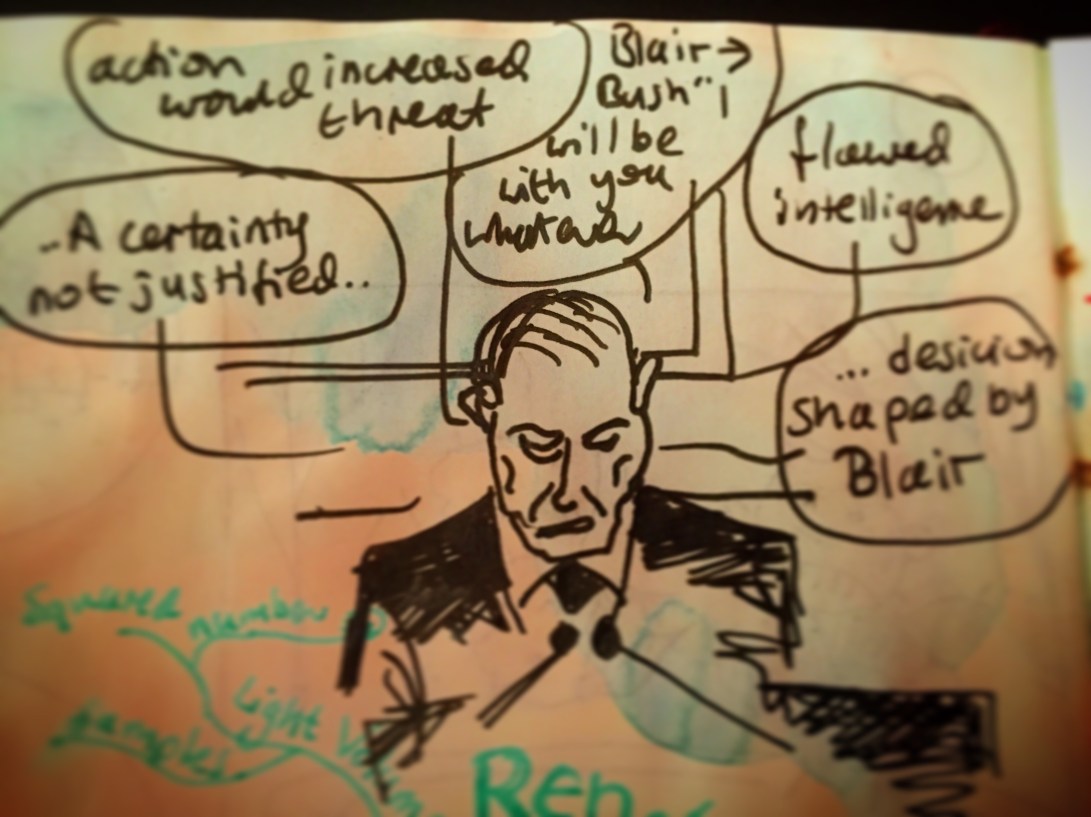
POLITICS
147/365

We’ve had a rocky week here in the UK, ICYMI (unlikely).
There’s a lot of anger and resentment on all sides, and it becomes difficult to pull yourself away from the news stream because of the speed with which things are developing.
But we are where we are.
In a recent Guardian panel Paul Mason was asked to give one reason why he thought the Leave vote had won, he said this (I’ve typed it down as best I could from the audio):—
“Many people in this room.//who voted, like me, to remain will be going through a kind of existential crisis of the self, in the sense that the institution we have based our lives around is the EU. It’s the source of our law, it’s the source of our democracy, in as far as there is any, but also it underpins our opinions of social justice. Many of our life chances have gone, some of our young people feel as though their life chances are over, and our sense of self, of who we are, as europeans has been completely challenged by this.
Well.
That’s how it feels to be working class.
If in twenty years time your kids are offered the chance to ‘get one back’ against the people who did this to them, in one single vote, that’s what they’ll do.”
I’m hoping one thing that can come from this is that we learn to understand and listen to ourselves better as a country.
This is the first time I’ve managed to draw anything since last Thursday.
Windows in a public building.
Vball.
10 mins
Notebook: Myrtle.
links bundle 19-04-2016
All text being snippets from the link:
- 30 Poets You Should Be Reading
- Comic Tragics/Emma Talbot
I have a bunch of work in a show called Comic Tragics at the Art Gallery of Western Australia at the moment. The Guardian just did a nice little piece about it, showing a few pages by Ron Rege (who also did an amazing wall-drawing for the show), Gabrielle Bell, Dash Shaw and others, including one Emma Talbot, who I had not heard of before the invitation to the show. There are a number of reasons why I wish I could have made it out to see the show – not least because I’ve just never been to Australia – but I’m sorry not to be seeing Talbot’s work in person. It looks pretty much unlike anything else – super strange and beautiful, sweet and creepy… and heartbreaking. She does really nice things with panels, something I’ve been thinking about a fair amount lately, and with facelessness, which is also a thing I can relate to, especially in dealing with similar themes. Surprised I hadn’t come across her work before, maybe because she’s in the gallery world, rather than the book world. Hopefully that will change. - “Each Bite Is Edging Me Towards Climax” – Read a Bawdy New Comic from Gina Wynbrandt
- Autodesk Buys Arnold . – fxguide
Autodesk has bought Arnold and Solid Angle based in Madrid, Spain and in London, UK. The deal was first struck in December of last year, and finalized in February. The plan is for Solid Angle to be a standalone provider, in much the same way Autodesk has done with Shotgun. Solid Angle is now fully owned by Autodesk but sits apart in so far as the brand Solid Angle remains, as does the sales channels and the staff.
- An Art-World Prankster Goes Digital – The New York Times
The American cartoonist Robert Crumb’s first U.K. solo exhibition in over a decade opens to the public in London on Friday — and features pictures from the latest volume of his “Art and Beauty” magazine series, which has previously seen Crumb faithfully reproduce imagery of women taken from mass media or life studies. Now, he adds cellphone street photos and his fans’ selfies to his wellsprings of inspiration.
- RBS pulls back fossil fuel investments as green deals grow | Environment | The Guardian
Royal Bank of Scotland has reduced its global lending to oil and gas companies and doubled its green energy loans in the UK to £1bn a year, according to new figures released to the Guardian.
- Watch Dancing Bodies Merge and Multiply
Dance is mesmerizing enough all by itself, but the short film Chimera, directed by Steven Briand and choreographedby Cathy Ematchoua, makes the art form all the more eye-catching by cutting together multiple performers, creating the effect of one seamlessly merging and multiplying body. The film takes its name from the Chimera of Greek mythology, a fire-breathing creature with the heads of both a lion and a goat and with a snake for a tail. The film perfectly captures the multi-body chimeric effect, minus the, you know, terrifying bit. Watch the dancers weave poetry in motion below.
- Marvellous monochrome drawings from Miguel Angel Valdivia
Using heavy black backgrounds and considered line-work, Miguel Angel Valdivia’s work is smart in its execution and brave in its layouts. Within a single image Miguel often uses multiple frames, which come together to create a disorientating but clear narrative. As well as working as an illustrator, Mexico-born Miguel is also a visiting lecturer at the Royal College of Art. When he’s not dong either of those things, he’s at the helm of beautiful drawing zine Le Petit Neant, which is soon to launch its third issue.
- Today in NYC: Storyscapes Interactive and VR Showcase
It’s a fairly safe bet to say that animation in a few decades will be a different experience than the current one of passively viewing content on a screen. But you don’t need to wait decades to get a taste of that future. The Storyscapes showcase at the Tribeca Film Festival is currently presenting 10 virtual reality and interactive installations that hint at this not-so-distant future.
- The secret rules of the internet | The Verge
Julie Mora-Blanco remembers the day, in the summer of 2006, when the reality of her new job sunk in. A recent grad of California State University, Chico, Mora-Blanco had majored in art, minored in women’s studies, and spent much of her free time making sculptures from found objects and blown-glass. Struggling to make rent and working a post-production job at Current TV, she’d jumped at the chance to work at an internet startup called YouTube. Maybe, she figured, she could pull in enough money to pursue her lifelong dream: to become a hair stylist.
- Molly Crabapple Explains How You Can Be an Artist and an Activist
…that people should be free to operate outside of the way they’ve been branded, the idea that branding as an act imposes unnecessary, damaging boundaries…
- Owen Jones meets Yanis Varoufakis | ‘Europe is staring into the abyss’
- Bosch’s ‘Garden of Earthly Delights’ Becomes an Animated Computer Simulation
Medieval artist Hieronymus Bosch’s triptych painting The Garden of Earthly Delights, a vision of paradise lost, is known for being a work of proto-surrealism that has inspired the work of many creative talents like Salvador Dali, William S. Burroughs, and Terry Gilliam. It’s a work that is also highly remixable, as Carla Gannis proved with her emoji-fied rework The Garden of Emoji Delights. Now the painting’s right panel—depicting a hallucinatory hell—undergoes a digital reconstruction as a 3D animation in Hell.exe.
- Mini Kuš! Comics #38–41
The latest quartet of Kuš! minicomics (pronounced “koosh!”) offers up yet another excellent sampling of the many and varied comics dished out by this Latvian art-comics publisher. For production value and design, the mini Kuš! series represents the pinnacle of what the minicomic art form can achieve. Of note: it wasn’t until several days after I’d first read them that I realized that all four comics were by women (the mini-Kuš! quartet of issues 30-33 were also all-female creations). Despite this year’s Angouleme debacle, it has become increasingly clear, at least in more enlightened comics circles, that excellent work transcends gender (and sexism). The comics in this quartet, by four different creators from four different countries, encompass a variety of styles and tones, from colorful whimsy to somber realism, with settings in the past, present and future. Whatever their subject matter or stylistic approaches, these little books are further testament to the enduring appeal of the elusive-yet-accessible Kuš! art-comics aesthetic.
- Lost Wright Brothers’ ‘Flying Machine’ Patent Resurfaces
- More than 200 ideas for your next podcast — Medium
Everyone has a podcast. Every business wants a podcast. Why? They’re cheap to make, they create community and brand affinity and a loyal subscription base. But the podcast space is still the Wild West. Companies are scrambling to corner the market, an audience, a vertical strategy. What will work? What won’t? We don’t know either, but decided to help y’all out — some of these ideas are serious, some are not. We hope all of them spark your imagination. If you decide to make any of these, let us know. Or invite us on as guests.
- Kelsey Garrity Riley
I am an illustrator living and working in Brooklyn, New York. I grew up in Germany and Belgium before moving to the US to pursue my love of art at the Savannah College of Art and Design where I graduated from in 2010.
- NANOGrav Animation of Gravitational Waves
Credit: B. Saxton and A. Angelich (NRAO/AUI/NSF); David W. Hogg, Michael R. Blanton, and the Sloan Digital Sky Survey Collaboration NANOGrav Animation of Gravitational Waves NRAO Outreach
- Film director Peter Greenaway calls for ‘image-based cinema’ | Film | The Guardian
“This is probably a very unpopular thing to say,but all film writers should be shot.”
- Charles Dickens, Star Wars, and the genre of serialization
In a new video, Even Puschak talks about the rise of the serialization genre, from Dickens to Flash Gordon to General Hospital to Star Wars. Now that our entertainment is increasingly serialized, he argues that audiences have a unique opportunity to shape what we watch. (Case in point: the increased importance of non-white and non-male characters in The Force Awakens and Rogue One.)
- “Get a job in Animation…” 12 Top Tips | Skwigly Animation Magazine
“Get a job in Animation…” Sure, sounds easy, but with plenty of competition for roles and the ability to study any time, any place with the growth of online courses, do you have what it takes to truly stand out?
- Want to help Louis CK out of debt? Four great reasons to watch Horace and Pete | Television
Louis CK is broke. Horace and Pete – his self-financed TV show distributed with minimum fanfare on his own website – has not done the numbers he expected.
- Virus trading cards, animated and 3D-printable
- Oculus Demos VR Selfie Sticks and 360 Photo Spheres
- This is Facebook’s gorgeous, open-source 360-degree video camera
- The free speech delusion
Oscar Wilde, who knew a few things about censorship, once wrote that he could “tolerate everything except intolerance”. Today, the rhetoric of free speech is being abused in order to shut down dissent and facilitate bigotry. On behalf of everyone with liberal tendencies, I’d like to know why and how we’ve allowed this to happen.
- Hands Off [A.I.] Short film by Moritz Reichartz
- April < Conner Willumson
- Apple patents new augmented reality technology
- #339: Storytelling in VR: Ambiguity and Implication in 1st Person Narratives | Voices of VR Podcast
Rob Morgan is the writer of The Assembly, and he spoke last year at GDC about narrative design in VR and the importance of accurate body language in NPCs to maintain a sense of presence. He returned to GDC this year to talk about some of his lessons that VR can learn from writing stories in AR. He has a lot of interesting insights about how to use ambiguity and implication to drive narratives within a first-person story to allow a user to have a more immersive and personalized experience.
On Rational Faith in the Human Spirit
Humanist radicalism … seeks to liberate man from the chains of illusions; it postulates that fundamental changes are necessary, not only in our economic and political structure but also in our values, in our concept of man’s aims, and in our personal conduct.
To have faith means to dare, to think the unthinkable, yet to act within the limits of the realistically possible; it is the paradoxical hope to expect the Messiah every day, yet not to lose heart when he has not come at the appointed hour. This hope is not passive and it is not patient; on the contrary, it is impatient and active, looking for every possibility of action within the realm of real possibilities.
– Erich Fromm from “The Anatomy of Human Destructiveness”
Also:-
The situation of mankind today is too serious to permit us to listen to the demagogues — least of all demagogues who are attracted to destruction — or even to the leaders who use only their brains and whose hearts have hardened. Critical and radical thought will only bear fruit when it is blended with the most precious quality man is endowed with — the love of life.
As highlighted by Brain Pickings
“In short, did the English pay the fearful price for the system…
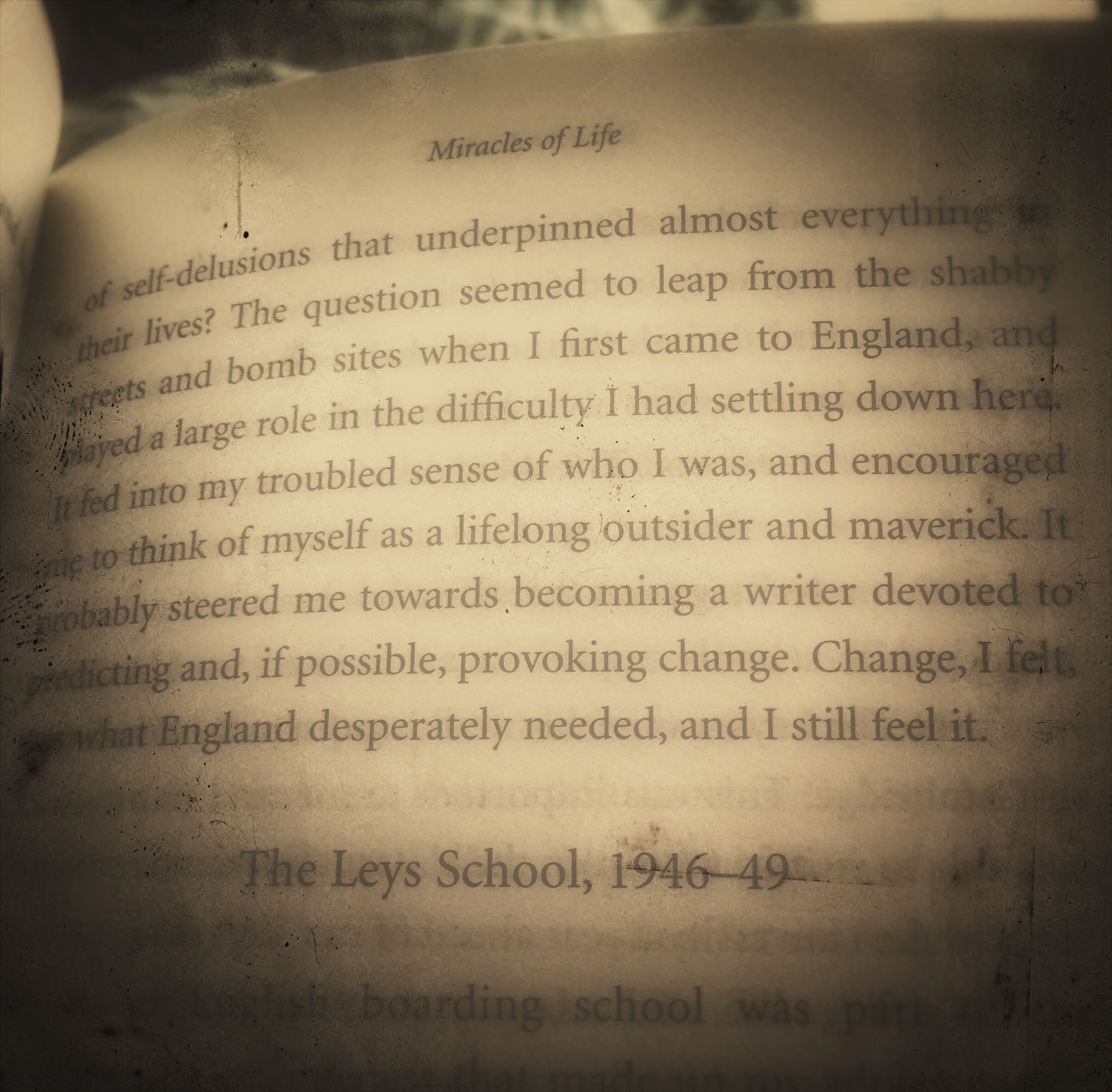
“It took just 10 years from scribbling this in prison, as leader of a banned party, for Hitler to achieve power. That happened, primarily, because the German economy collapsed and because no major power was willing to enforce the world “order” established at Versailles in 1919. But it also happened because, by the mid-1930s, a lot of people had begun to hate each other.
Since 1945, every generation in the educated world has been taught “the lessons” of the rise of Nazism. But surveying the world at the start of 2016 it seems as if we have been learning the wrong lessons. The world is awash with hatred. And since around a quarter of its inhabitants have mobile social media accounts we are leaving a very detailed evidential trail about its spread.”
–As Mein Kampf returns to Germany, the world is again awash with hatred | Paul Mason
Where do you see the film fitting within the spectrum from news to documentary?
“In Syd Field’s book about screenwriting, he said to take a phrase that must sing throughout the film and tape it to your typewriter. And here that phrase is “Europe smashed the first left government in modern history. The politicians made mistakes, but the people were always really strong.” That’s what it’s about.”
Have your say on the future of our BBC
I am posting this here in case anyone hasn’t seen it.
Last night I filled in my answers to the governments public consultation document for the future of the BBC. It has been sneeked out and the questions are weighted heavily so it is essential that anyone who cares about the BBC and would like to see it’s future secured in a way that benefits everyone, take the time to fill it in. It takes about quarter of an hour. There is just over a day left.
Here’s the link.
Here are my answers. They’re not perfect, but they’re done:
How well is the BBC serving its national and international audiences?
Extremely well. With news coverage, drama and especially documentaries. I also use the podcasting feature a lot and the radio iplayer.
Which elements of universality are most important for the BBC?
The BBC is a relied upon national institution, unique in the world. It is trusted universally and is a major driving part of British culture. It is extremely important that ti’s content is advert free as it provides a space for thought and consideration free from sponsorship.
Is the BBC’s content sufficiently high quality and distinctive from that of other broadcasters? What could improve it?
The nature of the BBC allows new talent and ideas to grow organically, many cultural icons with global influence exist today because they were nurtured and allowed to grow on the BBC. The BBC should be allowed to produce the kind of content that other companies cannot due to to market forces being their main drive.
Where does the evidence suggest the BBC has a positive or negative wider impact on the market?
It is extremely important that BBC news comes free from any adverts or sponsorship for obvious reasons. The powerhouse of innovation and creativity which the unique way the BBC is funded produces some of the most important cultural forces we have today. It is a shelter for innovation which produces benefits which far out way the investment.
Is the expansion of the BBC’s services justified in the context of increased choice for audiences? Is the BBC crowding out commercial competition and, if so, is this justified?
It is essential that the BBC provides an alternative to other commercial news and online content, if people choose to use the BBC over it’s competitors because of it’s high quality then surely that proves it’s value. If other commercial companies feel they are being pushed out maybe they should rethink their strategy of connecting with people. Their audience will not increase just because the BBC is not there.
Has the BBC been doing enough to deliver value for money? How could it go further?
The BBC is incredible value for money, if one compares it with any online subscription service. To get the equivalent breadth and range of content using other services one would have to spend considerably more than £12 per month, possibly 5 to 10 times that amount.
How should we pay for the BBC and how should the licence fee be modernised?
I think the existing license fee system is fair. I would like to see the BBC supplement this by providing an fee paying subscription for the iPlayer for non-UK customers.
How should the relationship between Parliament, Government, Ofcom, the National Audit Office and the BBC work? What accountability structures and expectations, including financial transparency and spending controls should apply?
The BBC should be supported by government but this regular interference by successive administration is unhelpful. There is room for improvement in the way the BBC is run, but I do not think many politicians have the breadth of knowledge and experience to be applying their opinions to the corporation. I also believe may politicians are under the influence of corporate lobbyists representing the interests of those who want to see the BBC diminished for their own personal gain. The BBC is for the people of Great Britain, it is for them to decide if the fee is suitable and appropriate and not a few politicians.
(cross posted from Facebook)
“Did you vote Tory at the last election?”
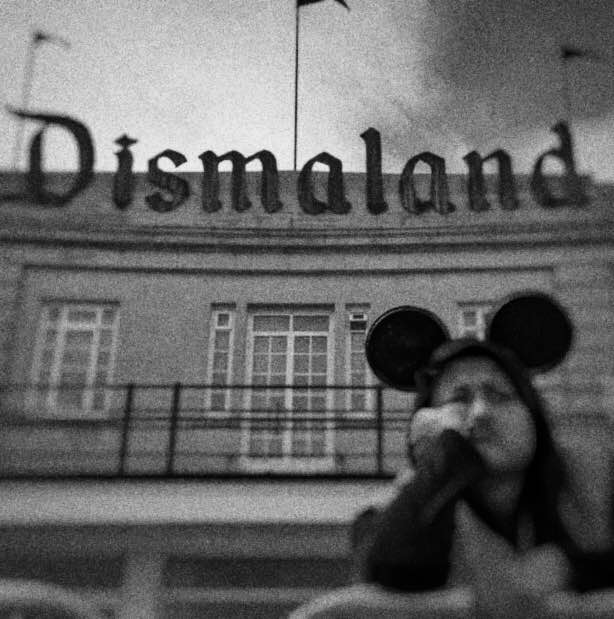
““Low-income holidaymakers” are the perfect art audience. There’s something very evocative about the British seaside experience. This show is modelled on the failed winter wonderlands they build every December that get shut down by trading standards – where they charge £20 to look at some alsatians with antlers taped to their heads towing a sleigh made from a skip. Essentially this is a theme park that Lawrence Llewelyn Bowen would endorse. The advantage of putting art in a small seaside town is you’re only competing with donkeys.I think a museum is a bad place to look at art; the worst context for art is other art.“
 Paul Greer