“Is there something you do every day that builds an asset for you?
Every single day?
Something that creates another bit of intellectual property that belongs to you?
Something that makes an asset you own more valuable?
Something that you learn?
Every single day is a lot of days. It’s easy to look at the long run and lull yourself into skipping a day now and then.
But the long run is made up of short runs.”
process
“The best way to learn is drawing, even if you’re no Leonardo Da Vinci.”
‘Our anxiety around drawing starts around puberty, when we begin self-critiquing our abilities to render a perfect likeness, Dowd says. “The self-consciousness associated with ‘good’ drawing, or a naive form of realism, is mostly to blame,” he explains to Quartz. ”If you take a step back, and define drawing as symbolic mark-making, it’s obvious that all human beings draw. Diagrams, maps, doodles, smiley faces: These are all drawings!”’
–– Drawing shouldn’t be about performance, but about process.
Project Ethel (27.05.14 – 07.01.16): Pages 27-32

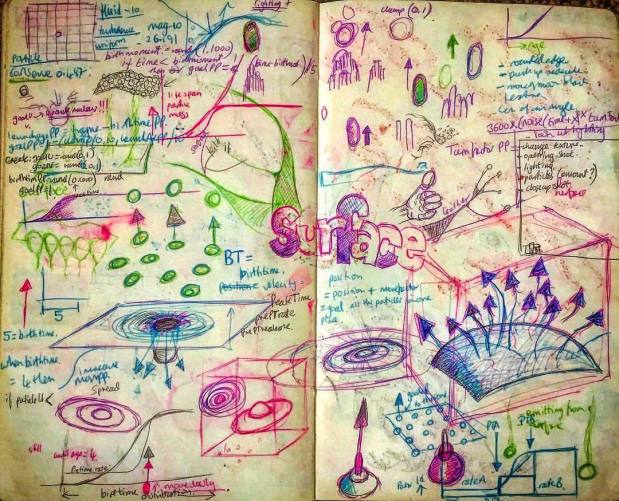
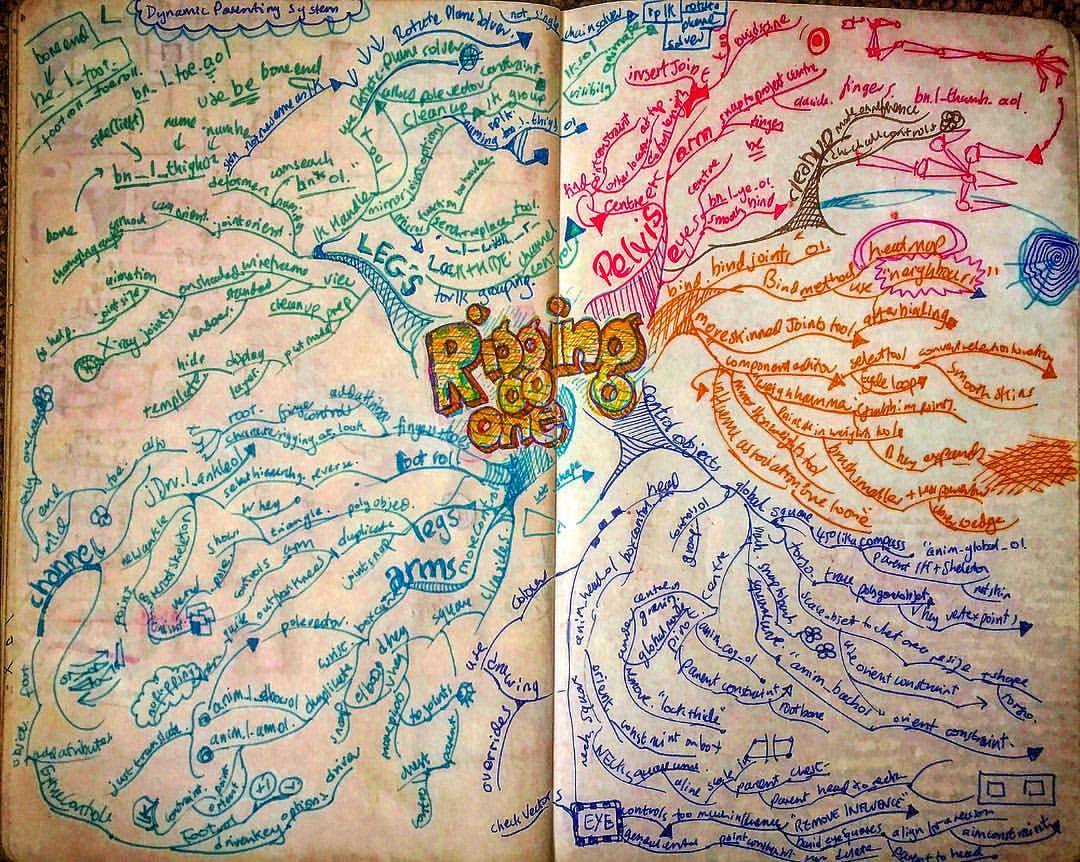
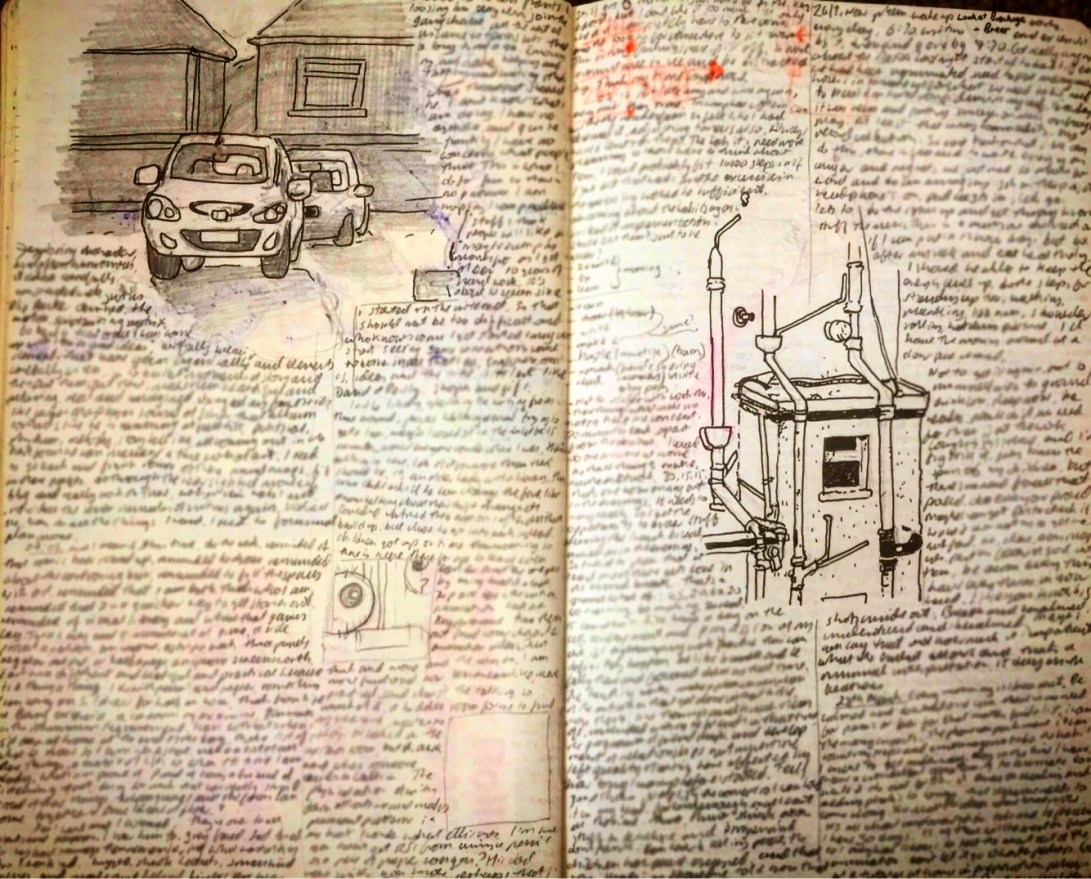
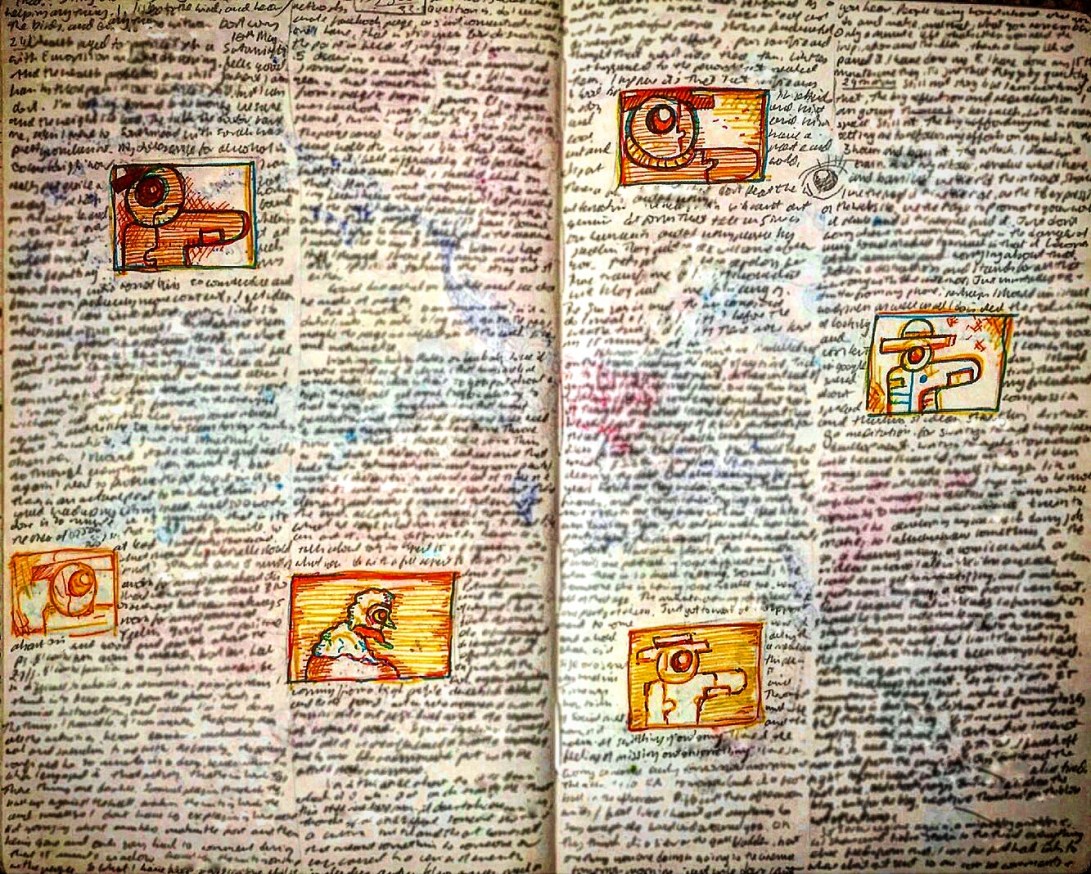
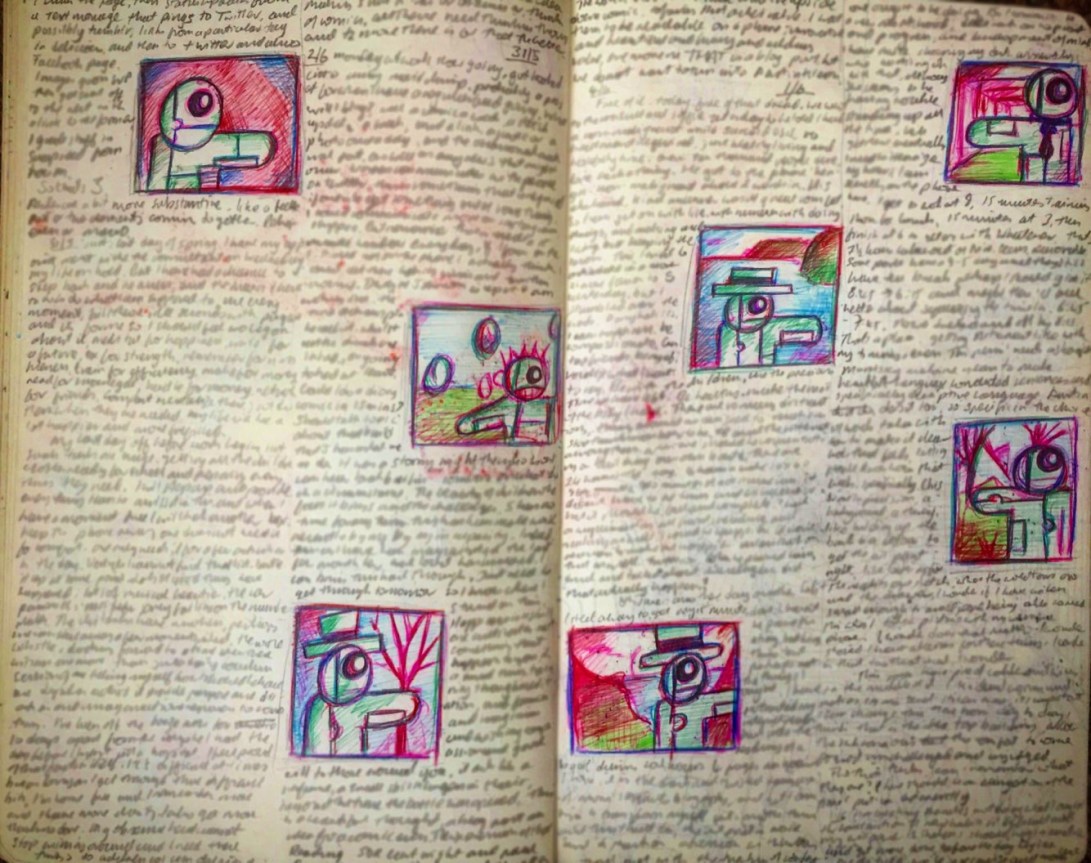

Mind map on rigging models in Maya and drawing of snacking child (artist included).
🧒 🕷 📓
From Errol Morris, a list of 10 things you should know about truth & photography
1. All photographs are posed.
2. The intentions of the photographer are not recorded in a photographic image. (You can imagine what they are, but it’s pure speculation.)
3. Photographs are neither true nor false. (They have no truth-value.)
4. False beliefs adhere to photographs like flies to flypaper.
5. There is a causal connection between a photograph and what it is a photograph of. (Even photoshopped images.)
6. Uncovering the relationship between a photograph and reality is no easy matter.
7. Most people don’t care about this and prefer to speculate about what they believe about a photograph.
8. The more famous a photograph is, the more likely it is that people will claim it has been posed or faked.
9. All photographs are posed but never in the same way.
10. Photographs provide evidence. (The question is of what?)
via kottke
‘He was one of the hanging judges of art.’
“My aim is to be understood by everyone. I reject the ‘depth’ that people demand nowadays, into which you can never descend without a diving bell crammed with cabbalistic bullshit and intellectual metaphysics. This expressionistic anarchy has got to stop … A day will come when the artist will no longer be this bohemian, puffed-up anarchist but a healthy man working in clarity within a collectivist society.”
via Daily Omnivore
10 Rules For Students and Teachers From John Cage
RULE ONE: Find a place you trust, and then try trusting it for awhile.
RULE TWO: General duties of a student — pull everything out of your teacher; pull everything out of your fellow students.
RULE THREE: General duties of a teacher — pull everything out of your students.
RULE FOUR: Consider everything an experiment.
RULE FIVE: Be self-disciplined — this means finding someone wise or smart and choosing to follow them. To be disciplined is to follow in a good way. To be self-disciplined is to follow in a better way.
RULE SIX: Nothing is a mistake. There’s no win and no fail, there’s only make.
RULE SEVEN: The only rule is work. If you work it will lead to something. It’s the people who do all of the work all of the time who eventually catch on to things.
RULE EIGHT: Don’t try to create and analyze at the same time. They’re different processes.
RULE NINE: Be happy whenever you can manage it. Enjoy yourself. It’s lighter than you think.
RULE TEN: “We’re breaking all the rules. Even our own rules. And how do we do that? By leaving plenty of room for X quantities.” (John Cage)

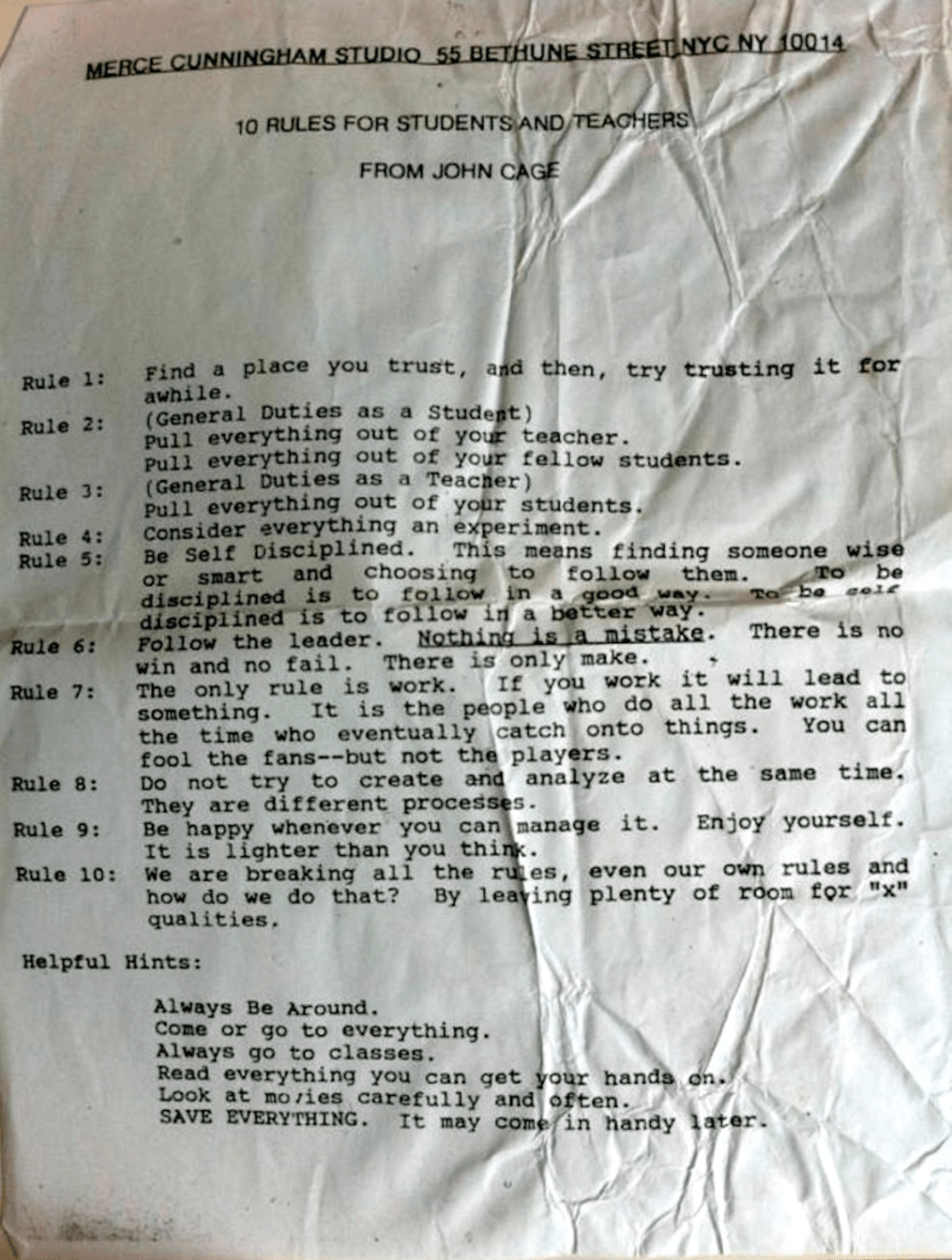 John Cage, 10 Rules for Students and Teachers
RULE ONE: Find a place you trust, and then try trusting it for a while.
RULE TWO: General duties of a student: pull everything out of your teacher ; pull everything out of your fellow students.
RULE THREE: General duties of a teacher: pull everything out of your students.
RULE FOUR: Consider everything an experiment.
RULE FIVE: Be self-disciplined: this means finding someone wise or smart and choosing to follow them. To be disciplined is to follow in a good way. To be self-disciplined is to follow in a better way.
RULE SIX: Nothing is a mistake. There’s no win and no fail, there’s only make.
RULE SEVEN: The only rule is work. If you want it to lead to something. It’s the people who do all of the work.
RULE EIGHT: Do not try to create and analyze at the same…
View original post 77 more words
David O’Reilly on making sure you keep going
- “What’s something you wish someone told you when you started making art?”
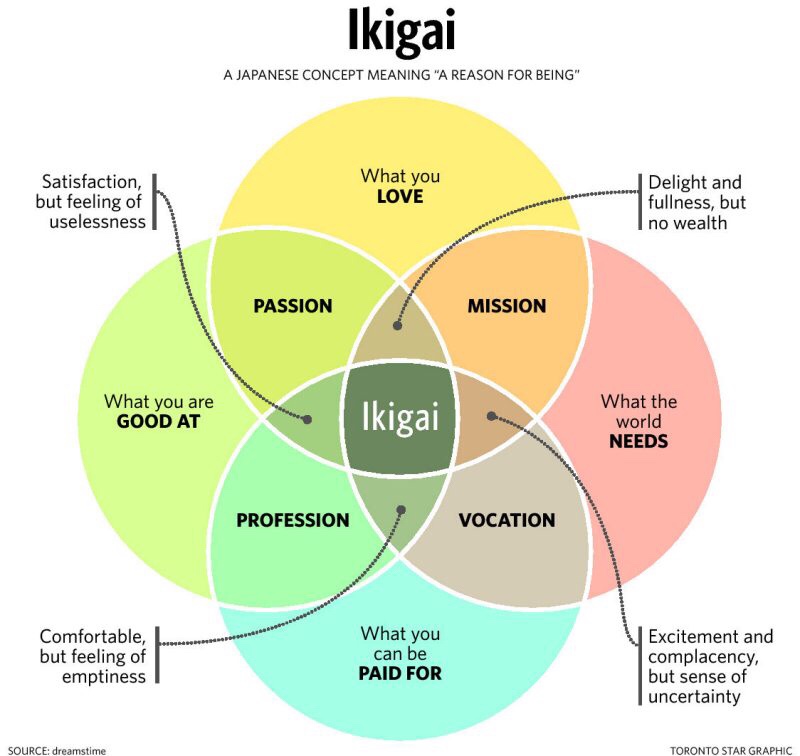
Ikigai
Our dreams are, generally, us imagining ourselves from the outside, not the inside. This can never be experienced and, because of that, “following one’s dreams” is usually a necessarily fruitless activity. Even in the best of circumstances, it is not a source of well-being or comfort.
And although we’re often told, “You can do anything you set your mind to!”, it’s just not true. People CAN’T do anything they set their minds to. The physicality of my vocal chords make it so that I will never sing like Adele. My height precludes me from being a basketball star. My age and ethnicity prevent me from ever being a member of South Korean boy band BTS, no matter how much I set my mind to it.
If you discover what you’re truly good at, and what you enjoy doing, and it’s something you can potentially make a living at – well, that, to me, is a much richer life than following your dreams, which are not only unfullfilling, but they shift and change throughout your life anyway. Because to achieve a dream is one thing, but to live inside a dream that you discover moment by moment along your path, where you grow stronger and wiser, and enhance the lives of those around you – well, that’s a much deeper, more fulfilling life.
to “all those who of set purpose choose to walk alone, who know the special grace attaching to it”
Nature’s particular gift to the walker, through the semi-mechanical act of walking — a gift no other form of exercise seems to transmit in the same high degree — is to set the mind jogging, to make it garrulous, exalted, a little mad maybe — certainly creative and suprasensitive, until at last it really seems to be outside of you and as if it were talking to you whilst you are talking back to it. Then everything gradually seems to join in, sun and the wind, the white road and the dusty hedges, the spirit of the season, whichever that may be, the friendly old earth that is pushing life firth of every sort under your feet or spell-bound in a death-like winter trance, till you walk in the midst of a blessed company, immersed in a dream-talk far transcending any possible human conversation. Time enough, later, for that…; here and now, the mind has shaken off its harness, is snorting and kicking up heels like a colt in a meadow.–
 Paul Greer