Len Lye – “A COlour Box” (1932″

“The first of Lye’s ‘direct films’ to receive a public screening. Promoted by Sidney Bernstein’s Granada chain of cinemas, it eventually came to be seen “by a larger public than any experimental film before it, and most since” (as the film historian David Curtis has pointed out). Its soundtrack is a beguine – a dance popular in France during the 1930s. A Colour Box won a Medal of Honour at the 1935 International Cinema Festival in Brussels. Having no suitable category in which to award the film, the jury simply invented a new one.”

“As its title suggests, A Colour Box was also notable for being a colour film. Lye used the process of Dufaycolor at a time when colour film was still in an experimental phase. This gave the film a novelty value when first shown. A Colour Box eventually secured quite a wide theatrical release and became popular with both general audiences and critics. Because it was colourful and dynamic, with a catchy musical score, it was more accessible than many abstract films of the period.”

screenonline

see also

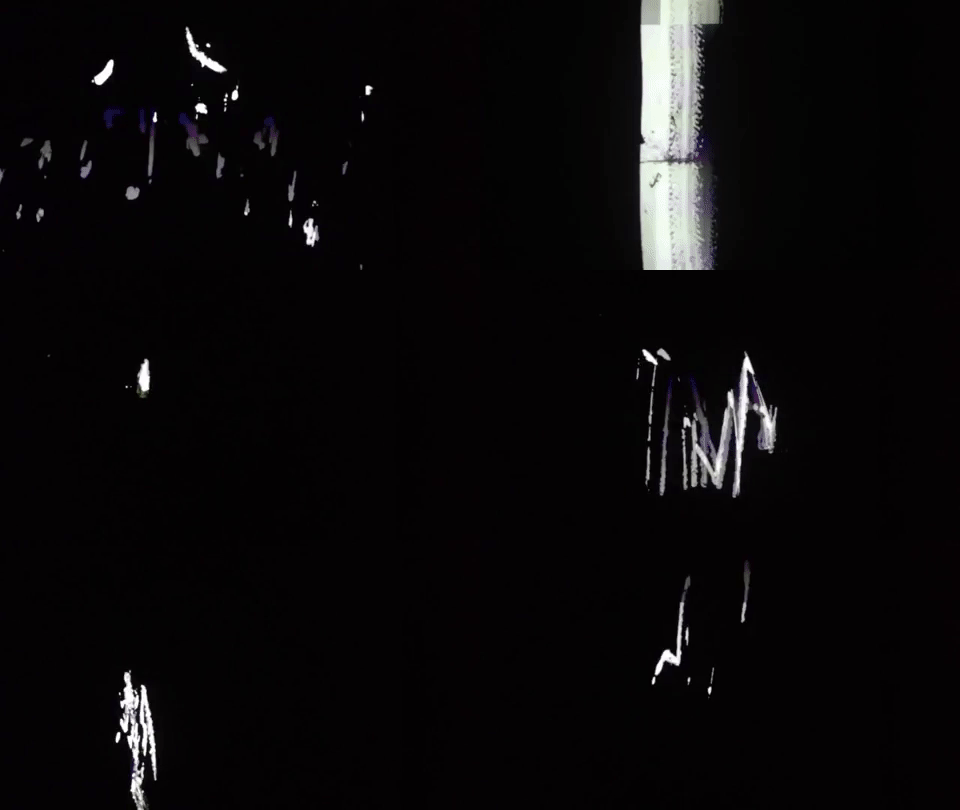
“Free Radicals” by Len Lye (1958)

“Created in 1958, Free Radicals is arguably one of American avant-garde artist Len Lye’s greatest film works. ‘Every film [I made], I tried to interest myself in it by doing something not previously done in film technique’, said Lye. Working across the mediums of painting, poetry, and film, Lye was a prolific and important kinetic artist. With a maverick character and obsession with movement, Lye pioneered experimental film and animation techniques with his influential invention of direct (camera-less) film-making as early as the 1930s. Though never associated solely with one movement, Lye’s work merged aspects of Surrealism, Futurism, Constructivism and Abstract Expressionism into his own breed of moving art.”

Sophie Pinchetti

Watch here.

“I, myself, eventually came to look at the way things moved mainly to try to feel movement, and only feel it. This is what dancers do; but instead, I wanted to put the feeling of a figure of motion outside of myself to see what I’d got. … I didn’t know the term ‘empathy’ – that is, the psychological trick of unconsciously feeling oneself into the shoes of another person – but I was certainly practising it. I got so that I could feel myself into the shoes of anything that moved, from a grasshopper to a hawk, a fish to a yacht, from a cloud to the shimmering rustle of ivy leaves on a brick wall. Such shoes were around in profusion. …”

Len Lye


see also:

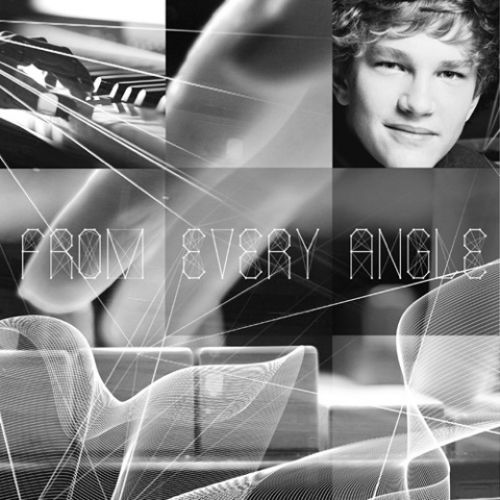
Lisiecki: From Every Angle

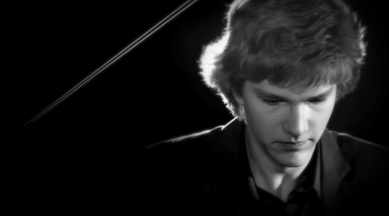
This week saw the very first Bristol Proms get underway and on Monday night BDH collaborated with the Bristol Old Vic, the Watershed and a fantastic team of technicians to showcase the extraordinary Jan Lisieki playing Chopin’s Etudes.

display

Lisieki performed on the stage of the Old Vic surrounded by cameras and scanning equipment, whilst a team of film makers technicians and artists weaved a live visual interpretation of the event, including CGI (by me), scanned versions of Jan and multiple camera angles, which was beamed over to the Watershed as a unique live experience to be enjoyed by a clapping and cheering crowd.

It was a great experience working on a live event with such a great crew, many lessons were learned and hopefully we can do more in the future, there is so much to explore with the live generation of 3D animation and it’s interaction with a real time event.

Here’s some grabs from the days leading up to the concert:

An edited and finessed version of the Watershed feed will be shown on Saturday night on More4 as part of their Piano Night.

“Sensology” by Michel Gagné (2006)

“The creation of this film was a true spiritual and artistic journey. Sometimes, I felt like I was channeling the images. I did no storyboards and virtually no preliminary work. I animated in a stream of consciousness, one frame at a time at a rate of 30 frames per second. The shapes revealed themselves as I listened to the music over and over again. The process was intensely focused and required large amount of concentration. I was becoming part of the music and expressing my creativity at its rawest and most primal. Like Kandinski tought us, every shape and sound has a equal vibration in the soul. When Paul Plimley saw a portion of the film for the first time, he said to me with tears in his eyes, “It’s like you read my soul.””

— Michel Gagné