
Pinter in 1978 – 02.05.16


I dated this because there probably’ll be more than one.

There was a recent rescreening of 1978 interview.

This on writing his first play

I wrote that play totally without calculation. In other words, I started at the top and at a certain point There was a knock at the door and someone came in, and I had absolutely no idea who he was, who he might be, what he might say, and I let it run. I let it happen, and found that he did have a voice, that he was the Landlord, in fact. That was the first chapter.

The two visitors arrived, and I didn’t know what they were on about really, or what they wanted. They were just part of the whole atmosphere.

This on starting:

It remains the essential joy of writing, I think. You’ve got a blank page, one moment, there’s nothing on it, and the next moment there’s something on it.

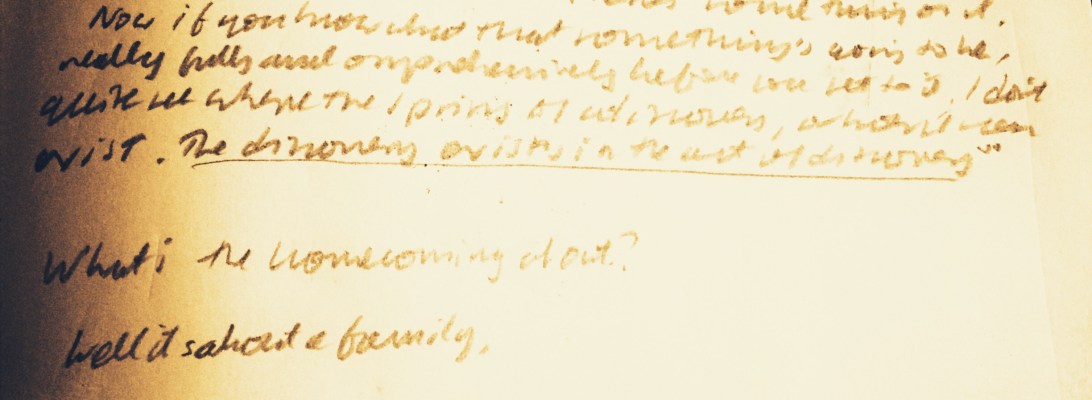
Now if you know what that something’s going to be, really, fully and comprehensively before you get to it, I don’t quite see where the spring of discovery can exist.

The discovery exists in the act of discovery.

“First he tells, then he shows.”

Harold Pinterby Dmitri Kasterine modern bromide print from original negative, 2009, based on a work of 1977
Harold Pinter by Dmitri Kasterine. Modern bromide print from original negative, 2009, based on a work of 1977


“Pinter did what Auden said a poet should do. He cleaned the gutters of the English language, so that it ever afterwards flowed more easily and more cleanly. We can also say that over his work and over his person hovers a sort of leonine, predatory spirit which is all the more powerful for being held under in a rigid discipline of form, or in a black suit…The essence of his singular appeal is that you sit down to every play he writes in certain expectation of the unexpected. In sum, this tribute from one writer to another: you never know what the hell’s coming next.”

David Hare in Harold Pinter:A Celebration Faber and Faber 2000 p 21

“How many times have we heard the tired injunction, “Show, don’t tell”? Of all the specious screenwriting rules peddled by gurus fleecing the young, this is the most annoying of the lot, because it’s plain to anyone who’s ever bothered to watch a play or a film carefully that the best writers invariably achieve their effects by mixing showing and telling. It’s how you configure showing and telling that makes you great. In fact, it’s the amount of one you mix with the other to which we give the name “personal style”. Read one page of Shakespeare, a writer fond of interior monologue. First he tells, then he shows. And that’s how Pinter does it as well.”

 – Adultery, alcohol and menace,

via i12bent