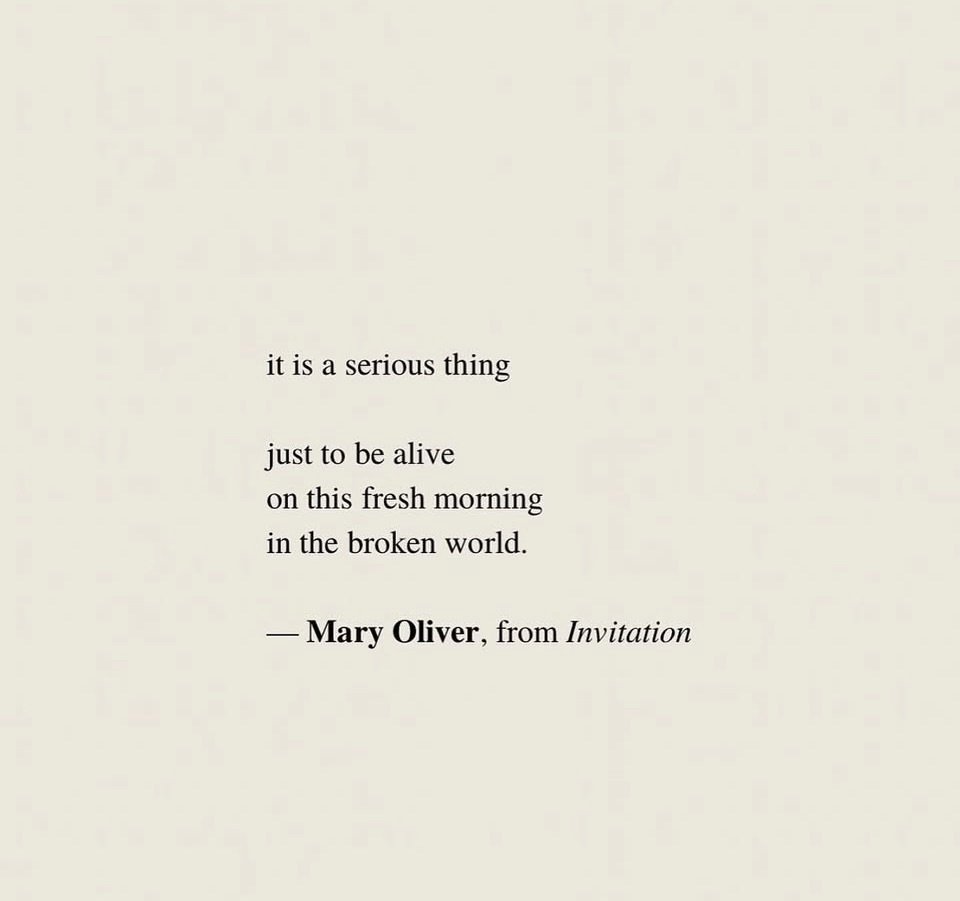
writing
/ˈrʌɪtɪŋ/
noun
1. the activity or skill of writing.
“parents want schools to concentrate on reading, writing, and arithmetic”
2. the activity or occupation of composing text for publication.
“she made a decent living from writing”
“Drive Your Plow Over The Bones Of The Dead” by Olga Tokarczuk
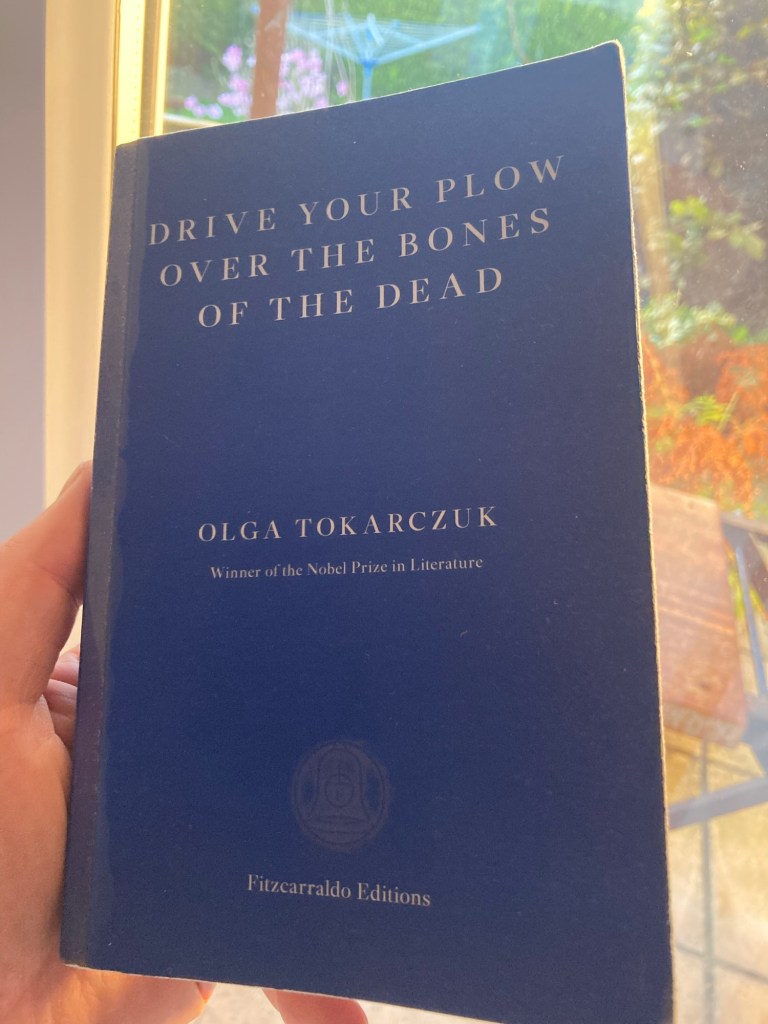
“Sometimes, when a Person feels Anger, everything seems simple and obvious. Anger puts things in order and shows you the world in a nutshell; Anger restores the gift of Clarity of Vision, which it’s hard to attain in any other state.”
Do this
Write something https://seths.blog/2021/09/write-something/
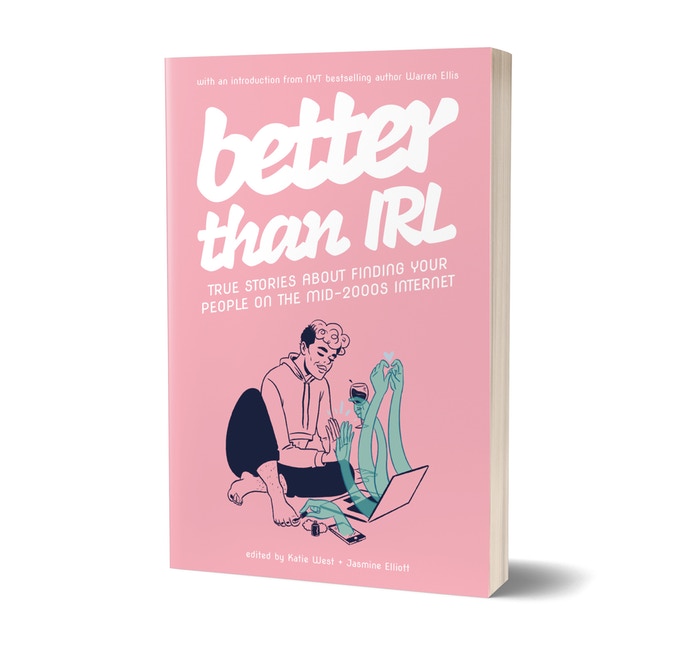
Better than IRL: “Finding your people on the internet of the mid-2000s.”
Having small children is an incredible experience, it can take in your whole world. Years fly by and you can be so very focused on our family and work that, unfortunately, you can lose track of a lot of friends, and your social life pretty much disappears.
When we got to put our heads above ground again in the mid-2000s, I found Tumblr (via Sussanah Breslin) and it really helped me to put my cultural self back together. Sharing work, art and ideas, meeting so many amazing people, (and I didn’t even need to go outside!) it really was an incredibly important time for me and I am very grateful to all of those who made that happen. I suppose the GDSP project was one of the many high points of that.
I left Tumblr behind when they brought in the censorship rules in because it seemed it was leaving the people who made it cool and essential behind, but I have been working hard on keeping my internet positive and fulfilling in that tradition.
It is the history of this spirit and time that Katie West, photographer, writer and publisher is documenting in her new book project “Better than IRL” currently open to pre orders on Kickstarter.
“Better Than IRL is a collection of true stories about the years when the internet first started gaining traction as a place to build connections and community. With 20 essays written by pioneers and participants from online communities, this paperback (or digital book!) looks at how this specific time on the internet changed us, and how we can take the elements that made it so much better than IRL with us into the future.”
“The book will be personal and hopeful. It won’t be nostalgic moaning about how the internet isn’t what it once was—it will discuss how it made us into who we are now and how we can take the lessons we learned about inclusion and belonging to be better people going forward. With talented authors from Canada, South Africa, Pakistan, USA, Singapore, UK, and Liberia, the book covers a wide array of experiences with the beginnings of the Web 2.0.”
Katie began a chat group on Instagram upon the launch of the Kickstarter, last week, and invited many of us who found each other then and it has really brought back many special memories and friendships.
I really hope the book gets funded, I urge you to consider backing the project, and sharing with anyone else you know who might be interested. The money doesn’t go out of you account until the project is fully funded, if that helps.
“All The Names They Used For God” by Anjali Sechdeva

Beautiful, terrible, rebellious, dreamlike. A lovely collection of short stories vary from the good to the very excellent. Recommended if you like your realism magical.
I found this quote by the author in a recent interview:
“Some people would argue that writing stories about rebellious people is not actually an act of rebellion, but I believe those people underestimate the extent to which we internalize a story that really moves us. In the introduction to her novel The Rending and the Nest (Bloomsbury, 2018) Kaethe Schwehn writes, “The most dangerous thing of all is the absence of a story, a narrative to explain what is happening to you … Because someone will always arrive to invent one. Then you will be at the whim of someone else’s story…” I absolutely agree with that, and I think there’s a lot of hope to be found in reading stories where you see people fight back against injustice and ugliness.”
..and on endings:
“My endings definitely evolve as I write the story. They are almost always the last thing I write, and it’s not at all uncommon for me to write three or four different endings before I find one that I’m satisfied with (to say nothing of the additional revisions where I fiddle with the ending to try to get the pacing and the cadence and the final note just right). I have heard some great writers say they always or often write their endings first, or at least know what the ending is going to be when they start out, but I am almost never in that position.”
quotes via PopMatters
“All The Name They Use For God” – US/UK
More in #ReadingRecord:
“The Stand” by Stephen King

Didn’t quite hit me as hard as it did when I was fifteen (understandable?). But still illuminating and great. Get a real sense of his working process, especially after that bit in On Writing when he talks about the block and how he came through it.
Forms – From concert programmes to chocolate wrappers – The Manuscripts of Emily Dickinson

“Although Dickinson did lead an active life outside the home in her youth, her increasing reclusiveness in her later years give the very notion of house and home a special resonance in her work. As such, the unusual piece pictured below is of particular interest, just one of Dickinson’s many “envelope poems” – the focus of a recent book, The Gorgeous Nothings by Marta Werner and Jen Bervin. In this instance, Dickinson has cut apart an envelope so all that remains are the flap and a portion of the body. She orients the paper so the point of the flap is at the top then she fills that peak with words: “The way hope builds his house…” Or, to phrase it more directly, she writes a poem about a house on a piece of paper that looks like a house.”


More in #codex:
- Initial, “Epistolae, etc.”: Spain, 15th century via The British Library, Public Domain.
- Hints of Trigonometry on a 3,700-Year-Old Babylonian Tablet
- Drawings on Manuscript by Leo Tolstoy (1828-1910)
“If you genuinely want to make make films, then write screenplays” – Akira Kurasawa
found via Dharma Bhagalia
The Schrift-Landschaften drawings by Herbert Pföstl
“The Schrift-Landschaften drawings are composed of a single text-fragment, written in Herbert Pföstl’s distinctly small script, inscribed upon a page from a nautical traverse table. One is reminded of the particularities of calligraphic expression and the meditative processes required to create needlework samplers, chronological tables, weather diaries, or even telegraphic code. Pföstl’s landscapes of script, however, come from a deep reading of and reliance upon literature; these lines are fragments from books gathered over many years and transformed into a landscape of incantations for the artist. What at first appears a wilderness of words on paper soon resolves into a garland of vows concealed within the text. These works are a meditation on the artist’s abiding interest in the liminal space which often exists between drawing and writing.”
More in Codex:
 Paul Greer