I’ve learned that no matter what happens, or how bad it seems today, life does go on, and it will be better tomorrow.
I’ve learned that you can tell a lot about a person by the way he/she handles these three things: a rainy day, lost luggage, and tangled Christmas tree lights.
I’ve learned that regardless of your relationship with your parents, you’ll miss them when they’re gone from your life.
I’ve learned that making a ‘living’ is not the same thing as ‘making a life’.
I’ve learned that life sometimes gives you a second chance.
I’ve learned that you shouldn’t go through life with a catcher’s mitt on both hands; you need to be able to throw some things back.
I’ve learned that whenever I decide something with an open heart, I usually make the right decision.
I’ve learned that even when I have pains, I don’t have to be one.
I’ve learned that every day you should reach out and touch someone. People love a warm hug, or just a friendly pat on the back.
I’ve learned that I still have a lot to learn.
I’ve learned that people will forget what you said, people will forget what you did, but people will never forget how you made them feel.
Author: Paul Greer
What are you looking for?
“Inspiration exists, but it has to find us working.”
Maya Frame Loop expression
Note to self: the expression “(frame)%250” will loop a 250 frame sequence in Maya. But they don’t put it in the help files.
Y’all got that?
°Kristamas is haunted

Bull by Pablo Picasso

Complexity means “reduction and removal of redundancy”, as first defined by the philospher John Locke (1632-1704): “Ideas thus made up of several simple ones put together, I call complex; such as beauty, gratitude, a man, an army, the universe.”, and as illustrated in art by Picasso in his famous bull drawing.
–-Jon Otto Fossum, Laboratory for Soft and Complex Matter Studies
via Vruz
Pablo Picasso created ‘Bull’ around the Christmas of 1945. ‘Bull’ is a suite of eleven lithographs that have become a masterclass in how to develop an artwork from the academic to the abstract. In this series of images, all pulled from a single stone, Picasso visually dissects the image of a bull to discover its essential presence through a progressive analysis of its form. Each plate is a successive stage in an investigation to find the absolute ‘spirit’ of the beast.
Here We Go Magic | “Tunnelvision”
“All of the footage was captured on the edge of a large lake in the Catskill Mountains. “The temperature had dropped the night before and the lake was starting to freeze. Everything was half-frozen,” recalls Peking’s Nat Johnson. A lot of the footage was recorded with Snejina’s homemade kaleidoscope fastened to the lens of the camera. The footage was then manipulated by hand, projected and filmed again. “Super-8 projection has an anxious, hypnotic effect that we thought served Here We Go Magic’s song well. We wanted something simple and transcendent,” Snejina explains. “Look closely and you’ll enjoy beautiful patterns in the seemingly random imagery,” notes Peking co-founder, Greg Mitnick.”
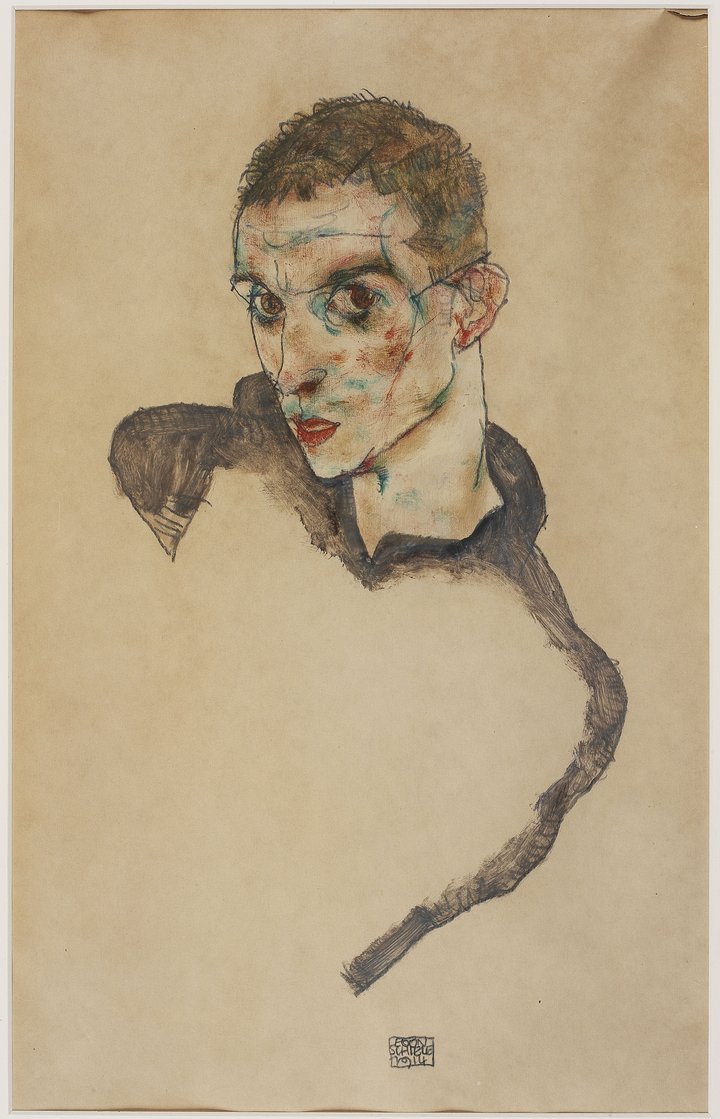
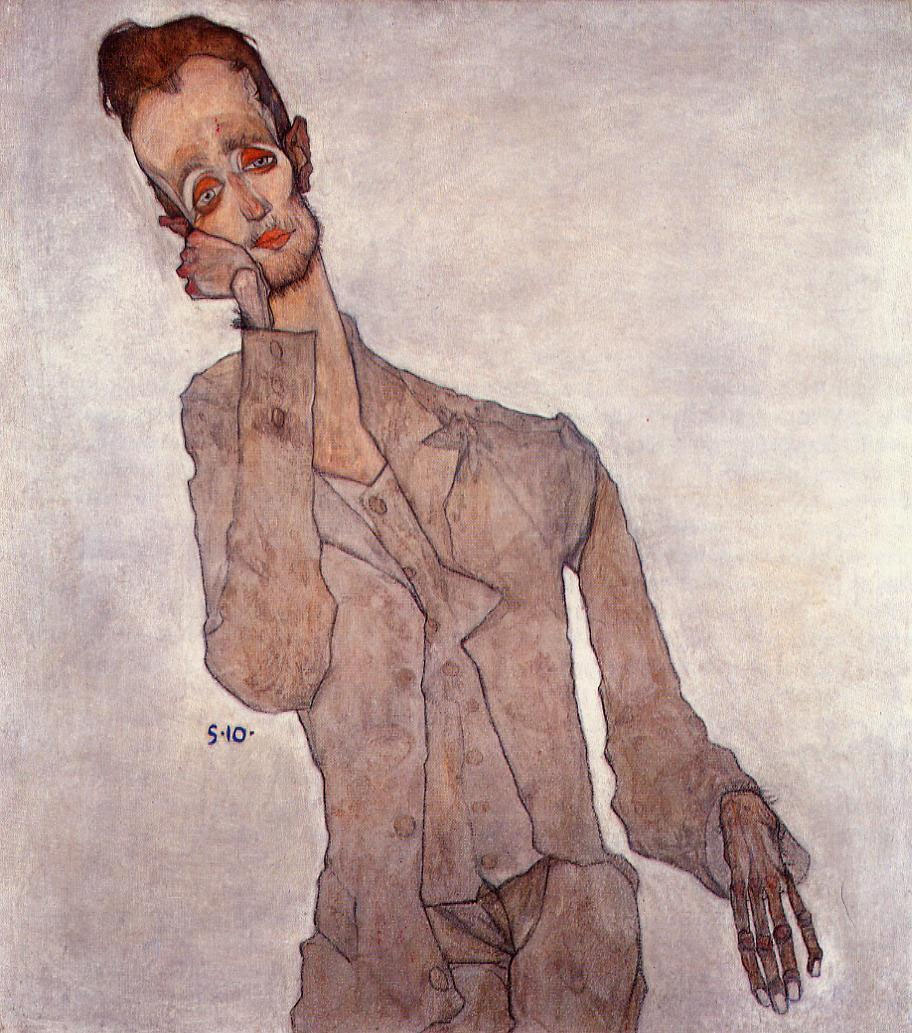
Egon Schiele (1890 – 1918)




Scintillation – Xavier Chassaing (2009)
“This is an experimental film made up of over 35,000 photographs. It combines an innovative mix of stop motion and live projection mapping techniques.”
Mykonos – Fleet Foxes

