“Things are both more trivial than they ever were, and more important than they ever were, and the difference between the trivial and the important doesn’t seem to matter. But the nowness of everything is absolutely wondrous, and if people could see that, you know. There’s no way of telling you; you have to experience it, but the glory of it, if you like, the comfort of it, the reassurance … not that I’m interested in reassuring people – bugger that.”
Author: Paul Greer
Swinging the Lambeth Walk
An Ingenious Abstract Colour Film Interpreting a Famous Dance Tune on the Screen in the Form of Moving Patterns
‘In this film coloured designs convey in simple visual form the rhythm of “The Lambeth Walk.” Patterns move and mingle in time to the music. The sounds of the various musical instruments are interpreted in as simple and direct way as possible, and each note was studied for its individual characteristics before it was drawn and coloured. Double-bass notes are conceived as thick cords of colour vibrating vertically on the screen, while the notes of the guitar are shown as separate horizontal lines. The different sound qualities are indicated by the extent of vibration, and the pitch of the notes by their position high or low on the screen.
The music is composed of excerpts from recordings by popular dance bands. Len Lye, a New Zealander, who developed this original film technique, chose the excerpts for their orchestration of the original tune, and aimed at capturing the emotional spontaneity of good jazz, rather than at creating an intellectual exercise in visual accompaniment.’
(Films of Britain – British Council Film Department Catalogue – 1940)
A memo from the 1945 British Council Film Department lists the reasons for films being withdrawn from circulation. It states that “Swinging the Lambeth Walk, a colour cartoon film made by Len Lye, is a failure in that no theatrical manager will show it. A sneak preview of this film was given at the Cosmo Cinema, Glasgow, but the audience howled it off the screen and the manager had to take it off before the reel finished.”
‘Schicksalsbuch’ (Book of Destiny)

The outstanding ‘Geomantie’ parchment manuscript of about one hundred pages is more a combination of astrological/astronomical treatise, religious almanac and prediction calendar. About one half of it is directly copied from a manuscript known as the ‘Schicksalsbuch’ (Book of Destiny) which was produced in the 1490s and is itself an assemblage of various astrological works. The images below of moveable disks (volvelle) are from the ‘Schicksalsbuch’, which is much longer than the ‘Geomantie’ manuscript.

From the unparalleled BiblioOdyssey.
This is my Brains.
Re-posted Toad

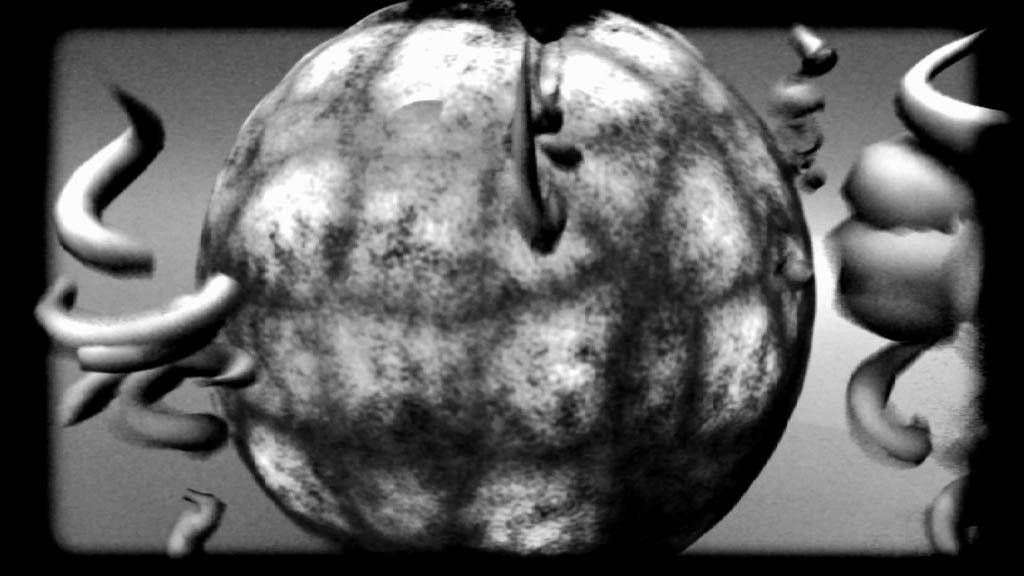
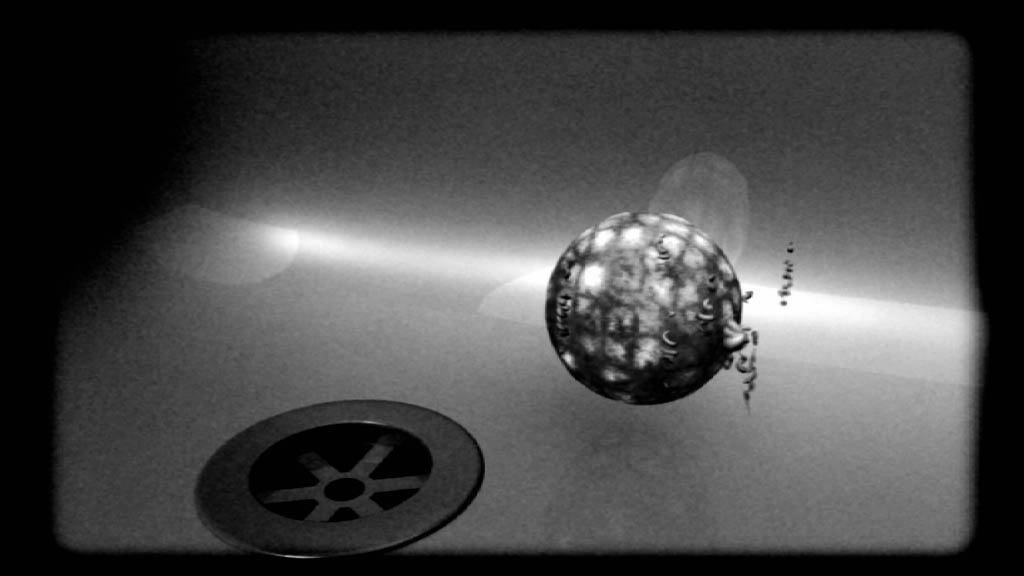
I’ve redone Toad with titles and have come up with a 49 word synopsis:
“God’s taps gleamed far above, like Chomolungma’s peak, but they leaked . The Devil’s toad sat by the death plug unable to progress beyond early meiotic division. Although distressed by Charons pet nymphs, it gained succour from the drip and stole time before new washers arrived.
Short psychedelic whimsey.”
It’s at MySpace and YouTube. Any ratings or comments given will be rewarded with kind thoughts and loving regards.
Badd Strips

Contacted the drummer yesterday

It’s nearly full in Sagittarius

We’re going to lose people

MySpace sucks

Pick-up the sandwiches on the way out

That they do owe me

Me…Thee…

Everyone going away at the weekends

Calm and Comfy

A few notes before I go
Stan Brakhage – Mothlight (1963)
Mothlight is a silent “collage film” that incorporates “real world elements.” Brakhage produced the film without the use of a camera, using what he then described as “a whole new film technique.” Brakhage collected moth wings, flower petals, and blades of grass, and pressed them between two strips of 16mm splicing tape. The resulting assemblage was then contact printed at a lab to allow projection in a cinema. The objects chosen were required to be thin and translucent, to permit the passage of light. Brakhage reused the technique to produce his later film, The Garden of Earthly Delights (1981). Mothlight has been described as boasting a “three-part musical structure.”
“Here is a film that I made out of a deep grief. The grief is my business in a way, but the grief was helpful in squeezing the little film out of me, that I said “these crazy moths are flying into the candelight, and burning themselves to death, and that’s what’s happening to me. I don’t have enough money to make these films, and … I’m not feeding my children properly, because of these damn films, you know. And I’m burning up here… What can I do?” I’m feeling the full horror of some kind of immolation, in a way.”
Over the lightbulbs there’s all these dead moth wings, and I … hate that. Such a sadness; there must surely be something to do with that. I tenderly picked them out and start pasting them onto a strip of film, to try to… give them life again, to animate them again, to try to put them into some sort of life through the motion picture machine.”
see also: Comingled Containers (1996)
Without You
I recently made a short musical video for English two man band, Nizlopi, and they have posted it on YouTube.
The brief was for a fairly straight interpretation of the lyrics and only one third of the song was covered.
It’s a cunning mixture of hand drawn and CGI animation.
Toad
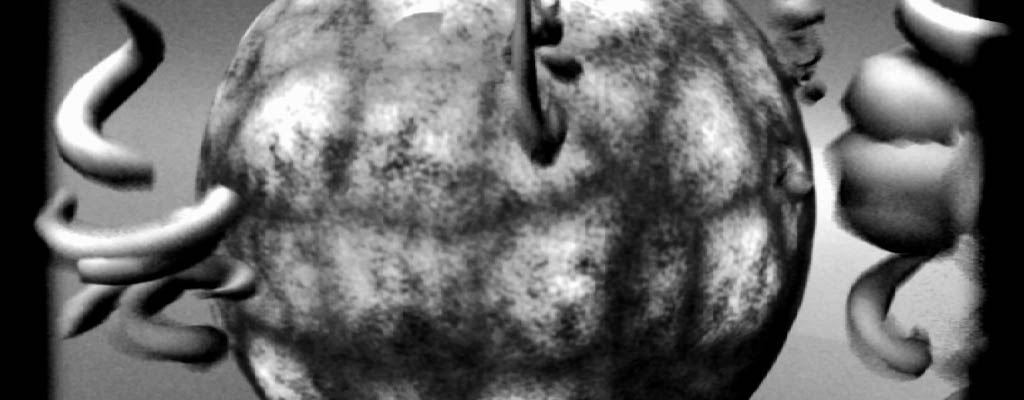
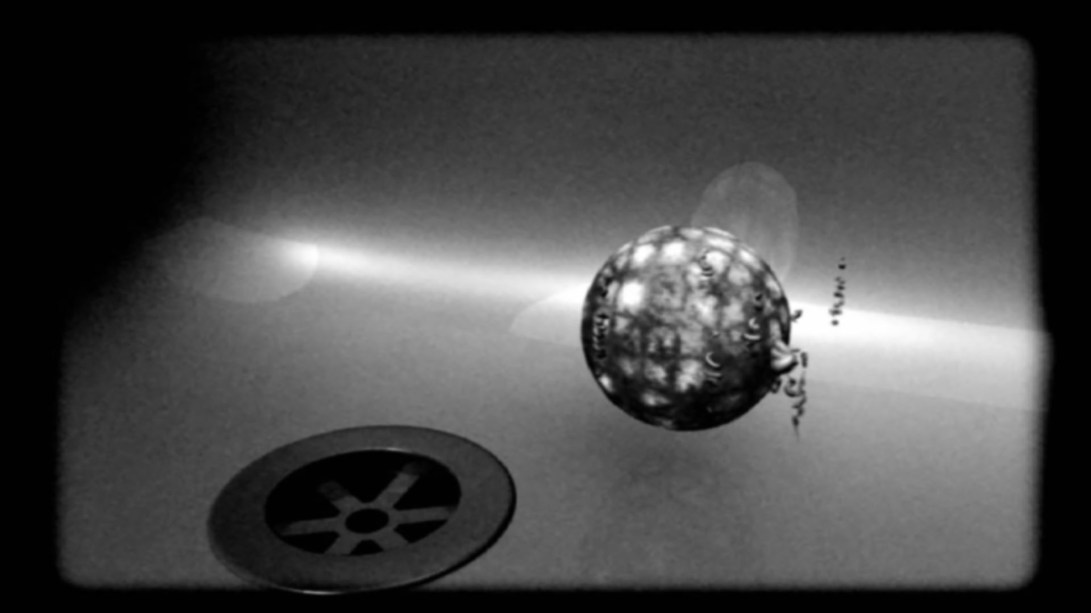
16 years later and I managed to get my shit together and make myself another animated short.
Time has been limited, so although a bit low on the content side, it’s mostly gut instinct, with hardly any sensible thought getting in the way.
It’s called “Toad” and you can see it at either MySpace or YouTube, depending on which side you like your corporate bread buttered.
Hopefully, it ‘s the first of a few, and next time, I might even start with a script.

