via Cinephilia
More in film making:
My old college friend and prolific animator and mentor, Chris Shepherd made this short film last year about the political issue currently dominating British politics at the expense of literally everything else.
Wherever you fall on the debate it’s pretty funny. I was lucky enough to see it last autumn at the Encounters film festival, but it is currently available on YouTube.
Posted here in celebration of Withdrawal Agreement Day in Parliament (haha!).
We did go see this yesterday and it was very good 🐈 💥 🚀
A weekly round up of links, music, items of interest, news and mediadiet.
Yorgos Lanthimos’ “The Favourite” was definitely my favourite from the recent awards season’s batch of films.
I truly had never seen a film like it, all the performances were incredible, the story was amazing, the cinematography, Olivia Coleman, everything.
I just listened to Lanthimos’ interview on Marc Marin’a podcast. He has this today about watching Tarkovsky:
“During the summer in Greece there’s a lot of open air cinemas, beautiful open air cinemas in a lot of neighbourhoods. You have a little table outside surrounded by apartment buildings, and you watch films.
So they would do retrospectives of his <Tarkovsky> films and John Cassevetes.
It was the first time seeing a different medium, seeing something new, like how an image can affect you in a different way, it doesn’t have to be a fast narrative, how poetic it can be, and how you can lose yourself in it, engage, but with your own personality. There’s an openness to it, you can bring your own stuff, and see things and understand things, maybe in a different way from how the person sitting next to you is experiencing the same thing at the same time.
…
It feels realistic but transcends that and you enter a different space. “
— Yorgos Lanthimos, WTF podcast.
It’s definitely worth listening to the whole thing.
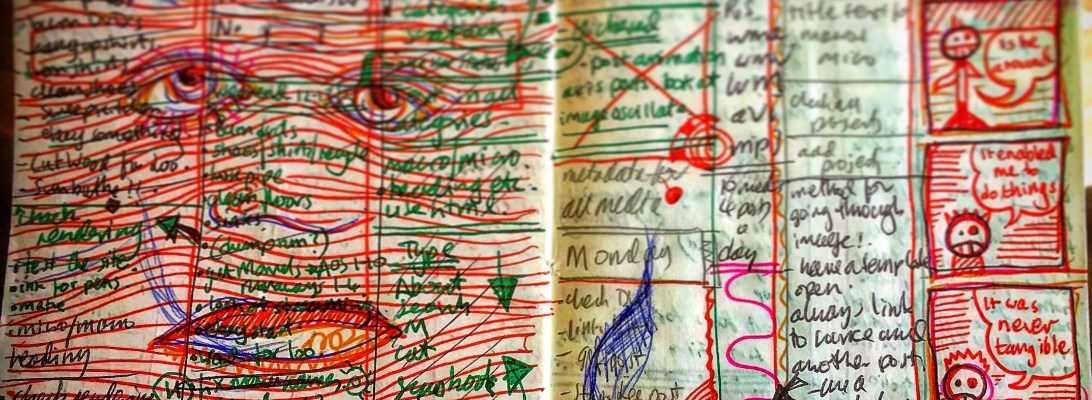
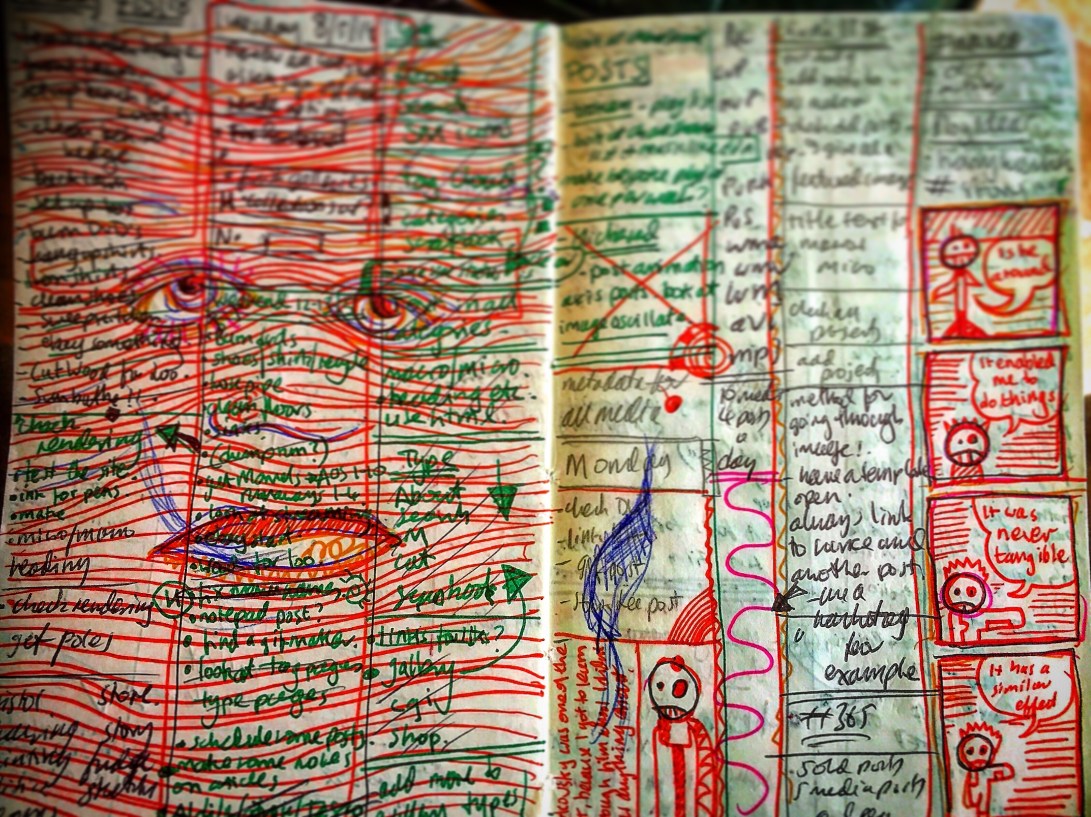
Here’s a notebook page of some drawing I did over some lists whilst I listened to it.
Here is the much viewed video of the wonderful Olivia Coleman accepting the Oscar for her role as Queen Mary.






A weekly round up of links, music, items of interest, news and mediadiet.

 Paul Greer