micro
The Smithsonian Collection of Newspaper Comics edited by Bill Blackbeard

“As an undergraduate student and aspiring cartoonist, the book laid open most often on my drawing table was Blackbeard and Williams’ weighty Smithsonian Book of Newspaper Comics. For years I’d been led to believe by various comic book aficionados that the zenith of achievement for the medium were the EC comic books of the 1950s, but after discovering the Smithsonian book, it became all too clear to me that the real original geniuses of the medium were the pre-cinema cartoonists of the throwaway Sunday supplements of a half century prior. As a general history, the book evenly balanced a necessary all-inclusivity with an otherwise gently insistent esthetic sophistication, which was something of a virtuosic tightrope act of curation: covering everything while still allowing the greats to shine. Choosing a few representative examples of Krazy Kat and Little Nemo is hard enough, but what about introducing Gasoline Alley and Polly and Her Pals to a brand-new readership, to say nothing of uncovering the obscure efforts of George Luks and Lyonel Feininger? Even better, the strips were presented in a warm, large, full-color format which at the time must have been extraordinarily expensive, but allowed their complicated and intricate compositions to be truly re-appreciated; earlier histories of comics had tended towards text-clotted black-and-white tour schedules, amputating single panels and freeze-drying them in black and white as little more than passing souvenirs of an outmoded 19th and early 20th century naïveté. (As an aside, one of the deciding reasons I agreed to design the “Krazy and Ignatz” series was that Mr. Blackbeard was its acting editor, and I considered it a personal honor to be asked to contribute.) By devoting his life to the preservation and location of these near-extinct supplements and sections, Bill Blackbeard saved an American art from the certain peril of trash men, librarians and ultraviolet light so that we, the generations to come, could appreciate their unprepossessing, unpretentious and uproarious beauty. The comic strip may have been disposable, but Bill Blackbeard’s founding contribution to the understanding of it as an art was, and always will be, timeless.”
– Chris Ware
via Austin Kleon
“The Words That Maketh Murder” by PJ Harvey (2011)
Radiolab Presents Symmetry (2011)
“This striking Radiolab video made by Everynone was inspired by Radiolab’s Desperately Seeking Symmetry episode. Filmmakers Will Hoffman, Daniel Mercadante, and Julius Metoyer III play with our yearning for balance, and reveal how beautiful imperfect matches can be.”
“The idea of producing variations on a work from the past was probably inspired by Picasso who reinterpreted works by Grünewald, Delacroix, Manet, Gauguin and Velazquez himself.”
“Picasso is the reason why I paint. He is the father figure, who gave me the wish to paint……Picasso was the first person to produce figurative paintings which overturned the rules of appearance; he suggested appearance without using the usual codes, without respecting the representational truth of form, but using a breath of irrationality instead, to make representation stronger and more direct; so that form could pass directly from the eye to the stomach without going through the brain.”
1856 Burritt – Huntington Chart of Comets, Star Clusters, Galaxies, and Nebulae

“This rare chart of comets, star clusters and nebula was engraved W. G. Evans of New York for Burritt’s Atlas to Illustrate the Geography of the Heavens . Notes several important comets recorded in the previous 300 years including the Comet of 1689, the Comet of 1744, The Great Comet of 1680, the Great Comet of 1811, Halley’s Cement, the Great Comet of 119 and the Comet of 1843. Also shows several well known nebulas including the Horse Shoe Nebula, the Spiral Nebula and the Dumb Bell Nebula. This unusual chart appeared in the 1856 edition of Burritt’s Atlas and was not present in earlier edition.”
Postcard from Japan
“- and besides, one thing that has become very clear in the last few terrible weeks is that ordinary, mundane life is a miracle, and the only place where you can find happiness.”
“Die Welt im Feuer, oder das wahre Vergehen und Ende der Welt, durch den letzten Sünd-Brand translate”
or: Depicting the destruction of the earth in several stages:
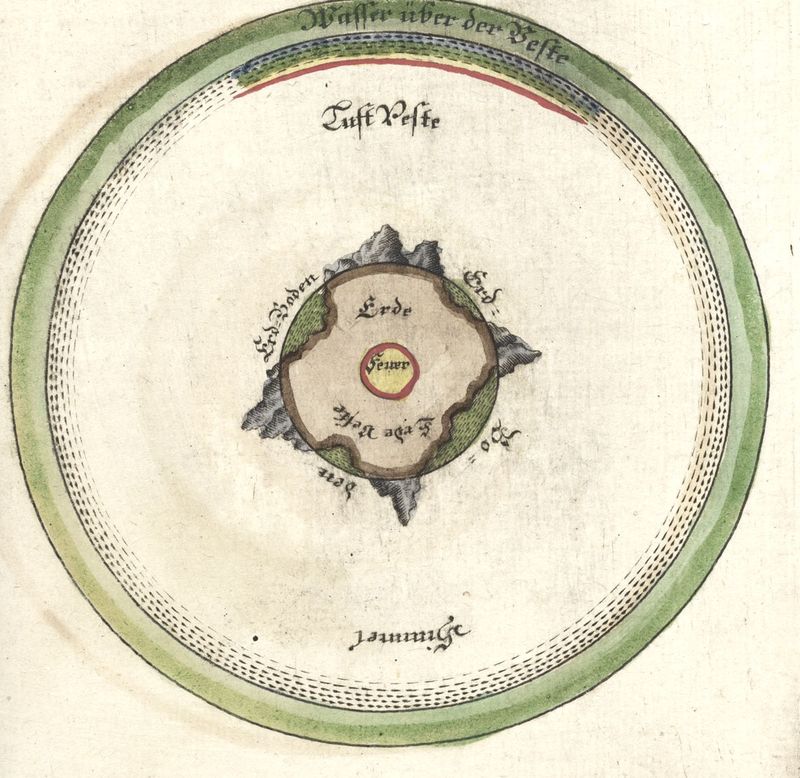
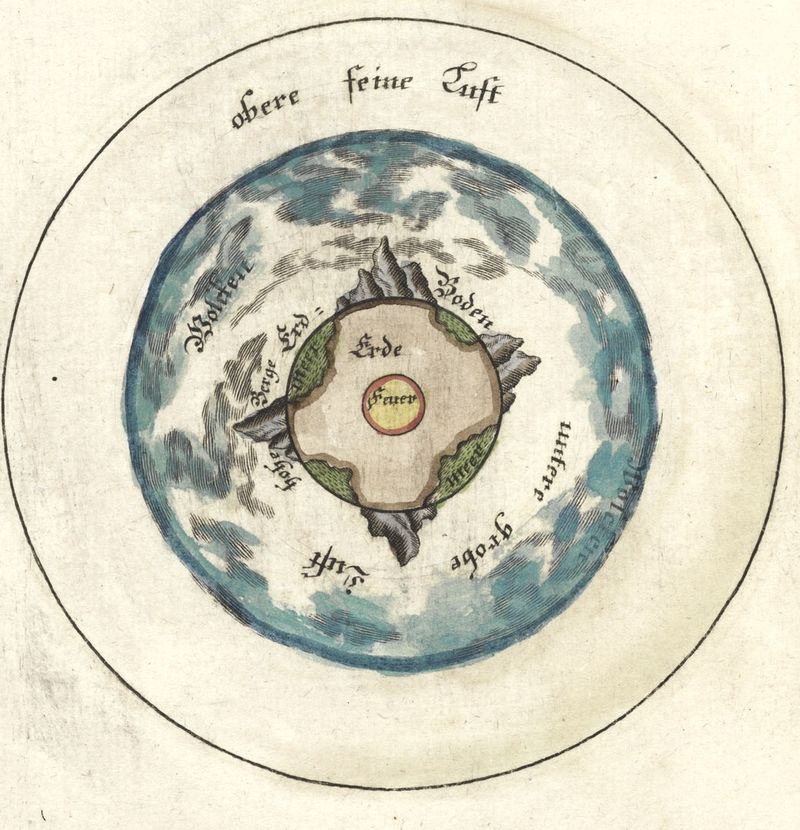
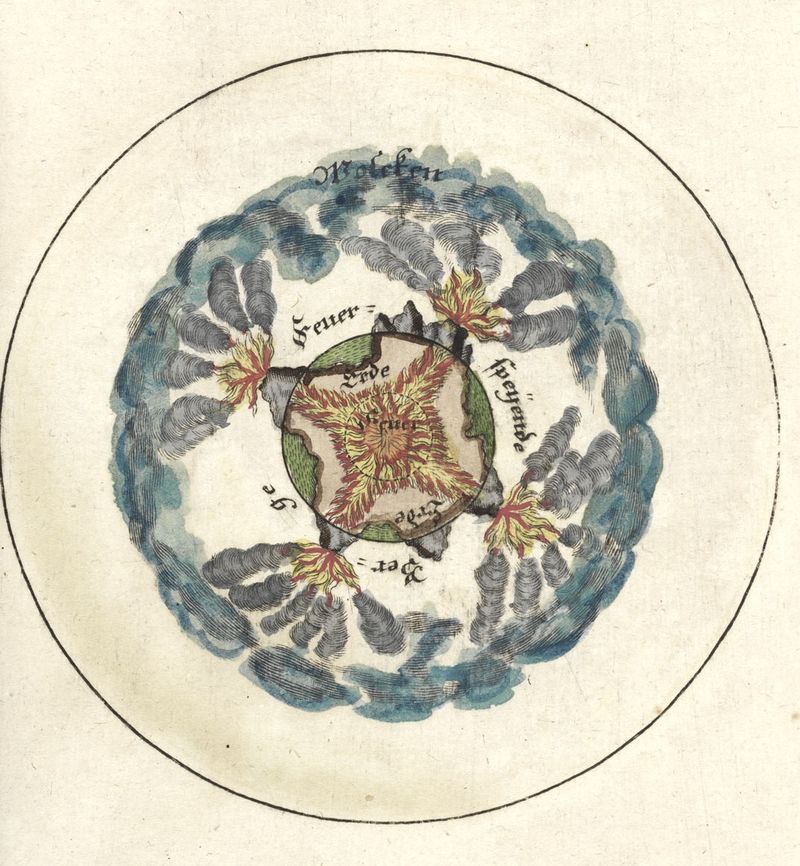
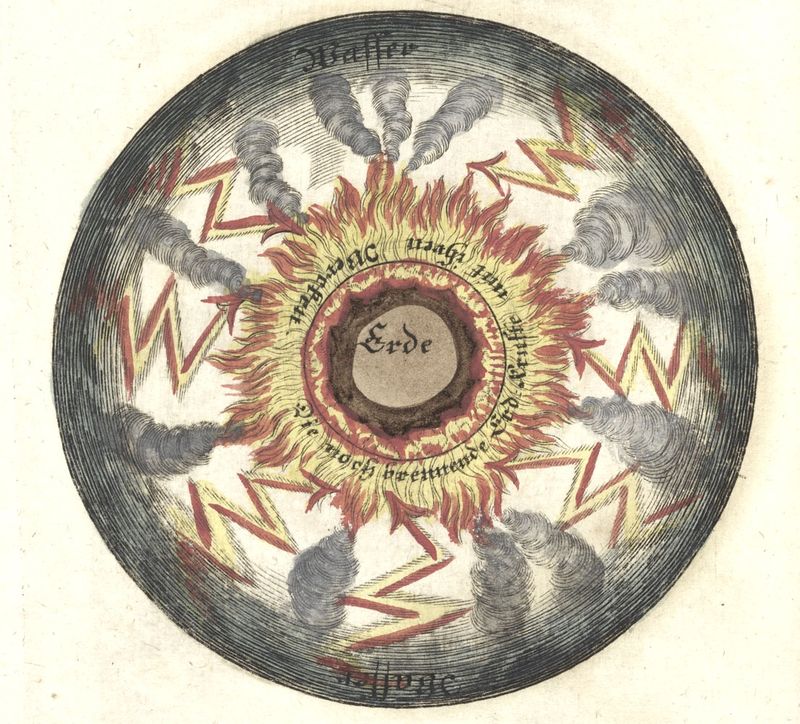
“This engraving is one of twelve found in a fine little book, the brainchild of clergyman/semi-scientist Jodocus Frisch (1714-1787), who delivered to the (un-) waiting world his vision of how the earth and heaven will come to an end, there at the end of days. Die Welt im Feuer, Oder das Wahre Vergehen und Ende der Welt, Durch den letzten Sünd-Brand (printed in Sorau by Gottlob Heboldm in 1746) is one of very few works that depict (in illustration) the destruction of the Earth, and even though Frisch illuminates biblically-based theory, the idea of the earth exploding into bits in primordial fire and so on was extraordinary. The images were done in four colors representing the four elements: yellow, brown, green and white represented (respectively) fire, earth, water and air. In this image, we see the fire-centric earth encircled by a sphere of water, which is surrounded by a sphere of fire, which in turn is surrounded by a sphere of air, with much bad stuff happening. “
More to be found at thesciencebookstore.
 Paul Greer