Yes, so we’ve been working on this thing a lot. It’s on the telly soon.
cgi
Star Wars: Teaser Trailer 1976
Today I was at home with the Youngest who is recovering from a stomach bug. So we watched the original CGI-free version of Star Wars.
All the old feelings came flooding back.
Lisiecki: From Every Angle
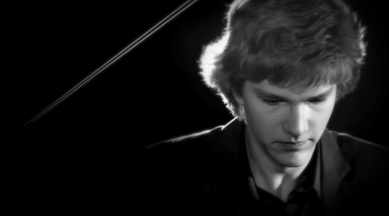
This week saw the very first Bristol Proms get underway and on Monday night BDH collaborated with the Bristol Old Vic, the Watershed and a fantastic team of technicians to showcase the extraordinary Jan Lisieki playing Chopin’s Etudes.
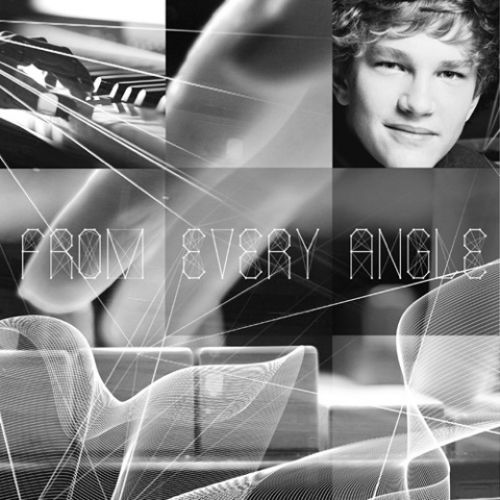
Lisieki performed on the stage of the Old Vic surrounded by cameras and scanning equipment, whilst a team of film makers technicians and artists weaved a live visual interpretation of the event, including CGI (by me), scanned versions of Jan and multiple camera angles, which was beamed over to the Watershed as a unique live experience to be enjoyed by a clapping and cheering crowd.
It was a great experience working on a live event with such a great crew, many lessons were learned and hopefully we can do more in the future, there is so much to explore with the live generation of 3D animation and it’s interaction with a real time event.
Here’s some grabs from the days leading up to the concert:
An edited and finessed version of the Watershed feed will be shown on Saturday night on More4 as part of their Piano Night.
Rise Of The Continents
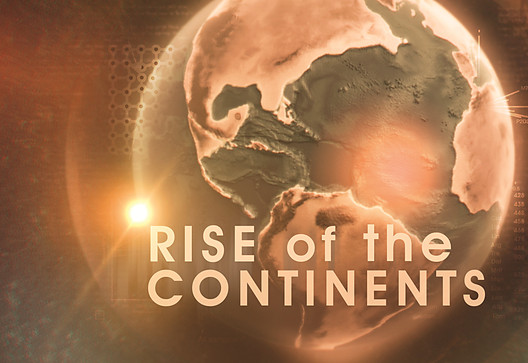
Rise Of The Continents, which we did extensive work for at BDH, is currently airing at 9pm on BBC2 on Sundays. If you are in the UK you can catch up with the whole series here on the iPlayer.
There is also some words on the process on the BBC website:
“The first stop was to understand and interpret the geological data. The production team at the BBC approached Professor Christopher Scotese, a leading expert in paleogeology from the University of Texas and creator of the Paleomap Project. This virtual reconstruction is a thirty year undertaking which aims to map the changing distribution of land and sea. By combining data from various fields of earth science, he mapped the movement and formation of our continents over the last billion years.
With Professor Scotese acting as a scientific advisor to the programme, the graphics team were able to use the geological data relating to land and plate tectonics to build the graphics. By subsequently playing with colour, size and special lens effects, the team created bold CGI sequences that would help clearly explain how the Earth works.”
Read more here.
Rise Of The Continents (Preview)
Those of you who aren’t Bots and actually pay attention to me on here might already know that for my actual job I make CGI for Television at BDH in Bristol.
Recently we worked on a landmark series for the BBC called Rise Of the Contintents, this involved visualising the unimaginable changes that have taken place on the Earth over hundreds of millions of years based data generated by paleogeologists and satellite scanning.
This is a preview of show featuring the presenter Iain Stewart (Professor of Geoscience Communication at Plymouth University), leaping, fully clothed, into the top of the Victoria Falls, free as a lamb in springtime. This sequence contains no, I repeat no, CGI.
The series has already aired in the States and here is a link a trailer for that version, which does contain some of the work we did.
The series begins in the UK at 9pm, Sunday 9th June. (ie tomorrow).
As you were.
New GIF: sevenTime
erm.. what I have been doing for the last 9 months appears to be airing in the US first… check it out, tonight 10pm.
Maya 2013 Installation Failure – Result 1603
Been having trouble installing Maya 2013 on one of our Windows 7 machines.
Message came up “Installation complete. Some products failed to install”.
Rectified the problem thus:1. Go to Start/Control Panels/Add or Remove Programs.
Message came up “Installation complete. Some products failed to install”.
Rectified the problem thus:1. Go to Start/Control Panels/Add or Remove Programs.
2. Remove the following: “Microsoft Visual C++ 2010 Redistributable (x64)” & “Microsoft Visual C++ 2010 Redistributable (x86)”
3. Restart
4.Go here.
5. Download and install: “vcredist_x64.exe” & “vcredist_x86.exe”
6. Restart.
7. Reinstall Maya.
Wonders Of Life
At BDH we made the graphics for this new series from Prof Brian Cox. It features a specially updated version of the Galaxy Song by Eric Idle, pretty much outlining the 4 billion year history of life in three and a half minutes.
 Paul Greer