BAFTA nomination for #WondersOfTheUniverse


OK, I’ve had a cup of tea and a slice of cake so I’m slightly calmer now, I’ll explain a bit more fully:
I work at BDH making CGI for television, which can involve making all sorts of things, from visualizing thought to animating bouncing sex toys.

Last year we were lucky enough to work on a miraculous programme called “Wonders of the Universe“, hosted by Professor Brian Cox, and produced by the BBC.

For someone who grew up on Carl Sagan, Star Trek and Doctor Who it was a very special experience for me personally.

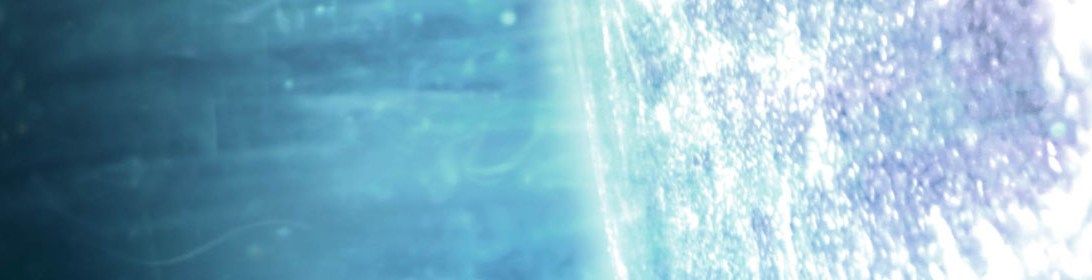
I was largely responsible for star surfaces, coronal loops and solar flares.

So now the work we did has been nominated for a Visual Effects award at the Television Craft BAFTAs, alongside Great Expectations, Inside the Human Body, and… DOCTOR WHO.
So today couldn’t really get more awesome.

(There is 15 minute edit of just the work we did here, with music by Timo Baker (full screen, head phones on please)):

and a lovely playlist of clips from the actual series here:

in case you are unfamiliar with it’s magic.

Did I mention I just had cake?

Frozen Planet

 
This is Frozen Planet, which I was working for a while there..
Should be going out on BBC One soon (Oct?).
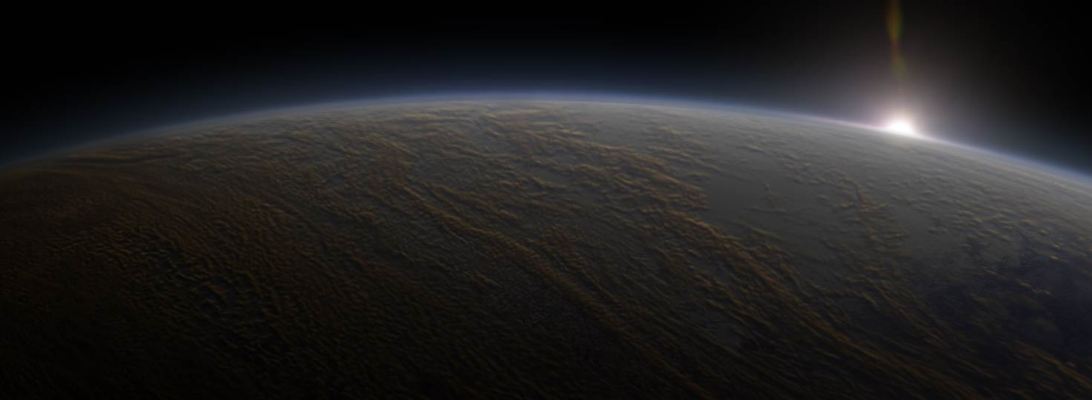
I was taking and interpreting data from NASA and commercial satellite scans and turning them into accurate, explanatory yet aesthetically pleasing globe views.
I was assisted in the task by the excellent Jessica Lee.
There is one at the front of this trailer there, but it has been compressed to **** on the YouTubes, there are at least another 6 million shades of snow in there on the full HD version.
(All the animals are real, btw.)

On Painting Machines


Reblogged from ekstasis:

“Anton Perich

Everything has history. Call the above proto-glitch. Here’s Perich describing his artistic process, in this case building a machine to do his painting for him in 1977:

I dreamed of a machine that would paint. No more hand made paintings, but machine made, with sharp electric lines, on and off, like Morse code, short and long. So in 1977/78 I built such a machine, using surplus materials from Canal Street stores. I wired some photocells to the airbrushes on the motorized scanning unit that swept an area of about 10×12 feet, hung a piece of canvas, and made my first digital painting. In his Diaries Warhol said he was terribly jealous. This machine was an early precursor of ink jet printer/scanner. This was the time long before computer and digital art. I had my first show of electric paintings at Tony Shafrazy Gallery in 1979. I am still painting with this machine every day. It keeps breaking and I keep fixing it all the time.

Not “computer generated,” but computer aided. Not mechanistic, but nevertheless mediated by technology, by the digital. “Glitched,” before such a thing was.

The wonderful Joanne McNeil is in charge of Rhizome’s frontpage these days. Compare Perich’s painting from the 70’s to her post, from 2011:

Today’s information and mass media society have brought about a diffused ‘aestheticization’ where artists are mixing political and war images with those proceeding from adds, commercial cinema and entertainment. Be it by hiding images behind layers, making them transparent or pixilated, applying faded colors and thick paint, there is a slowing down of the experience of viewing an image through a hand made, physical rendering. But, besides this ‘slowness’ and physicality that we traditionally associate with painting, the painting medium is also paradoxically going through an ‘acceleration’ process through its newfound relationship with iPhones, scanners, Photoshop, Facebook, satellites, digital cameras, and 3-D programs.

— The Museum voor Moderne Kunst Arnhem (MMKA) description of exhibition The End of History…and The Return of History Painting (via Bruce Sterling)

…Not “computer generated,” but mediated. That “slowness” is the same as Perich’s, a layer between theory and practice. Perich built a piece of bleeding-edge technology inspired by century old Morse code, by a dream, that always breaks and needs repair. It could be contemporary and would still seem avant garde.

The tools have changed, of course, which changes the context. A modified inkjet printer is a throwback now, a modern process made real by an allegedly dying technology, but the principle remains the same. That’s “the end of history,” simultaneously hurtling forward and artificially slowing ourselves, if only so we can make sense of things. Reaching into the past only to find what we thought was new, revolutionary and not being entirely surprised.”
A Cosmological Fantasia

Very proud to say I am a small part of the awesomeness that is the BDH graphics team on the BBC’s Prof. Brian Cox, doe-eyed-lens-flare-fest, “Wonders of the Universe”.

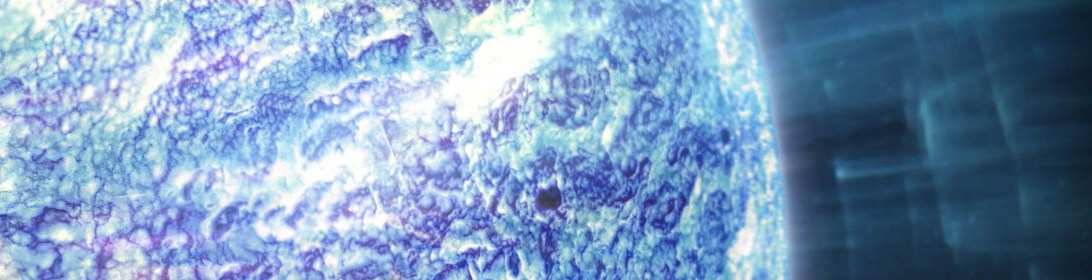
I made particular contributions to star surfaces and coronal loops.

Here is an edit of all the graphics we produced for the series, with a soundtrack by Timo Baker.

This comes with a caution, as face melting may occur.

EDIT: Looks like they had to take the edit down, but you can still see the trailer for the show here.

Vivaldi’s La Primavera


BDH produced a series of films to accompany the performace of Vivaldi’s Four Seasons by the Emerald Ensemble.

This is the Largo from Concerto No. 1 in E major, Op. 8, RV </wiki/Ryom_Verzeichnis> 269, “La primavera” (Spring).

Vivaldi wrote sonnets for each concerto in the Four Seasons. For this piece he wrote:

“And now, in the pleasant, flowery meadow, to the soft murmur of leaves and plants, the goatherd sleeps with his faithful dog at his side.”

Each musical element clearly illustrates this scene and the shapes in the animation aims to reflect that.

http://www.emeraldensemble.co.uk/

this links is about the piece in general

http://classicalmusic.about.com/od/baroqueperiod/ss/fourseasons.htm