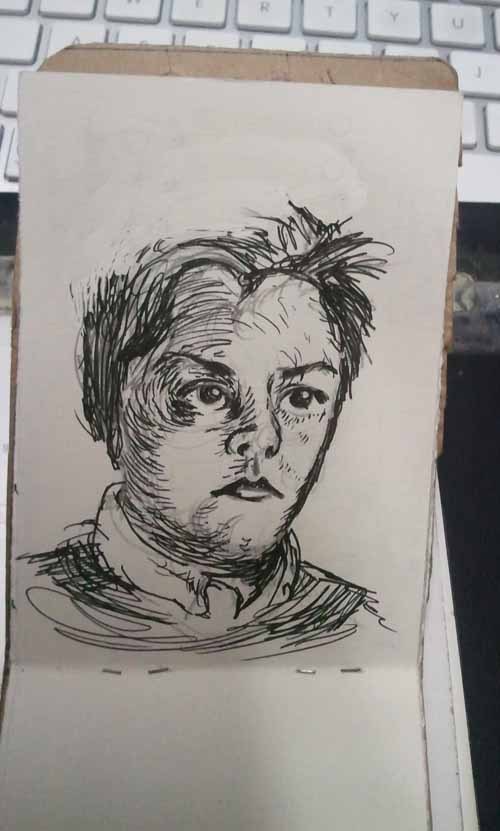
I drew @MissSpite. She drew me, see?
/ˈdrɔː(r)ɪŋ/
noun
1. a picture or diagram made with a pencil, pen, or crayon rather than paint.
“a series of charcoal drawings on white paper”
synonyms: sketch, picture, illustration, representation, portrayal, delineation, depiction, composition, study, diagram, outline, design, plan, artist’s impression; tracing
“he did a pencil drawing of the house”
2. an instance of selecting the winner or winners in a lottery or raffle.
“entrants need not be present at the drawing”
I drew @MissSpite. She drew me, see?
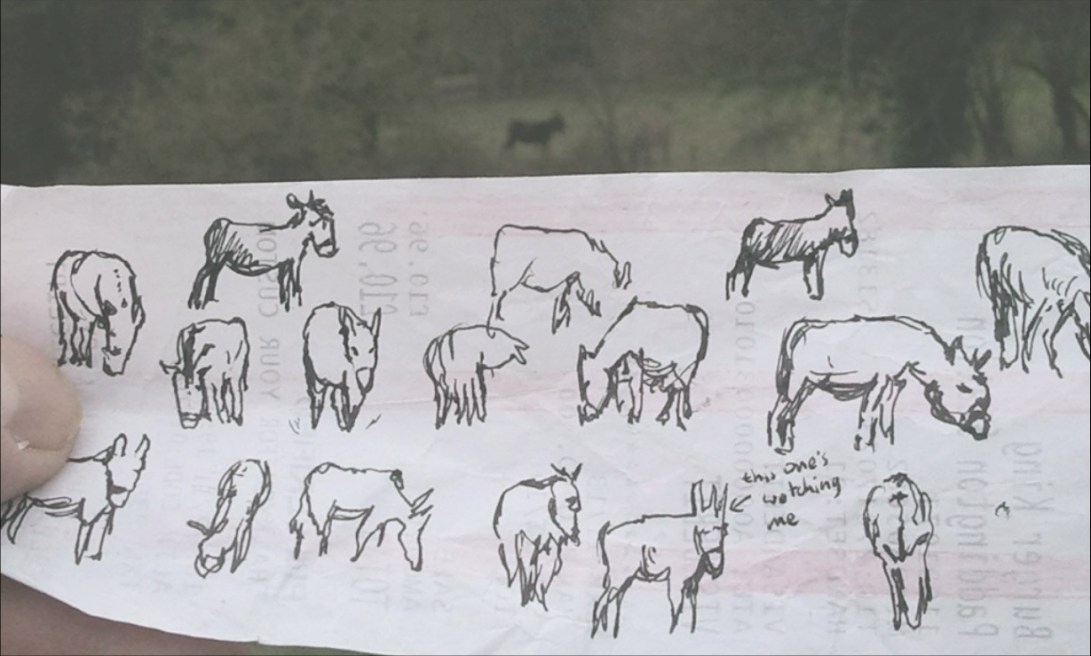
An assembly manual by Burningfp.

1. You will need:
2 sheets good quality A4 paper (150 gsm is good)
1 piece of recycled cardboard (Stella beer box card is thin and strong)
2 standard staples
Scissors, ruler, pencil and stapler.

2. Fold the paper in half, then fold back the other way, this then should make it easy to tear in half with a neat edge.

3. Repeat so, in the end, each sheet bears 4 strips.

4. Repeat on the other sheet so you end up with 8 strips.

5. Fold them all together in half, making booklet.

6. Make sure that crease is nice and sharp.

7. Using the booklet as a guide measure out a rectangle on the card to act as a cover. Give it an extra 5mm in width and 10mm in length to accommodate the edges and spine thickness.

8. Cut out the card.

9. Making sure the edges are equal fold the cover around the booklet.

10. Using a thick carpet or plasticine as a base push two staple through the spine. Turn the book over and carefully bend the staples over as they should be, but use a tool, like a knife or something so you don’t damage your beautiful fingers.
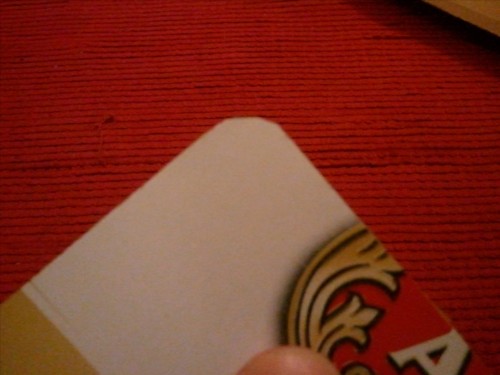
11. You can even cut the corners rounded just to look classy.

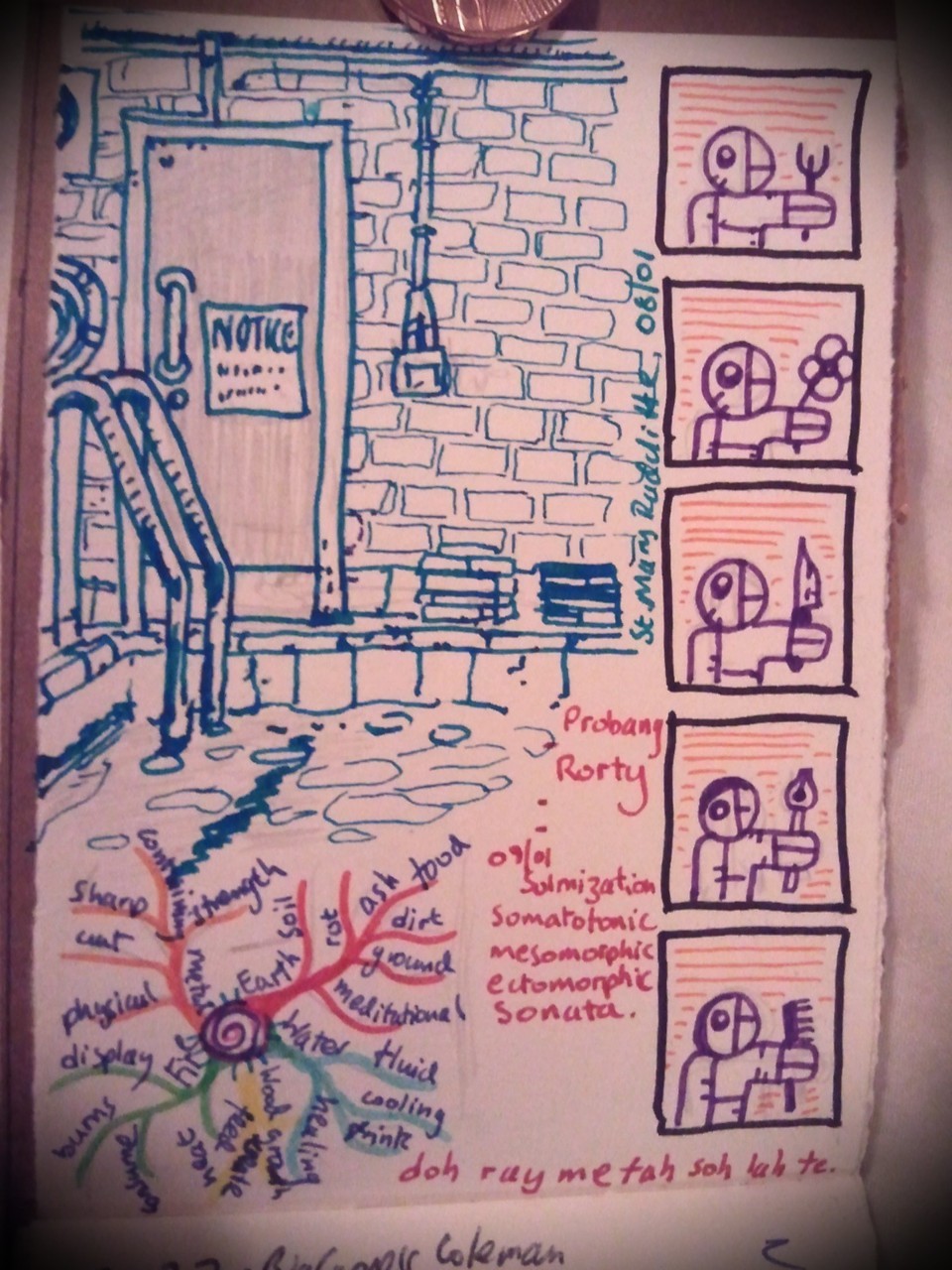
12. Bingo, it’s flexible so will fit nicely in a back pocket, and is the perfect receptacle for notes on your next novel, concepts of social theory, life sketching, mind maps, crudely drawn genitalia etc etc.
(If this is a bit low rent for you, may I recommend the excellent Linda Boucher’s elegantly decorated actual moleskines available here.)
Enjoy!
bfp
x
(cross posted from my tumblr)


Looking at a rapidly flowing stream or a thunderstorm leaves a strong visual impression, but many aspects of what is actually happening remain hidden from or are simply beyond the reach of observation, either by the naked eye or instruments. They have to be inferred from what can be observed, and this is a matter of interpretation, of imagination. It is very much the method Albert Einstein used in developing his theories of Relativity, because he could not directly observe objects moving close to the speed of light, or the movements of stars in interstellar space. In science it is called making a hypothesis, and the application of this method took modern physics far beyond empiricism (Newton had proudly claimed, “I make no hypotheses”), which was based strictly on what could be observed. Da Vinci, in this way as in others, anticipated future developments—he created hypothetical worlds that revealed the hidden structures of nature. These, in turn, helped him create paintings of great originality that are imbued with a lasting aura of conceptual power.


more here

“Sir William Hamilton (1730-1803), perhaps best-known today as the husband of Emma Hamilton, mistress of Admiral Lord Nelson, was in his own right a skilled diplomatist, a celebrated connoisseur and collector, and a respected natural historian. In his own time he was honoured in particular for his contributions to the study of volcanoes, acquiring the title ‘the modern Pliny’ for his studies of Vesuvius.”
vi BibliOdyssey
“The artist is a receptacle for emotions that come from all over the place: from the sky, from the earth, from a scrap of paper, from a passing shape, from a spider’s web. That is why we must not discriminate between things. Where things are concerned there are no class distinctions. We must pick out what is good for us where we can find it – except from our own works. ”

 Paul Greer