Stuart Hall and the Rise of Cultural Studies

“Culture, after all, is a matter of constructing a relationship between oneself and the world. “People have to have a language to speak about where they are and what other possible futures are available to them,” he observed, in his 1983 lectures. “These futures may not be real; if you try to concretize them immediately, you may find there is nothing there. But what is there, what is real, is the possibility of being someone else, of being in some other social space from the one in which you have already been placed.” He could have been describing his own self-awakening.”

Hua Hsu


Making Sense of Language – Mr. Rogers Set of Rules for Talking to Children

Rogers was extraordinarily good at imagining where children’s minds might go. For instance, in a scene in which he had an eye doctor using an ophthalmoscope to peer into his eyes, he made a point of having the doctor clarify that he wasn’t able to see Rogers’s thoughts. Rogers also wrote a song called “You Can Never Go Down the Drain” because he knew that drains were something that, to kids, seemed to exist solely to suck things down.”

  1. “State the idea you wish to express as clearly as possible, and in terms preschoolers can understand.” Example: It is dangerous to play in the street. ​​​​​​

  2. “Rephrase in a positive manner,” as in It is good to play where it is safe.

  3. “Rephrase the idea, bearing in mind that preschoolers cannot yet make subtle distinctions and need to be redirected to authorities they trust.” As in, “Ask your parents where it is safe to play.”

  4. “Rephrase your idea to eliminate all elements that could be considered prescriptive, directive, or instructive.” In the example, that’d mean getting rid of “ask”: Your parents will tell you where it is safe to play.

  5. “Rephrase any element that suggests certainty.” That’d be “will”: Your parents can tell you where it is safe to play.

  6. “Rephrase your idea to eliminate any element that may not apply to all children.” Not all children know their parents, so: Your favorite grown-ups can tell you where it is safe to play.

  7. “Add a simple motivational idea that gives preschoolers a reason to follow your advice.” Perhaps: Your favorite grown-ups can tell you where it is safe to play. It is good to listen to them.

  8. “Rephrase your new statement, repeating the first step.” “Good” represents a value judgment, so: Your favorite grown-ups can tell you where it is safe to play. It is important to try to listen to them.

  9. “Rephrase your idea a final time, relating it to some phase of development a preschooler can understand.” Maybe: Your favorite grown-ups can tell you where it is safe to play. It is important to try to listen to them, and listening is an important part of growing.

    via Maxwell King

More in #lists:

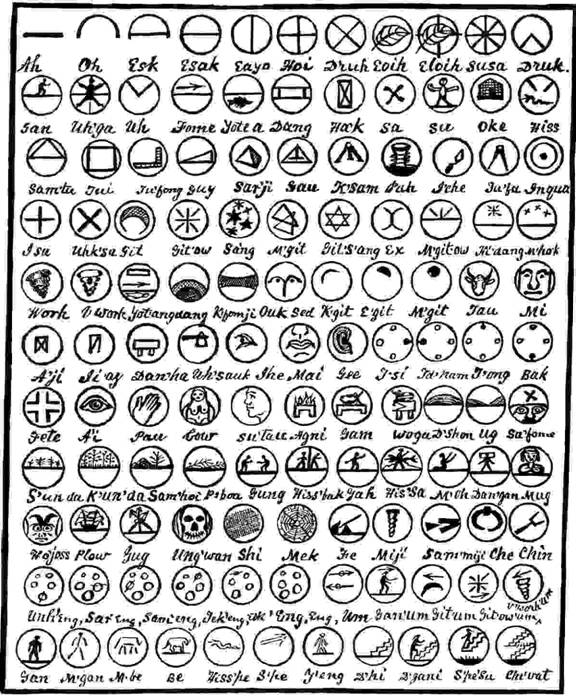
‘Se’moin’ from the Tablet of Fonece (Oahspe ‘primordial language’ also known as Panic, from the name Pan), John Ballou Newbrough, d. 1891.


‘Se'moin’ from the Tablet of Fonece (Oahspe 'primordial language’ also known as Panic, from the name Pan), John Ballou Newbrough, d. 1891.

“i033 Tablet of Se’moin. Panic language means earth-language; things were named after the sounds they uttered; thus, the soul of each thing spoke, and that which was voiced was called the Panic language. Panic was the first language on earth but was not written until Se’moin, given in the time of Sethantes, being the first written language given to I’hins. As such, Se’moin represents the first explanation of creation ever given to man.”

more here

via

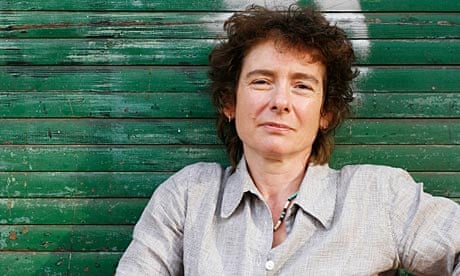
Literary Birthday – Jeanette Winterson, born 27 August 1959


jeanette

reblogging  Amanda Patterson for Writers Write

Literary Birthday – 27 August

Jeanette Winterson, born 27 August 1959

Seven Quotes

1. Language is what stops the heart exploding.
2. It’s not the one thing nor the other that leads to madness, but the space in between.
3.Everything in writing begins with language. Language begins with listening.
4. When people say that poetry is merely a luxury for the educated middle classes, or that it shouldn’t be read much at school because it is irrelevant, or any of the strange and stupid things that are said about poetry and its place in our lives, I suspect that the people doing the saying have had things pretty easy. A tough life needs a tough language – and that is what poetry is. That is what literature offers – a language powerful enough to say how it is.
5. What you risk reveals what you value.
6. So from the very first, if I was hurt in some way, then I would take a book — which was very difficult for me to buy when I was little — and I would go up into the hills, and that is how I would assuage my hurt.
7. Always in my books, I like to throw that rogue element into a stable situation and then see what happens.

Jeanette Winterson’s 10 Rules for Writing

1. Turn up for work. Discipline allows creative freedom. No discipline equals no freedom.
2. Never stop when you are stuck. You may not be able to solve the problem, but turn aside and write something else. Do not stop altogether.
3.Love what you do.
4. Be honest with yourself. If you are no good, accept it. If the work you are ­doing is no good, accept it.
5. Don’t hold on to poor work. If it was bad when it went in the drawer it will be just as bad when it comes out.
6. Take no notice of anyone you don’t respect.
7. Take no notice of anyone with a ­gender agenda. A lot of men still think that women lack imagination of the fiery kind.
8. Be ambitious for the work and not for the reward.
9. Trust your creativity.
10. Enjoy this work!
Winterson is a British writer who was awarded an OBE for services to literature. Oranges Are Not the Only Fruit won the 1985 Whitbread Prize for a First Novel, and was adapted for television by Winterson in 1990. She has won various awards around the world for her fiction and adaptations, including the Whitbread Prize, UK, and the Prix d’argent, Cannes Film Festival. She writes regularly for various UK newspapers.

Source for 10 Rules

Source for Image
“…Let me explain this slowly”

“He claims that I criticised the new grammar test because there is “no such thing as correct grammar”. No, I criticised it because a) it was brought in without any evidence that it would help children write better, b) that Year 6 is too early to tackle grammar in any useful way, c) the kind of grammar being tested was resulting in it being taught out of context of real speaking, writing and reading, d) questions about grammar are not simply a matter of “right and wrong”.”

Michael Rosen

Abstractions

“In Hollywood, more often than not, they’re making more kind of traditional films, stories that are understood by people. And the entire story is understood. And they become worried if even for one small moment something happens that is not understood by everyone. But what’s so fantastic is to get down into areas where things are abstract and where things are felt, or understood in an intuitive way that, you can’t, you know, put a microphone to somebody at the theatre and say ‘Did you understand that?’ but they come out with a strange, fantastic feeling and they can carry that, and it opens some little door or something that’s magical and that’s the power that film has.”

David Lynch