The “big animation project” we were working on earlier in the year is being previewed at the Watershed on the 5th November.
The programme explores the stories of the writer soldiers who were present at the Battle of the Somme and at BDH we produced 10 animations illustrating, with respect, the poetry the soldiers produced, which are embedded in the documentary.
The event is free, but you do have to register here.
Maybe see you there.
poetry
“First Stanford code poetry slam reveals the literary side of computer code”
“When we realize that coding is a creative act, we not only value that part of the coder’s labor, but we also realize that the technologies in which we swim have assumptions and ideologies behind them that, perhaps, we should challenge.”
Literary Birthday – Jeanette Winterson, born 27 August 1959
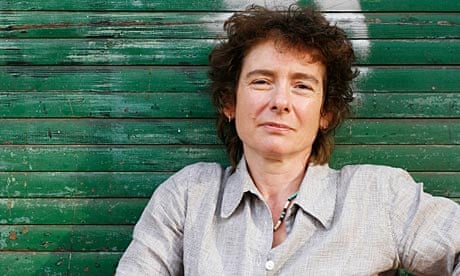
reblogging Amanda Patterson for Writers Write
Literary Birthday – 27 August
Jeanette Winterson, born 27 August 1959
Seven Quotes
1. Language is what stops the heart exploding.
2. It’s not the one thing nor the other that leads to madness, but the space in between.
3.Everything in writing begins with language. Language begins with listening.
4. When people say that poetry is merely a luxury for the educated middle classes, or that it shouldn’t be read much at school because it is irrelevant, or any of the strange and stupid things that are said about poetry and its place in our lives, I suspect that the people doing the saying have had things pretty easy. A tough life needs a tough language – and that is what poetry is. That is what literature offers – a language powerful enough to say how it is.
5. What you risk reveals what you value.
6. So from the very first, if I was hurt in some way, then I would take a book — which was very difficult for me to buy when I was little — and I would go up into the hills, and that is how I would assuage my hurt.
7. Always in my books, I like to throw that rogue element into a stable situation and then see what happens.Jeanette Winterson’s 10 Rules for Writing
1. Turn up for work. Discipline allows creative freedom. No discipline equals no freedom.
2. Never stop when you are stuck. You may not be able to solve the problem, but turn aside and write something else. Do not stop altogether.
3.Love what you do.
4. Be honest with yourself. If you are no good, accept it. If the work you are doing is no good, accept it.
5. Don’t hold on to poor work. If it was bad when it went in the drawer it will be just as bad when it comes out.
6. Take no notice of anyone you don’t respect.
7. Take no notice of anyone with a gender agenda. A lot of men still think that women lack imagination of the fiery kind.
8. Be ambitious for the work and not for the reward.
9. Trust your creativity.
10. Enjoy this work!
Winterson is a British writer who was awarded an OBE for services to literature. Oranges Are Not the Only Fruit won the 1985 Whitbread Prize for a First Novel, and was adapted for television by Winterson in 1990. She has won various awards around the world for her fiction and adaptations, including the Whitbread Prize, UK, and the Prix d’argent, Cannes Film Festival. She writes regularly for various UK newspapers.
“’81” by Joanna Newsome (2010)
“Golden Hair” by Syd Barrett (1970)
(added 2018: )
‘In ‘Golden Hair’, culled from Chamber Music, a slim verse Joyce wrote in 1907, a troubadour yearns for a Rapunzel locked in a tower. With simple barre chords, Barrett conjured a solemn air akin to a medieval madrigal. Its cadence is pure plainsong, chanted words over bare chords, with the first of his thrilling downward octave leaps at the end.‘
— (Syd Barrett and Pink Floyd – Dark Globe by Julian Palacios)
via byronsmuse
Werner Herzog’s Note To His Cleaning Lady »
“You constantly revile me with your singular lack of vision. Be aware, there is an essential truth and beauty in all things. From the death throes of a speared gazelle to the damaged smile of a freeway homeless. But that does not mean that the invisibility of something implies its lack of being. Though simpleton babies foolishly believe the person before them vanishes when they cover their eyes during a hateful game of peek-a-boo, this is a fallacy. And so it is that the unseen dusty build up that accumulates behind the DVD shelves in the rumpus room exists also. This is unacceptable.”
‘Stephen Lawrence’ by Carol Ann Duffy
Cold pavement indeed
the night you died,
murdered;
but the airborne drop of blood
from your wound
was a seed
your mother sowed
into hard ground –
your life’s length doubled,
unlived, stilled,
till one flower, thorned,
bloomed
in her hand,
love’s just blade.
‘Poems are a form of texting’
“The poem is a form of texting … it’s the original text… it’s a perfecting of a feeling in language – it’s a way of saying more with less, just as texting is. We’ve got to realise that the Facebook generation is the future – and, oddly enough, poetry is the perfect form for them. It’s a kind of time capsule – it allows feelings and ideas to travel big distances in a very condensed form.”
The Ode Less Traveled
“English is a language suited to poetry like no other. The crunch and snap of Anglo-Saxon, the lyric romanticism of Latin and Greek, the comic, ironic fusion yielded when both are yoked together, the swing and jazz of slang … the choice of words and verbal styles available to the English poet is dazzling.
Think of cityscapes. In London, thanks to a mixture of fires, blitzes, ludicrous mismanagement and muddled planning, the medieval, Tudor, Georgian, Victorian and modern jostle together in higgledy-piggledy confusion. The corporate, the ecclesiastical, the imperial and the domestic coexist in blissful chaos. Paris, to take the nearest capital to London, was planned. For reasons we won’t go into, it managed to escape the attentions of the Luftwaffe. It remains a city of grand, tasteful boulevards laid out in a consistent style where, with the exception of a few self-consciously designed contemporary projects, the modern, commercial, vulgar and vernacular are held at bay beyond the outer ring of the city, like barbarians at the gates.
The English language is like London: proudly barbaric yet deeply civilised, too, common yet royal, vulgar yet processional, sacred yet profane: each sentence we produce, whether we know it or not, is a mongrel mouthful of Chaucerian, Shakespearean, Miltonic, Johnsonian, Dickensian and American. Military, naval, legal, corporate, criminal, jazz, rap and ghetto discourses are mingled at every turn. The French language, like Paris, has attempted, through its Academy, to retain its purity, to fight the advancing tides of franglais and international prefabrication. English, by comparison, is a shameless whore.”
— Stephen Fry on the English language in The Ode Less Traveled, as quoted by Elizabeth Minkel in The New Yorker.
via byronic
 Paul Greer