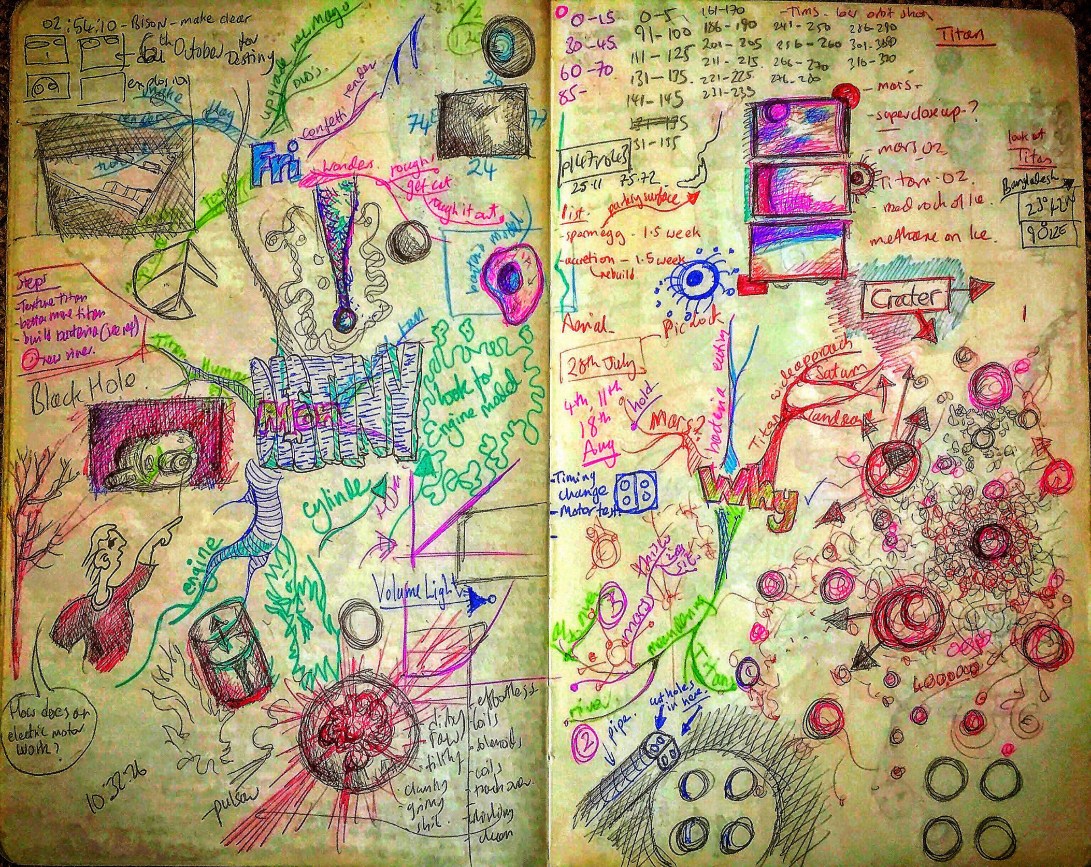
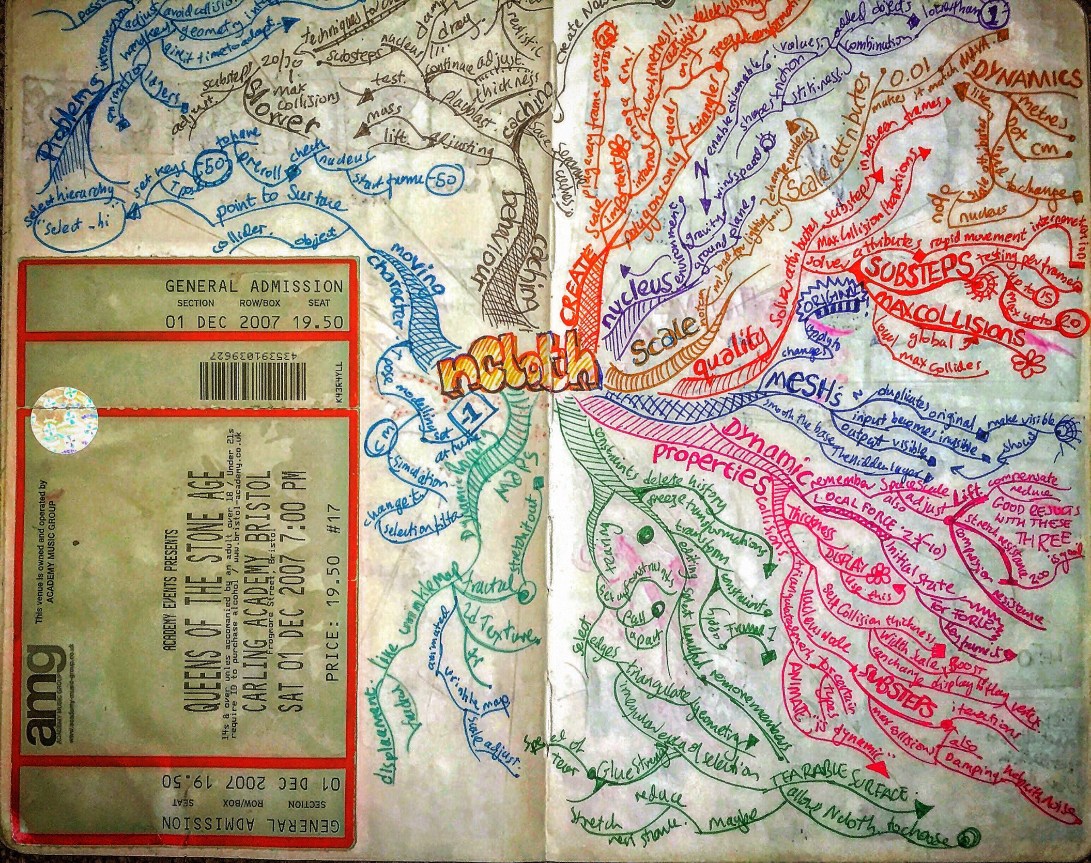
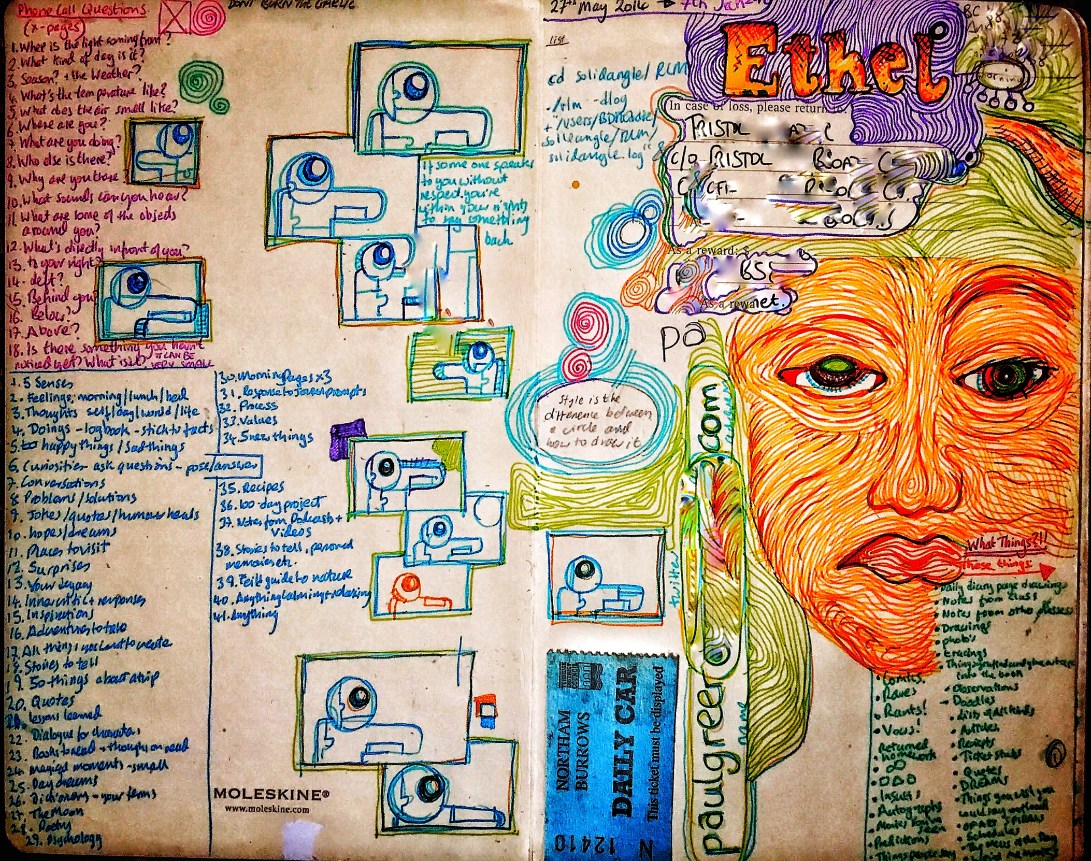
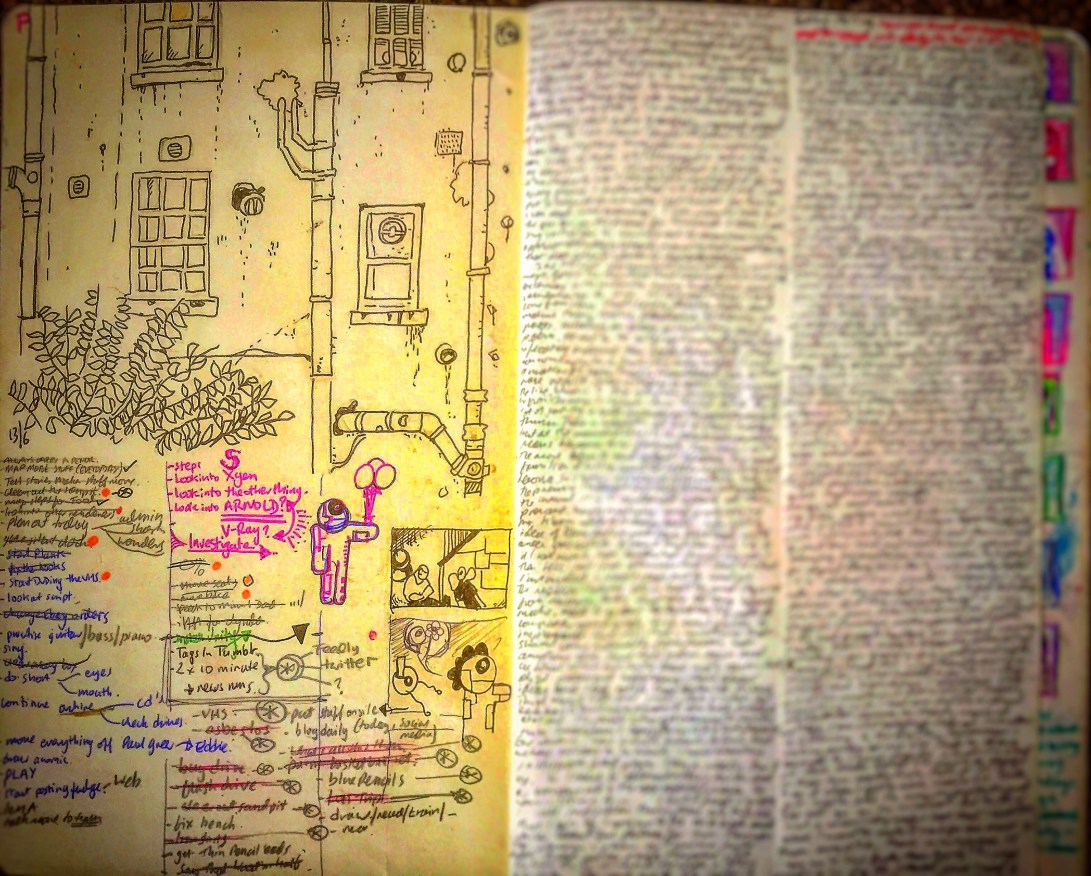
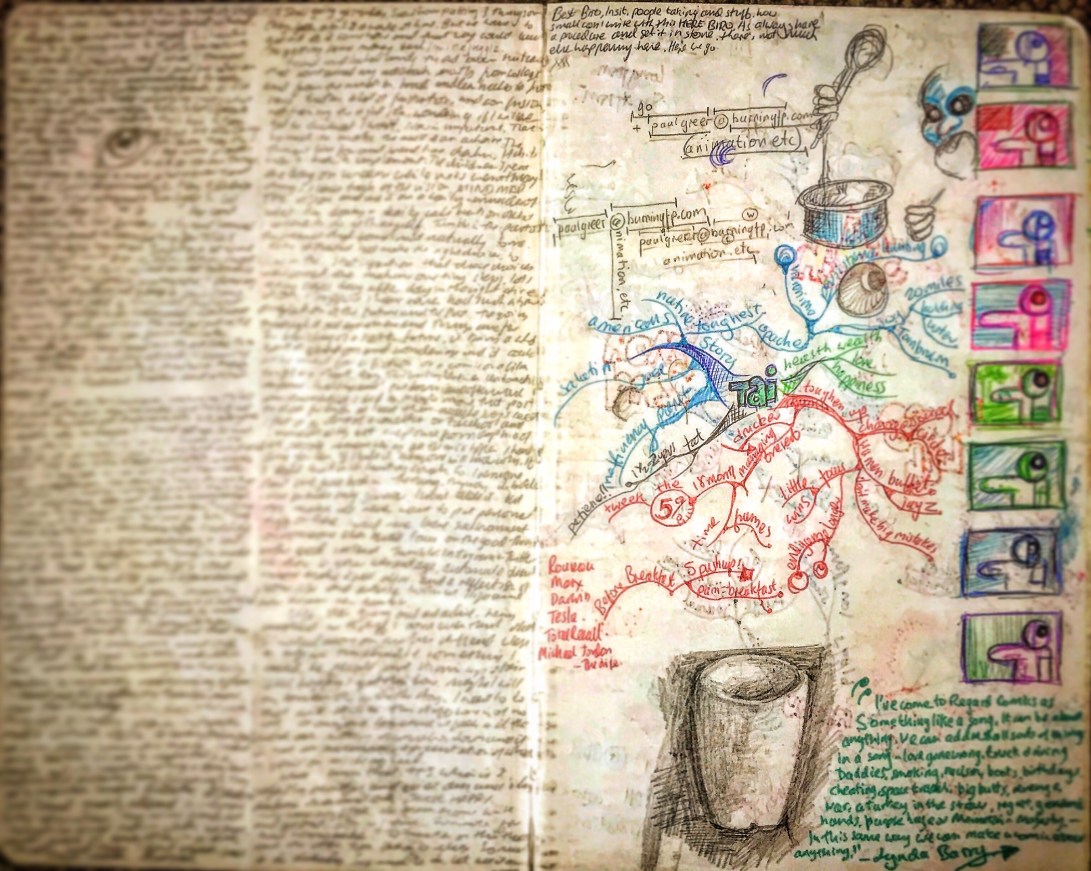
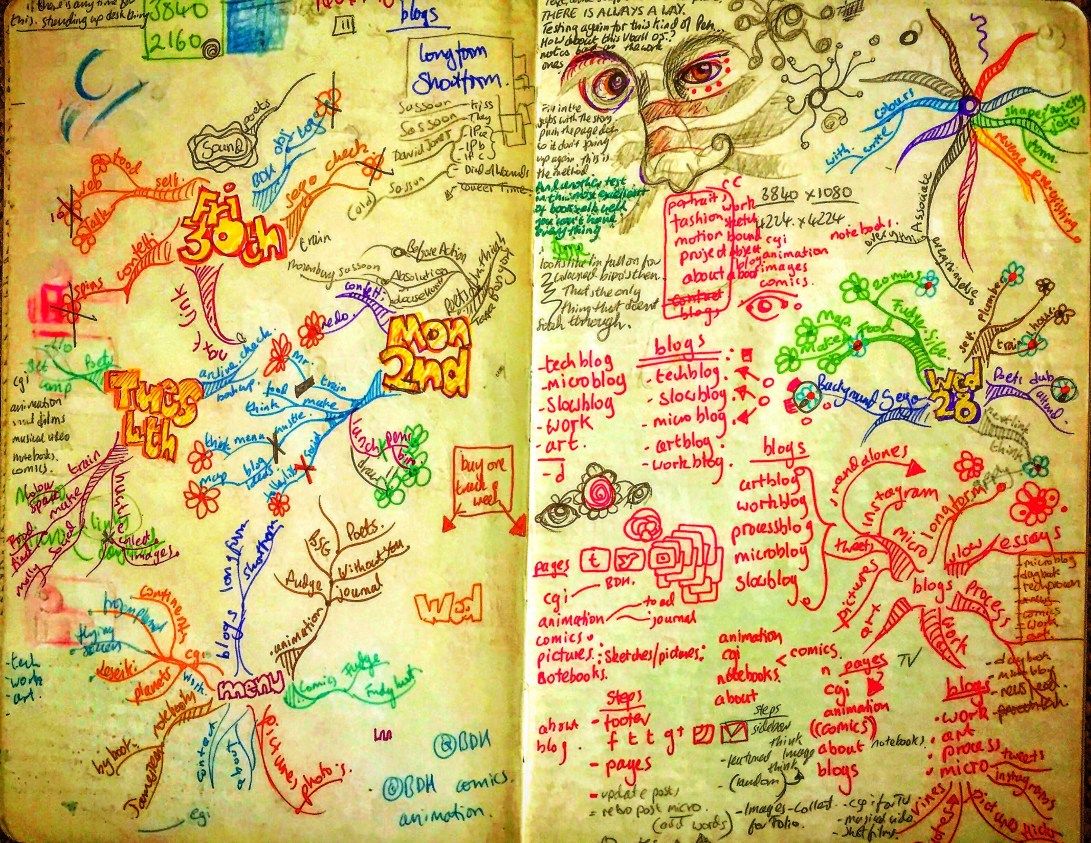
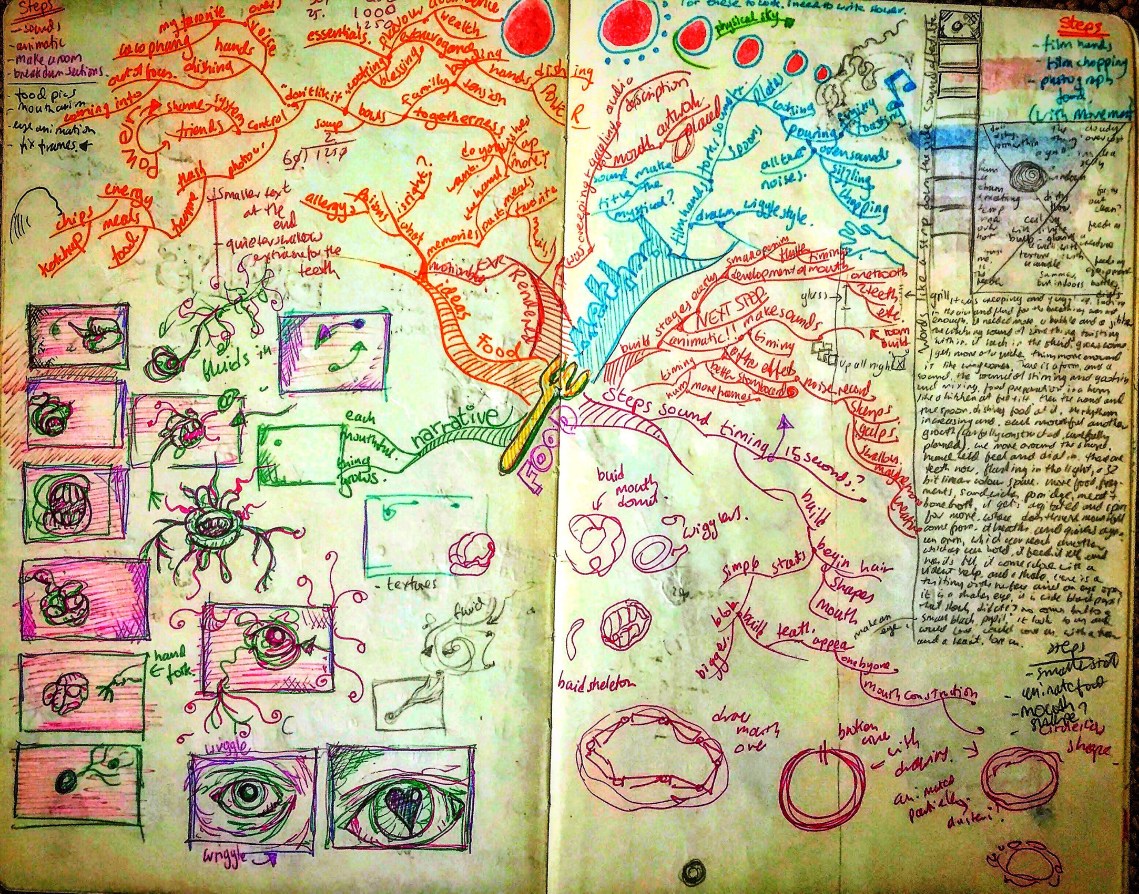
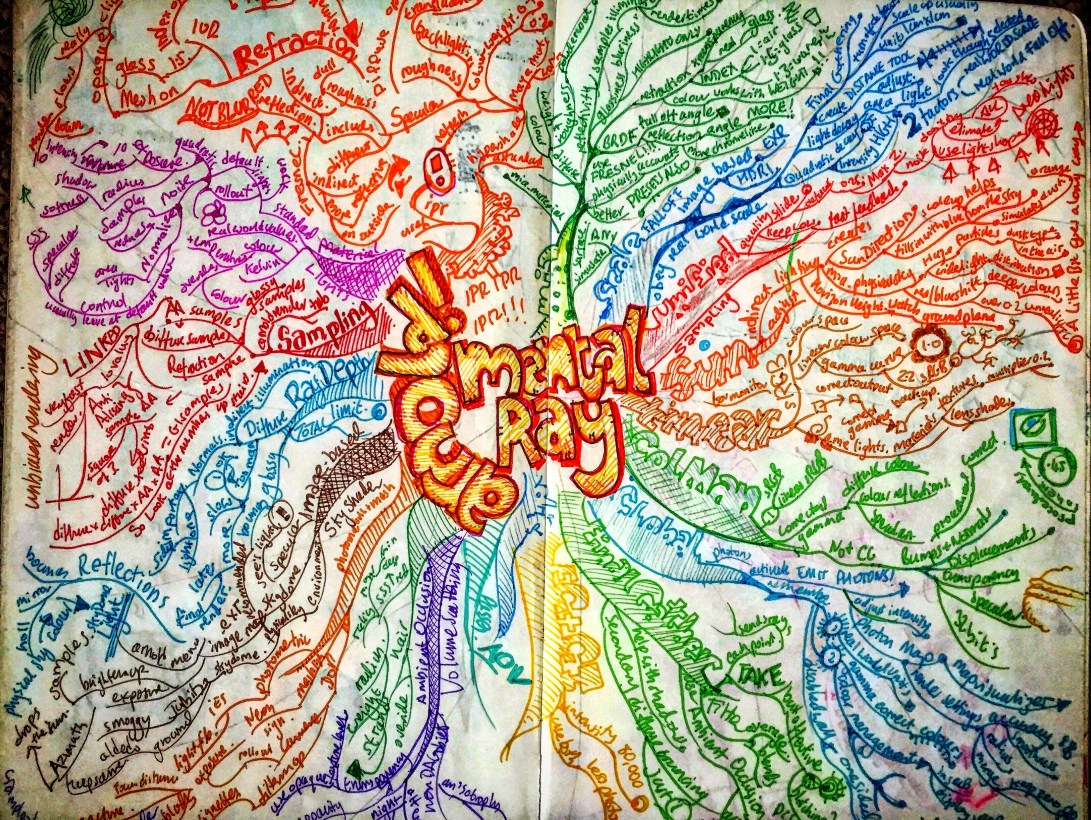
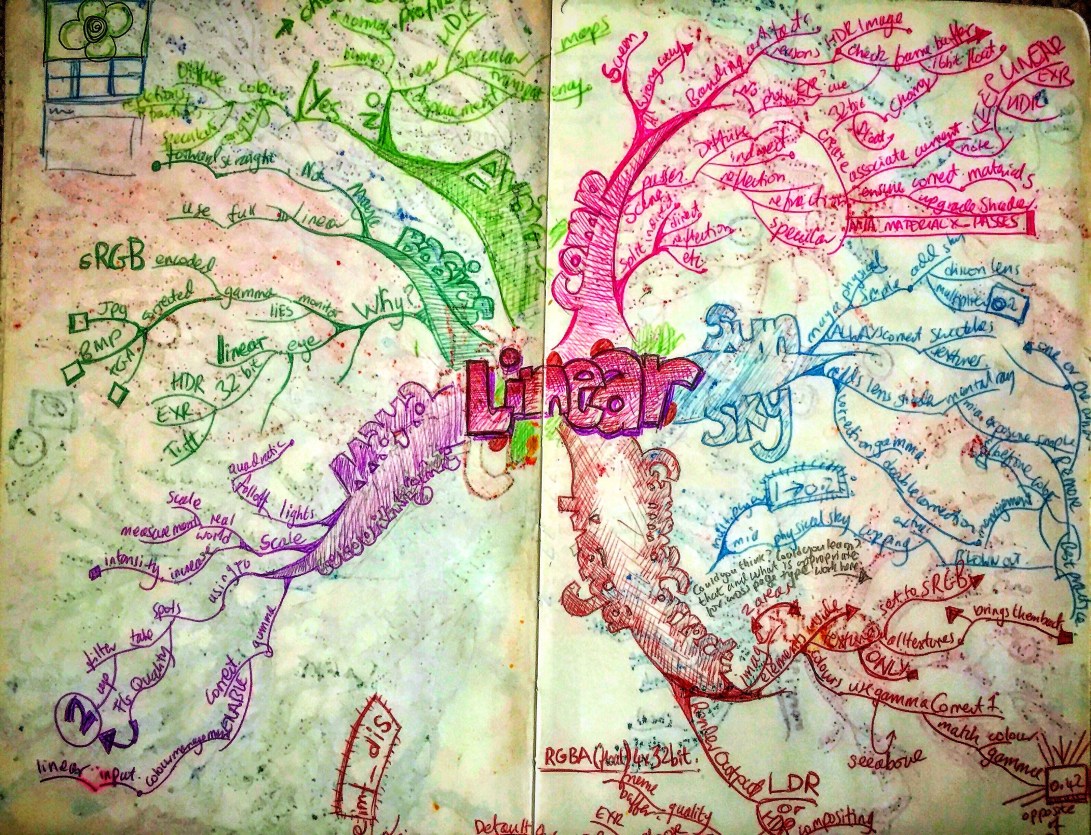
Continuing the project of uploading most pages form Notebook Ethel. As I said before these are from a few years ago now.


/ˈrʌɪtɪŋ/
noun
1. the activity or skill of writing.
“parents want schools to concentrate on reading, writing, and arithmetic”
2. the activity or occupation of composing text for publication.
“she made a decent living from writing”
Continuing the project of uploading most pages form Notebook Ethel. As I said before these are from a few years ago now.
“…this massive moment of disruption we’re in — is really a function of audiences craving new kinds of storytelling. I think we had a really nice run for 100 years of two-hour, two-dimensional storytelling, but I think over the next decade, decade-and-a-half, you’re going to see a radical shift in how stories are told.”
Beginning a large project of uploading old notebook pages. These are not high res scans as that would considerably increase the amount of time needed, so these would have to do for now.
These are all generally going up on Instagram first.

“All fiction is metaphor. Science fiction is metaphor. What sets it apart from older forms of fiction seems to be its use of new metaphors, drawn from certain great dominants of our contemporary life—science, all the sciences, and technology, and the relativistic and the historical outlook, among them. Space travel is one of these metaphors; so is an alternative society, an alternative biology; the future is another. The future, in fiction, is a metaphor.
A metaphor for what?
If I could have said it non-metaphorically, I would not have written all these words, this novel…”
– Ursula K. Le Guin, 1976 Foreword to The Left Hand of Darkness (via Nearlya)
A really intense, gruelling book about a pretty loathsome wretch. Horrible thing is there’s a billion Rabbits in the actual world. Ahead of its time in many ways. This is my first Updike. His writing is profound. But yeah. Relentless.
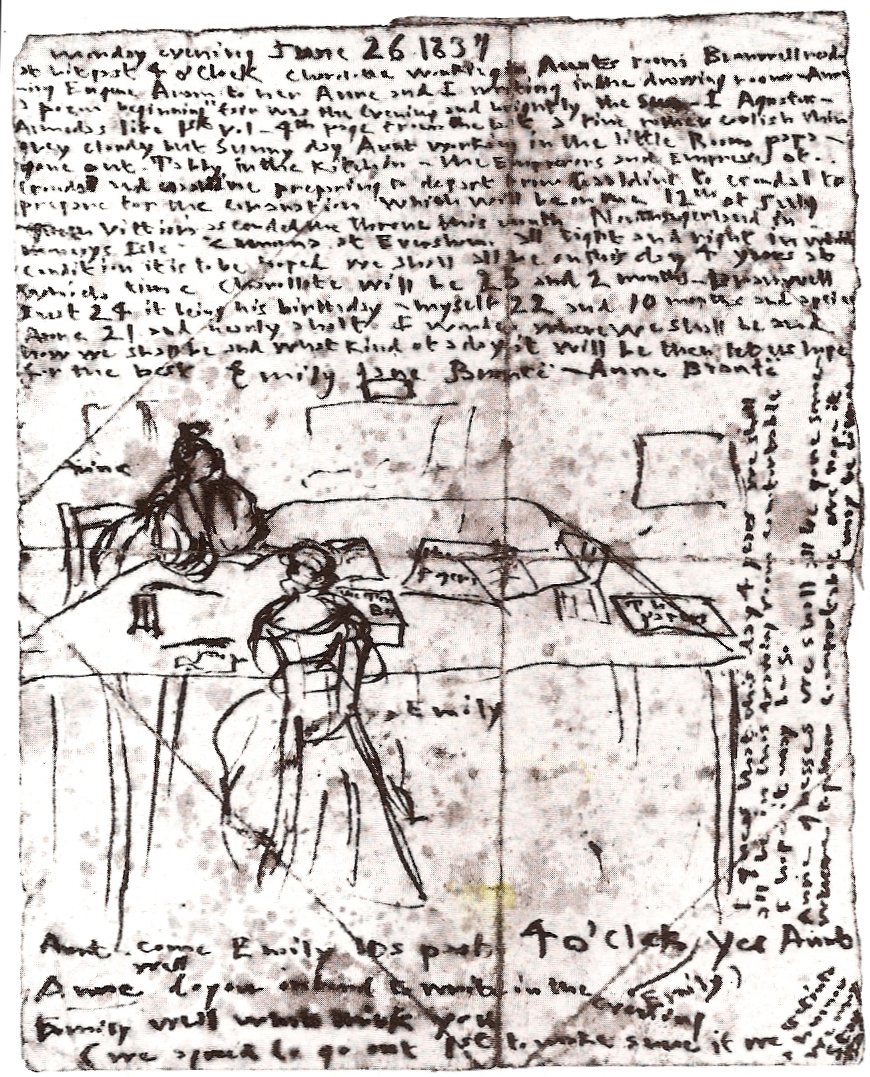
(via Womensart)

“Traditional storytelling structures aren’t especially necessary in comics – it’s what’s kept people with genuinely avant garde leanings working in commercial comics for so long….Even in what we call the ‘mainstream’ end of the field, where the superheroes live, the medium remains remarkably plastic.”

In Beckett’s novels the reader is lost and confused, stranded in a mire of words that seem designed to be inhospitable and to exclude, accompanying something that speaks its unquestioning I-say-I while forbidding any identification – until you realise that the strange tormenting voice that is mentioned sometimes, the one that tells people what to do, the one that is constantly trying to bring itself to an end but is never able to stop speaking itself, is the same voice that’s been in your head the entire time as you read. It’s shocking, but there’s a sense of joy at the same time. What distinguishes real writing from a legal deposition or a laundry list is its occasional capacity to provoke a kind of joy, even in evocations of sadness, loneliness, misery, loss, repression, and horror, the sheer pleasure of something entirely alien and entirely intimate, of a voice that is nobody’s and everyone’s and yours, there with you in your solitude, of language in the infinity of its play and substitutions, a moment of the freedom that’s still to come.
(image from article)

 Paul Greer