Jaws (1975) – The Indianapolis Speech Scene

I recently caught Jaws on the TiVo and watched it through a few times. I hadn’t seen it through in decades. I had it on VHS as a teenager and it was one of those films I would turn to again and again. I actually made a comic book out of it, pausing the tape and writing down the dialogue. I did this with a few of my favourite films.

What struck me most I think, upon watching it this time was the lack of polish, something you get used to with Spielberg films of late. I think this was only his third feature(?) and he was still in his mid-twenties at the time. It has the multi-layered chaotic dialogue style he uses in Close Encounters of the Third Kind (a film he was writing as he filmed this one). In both cases this form of naturalistic dialogue style offsets the fantastic subject of the film. In CE3K’s case it was multi coloured UFOs and here it is the notoriously unrealistic shark. The point is though, as outmoded the effects are compared todays super CGI realism, you inevitably get pulled into the story, the film making is so strong.

One example of this storytelling is Quint’s Indianapolis speech which comes midway through the all-at-sea who is hunting who section. It provides a pause, but intensified and deepens the tension. Robert Shaw’s performance is extraordinary and there are many tales of how the speech came about.

Here’s Spielberg talking about how the scene came about:

I owe three people a lot for this speech. You’ve heard all this, but you’ve probably never heard it from me. There’s a lot of apocryphal reporting about who did what on Jaws and I’ve heard it for the last three decades, but the fact is the speech was conceived by Howard Sackler, who was an uncredited writer, didn’t want a credit and didn’t arbitrate for one, but he’s the guy that broke the back of the script before we ever got to Martha’s Vineyard to shoot the movie.

I hired later Carl Gottlieb to come onto the island, who was a friend of mine, to punch up the script, but Howard conceived of the Indianapolis speech. I had never heard of the Indianapolis before Howard, who wrote the script at the Bel Air Hotel and I was with him a couple times a week reading pages and discussing them.

Howard one day said, “Quint needs some motivation to show all of us what made him the way he is and I think it’s this Indianapolis incident.” I said, “Howard, what’s that?” And he explained the whole incident of the Indianapolis and the Atomic Bomb being delivered and on its way back it was sunk by a submarine and sharks surrounded the helpless sailors who had been cast adrift and it was just a horrendous piece of World War II history. Howard didn’t write a long speech, he probably wrote about three-quarters of a page.

But then, when I showed the script to my friend John Milius, John said “Can I take a crack at this speech?” and John wrote a 10 page monologue, that was absolutely brilliant, but out-sized for the Jaws I was making! (laughs) But it was brilliant and then Robert Shaw took the speech and Robert did the cut down. Robert himself was a fine writer, who had written the play The Man in the Glass Booth. Robert took a crack at the speech and he brought it down to five pages. So, that was sort of the evolution just of that speech.

Steven Spielberg


see also The Last Speech of Tom Joad.
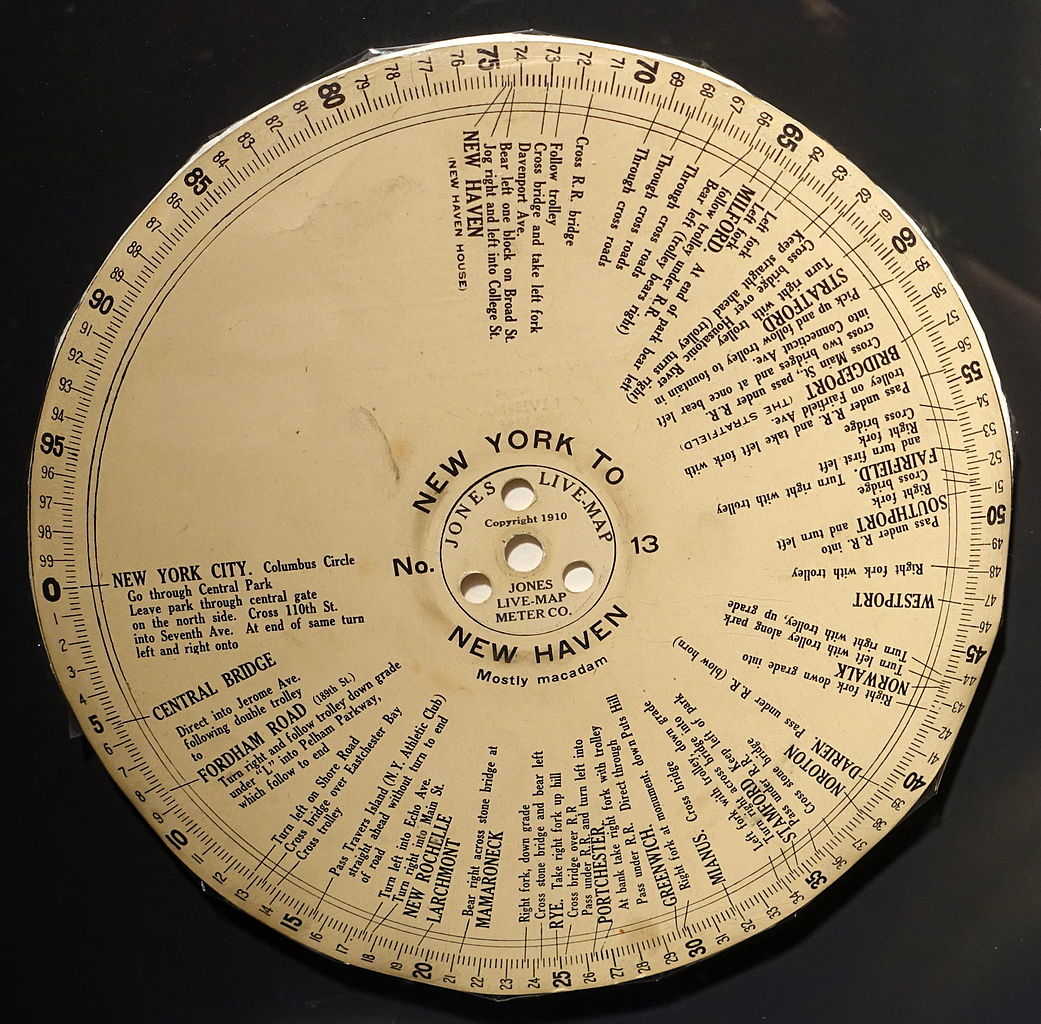
Ernest Jones’ 1909 “Live-Map” navigator


“Under its guidance the most muddling twists, turns and corners melt away behind you,” read the advertisement. “It is better than a Human Guide because it is always doing its work to the exclusion of everything else. … The Jones Live-Map emancipates you from slavery to great, flopping maps and profound route-books that you can’t make head or tail of without stopping.”

more at Futility Closet

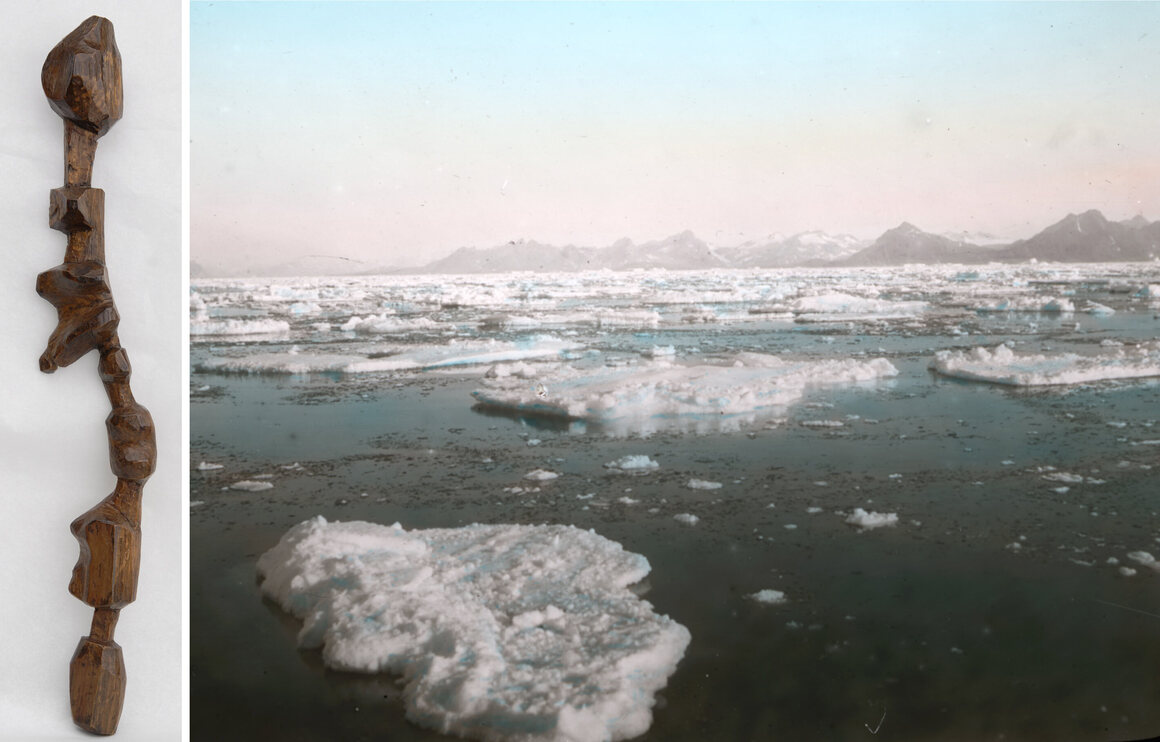
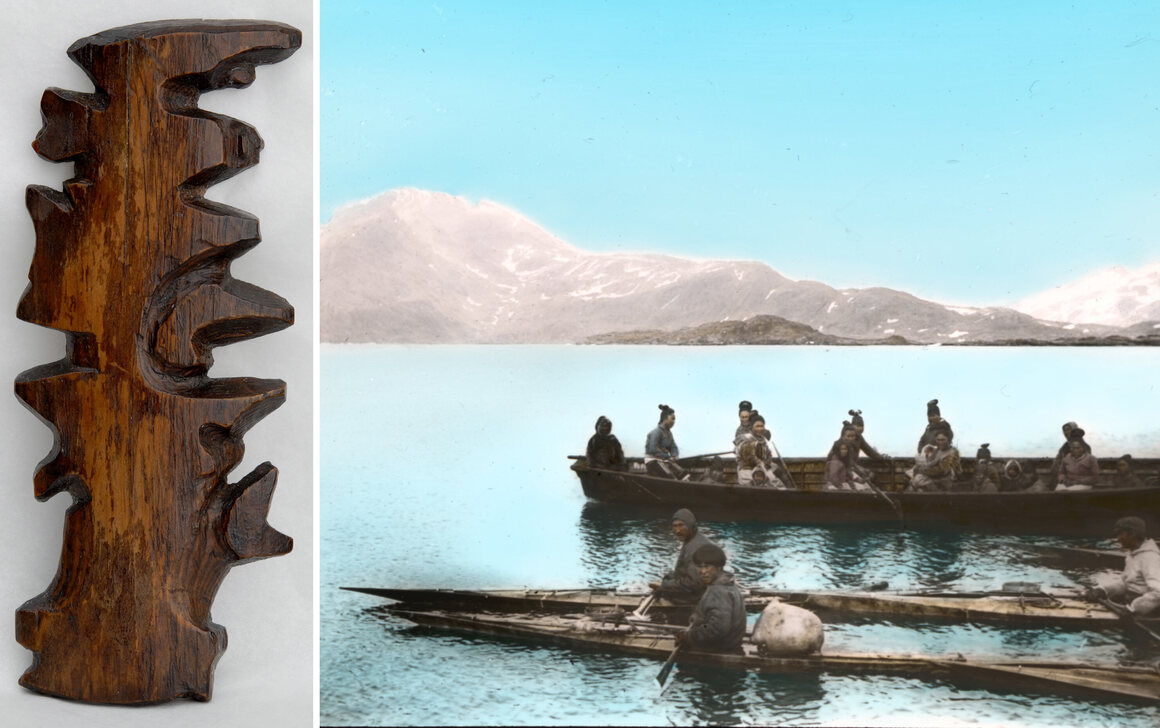
“Greenland’s Hand-Sized Wooden Maps Were Used for Storytelling, Not Navigation”


Left: a wooden map of the East Greenland coast, c. 1885.; Right: umiaq and kayaks, Ammassalik, East Greenland, 1908, by Th. N. Krabbe.


“For these seafaring people, geographic knowledge was something remembered and shared through stories and conversations of travels and hunting. “The drawing of charts and maps,” Holm wrote, “was of course quite unknown to the people of [Ammassalik], but I have often seen how clever they were as soon as they grasped the idea of our charts. A native from Sermelik, called Angmagainak, who had never had a pencil in his hand and had only once visited the East coast, drew a fine chart for me covering the whole distance from Tingmiarniut to Sermiligak, about 280 miles.” They also provided him with incredibly detailed descriptions of terrain, flora and fauna, and, in some cases, local weather patterns and lunar and solar cycles. To pass some of this knowledge on to the curious, acquisitive Holm, one hunter presented him with a set of unusual maps that have been, by turns, overlooked, discounted, misunderstood, and, eventually, admired.”

Left: a wooden map of islands off the East Greenland coast, c. 1885; Right: ice field, Ammassalik, East Greenland, 1908, by Th. N. Krabbe.

“But woodcarving was a common activity among the Tunumiit and Holm mentions that carving maps was not out of the ordinary. The Inuit people have used carvings in a certain way—to accompany stories and illustrate important information about people, places, and things. A wooden relief map, would have functioned as a storytelling device, like a drawing in the sand or snow, that could be discarded after the story was told. As geographer Robert Rundstum has noted, in Inuit tradition, the act of making a map was frequently much more important than the finished map itself. The real map always exists in one’s head. Though the maps themselves are unique, the sentiments and view of the world they represent were universal to the culture that made them.”


…Much more including annotated manipulatable 3-d models on this great post from Atlas Obscura.

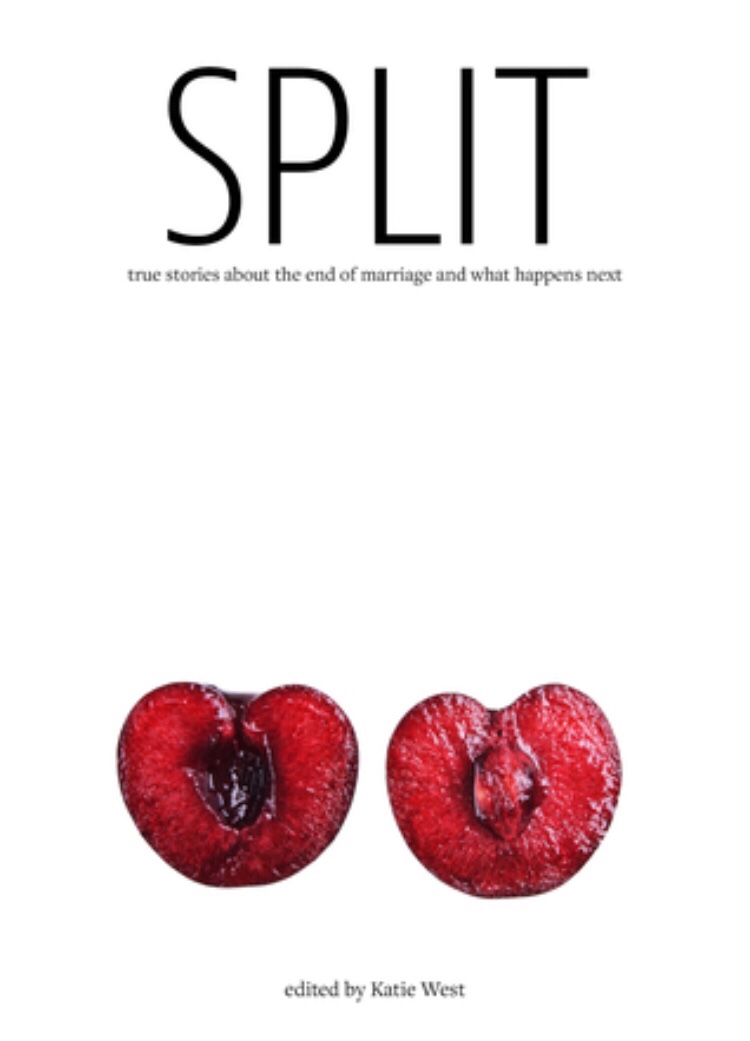
Split

This is an incredible book of many intense stories of the process and survival of divorce. It doesn’t sound like a barrel of laughs as a concept but give it time and there’s joy, inspiration, hope, sadness, hilarity, devastation, fun and beauty.

It is an intense read, especially in the knowledge that it is all true, and as someone who has not experienced this directly (I think another reviewer has said this) an incredible window into a world that is not often written about. That intensity might be why it’s taken me so long to finish. I generally have five or so books on the go. I didn’t want to binge this, I wanted to remember each one so I took my time.

Looking forward to other publications from Fiction and Feeling.

Heavily recommended.

Specializing in Cartography

“The first rule of geography is that everything is related to everything else. Today’s cartography reflects exactly that: It combines design, geography, anthropology, human impressions and ideas within spatial contexts. It’s a connector, an aggregator. And, increasingly, it’s a way of telling stories.”

— Chelsea Nestel


see also:

“I’ll be there” – The Final Speech of Tom Joad

“I want to put a tag of shame on the greedy bastards who are responsible for this.”

I just finished reading The Grapes of Wrath by John Steinbeck.  I have always known of this book but never read it or even knew very much about what is was about.

I really wasn’t prepared by how relevant it was to so many situations occurring globally at the moment. The mass migration of populations due to climate changes, infrastructure collapse and economics, the refusal of a system to help and indeed the full demonisation of those in transit.

The language is beautifully simple and yet says so much about strength, sadness, suffering, perseverance and dignity.

Continue reading

The future, in fiction, is a metaphor.

“All fiction is metaphor. Science fiction is metaphor. What sets it apart from older forms of fiction seems to be its use of new metaphors, drawn from certain great dominants of our contemporary life—science, all the sciences, and technology, and the relativistic and the historical outlook, among them. Space travel is one of these metaphors; so is an alternative society, an alternative biology; the future is another. The future, in fiction, is a metaphor.

A metaphor for what?

If I could have said it non-metaphorically, I would not have written all these words, this novel…”

 –  Ursula K. Le Guin, 1976 Foreword to The Left Hand of Darkness (via Nearlya)