Inuit Genealogy

reblogging johnfass

johnfass's avatarfevered imaginings

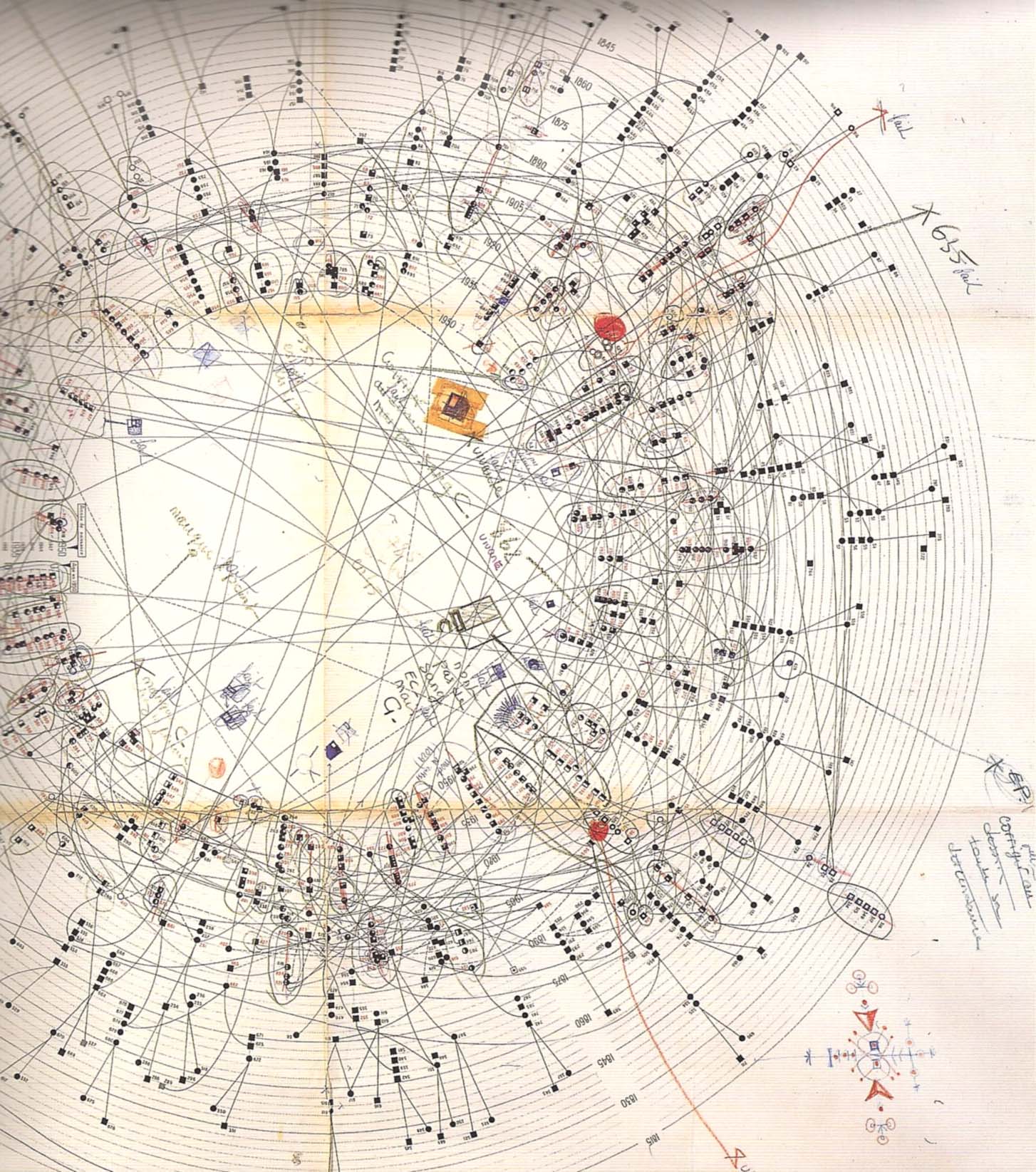
Currently working on a research project related to Canadian and Greenland Inuit with R0gMedia in Berlin. The diagram above is a genealogical diagram made in the mid 1950s by anthropologist Jean Malaurie, the first of its kind. It’s a hand made radial drawing, Malaurie has a whole series of them in his apartment in Paris, along with his extensive personal archive of research materials including photos, films, notebooks, drawings. While the broader aims of the project are to find an institution willing to host the collection, I’m trying to make an digital artefact out of this diagram that could bring the information alive and demonstrate how historical anthropological materials can be made relevant and contextualised for present and future generations. DIS2012 published a paper on this project for a workshop about slow technology. Slow technology DIS2012

View original post

Making Infinity Comprehensible – Eco

“The list is the origin of culture. It’s part of the history of art and literature. What does culture want? To make infinity comprehensible. It also wants to create order — not always, but often. And how, as a human being, does one face infinity? How does one attempt to grasp the incomprehensible? Through lists, through catalogs, through collections in museums and through encyclopedias and dictionaries. There is an allure to enumerating how many women Don Giovanni slept with: It was 2,063, at least according to Mozart’s librettist, Lorenzo da Ponte. We also have completely practical lists — the shopping list, the will, the menu — that are also cultural achievements in their own right.”

Umberto Eco

other lists:

Project Ethel (27.05.14 – 07.01.16): Pages 18-26

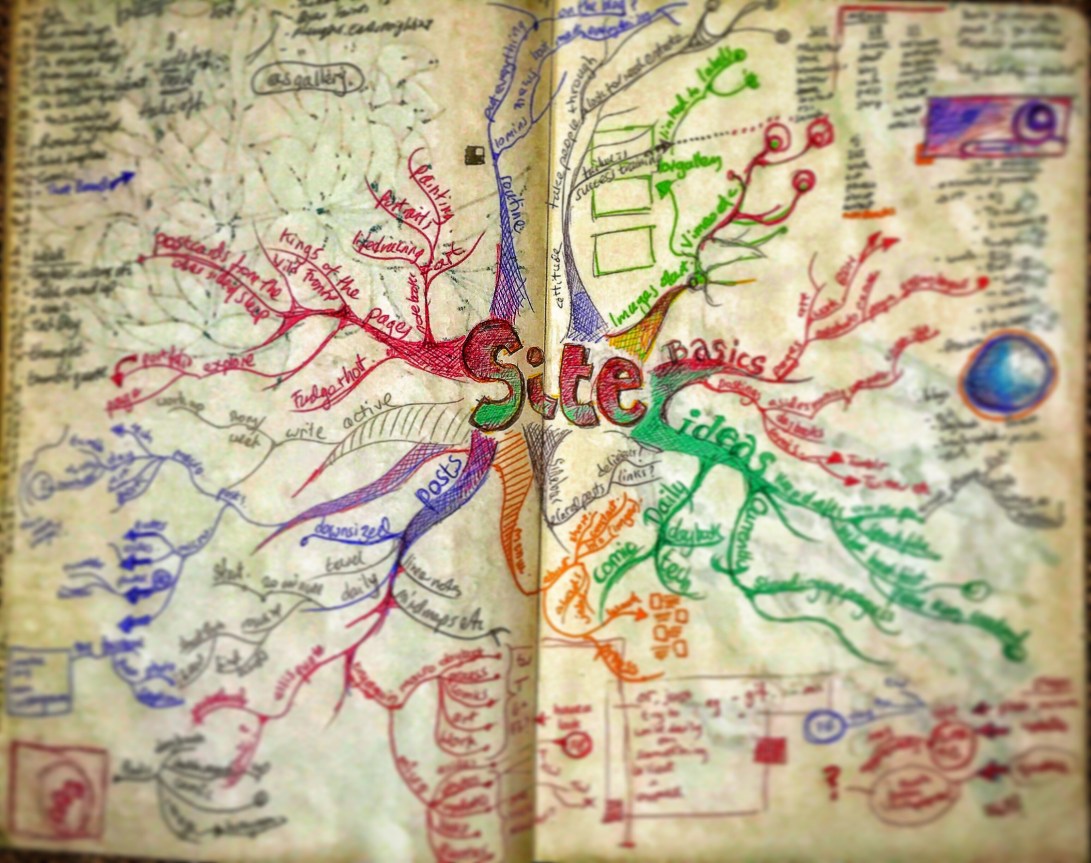
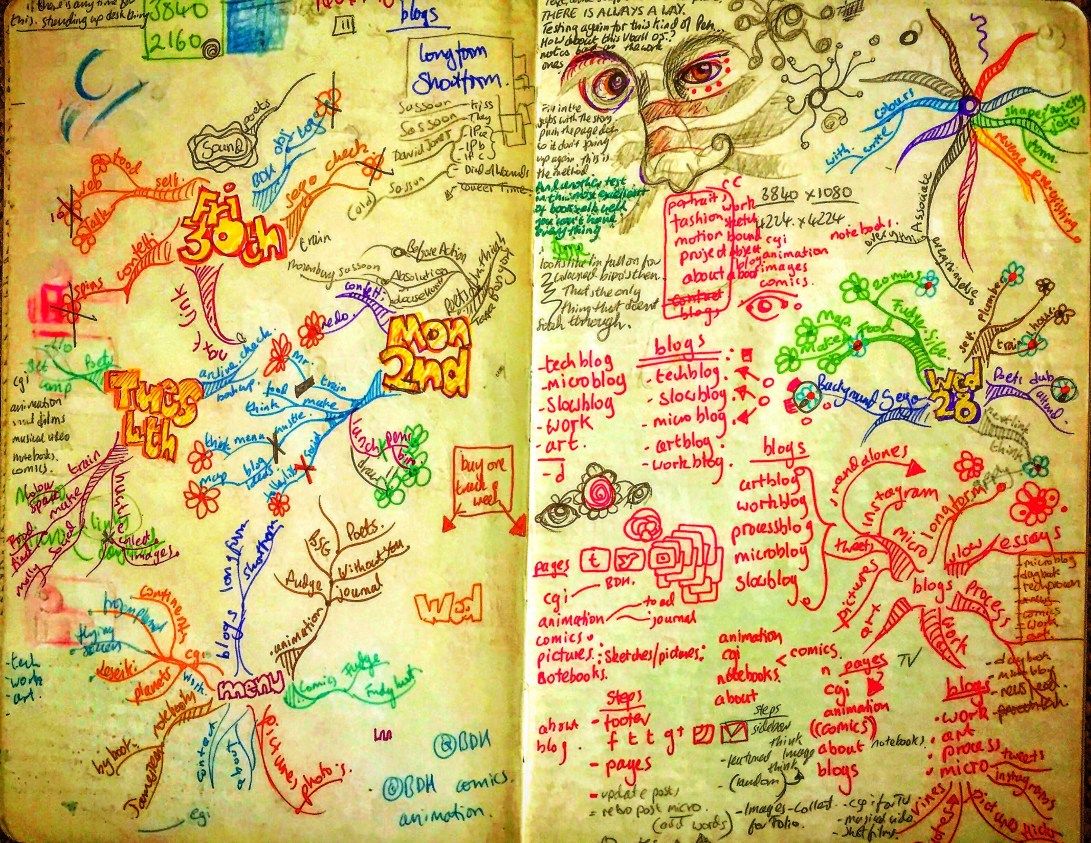
Notebook Ethel, Spread Eighteen. Me trying to mind map and plan my website. You can see the ongoing result at the #linkinbio. A work of art is never finished, apparently. 🕷 📓 🗺
Notebook Ethel, Spread Eighteen. Me trying to mind map and plan my website. You can see the ongoing result. A work of art is never finished, apparently. 🕷 📓 🗺
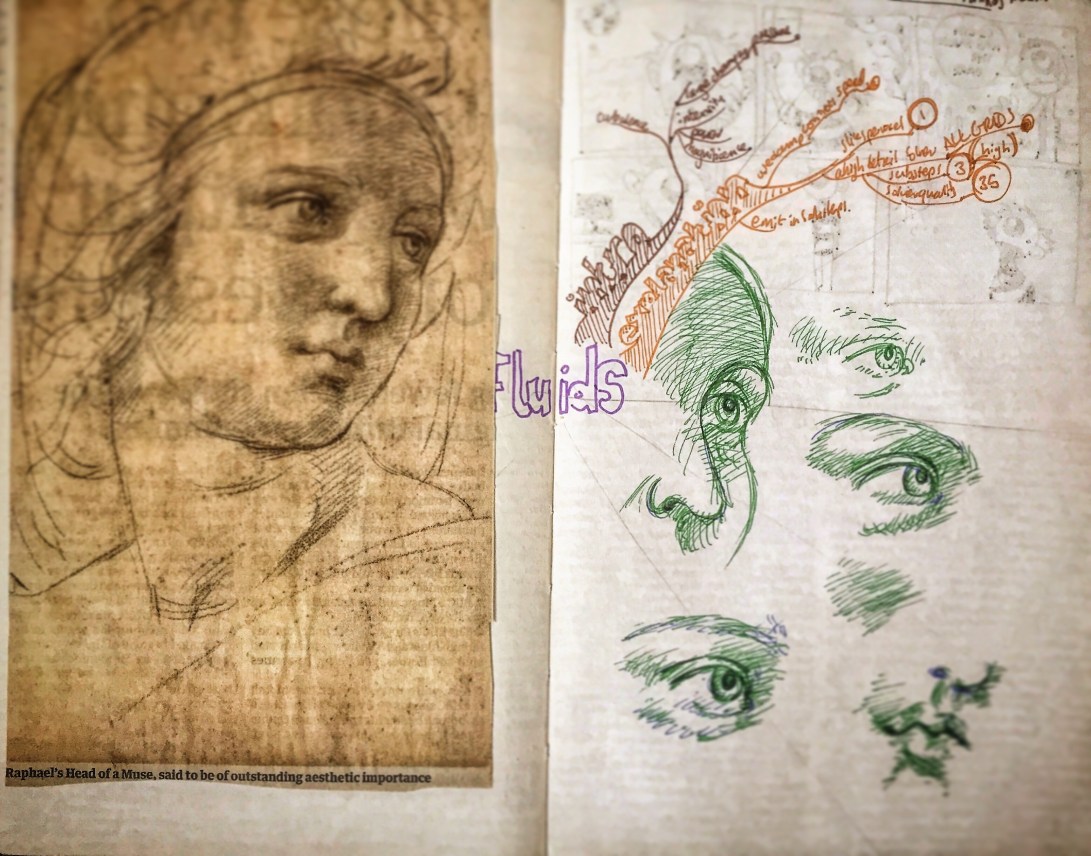
Notebook Ethel, Spread Eighteen. Newspaper clipping of Raphael’s Head of a Muse, some copying of that image and the beginnings of a mind map on fluid dynamics. 👁 📓 🗺
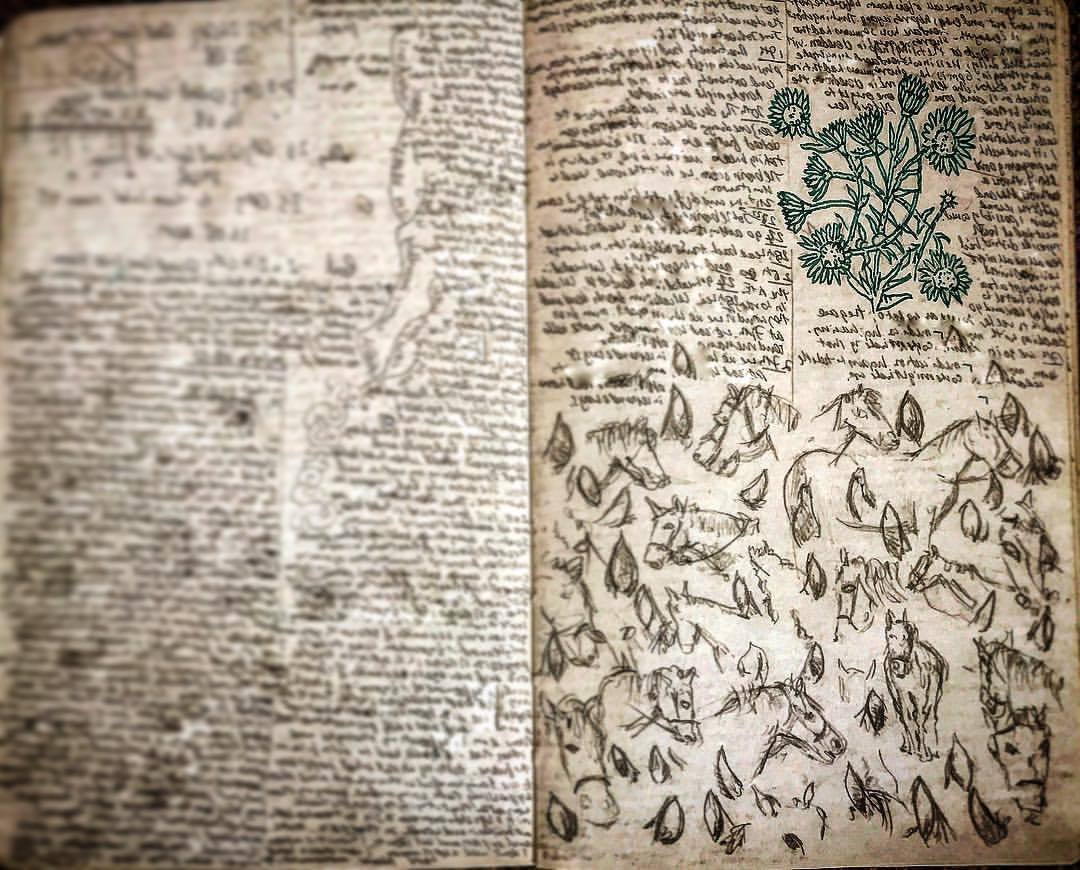
burningfpNotebook Ethel, Spread Nineteen. Horse drawings, daises, diary notes (text obscured). 📓 🐴 🌷
Notebook Ethel, Spread Nineteen. Horse drawings, daises, diary notes (text obscured). 📓 🐴 🌷
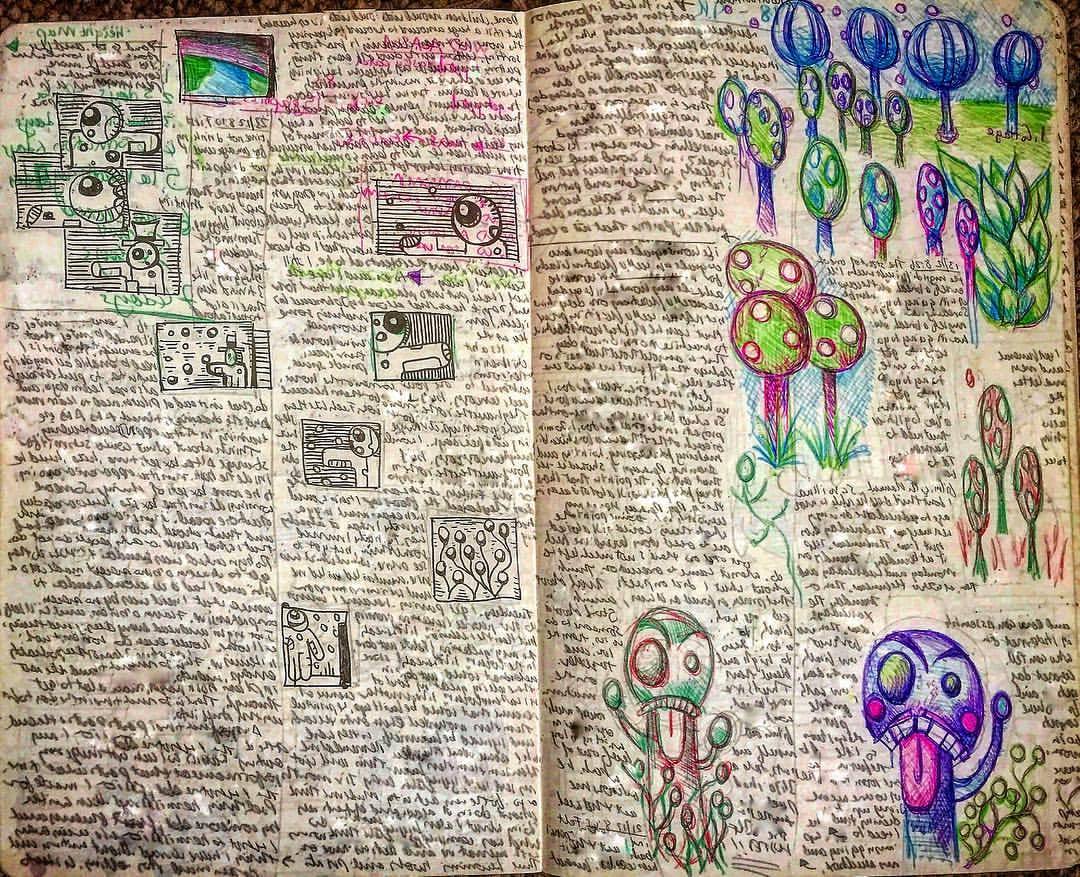
Notebook Ethel, Spread Twenty. Morning Pages writing exercise and drawing my comic book character Fudge (see more of him at #linkinbio). 🌳 👹 ✍️
Notebook Ethel, Spread Twenty. Morning Pages writing exercise and drawing my comic book character Fudge. 🌳 👹 ✍
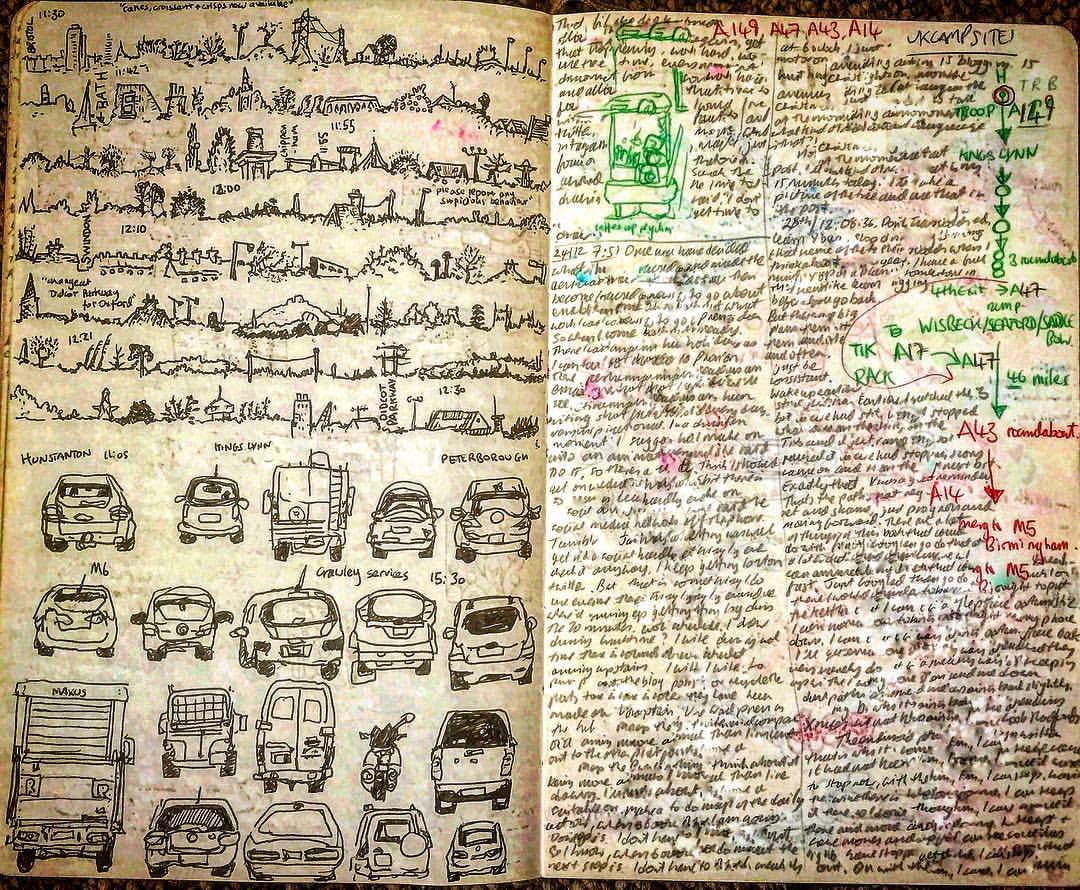
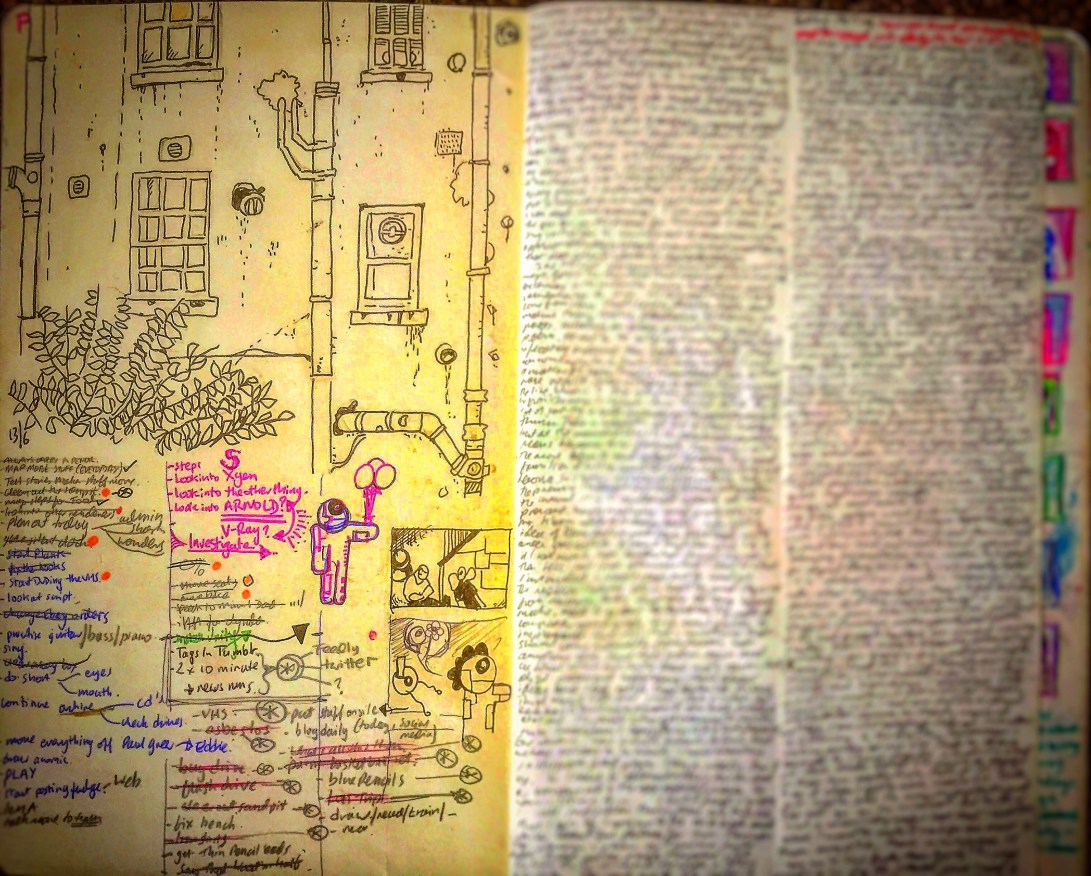
Notebook Ethel, Spread Twenty-One. Documenting a two day journey from the West to the East and back again (full story at #linkinbio). Drawing from the window of a train, cars in traffic, route plan and garbage writing. 🚗 ✍️ 🚂
Notebook Ethel, Spread Twenty-One. Documenting a two day journey from the West to the East and back again. Drawing from the window of a train, cars in traffic, route plan and garbage writing. 🚗 ✍ 🚂
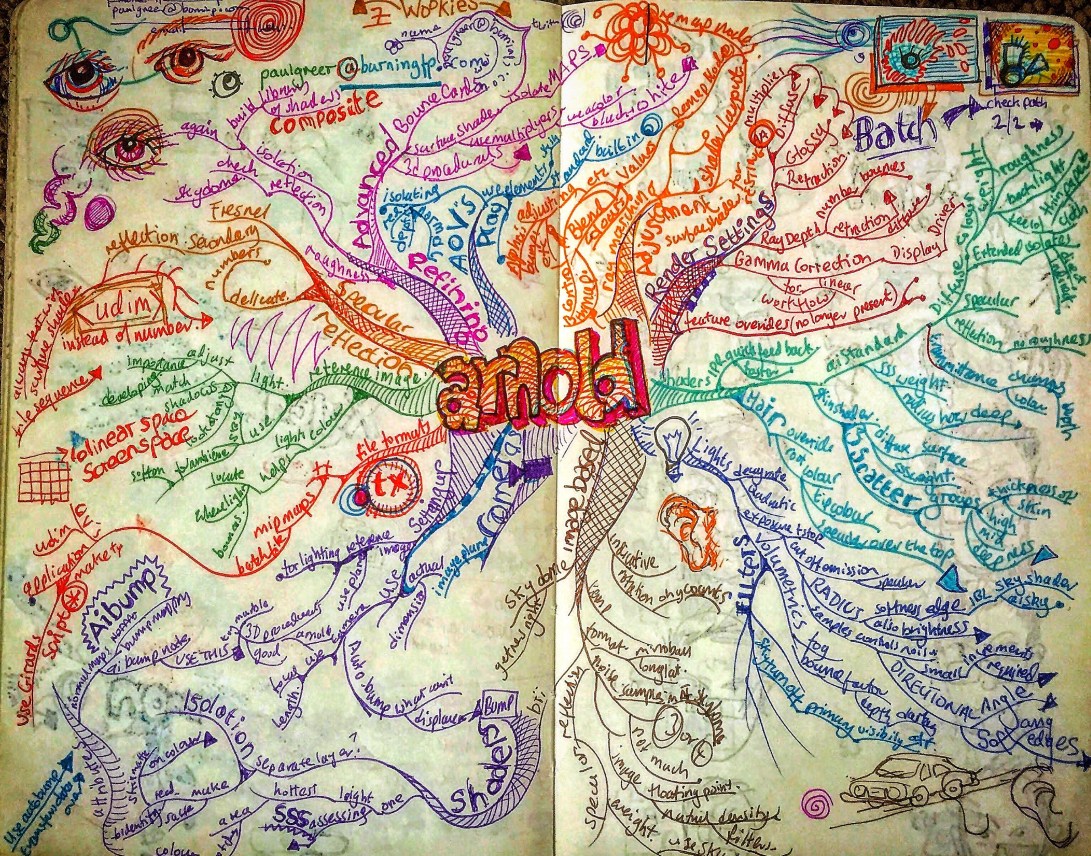
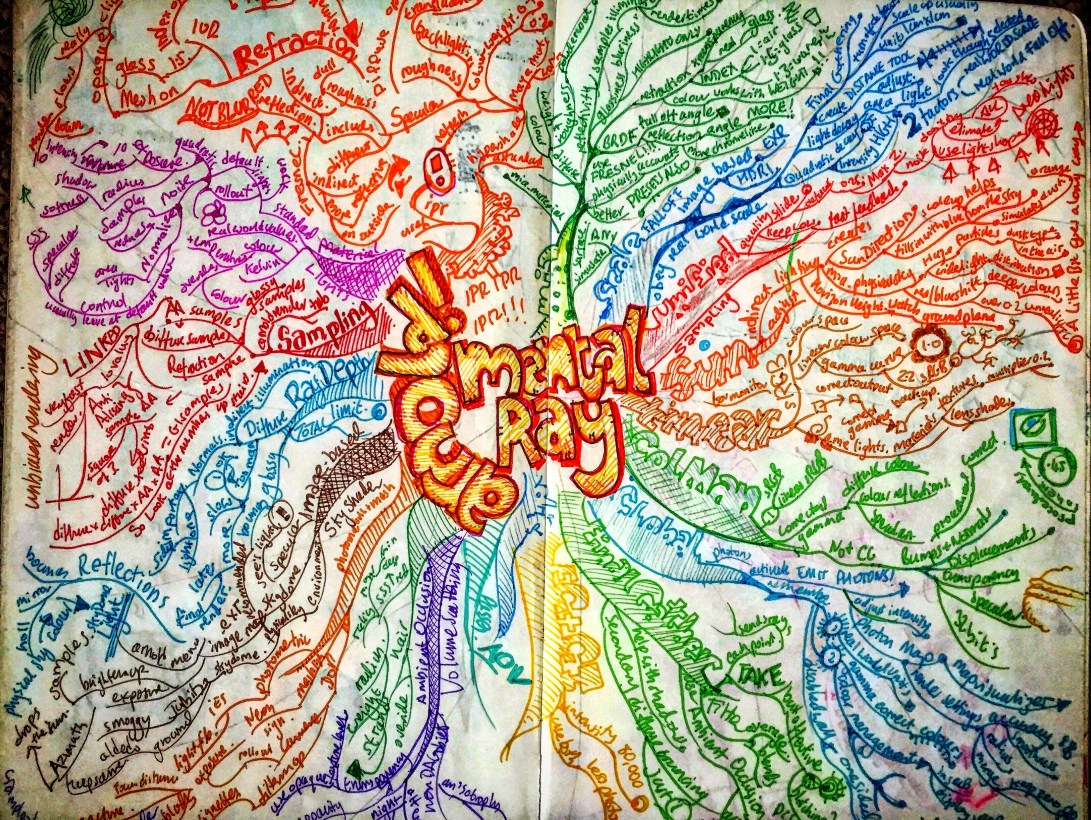
Notebook Ethel, Spread Twenty-Two. Mind map getting to grips with some serious understanding of the render engine #Arnold, soon after we began using it. Also eye doodles. 🕷 👁 🗺
Notebook Ethel, Spread Twenty-Two. Mind map getting to grips with some serious understanding of the render engine Arnold, soon after we began using it. Also eye doodles. 🕷 👁 🗺
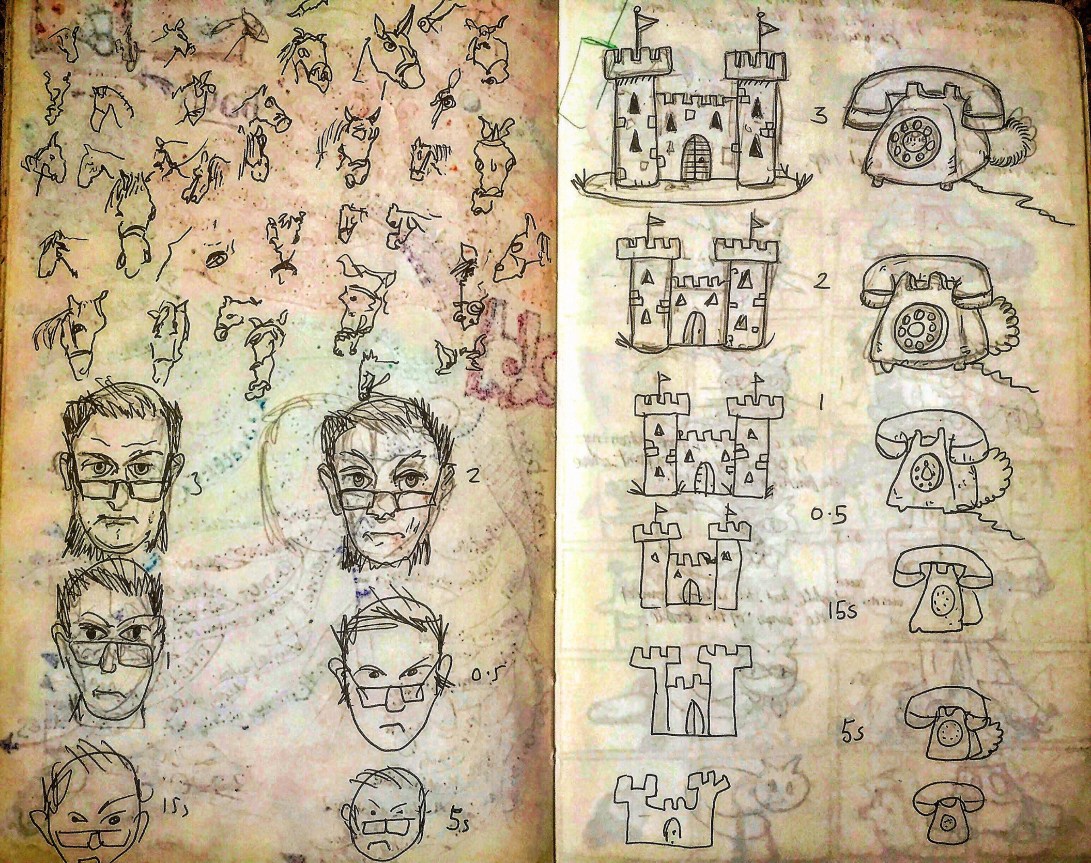
Notebook Ethel, Spread Twenty- Three. More horses, and my attempt at the Ivan Brunetti drawing exercise in his “Cartooning: Philosophy and Practice”, it goes: “Using your sketchbook and a pencil or pen of your choice, spend 3-4 minutes drawing a car. Then, start over and draw it in 2 minutes. Then 1 minute. Then 30 seconds. Then 15 seconds. And then 5 seconds. Draw faster at each step-that is, draw the entire car within the time limit. Repeat this same process for four other subjects: a cat, a castle, a telephone, and self-portrait.” ✍️📓 📞
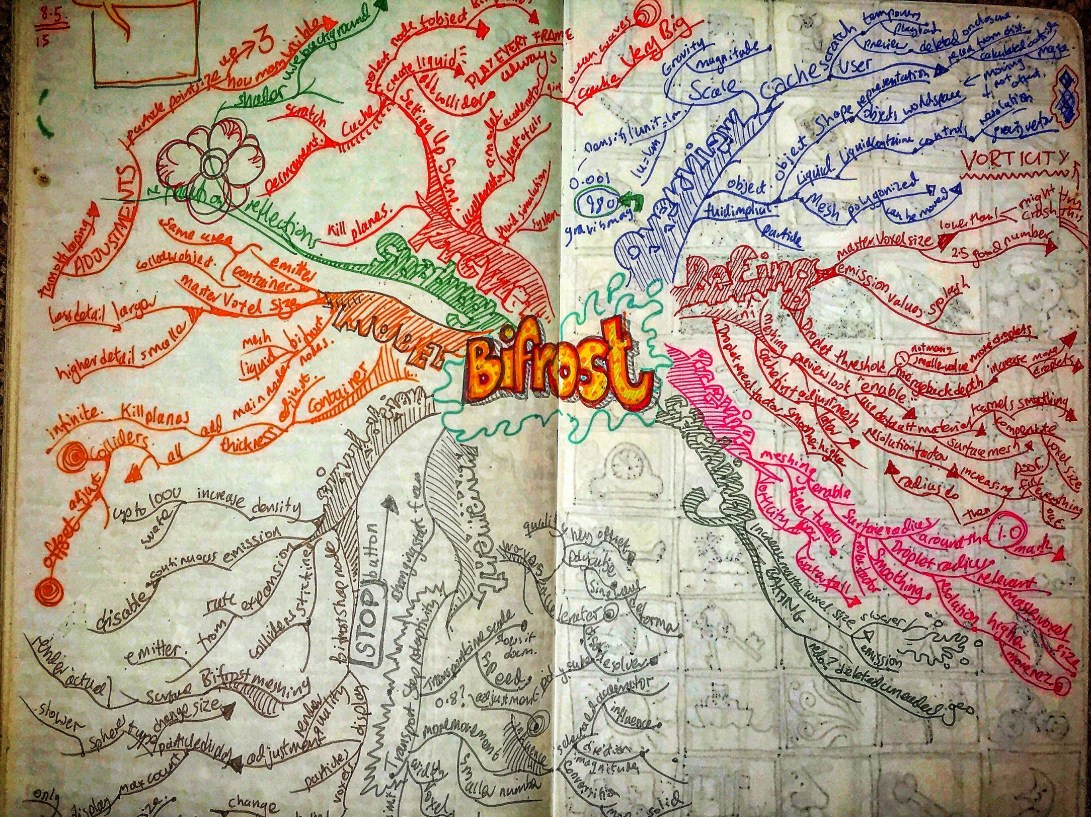
Notebook Ethel, Spread Twenty-Four. Mind map on the Autodesk Maya Bifrost system, dynamic and fluid simulation software. 🌊 🖥 🕷
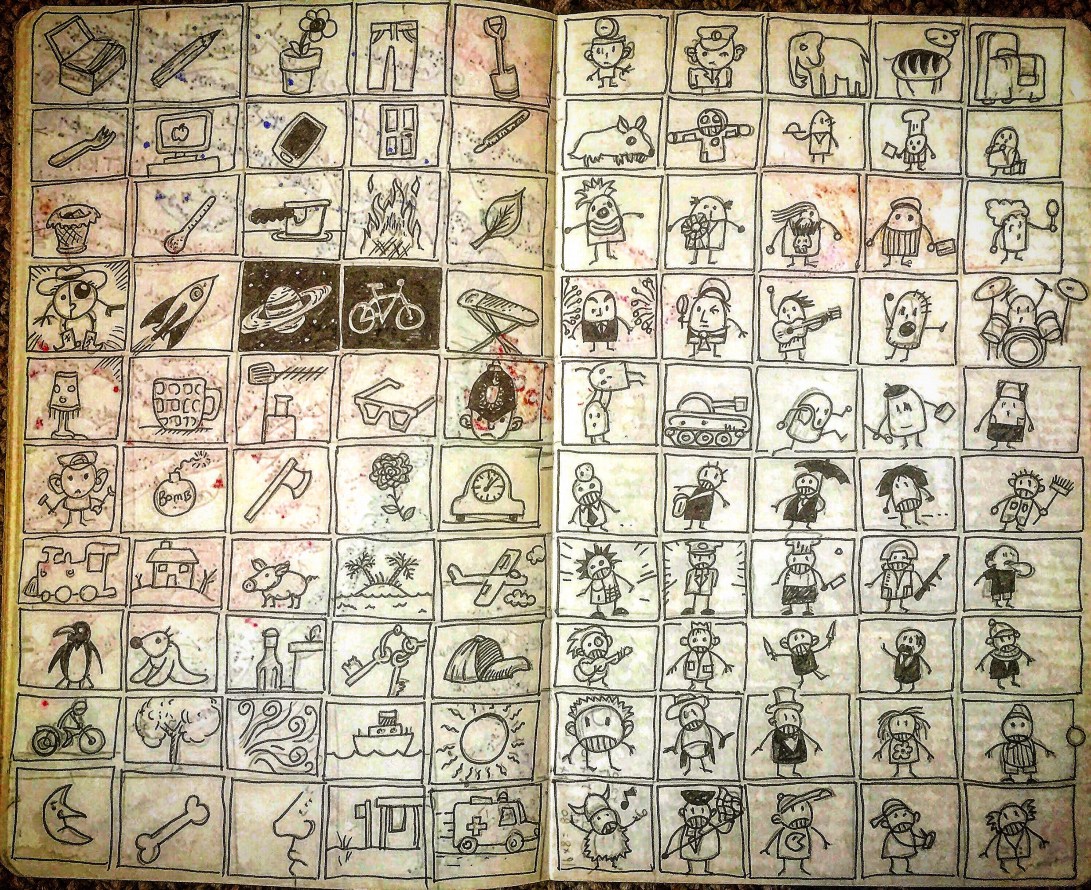
Notebook Ethel, Spread Twenty-Five. Another Ivan Brunetti exercise from “Cartooning: philosophy and practice”: “Pencil out a grid in your notebook, enough to contain 100 small drawings.now spending no more than 5 seconds per drawing, let your stream of consciousness guide you, drawing whatever comes to mind (don’t stop to think about it).” I went back and inked them after. 📓✍️🖼
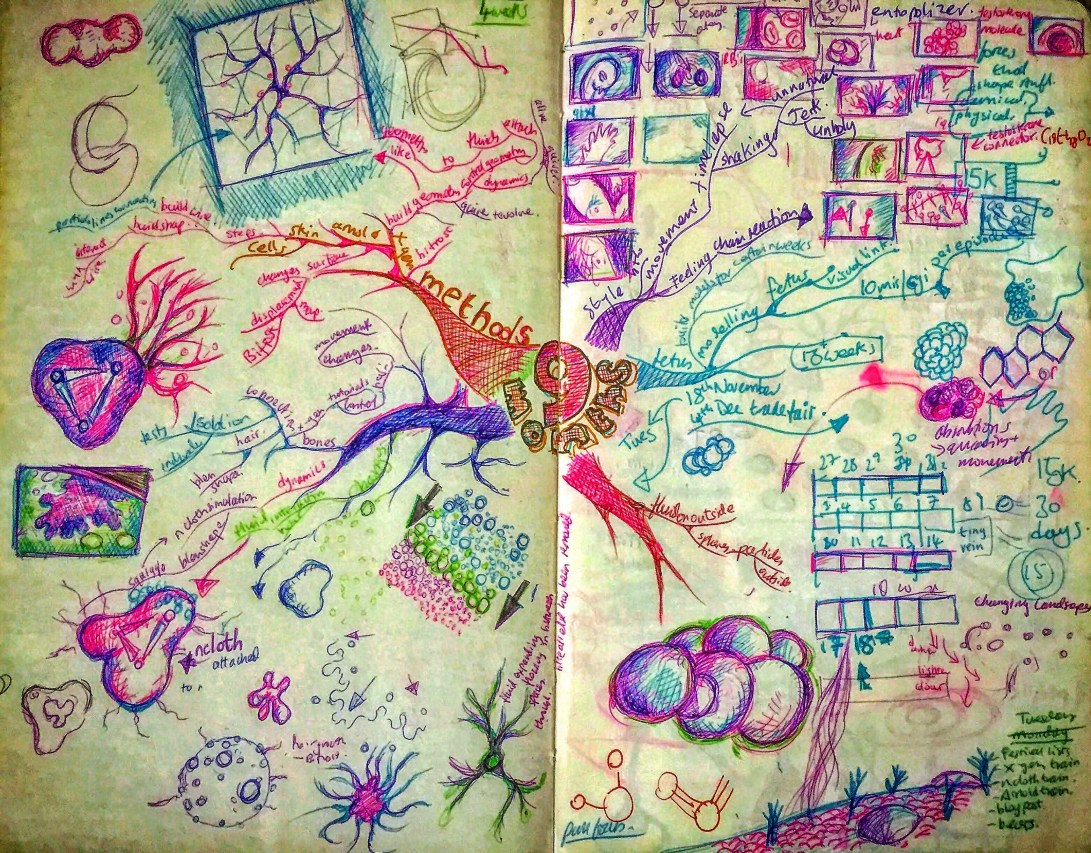
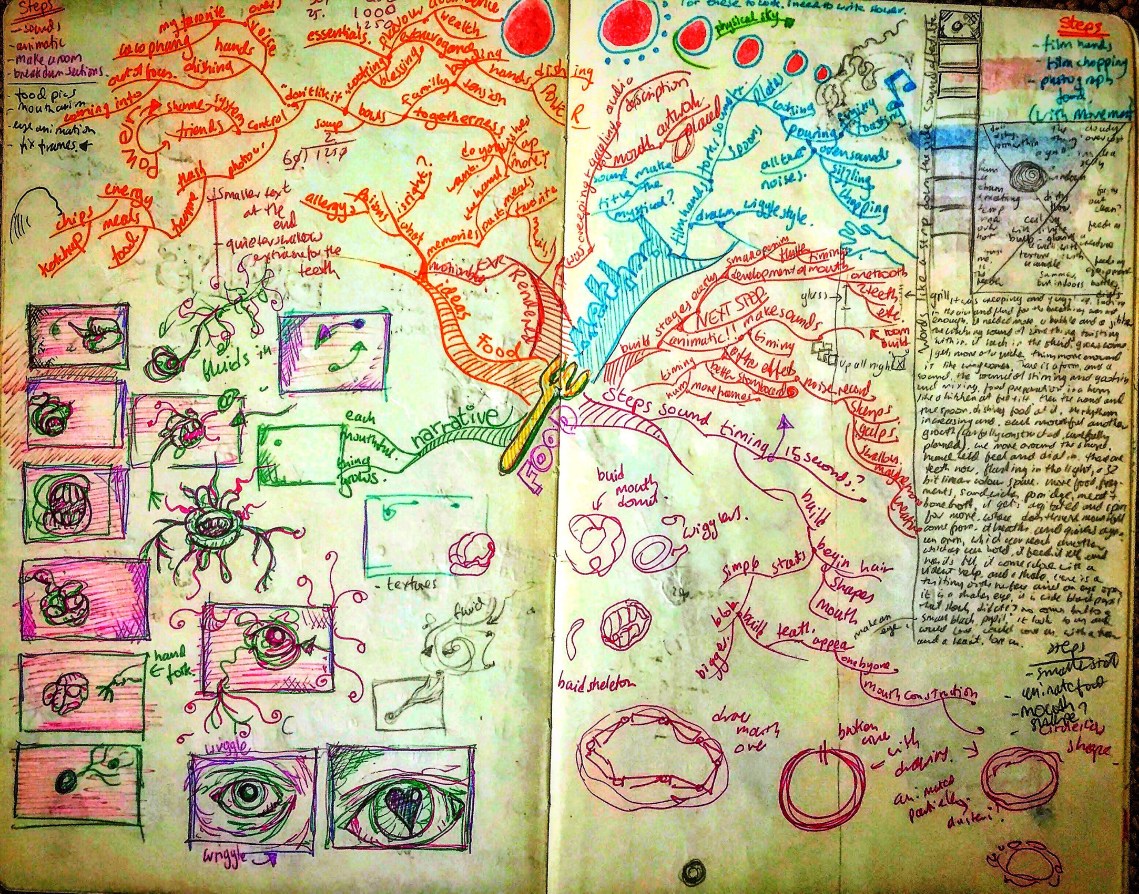
Notebook Ethel, Spread Twenty-Six. Mind mapping notes for the content graphics of Countdown To Life. Ideas, concepts, storyboards, techniques. 📓 🕷 💓

Project Ethel (27.05.14 – 07.01.16): Pages 1-8

Beginning a large project of uploading old notebook pages. These are not high res scans as that would considerably increase the amount of time needed, so these would have to do for now.

These are all generally going up on Instagram first.

Ethel Spread 1
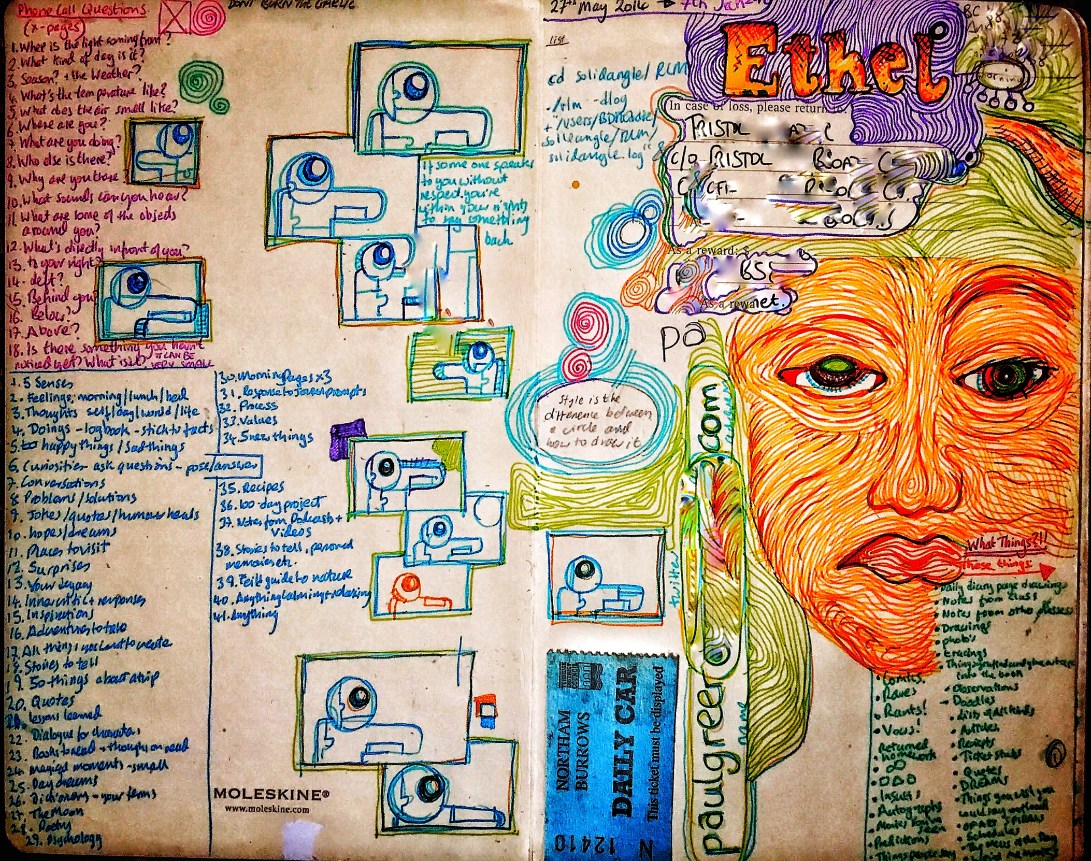
Opening page of Notebook: Ethel. I’m going to be uploading notebooks in a more systematic fashion (with sensitive info deleted obvs). Notebook Ethel is a few years old. This is before I started using the first page spread as an index for the rest of the book. So the lists here are largely inspirational items and ideas of content capture. There’s not much order and I tend to fill empty spaces with bits of ephemera stuck in and doodles.
Clifton windows, lists and words.
This is a systematic uploading.
Notebook: Ethel Spread 2
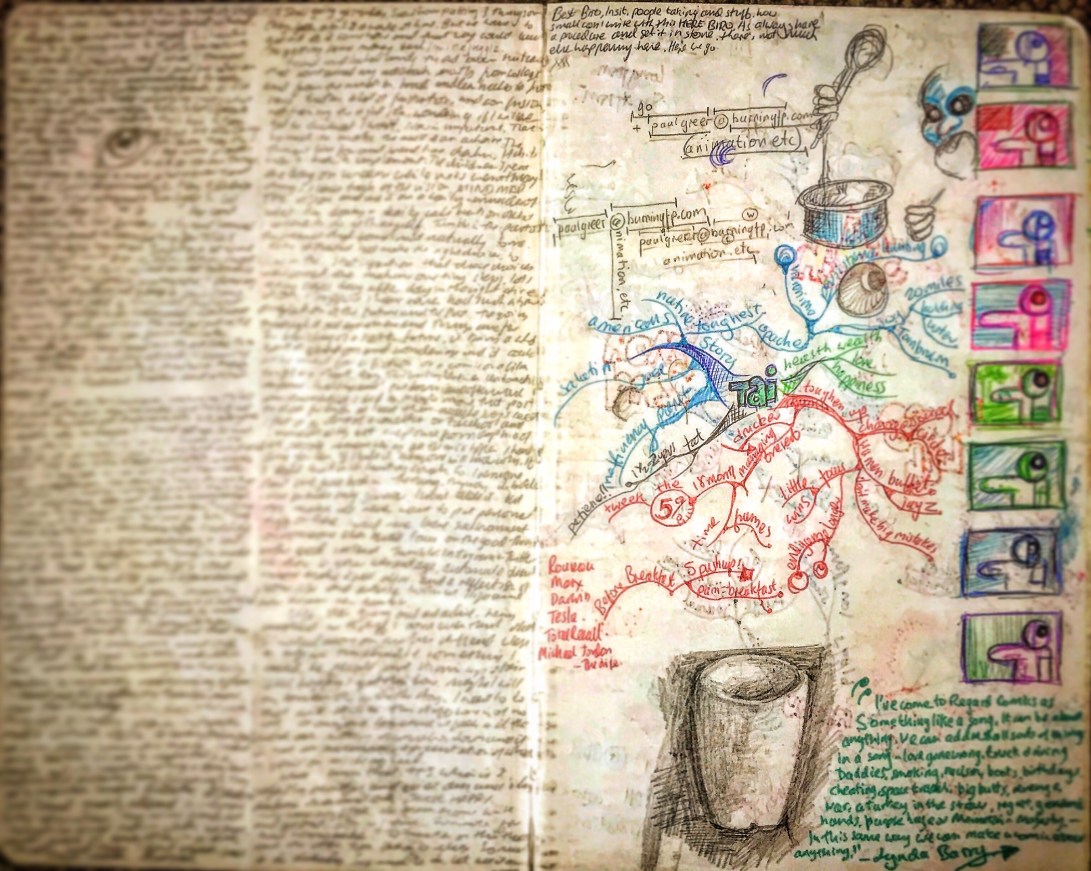
First drafts, mug drawing, rough mind map, comics and a quote from Lynda Barry.
It’s along the lines of: “I’ve come to regard comics as something like a song. It can be about anything. We can address all sorts of things in a song, love gone wrong, truck driving, Daddies, smoking, boots, birthdays, cheating, space travel, big butts, revenge, war, a turkey in the straw, regret, genders, hands, purple haze . We can this way we can make comics about anything.” – Although I did write it down in a hurry!
Notebook: Ethel Spread 4.
Daily mini-maps, plans for website, doodles and the like.
Notebook: Ethel Spread 5.
Preliminary notes on Shark Brains, Art Speigelman on Maus: “Reality is too complex for any media” “Ironic Distance” “Fourth Wall” “Blank expressions allow the reader to impose their own” “I draw my comics one to one” “The past and the present intertwining, simultaneously in the same space” …& Ray Bradbury on writing: “Libraries are full of people not books” “Love what you do. Do what you love” “I don’t write the book, my characters write the book, they come to me and they tell me” “Stand on the top of the cliff, jump off, build your wings on the way down.” etc…
Notes for a very short film called “Bevel’s Nub” that appeared in the @strangealtars project a while back.
Marker pen, biro, pencil.
Notebook: Ethel. Spread 7.
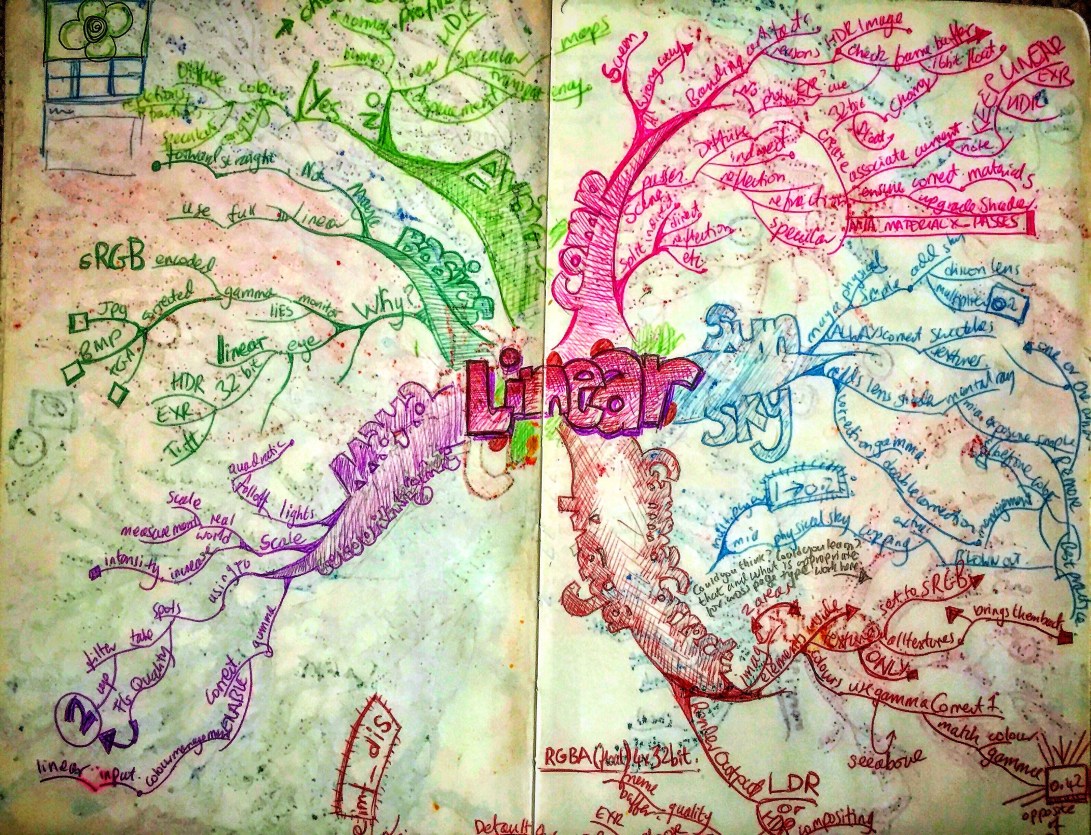
Mind Map of the early days with Arnold and Maya before he full recent integration.
Mind Map on understanding Linear Colour Space within Maya and Arnold back when we first started using it.

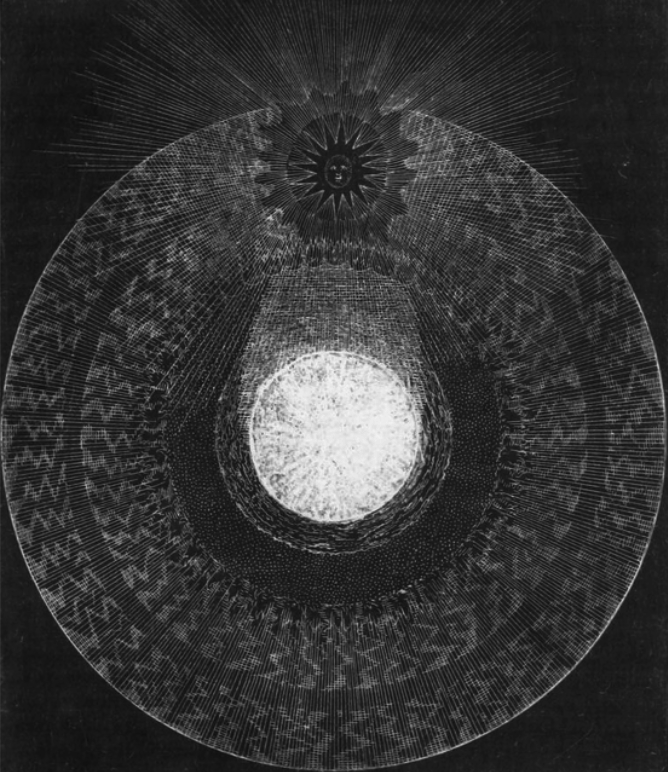
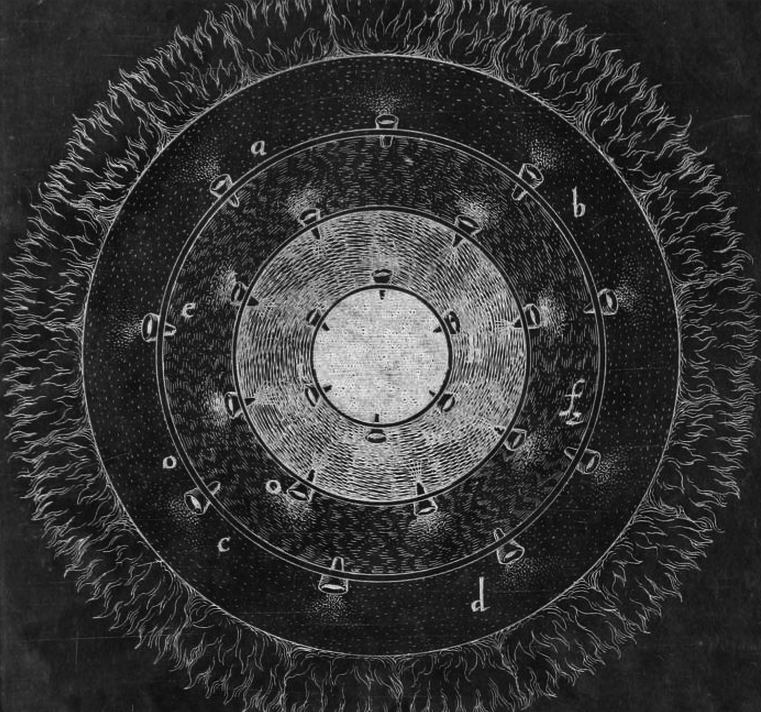
Robert Fludd – Utriusque Cosmi Maioris Scilicet et Minoris Metaphysica, 1617


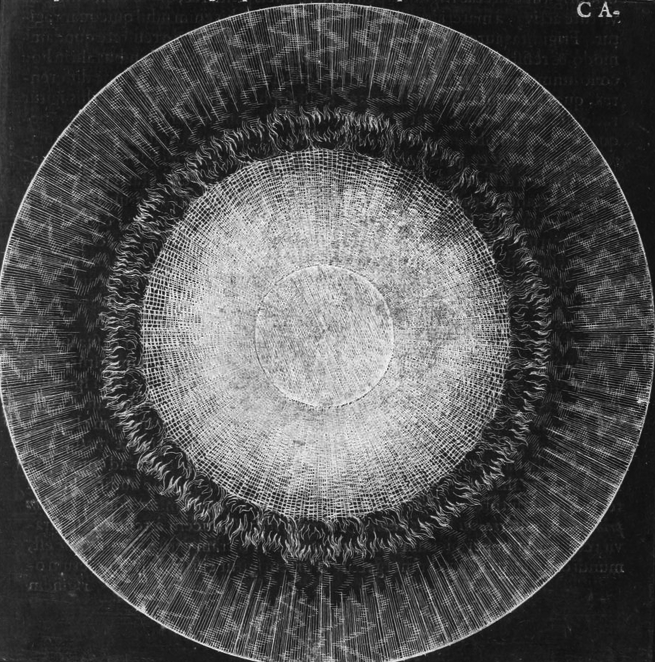
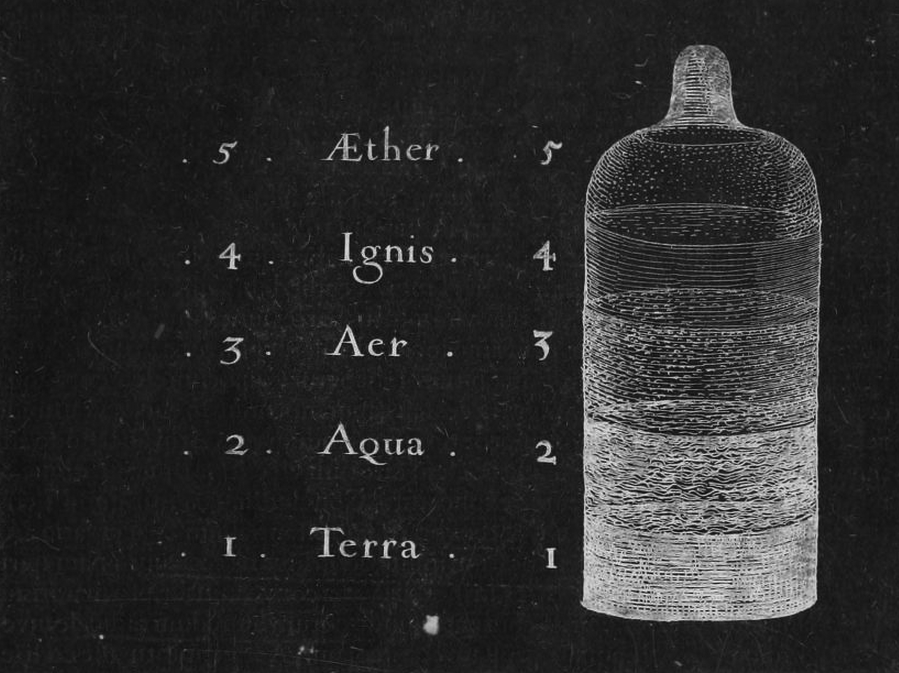
Robert Fludd - Utriusque Cosmi Maioris Scilicet et Minoris Metaphysica, 1617


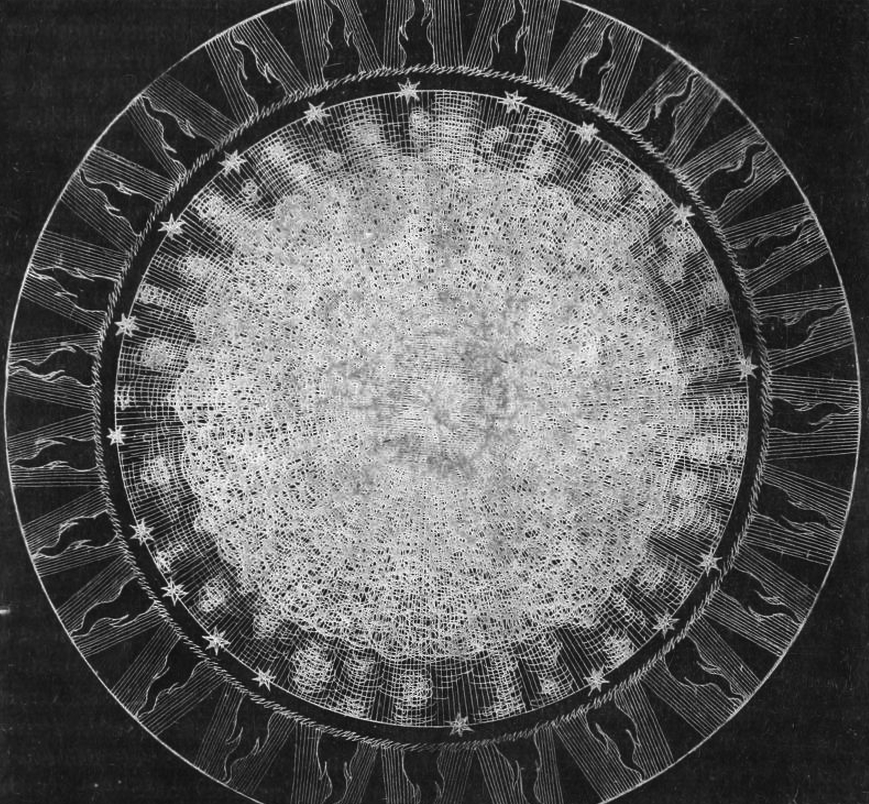
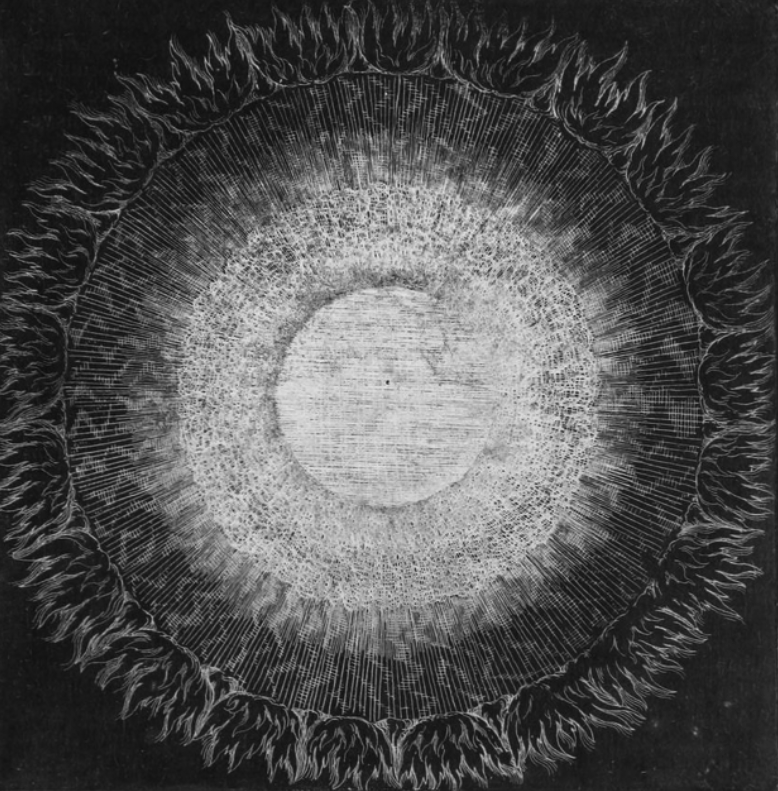
Robert Fludd - Utriusque Cosmi Maioris Scilicet et Minoris Metaphysica, 1617


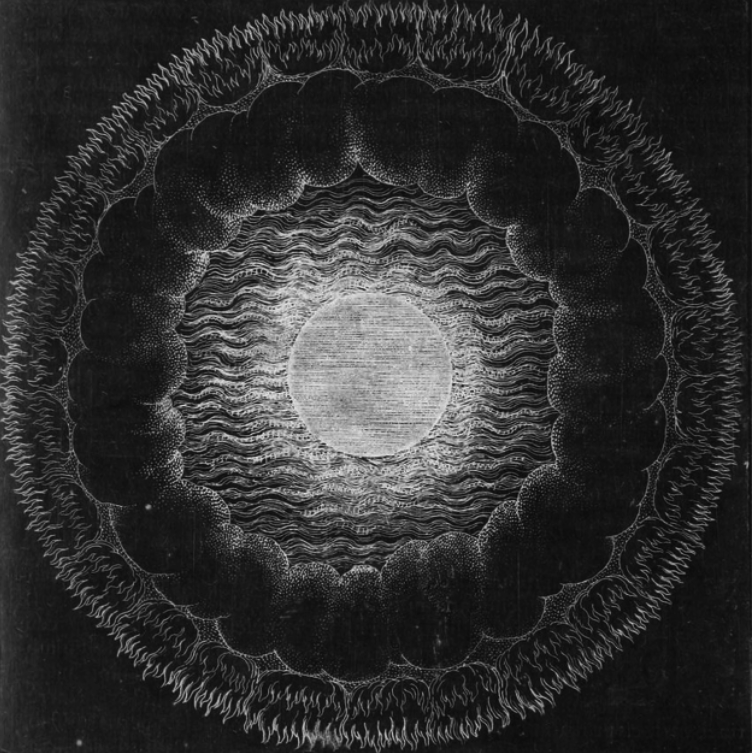
Robert Fludd - Utriusque Cosmi Maioris Scilicet et Minoris Metaphysica, 1617


Robert Fludd - Utriusque Cosmi Maioris Scilicet et Minoris Metaphysica, 1617


Robert Fludd - Utriusque Cosmi Maioris Scilicet et Minoris Metaphysica, 1617


Robert Fludd - Utriusque Cosmi Maioris Scilicet et Minoris Metaphysica, 1617


Robert Fludd - Utriusque Cosmi Maioris Scilicet et Minoris Metaphysica, 1617


Robert Fludd - Utriusque Cosmi Maioris Scilicet et Minoris Metaphysica, 1617


Robert Fludd - Utriusque Cosmi Maioris Scilicet et Minoris Metaphysica, 1617

via bloodmilk


“Robert Fludd was a respected English physician (of Welsh origins) employed at the court of King James I of England. He was a prolific writer of vast, multi-volume encyclopaedias in which he discussed a universal range of topics from magical practices such as alchemy, astrology, kabbalism and fortune-telling, to radical theological thinking concerning the inter-relation of God with the natural and human worlds. However, he also proudly displayed his grasp of practical knowledge, such as mechanics, architecture, military fortifications, armaments, military manoeuvres, hydrology, musical theory and musical instruments, mathematics, geometry, optics and the art of drawing, as well as chemistry and medicine. Fludd used the common metaphor for the arts as being the “ape of Nature,” a microcosmic form of the manner in which the universe itself functioned.

“Fludd’s most famous work is the History of the Two Worlds (Utriusque Cosmi … Historia, 1617-21) published in five volumes by Theodore de Bry in Oppenheim. The two worlds under discussion are those of the Microcosm of human life on earth and the Macrocosm of the universe (which included the spiritual realm of the Divine).”

PublicDomainReview

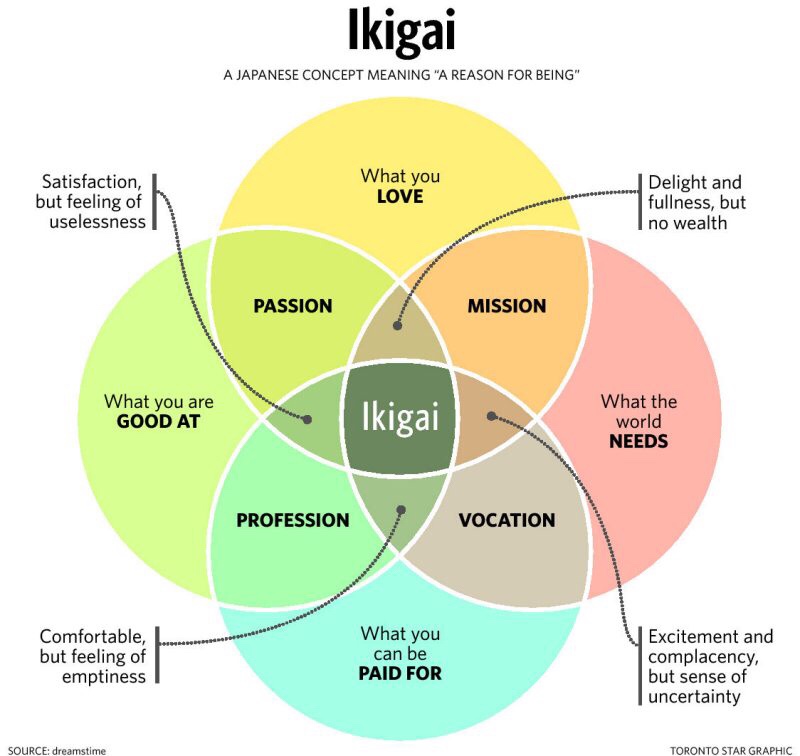
Ikigai

James Gunn:

Our dreams are, generally, us imagining ourselves from the outside, not the inside. This can never be experienced and, because of that, “following one’s dreams” is usually a necessarily fruitless activity. Even in the best of circumstances, it is not a source of well-being or comfort.


And although we’re often told, “You can do anything you set your mind to!”, it’s just not true. People CAN’T do anything they set their minds to. The physicality of my vocal chords make it so that I will never sing like Adele. My height precludes me from being a basketball star. My age and ethnicity prevent me from ever being a member of South Korean boy band BTS, no matter how much I set my mind to it.


If you discover what you’re truly good at, and what you enjoy doing, and it’s something you can potentially make a living at – well, that, to me, is a much richer life than following your dreams, which are not only unfullfilling, but they shift and change throughout your life anyway. Because to achieve a dream is one thing, but to live inside a dream that you discover moment by moment along your path, where you grow stronger and wiser, and enhance the lives of those around you – well, that’s a much deeper, more fulfilling life.